Weather postpones SpaceX's first astronaut launch from Florida
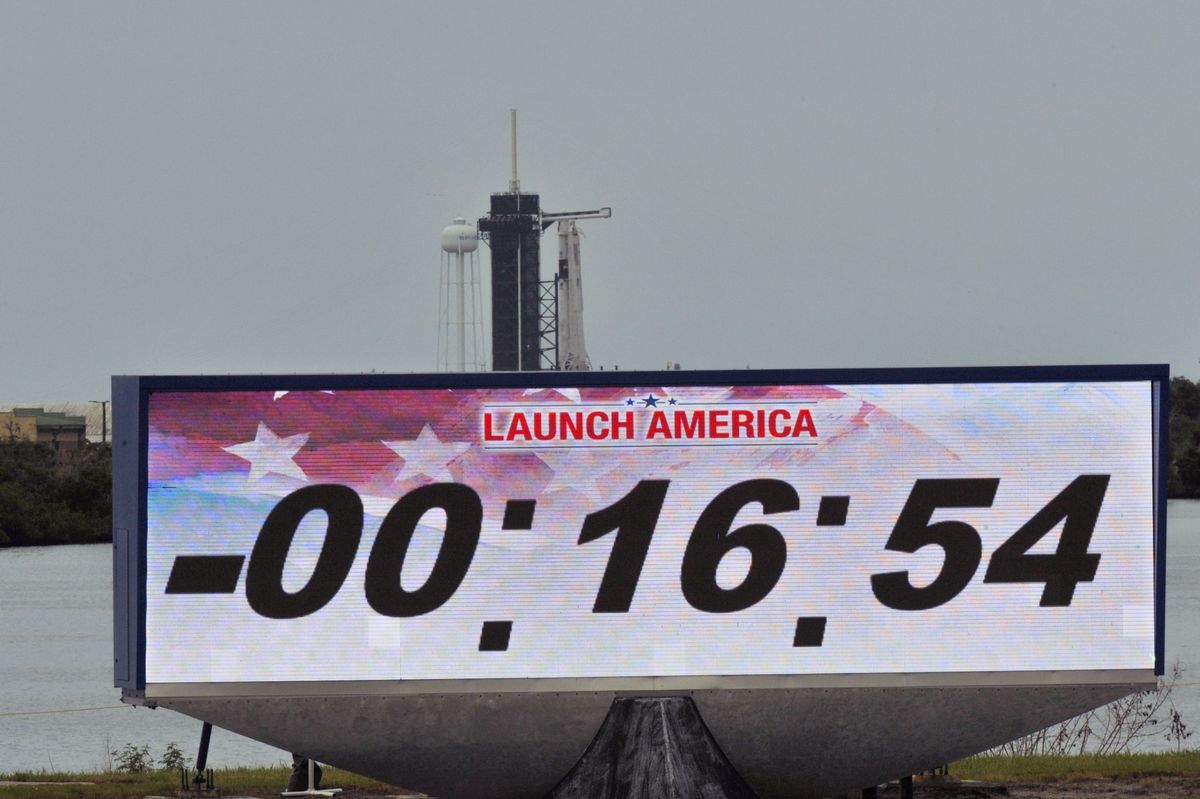
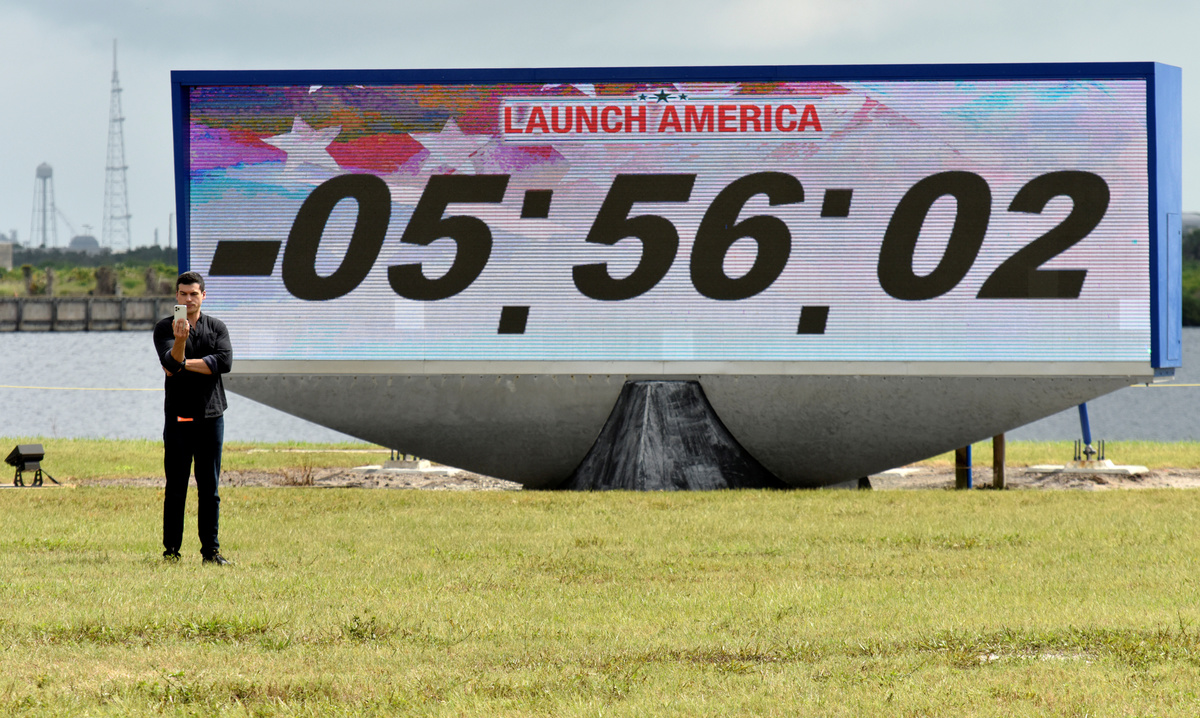
A screen showing the countdown clock is seen with SpaceX Falcon 9 rocket and Crew Dragon spacecraft in the background as launch from NASA's Kennedy Space Center was scrubbed, in Cape Canaveral, Florida, U.S. May 27, 2020. REUTERS/Steve Nesius
Stormy weather thwarted a landmark moment for private rocket company SpaceX and NASA on Wednesday, forcing launch directors in Florida to postpone what would have been the first flight of U.S. astronauts into orbit from American soil in nine years.
The countdown, made especially suspenseful by shifting weather conditions, was halted just 16 minutes and 54 seconds before the SpaceX Falcon 9 rocket had been due to launch astronauts Doug Hurley and Bob Behnken on a 19-hour ride to the International Space Station.
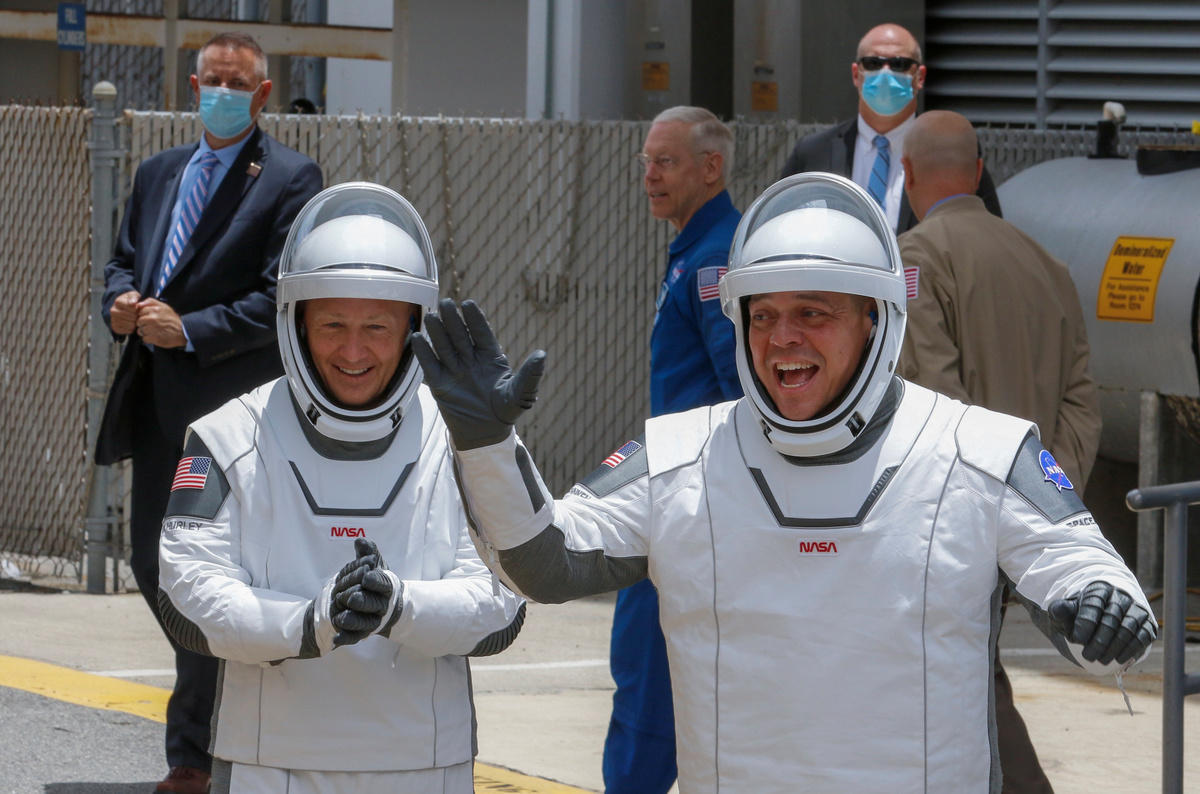
NASA astronauts Douglas Hurley and Robert Behnken head to launch pad 39 to board a SpaceX Falcon 9 rocket during NASA's SpaceX Demo-2 mission to the International Space Station from NASA's Kennedy Space Center in Cape Canaveral, Florida, U.S., May 27, 2020. REUTERS/Joe Skipper
SpaceX will make a second attempt on Saturday afternoon to launch the astronauts aboard its newly designed Dragon Crew capsule.
The presence of visiting dignitaries, including President Donald Trump, Vice President Mike Pence and billionaire SpaceX Chief Executive Elon Musk added to the high-pressure mood at the Kennedy Space Center.
In the end, it was an electrically charged atmosphere, literally, that prompted SpaceX and NASA to scrub the launch, even as the rocket was being loaded with fuel.
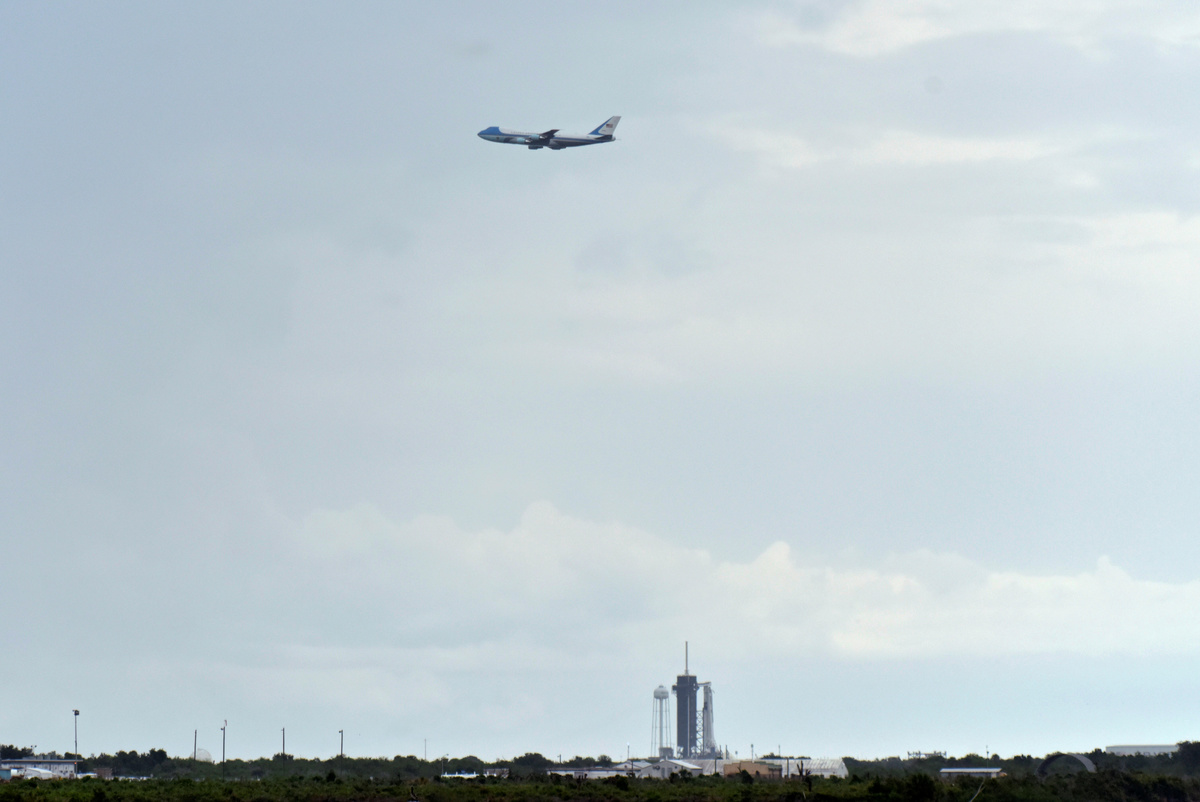
U.S. President Donald Trump flies over Pad39A on Air force One before landing to attend the launch of SpaceX Falcon 9 rocket and Crew Dragon spacecraft from NASA's Kennedy Space Center in Cape Canaveral, Florida, U.S. May 27, 2020. REUTERS/Steve Nesius
LIGHTNING THREAT
"There wasn't really a lightning storm, but there was a concern that if we did launch it could trigger lightning," NASA chief Jim Bridenstine explained afterwards.
Launch director Mike Taylor cited a number of unspecified "weather violations" for halting the mission, capping a day of intermittent showers and a tornado warning.
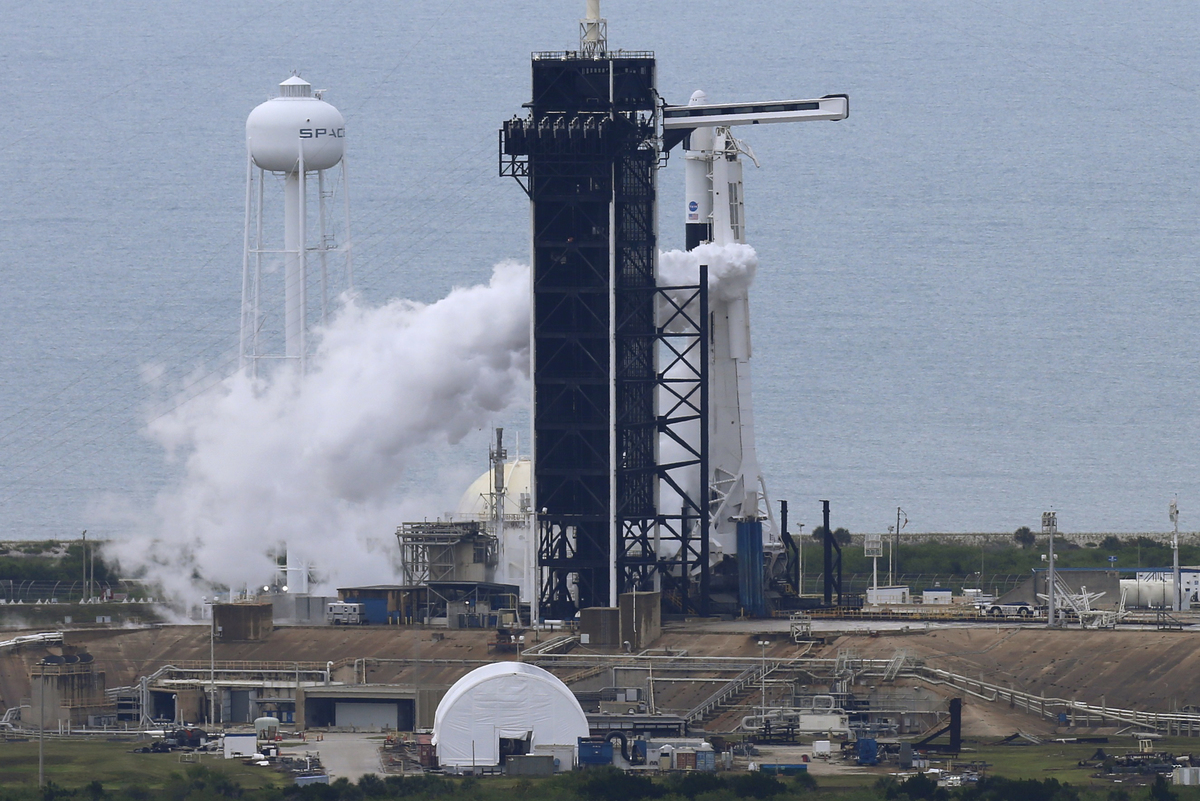
A SpaceX Falcon 9 rocket purges fuel after topping off before scheduled launch of NASA's SpaceX Demo-2 mission to the International Space Station from NASA's Kennedy Space Center in Cape Canaveral, Florida, U.S. May 27, 2020. REUTERS/Joe Skipper
Still, Bridenstine sounded an upbeat note, calling the aborted countdown a valuable "wet dress rehearsal."
"This was an important milestone, just today," he said on NASA TV. "We learn a lot every time we do these things."
Hurley, 53, and Behnken, 49, had been strapped into their seats for a little over two hours before the launch was called off. NASA's broadcast on the internet showed the two men seated side by side in helmeted white flight suits as the postponement was announced.
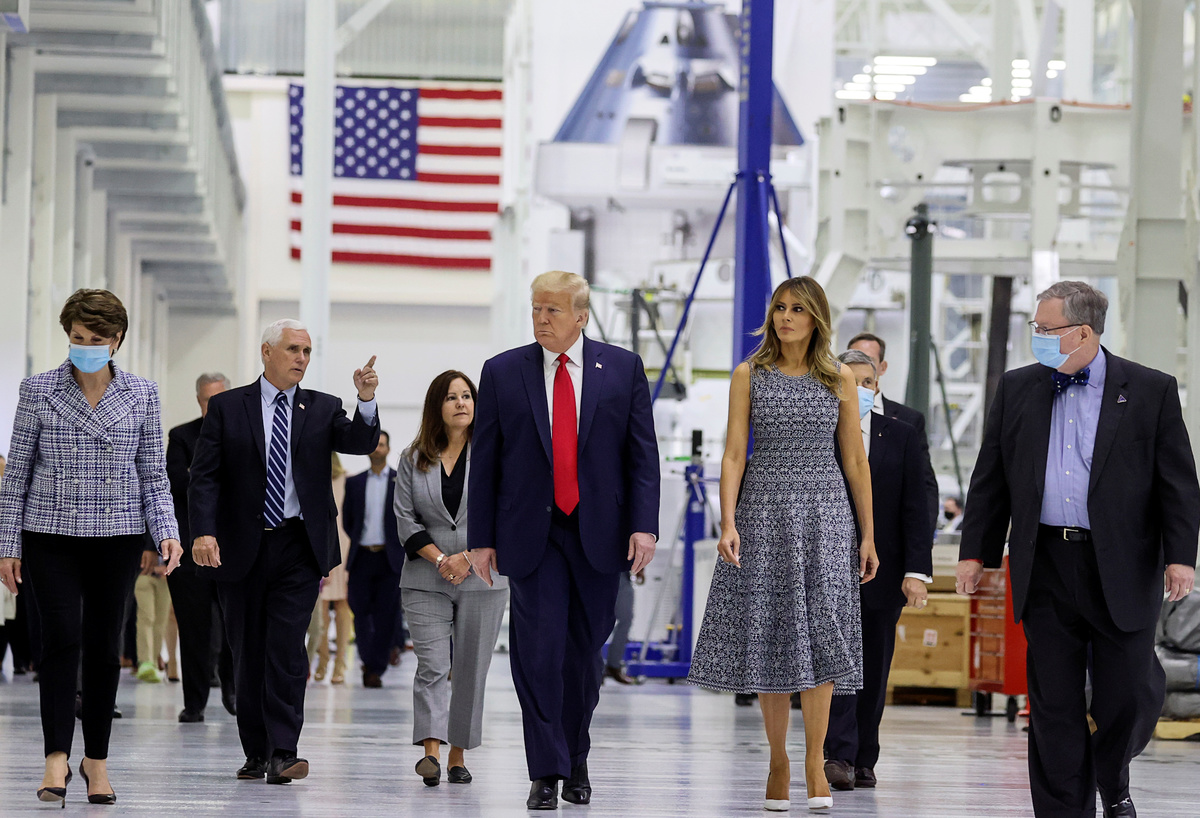
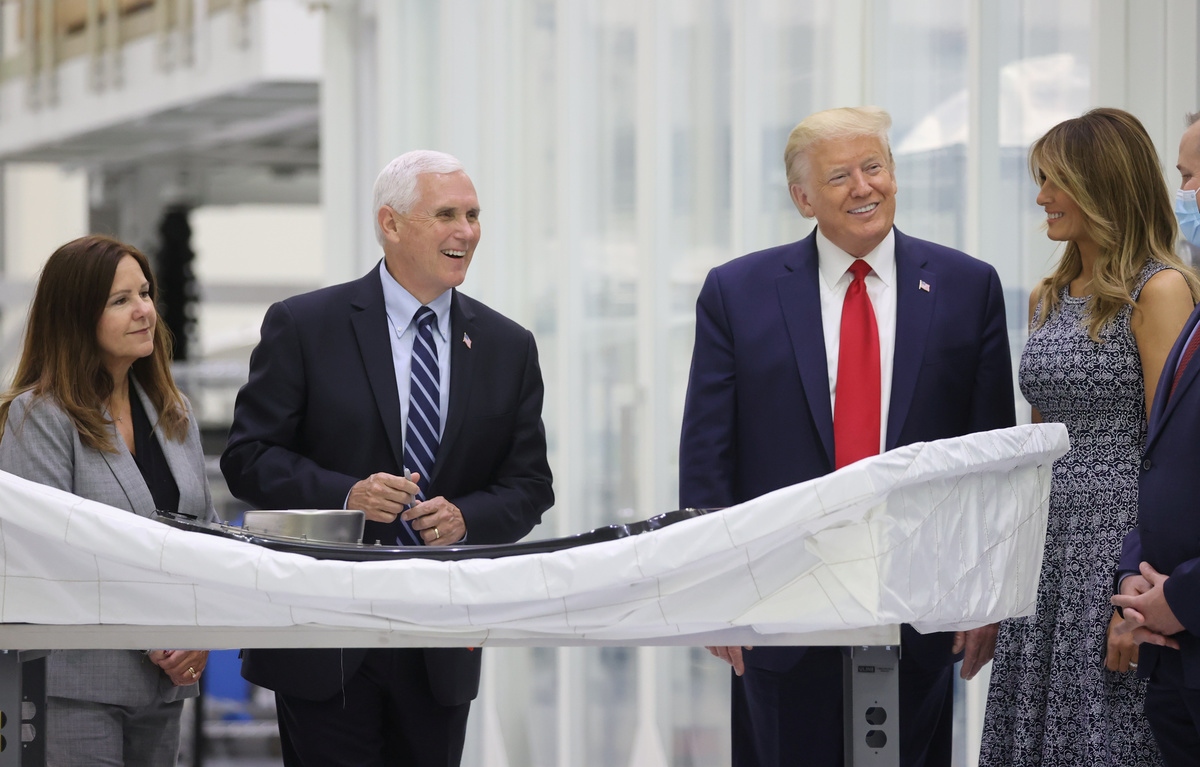
U.S. President Donald Trump listens to Vice President Mike Pence as they tour the Neil Armstrong Operations and Checkout Facility with first lady Melania Trump and Karen Pence prior to witnessing the launch of a SpaceX Falcon 9 rocket carrying two NASA astronauts to the International Space Station at the Kennedy Space Center in Cape Canaveral, Florida, U.S., May 27, 2020. REUTERS/Jonathan Ernst
"Everybody did great today. It was a great practice, and we'll do it again on Saturday," Hurley said just before climbing out of the capsule.
Technicians in black suits and face masks then escorted the two astronauts back down the 265-foot-tall (80-meter) launch tower for the return trip to their quarantine holding facility.
The astronauts were to have blasted off from the same launch pad used in 2011 by NASA's final space shuttle flight, which was piloted by Hurley. Since then, NASA astronauts have had to hitch rides into orbit aboard Russia's Soyuz spacecraft.
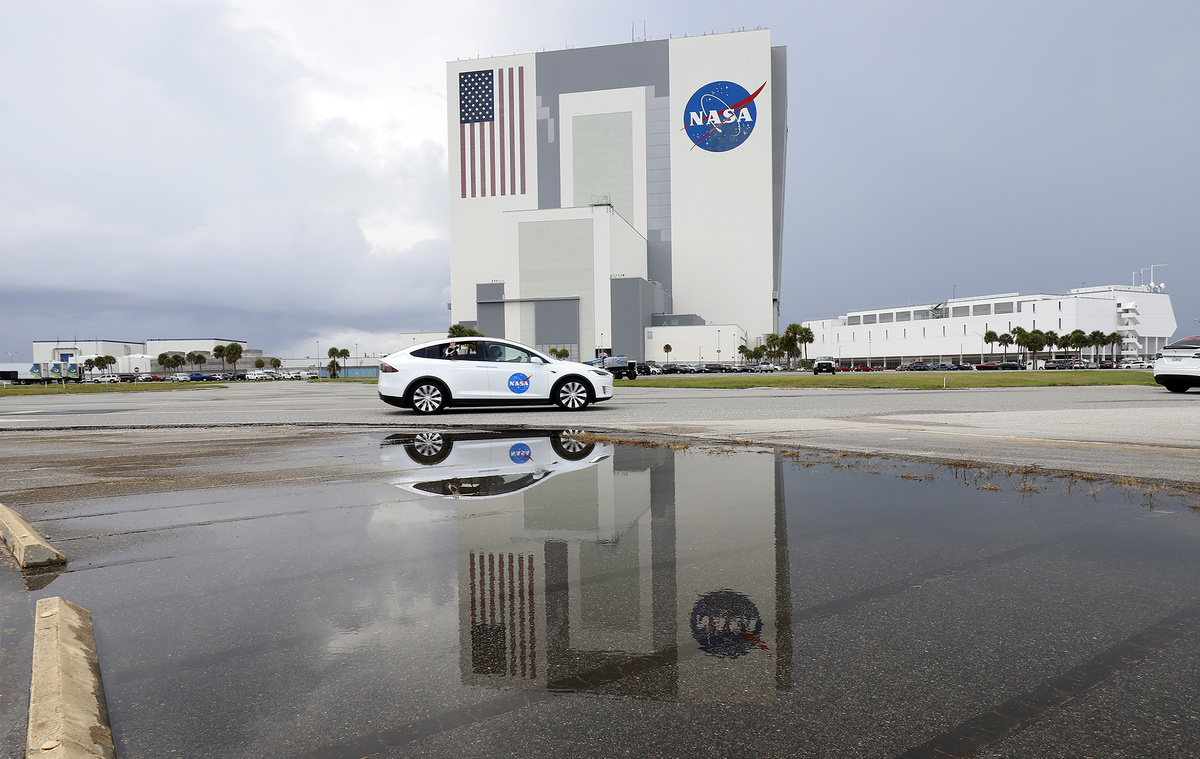
NASA astronaut Douglas Hurley waves from his Tesla as they pass the VAB heading to Pad39A for the launch of the SpaceX Crew Dragon on a Falcon 9 booster rocket from the Kennedy Space Center in Cape Canaveral, Florida, U.S. May 27, 2020. REUTERS/Thom Baur
For Musk, who is also CEO of electric carmaker Tesla Inc <TSLA.O>, the first manned SpaceX launch represents another milestone for the reusable rockets his company pioneered to make space flight less costly. SpaceX, founded by Musk in 2002 and formally known as Space Exploration Technologies, has never previously flown humans into orbit, only cargo.
It also would mark the first time commercially developed space vehicles - owned and operated by a private entity rather than NASA - have carried Americans into orbit.
NASA has awarded nearly $8 billion combined to SpaceX and Boeing Co <BA.N> for development of rival space launch systems.
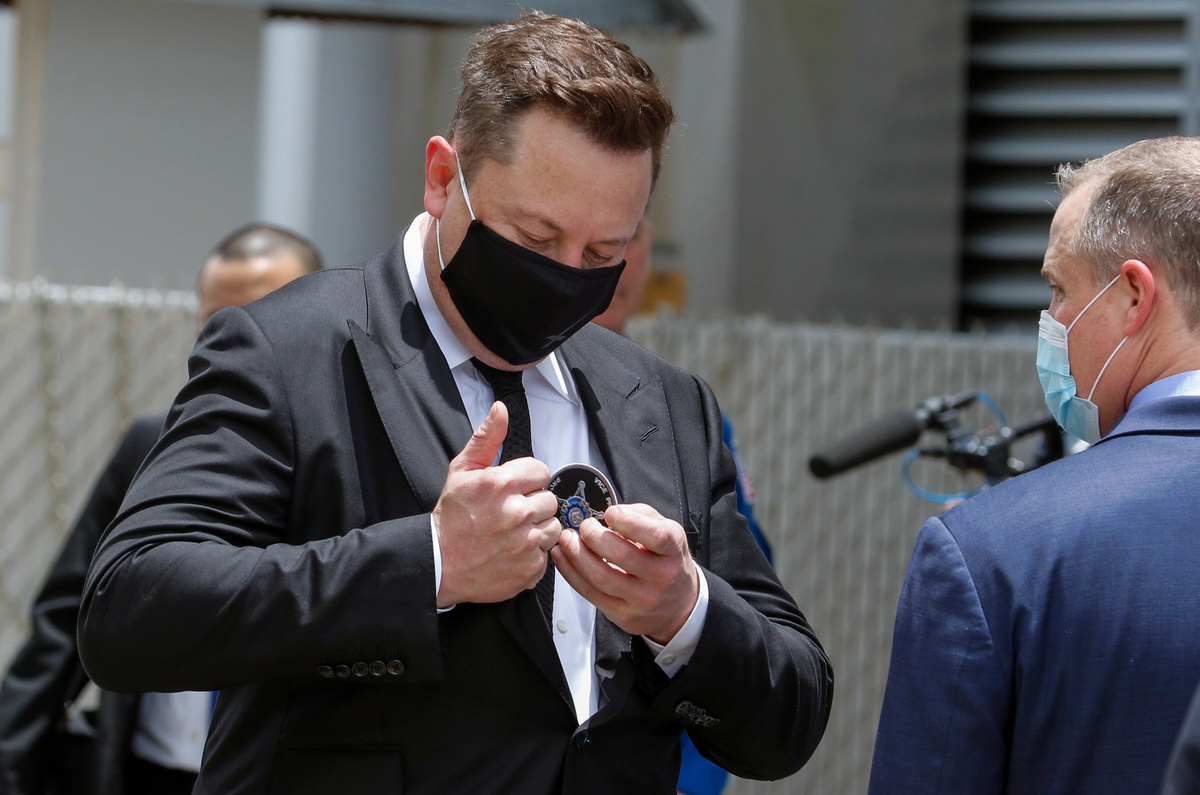
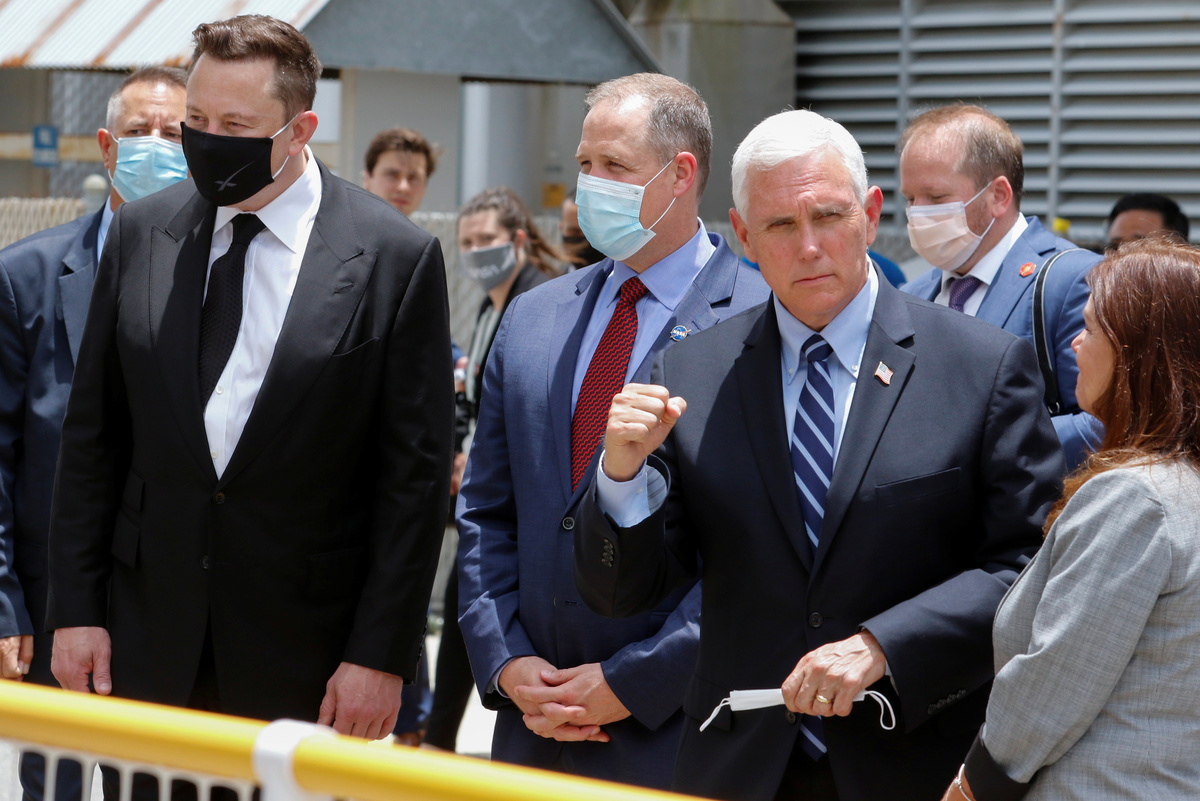
SpaceX founder Elon Musk and NASA Administrator Jim Bridenstine attend the walkout of NASA astronauts Douglas Hurley and Robert Behnken before the launch of a SpaceX Falcon 9 rocket and Crew Dragon spacecraft at the Kennedy Space Center, in Cape Canaveral, Florida, U.S., May 27, 2020. REUTERS/Joe Skipper
The last time NASA launched astronauts into space aboard a brand new vehicle was four decades ago at the outset of the shuttle program.
The two astronauts are NASA employees under contract to fly with Hawthorne, California-based SpaceX. Plans call for them to remain at the space station for several weeks, assisting a short-handed crew aboard the orbital laboratory.
Wednesday's outcome was a disappointment for Trump, who made the trip to Florida for what he hoped would showcase a triumphant moment for America as the nation battles the coronavirus pandemic.
U.S. President Donald Trump tours the Neil Armstrong Operations and Checkout Facility with Vice President Mike Pence, second lady Karen Pence and first lady Melania Trump prior to witnessing the launch of a SpaceX Falcon 9 rocket carrying two NASA astronauts to the International Space Station at the Kennedy Space Center in Cape Canaveral, Florida, U.S., May 27, 2020. REUTERS/Jonathan Ernst
The president left Cape Canaveral shortly after the countdown was halted but said he would return on Saturday.
(Reporting by Joey Roulette and Jeff Mason in Cape Canaveral, Fla.; Writing and additional reporting by Steve Gorman in Los Angeles; Editing by Bill Tarrant and Leslie Adler)
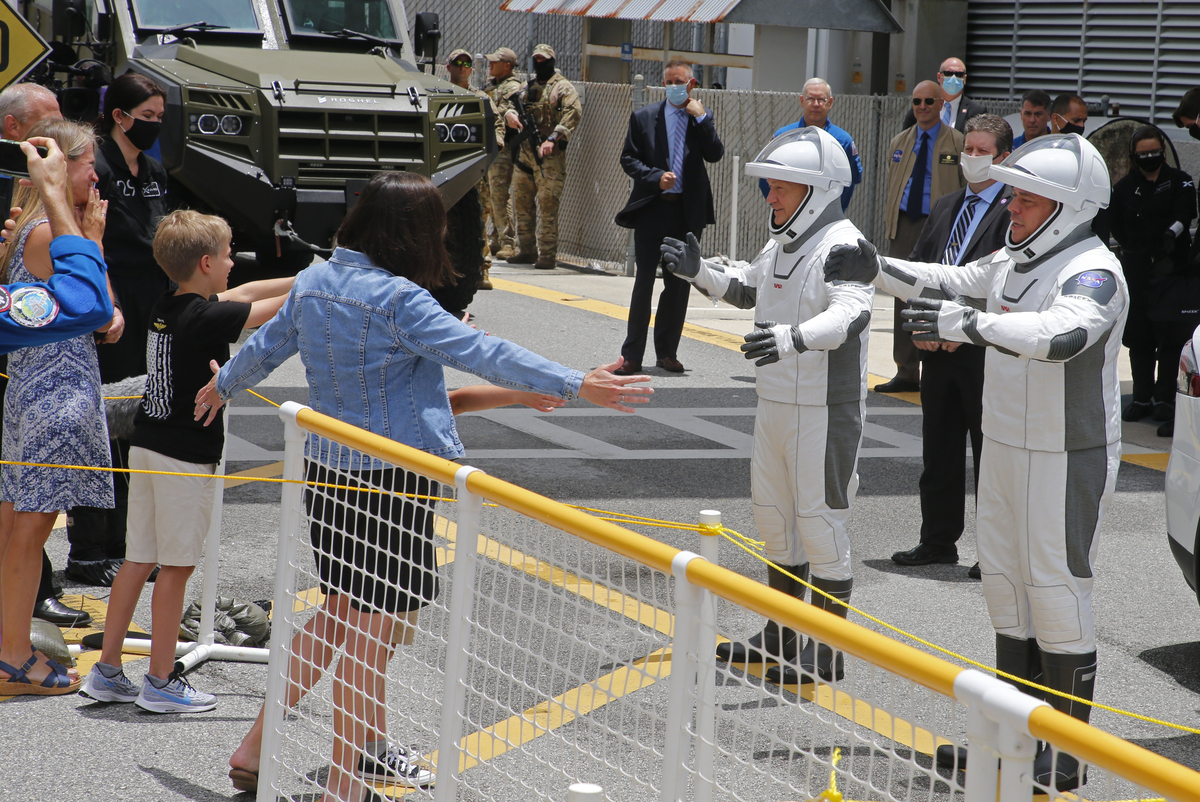
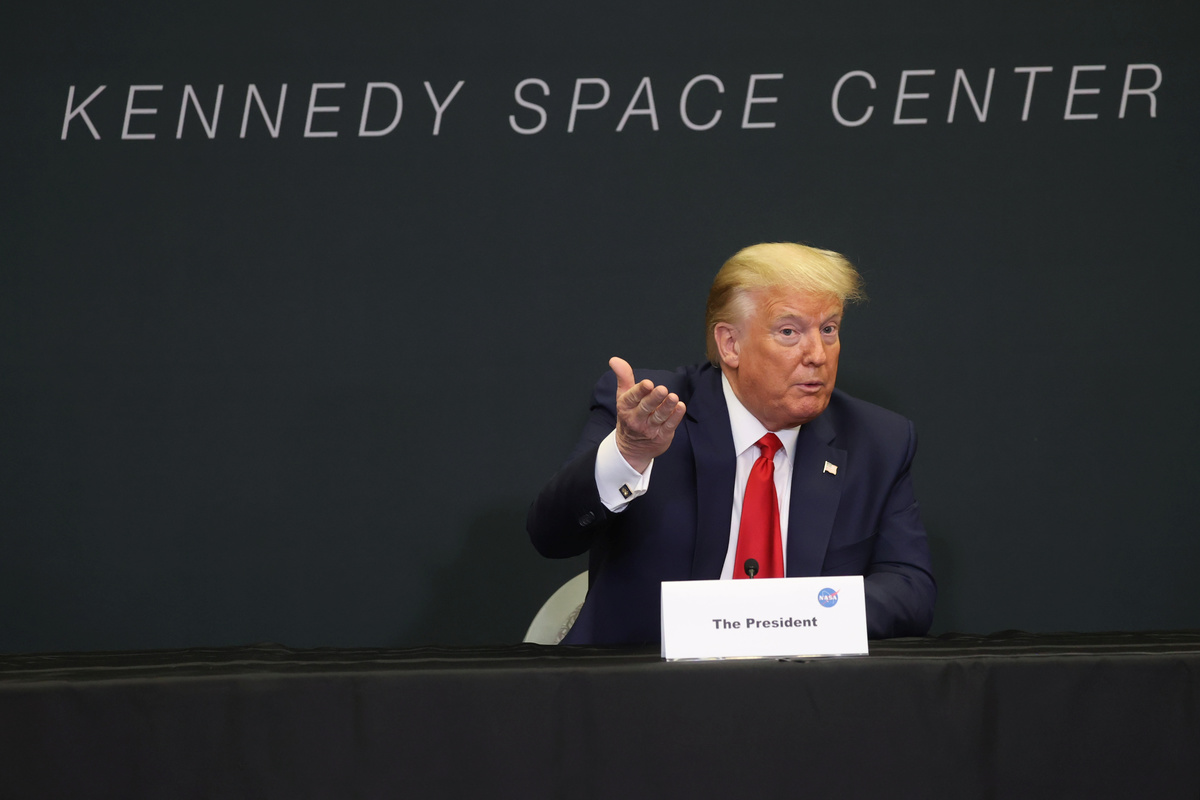
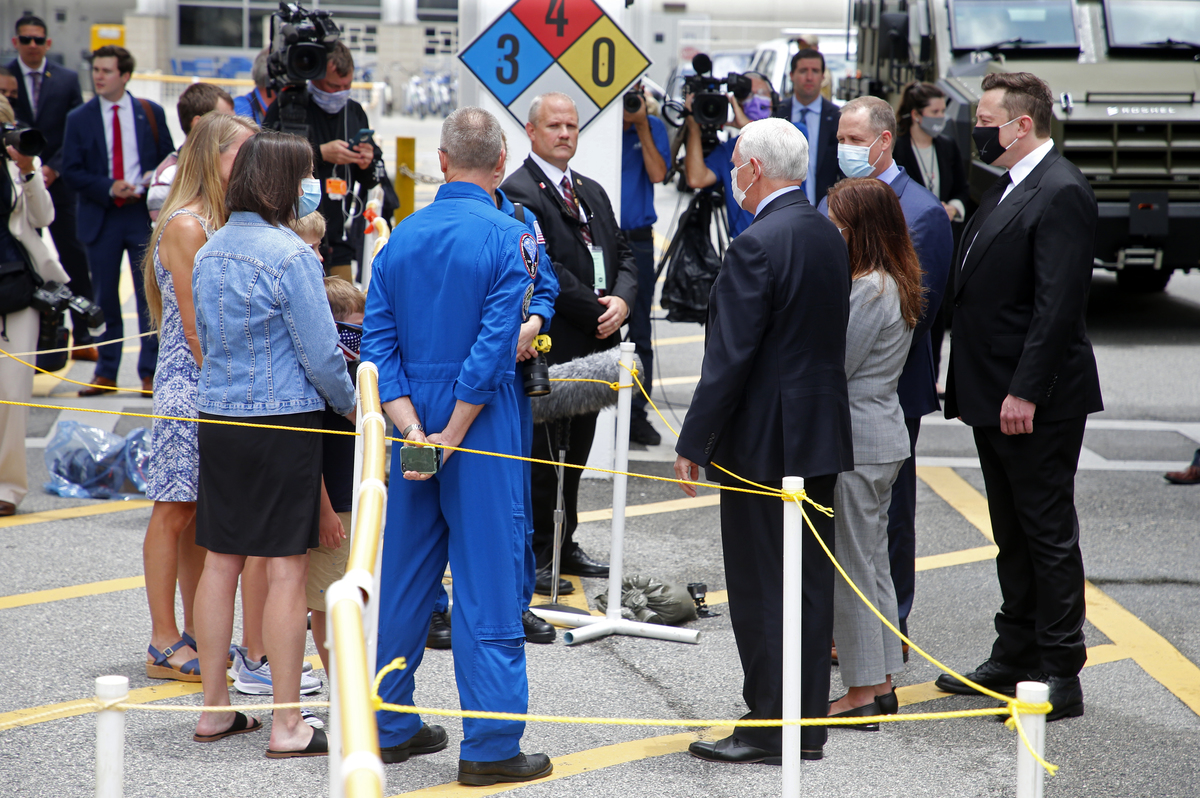
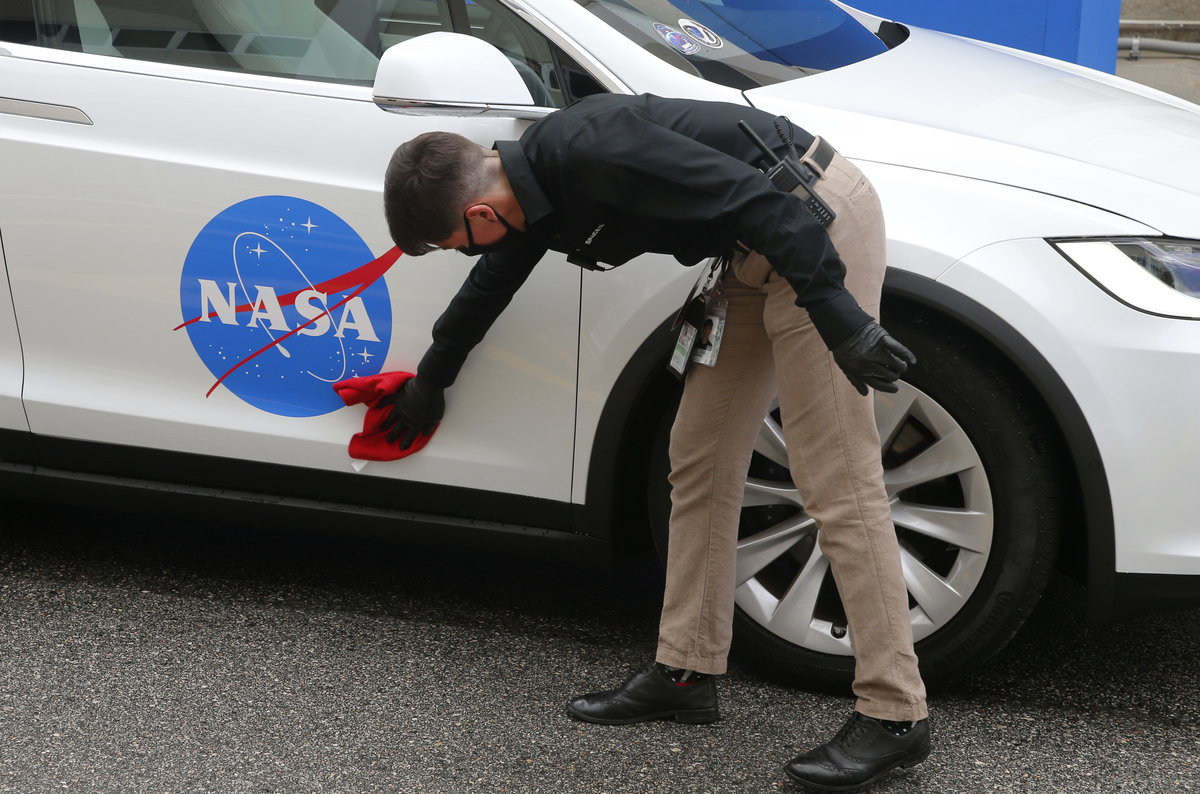
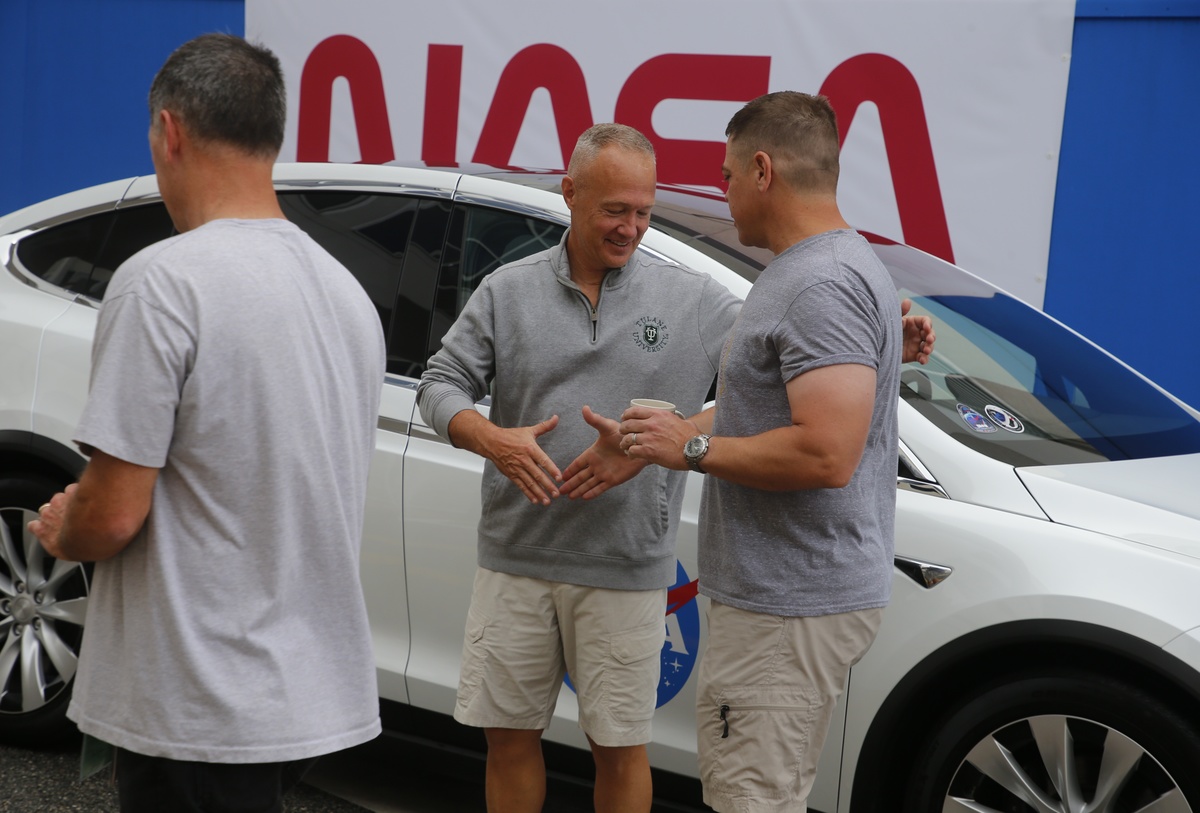
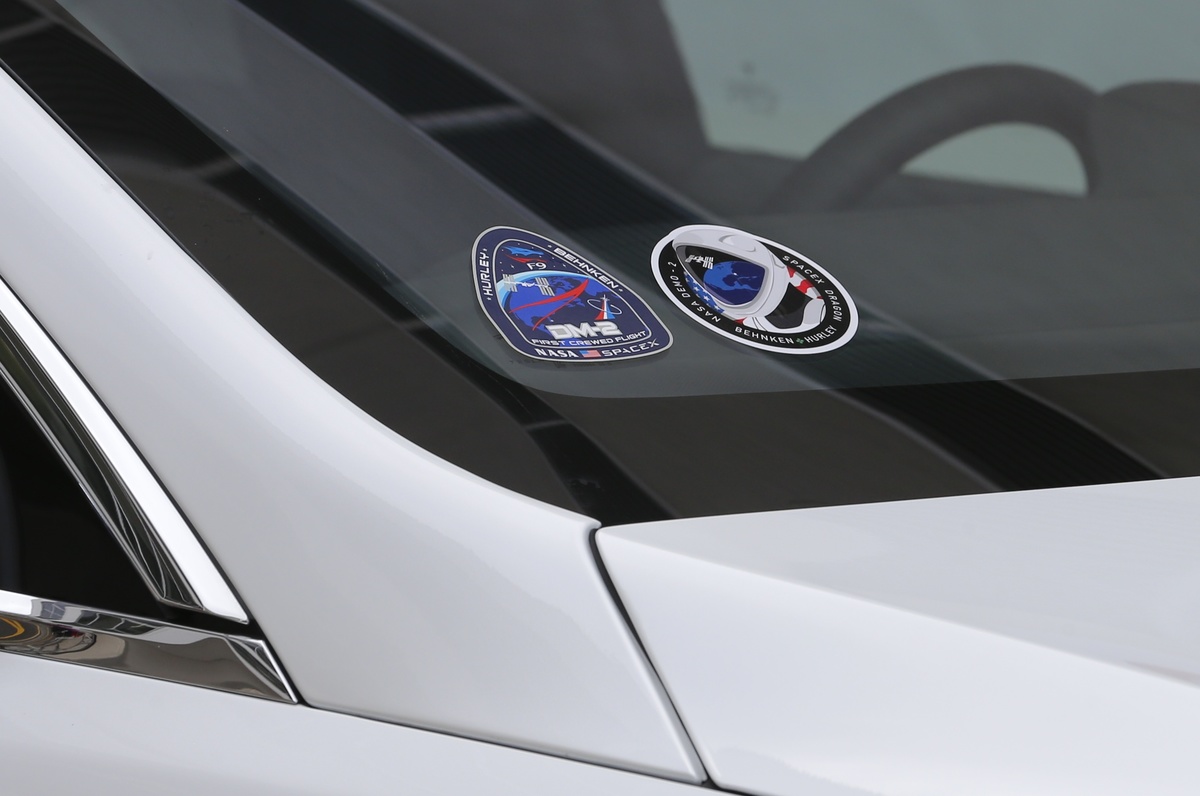
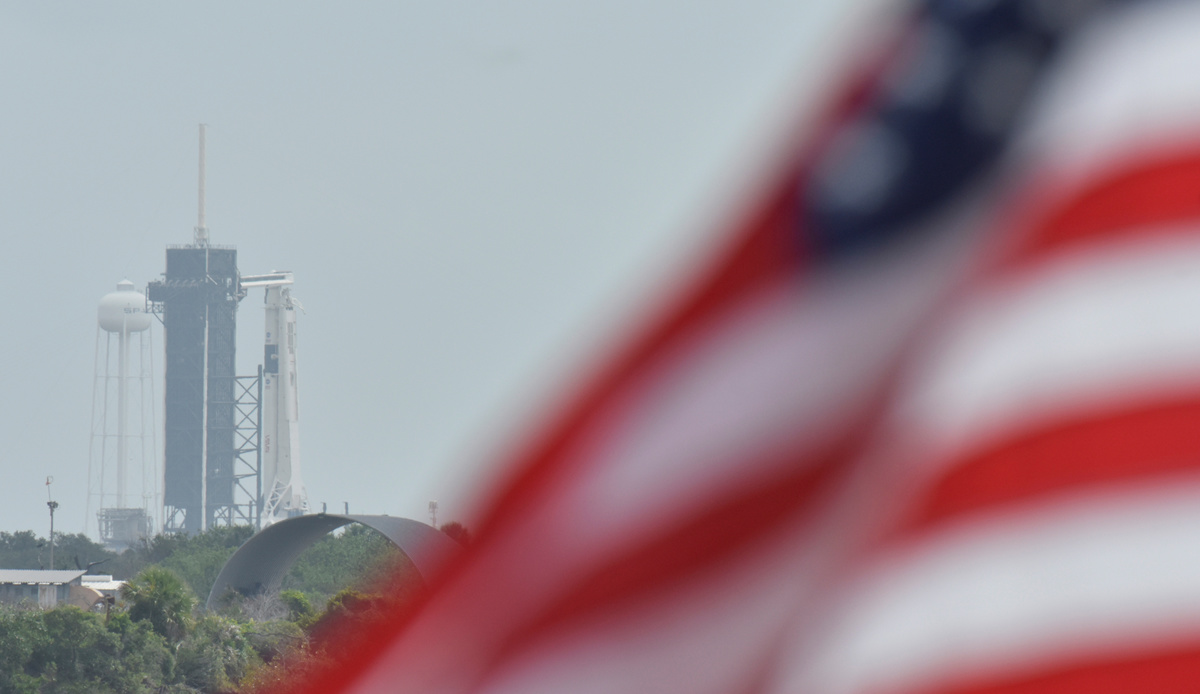
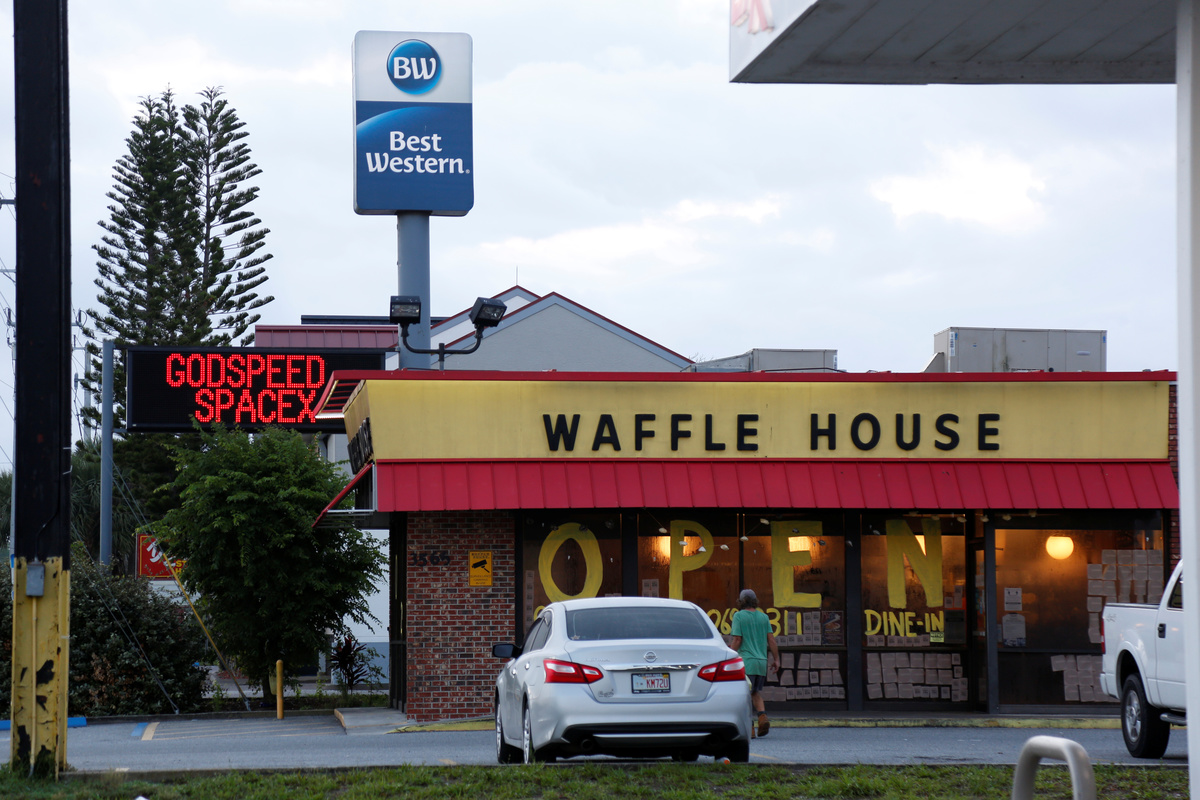
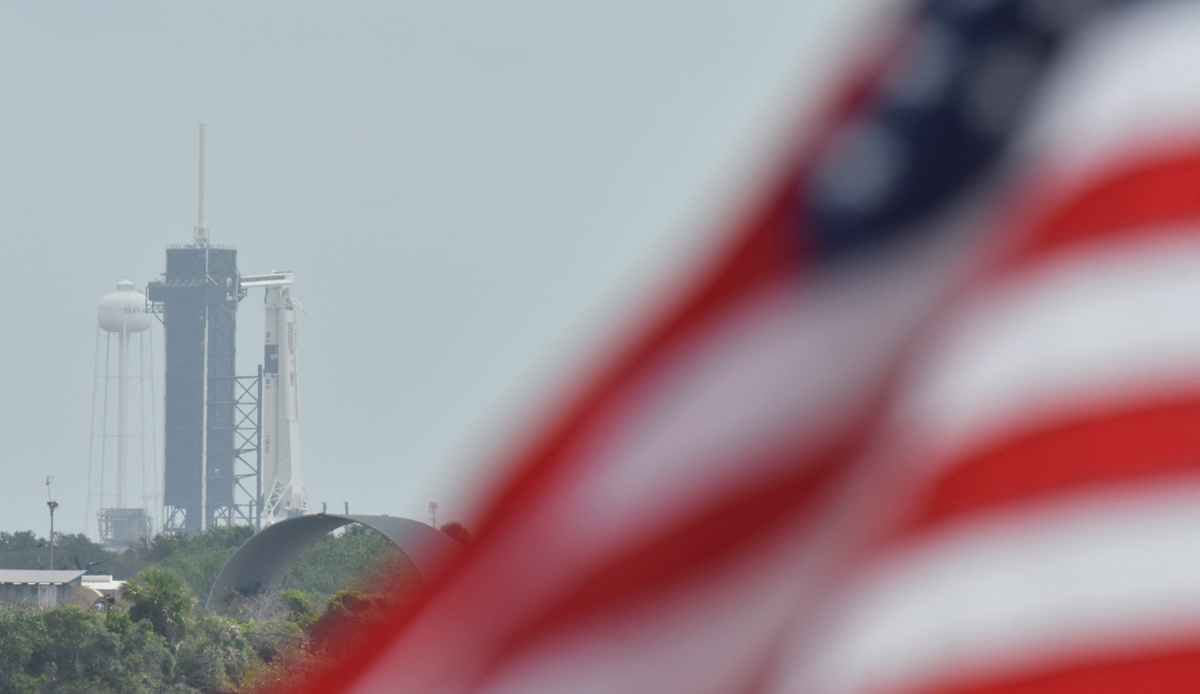
NASA astronauts Doug Hurley and Bob Behnken greet their families before the launch of a SpaceX Falcon 9 rocket and Crew Dragon spacecraft at the Kennedy Space Center, in Cape Canaveral, Florida, U.S., May 27, 2020. REUTERS/Joe SkipperU.S. President Donald Trump speaks while attending a SpaceX mission briefing before attending the launch of a SpaceX Falcon 9 rocket carrying two NASA astronauts to the International Space Station at the Kennedy Space Center in Cape Canaveral, Florida, U.S., May 27, 2020. REUTERS/Jonathan ErnstU.S. Vice President Mike Pence, SpaceX founder Elon Musk and NASA Administrator Jim Bridenstine speak before the launch of a SpaceX Falcon 9 rocket and Crew Dragon spacecraft at the Kennedy Space Center, in Cape Canaveral, Florida, U.S., May 27, 2020. REUTERS/Joe SkipperThe crew car of the NASA astronauts is polished before the launch of a SpaceX Falcon 9 rocket and Crew Dragon spacecraft at the Kennedy Space Center, in Cape Canaveral, Florida, U.S., May 27, 2020. REUTERS/Joe SkipperA reporter does a stand-up in front of the countdown clock the press site before the launch of the SpaceX Crew Dragon on a Falcon 9 booster rocket from Pad39A at the Kennedy Space Center in Cape Canaveral, Florida, U.S. May 27, 2020. REUTERS/Steve NesiusNASA astronauts Douglas Hurley and Robert Behnken shake hands after placing decals on their crew car, before their NASA SpaceX Demo-2 mission to the International Space Station aboard a SpaceX Falcon 9 rocket and Crew Dragon spacecraft at NASA’s Kennedy Space Center in Cape Canaveral in Florida May 27, 2020. REUTERS/Joe SkipperU.S. Vice President Mike Pence, SpaceX founder Elon Musk and NASA Administrator Jim Bridenstine are seen before the launch of a SpaceX Falcon 9 rocket and Crew Dragon spacecraft at the Kennedy Space Center, in Cape Canaveral, Florida, U.S., May 27, 2020. REUTERS/Joe SkipperDecals placed on the crew car by NASA astronauts Douglas Hurley and Robert Behnken are seen, before their NASA SpaceX Demo-2 mission to the International Space Station aboard a SpaceX Falcon 9 rocket and Crew Dragon spacecraft at NASA’s Kennedy Space Center in Cape Canaveral in Florida May 27, 2020. REUTERS/Joe SkipperA U.S. flag flutters in the breeze as the SpaceX Crew Dragon on a Falcon 9 booster rocket sits on Pad39A at the Kennedy Space Center in Cape Canaveral, Florida, U.S. May 27, 2020. REUTERS/Steve NesiusA business near NASA's Kennedy Space Center shows support for SpaceX on the day of the company's first launch carrying humans to space in Titusville, Florida, U.S. May 27, 2020. REUTERS/Joey RouletteA U.S. flag flutters in the breeze as the SpaceX Crew Dragon on a Falcon 9 booster rocket sits on Pad39A at the Kennedy Space Center in Cape Canaveral, Florida, U.S. May 27, 2020. REUTERS/Steve Nesius
Sign up to read this article
Read news from 100’s of titles, curated specifically for you.