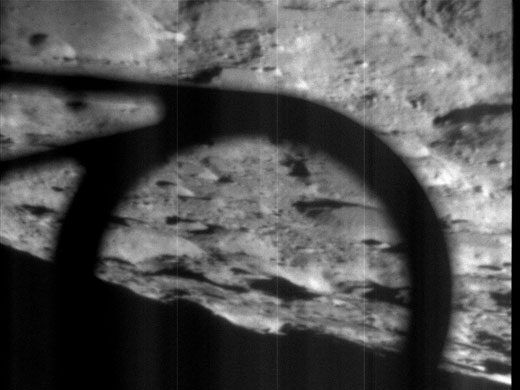
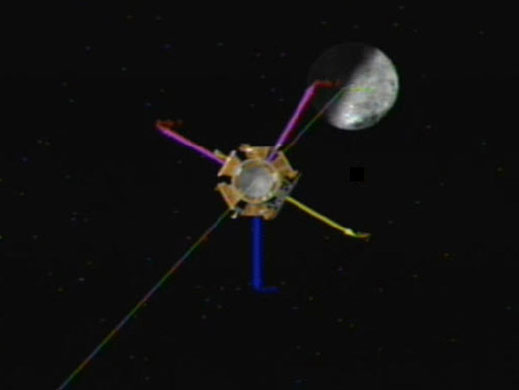
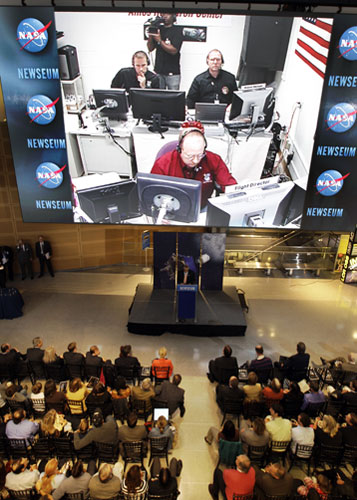
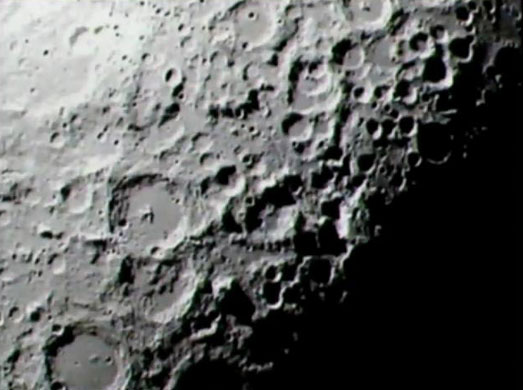
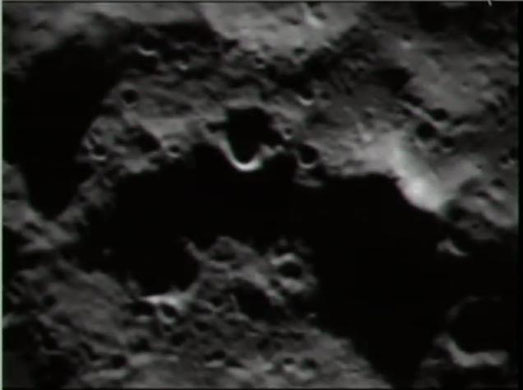
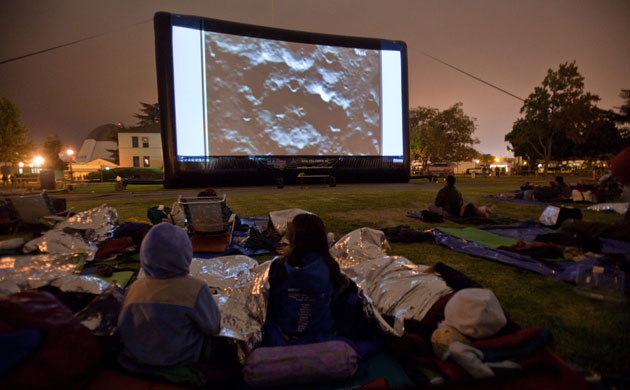
Picture of the moon centering Nasa's intended impact site for LCROSS. The dark ring is the 25-arcsec field lens holder for the Altair adaptive optics system. Observers will be able to use any bright feature within this ring as a pseudo-star to guide the telescope to the impact plume. It will also help correct the image for atmospheric distortion.Photograph: C.E. Woodward, K. Roth, A. Stephens and the LCROSS Impact Team/Gemini Observatory/AURASTK's image of LCROSS after Centaur separated at 10:50am. After separation, LCROSS turned 180 degrees to point its science equipment towards the receding Centaur.Photograph: NasaAn audience watches the day's events on a big screen at the Newseum in WashingtonPhotograph: Alex Brandon/AP
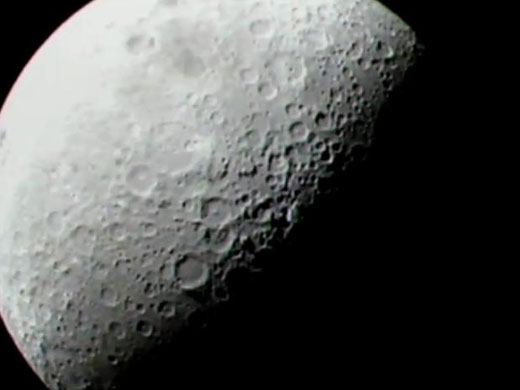
First view of the moon through a camera onboard LCROSSPhotograph: NasaA closer view from the LCROSS craftPhotograph: NasaMoments before Centaur's impactPhotograph: NasaSpace enthusiast gather to watch the impact at Ames Research Centre at Moffett Field in CaliforniaPhotograph: PETER DASILVA/EPACarol Carroll, a Nasa Ames employee, and her son David with Lawrence Nguyen join other space enthusiast to watch the impactPhotograph: Peter Dasilva/EPA
Sign up to read this article
Read news from 100’s of titles, curated specifically for you.