NASA is preparing for a giant leap in the search for alien worlds. The upcoming Nancy Grace Roman Space Telescope is expected to discover around 100,000 new exoplanets, dramatically expanding humanity's knowledge of planets beyond our solar system and potentially rewriting what scientists know about planetary formation across the Milky Way.
The milestone would dwarf the nearly 6,300 exoplanets discovered so far, making Roman one of the most powerful planet-hunting missions ever launched.
Looking Beyond Earth's Neighborhood
Until now, most known exoplanets have been found within a few thousand light-years of Earth. Roman will push much farther, scanning deep into the heart of the Milky Way and beyond the galaxy's densely packed central bulge.
Scientists say this will allow them to study planetary systems in regions of the galaxy that have remained largely unexplored.
"Our galaxy contains many different environments, but we've mostly searched for planets in our own cosmic backyard," said NASA researcher Elisa Quintana. "Roman will help us understand how planets form in completely different parts of the Milky Way."
Two Powerful Techniques
Roman will use the transit method to discover roughly 100,000 exoplanets. This technique detects planets when they pass in front of their host stars, causing tiny dips in starlight.
The telescope will also employ gravitational microlensing, a method capable of detecting more than 1,000 additional worlds, including planets similar in size to Earth and Mars that orbit farther from their stars.
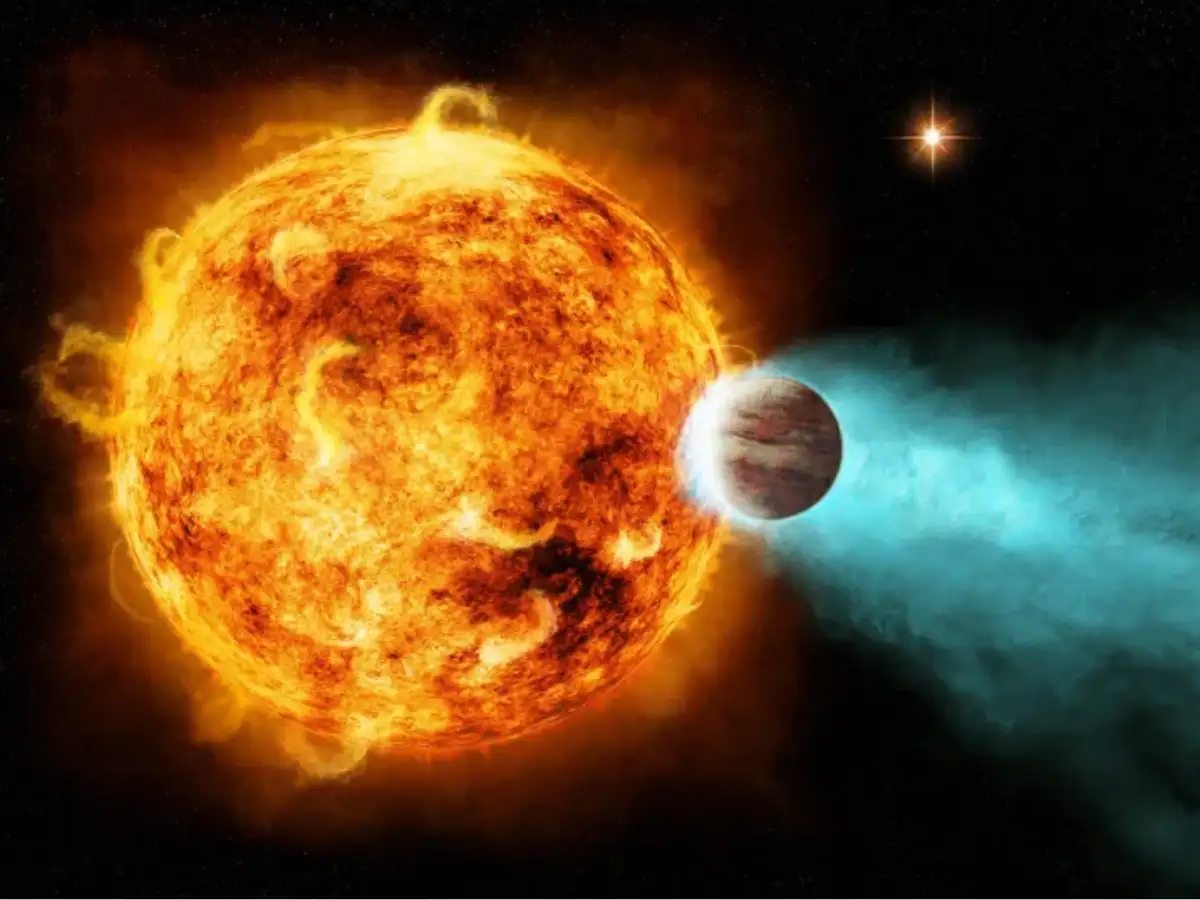
While transit observations are best at finding large, hot planets known as "hot Jupiters," microlensing can uncover cooler worlds located in habitable zones where liquid water may exist.
Together, the two methods will provide the most comprehensive survey yet of planetary systems across the galaxy.
Searching Earth's Ancient Birthplace
One of Roman's most intriguing missions will be to investigate regions where scientists believe our own solar system may have originated.
Today, the Sun sits about 27,000 light-years from the Milky Way's center. However, researchers suspect it formed roughly 10,000 light-years closer to the galactic core before gradually migrating outward.
Stars near the galactic bulge contain higher concentrations of heavy elements such as silicon, oxygen and magnesium—ingredients that play a crucial role in planet formation.
Scientists hope Roman's observations will reveal whether stars with different chemical compositions produce different kinds of planets, helping answer long-standing questions about how common solar systems like ours may be.
Studying Alien Weather
Roman's capabilities won't stop at finding planets. Researchers expect the telescope to gather atmospheric information for thousands of exoplanets.
By measuring infrared heat emitted by giant gas planets, Roman will be able to estimate temperatures, track weather patterns and study how heat moves between a planet's day and night sides.
The observations will complement detailed atmospheric studies conducted by the James Webb Space Telescope, creating the largest statistical database ever assembled on exoplanet climates.
A New Era of Discovery
Roman's planned galactic survey will monitor around 100 million stars, generating an unprecedented treasure trove of astronomical data. NASA scientists believe the mission could revolutionize exoplanet science in the same way that the Kepler Space Telescope transformed the field more than a decade ago.
With all mission data set to be publicly available, researchers and citizen scientists around the world will be able to join the hunt for new worlds.
As astronomers prepare for Roman's launch, expectations are high that the telescope will reveal whether planetary systems like our own are common throughout the galaxy—or if Earth remains a rare cosmic exception.