NASA just ordered an emergency safe haven drill on the International Space Station (ISS) after persistent air leaks forced a tense standoff between the crew and mission control. Five astronauts were told to put on their spacesuits and shelter inside the docked SpaceX Dragon capsule Friday afternoon, June 5, 2026, ready to undock and evacuate if the situation worsened.
Recommended Videos
Meanwhile, two Russian cosmonauts stayed behind to attempt repairs on the leaky Zvezda service module, where air loss had been steadily increasing since Monday. The drama unfolded after Roscosmos, Russia’s space agency, detected a fresh pressure drop in the transfer tunnel leading to the Zvezda module. This wasn’t a new problem – the same cracks have been causing headaches for six years – but the latest leak crossed a threshold that demanded action.
The plan was to patch it up, but NASA hit the brakes when they learned the cosmonauts were using a saw to access the crack. Mission control in Houston wasn’t having it, and the five astronauts were sent to the Dragon capsule as a precaution. According to the BBC, the standoff ended when Roscosmos paused the repairs, and NASA gave the all-clear for the crew to return to the station.
Inside the International Space Station’s lifeboat
Jessica Meir, Jack Hathaway, Sophie Adenot, Andrey Fedyaev, and Chris Williams spent the afternoon in the Dragon capsule, which doubles as the station’s lifeboat. It’s designed to detach instantly if the ISS becomes uninhabitable, but thankfully, that wasn’t necessary this time. The two cosmonauts, station commander Sergey Kud-Sverchkov and flight engineer Sergei Mikaev, had their own escape route via the docked Soyuz MS-28 spacecraft.
Retired Canadian astronaut Chris Hadfield, who commanded the ISS in 2012, explained that the station normally leaks about half a pound of air per day. When that number climbs to a pound or two, it’s time to take action. “You’re always one breath away from having to take shelter somewhere if the station has a problem,” he said. “It’s just a matter of fact of living on board a spaceship.”
The Zvezda service module transfer tunnel, known as PrK, has suffered from cracks and leaks for some time, and has been mitigated by Roscosmos as much as possible to date. The cracks have always been a concern that NASA watches very closely. NASA and Roscosmos have been working…
— Bethany Stevens (@NASASpox) June 5, 2026
This isn’t the first time the ISS has dealt with these leaks. The Zvezda module, a critical part of the Russian segment, has been a persistent trouble spot. After a Russian cargo ship arrived last month, Roscosmos noticed the pressure drop had worsened, prompting the decision to move beyond temporary fixes and attempt a full repair. The method they chose – using a saw to access the crack – raised eyebrows at NASA, which vetoed the approach.
Bethany Stevens, a NASA spokeswoman, confirmed on X that the safe haven procedures were called off once Roscosmos paused the repairs. “Given this development, NASA has instructed the crew members inside the Dragon spacecraft to end the safe haven procedures and return to planned operations aboard the International Space Station,” she wrote.
Roscosmos has paused Friday’s structural repair efforts inside the Zvezda service module transfer tunnel, known as PrK, as more measurements and data is assessed. Given this development, NASA has instructed the crew members inside the Dragon spacecraft to end the safe haven…
— Bethany Stevens (@NASASpox) June 5, 2026
Roscosmos downplayed the severity of the situation
It insisted the ISS’ crew and systems were never in danger. According to CBS News, it said pressure on the ISS remained stable and within calculated levels. The agency later clarified that the cosmonauts had identified two potential leak locations.
The first was sealed with a two-component compound, while the second, located on the conical part of the compartment, was still being prepped for repairs. It’s unclear when they’ll resume the work or if this latest leak is connected to the older ones.
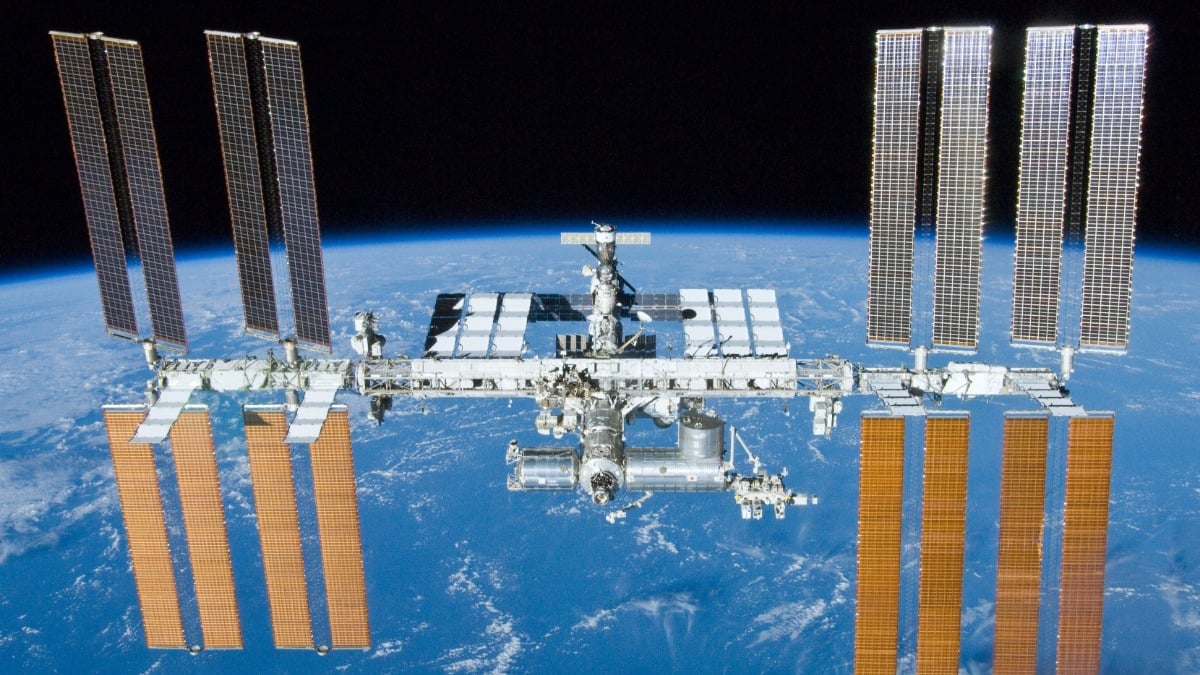
The International Space Station is a marvel of engineering, stretching the length of a football field and orbiting Earth as the largest human-made object in space. It’s been continuously occupied since 1998, a collaboration between the U.S., Russia, Canada, Japan, and 11 European countries.
Despite its size and sophistication, it’s not immune to the wear and tear of space. Small leaks are a fact of life, and the crew is trained to handle them. Still, the sight of astronauts suiting up and sheltering in a lifeboat is a stark reminder of how fragile life in orbit can be.
The safe haven drill was a brief but intense moment
The five astronauts in the Dragon capsule joked with mission control as internal cameras were turned off for privacy. “You just couldn’t watch any more of this, huh?” Meir quipped. Mission control played along, calling it a “family camp-out day in Dragon.” The lighthearted exchange underscored the professionalism of the crew, even as they prepared for the worst. When the repairs were paused, their camp-out was cut short, and they returned to the station.
#NASA ISS Update: The Zvezda service module’s transfer tunnel, known as the PrK, on the International Space Station has experienced cracks since 2019 that have resulted in small atmosphere leaks and prompted ongoing monitoring and repair efforts by Roscosmos. NASA and Roscosmos… pic.twitter.com/dYbr9j2snX
— NASA Watch (@NASAWatch) June 5, 2026
NASA and Roscosmos are still working together to find a permanent solution to the leaks. The transfer tunnel, known as PrK, has been sealed off periodically to minimize air loss, but the cracks keep coming back. The latest attempt at a fix was more ambitious than previous patch jobs, but NASA’s caution won out.
Living on the ISS means accepting a certain level of risk. The station is a pressurized metal can hurtling through the vacuum of space, and leaks are inevitable. The crew trains for these scenarios, and the safe haven drill is a standard procedure. Still, it’s not something anyone takes lightly. The Dragon capsule is there for a reason. It’s the ultimate insurance policy if the station becomes uninhabitable.
(Featured image: NASA/Crew of STS-132)