Nasa has, for the second time this year, rolled its colossal moon rocket from its hangar to the launchpad, hoping to send four astronauts on a lunar fly-around mission next month.
If the latest repairs hold and all goes to plan, the Space Launch System could blast off from Florida's Kennedy Space Center as early as April 1.
The Artemis II crew, comprising three Americans and one Canadian, entered quarantine in Houston this week.
The 98-meter (322-foot) rocket began its slow, 6.4-kilometre (4-mile) journey overnight, transported atop a massive crawler used since the 1960s Apollo era.
The 12-hour trek was delayed for several hours due to high winds.
The crew will zip around the moon in their capsule before returning directly to Earth. Their mission was originally slated for completion by now, but hydrogen fuel leaks and clogged helium lines forced a two-month delay.
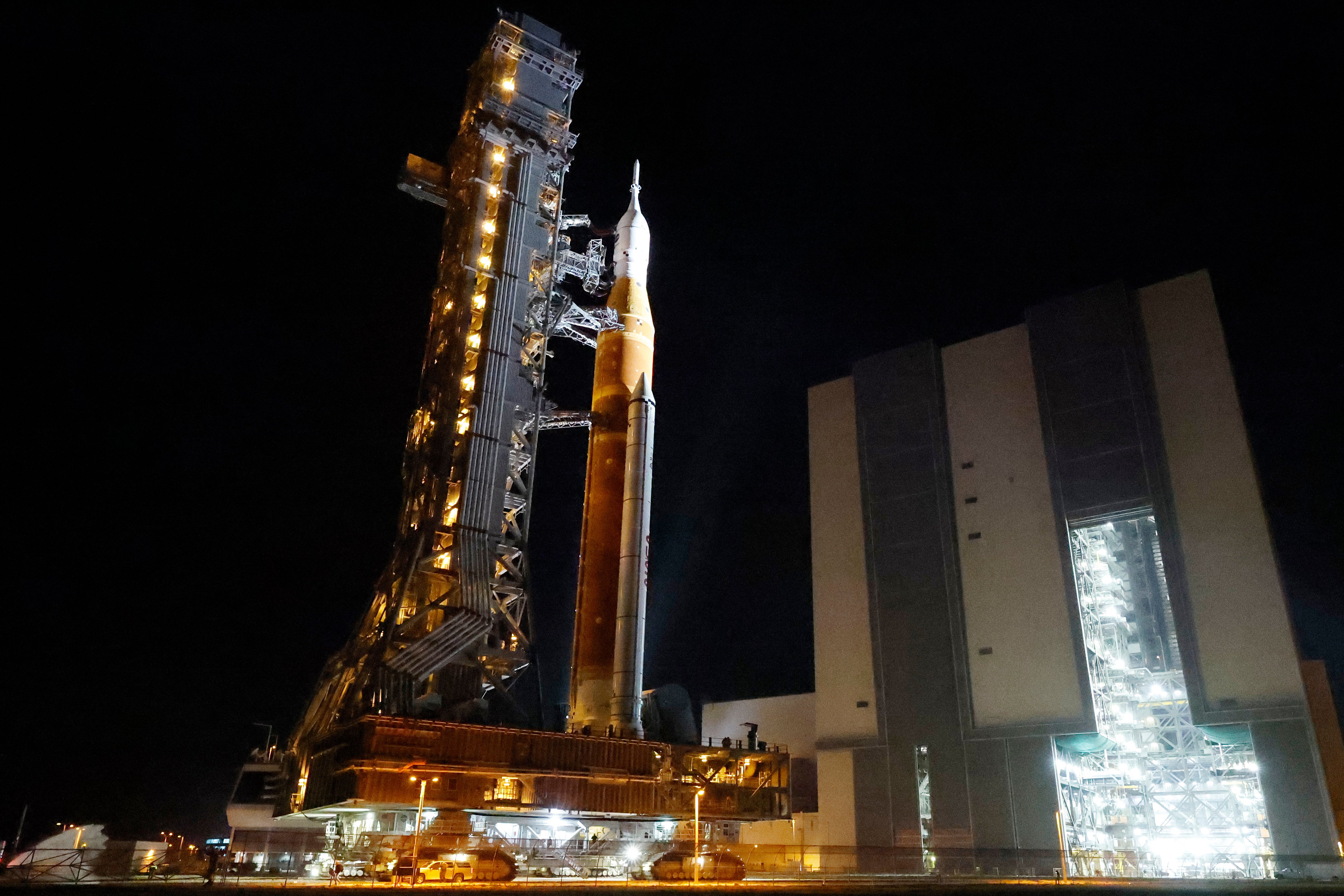
While technicians plugged the leaks at the pad, the helium issue could only be fixed in the Vehicle Assembly Building, forcing Nasa to roll the rocket back at the end of February.
The last time Nasa sent astronauts to the moon was during Apollo 17 in 1972. The new Artemis program aims for a two-person landing in 2028.
Late last month, Nasa's new administrator, Jared Isaacman, announced a major overhaul of the Artemis program.
Dissatisfied with the slow pace and lengthy gaps between lunar missions, he added an extra practice flight in orbit around Earth for next year.
That is now the new Artemis III, with the Moon landing by two astronauts shifted to Artemis IV. Mr Isaacman is targeting one and maybe even two lunar landings in 2028.
Nasa's Office of Inspector General previously warned in an audit that the space agency needs to come up with a rescue plan for its lunar crews.
Landing near the Moon's south pole will be riskier than it was for the Apollo astronauts closer to the equator given the rough polar terrain, according to the report.
Contracted by Nasa to provide the moon landers for astronauts, Elon Musk's SpaceX and Jeff Bezos' Blue Origin have accelerated work in order to meet the new 2028 target date.
Meteorite hunters race to Ohio after space rock crashes down to Earth
Nasa sets new launch date for Artemis Moon mission
Huge, out-of-control Nasa satellite to crash to Earth today
NASA crashes spacecraft into asteroid to push it off course in landmark defense test
Scientists find entirely new kind of planet
China unveils humanoid robot on wheels key to building lunar base