Nasa gets a postcard from an old Martian rover, the mystery of the vanishing dust, and a new moon for Pluto – in pictures
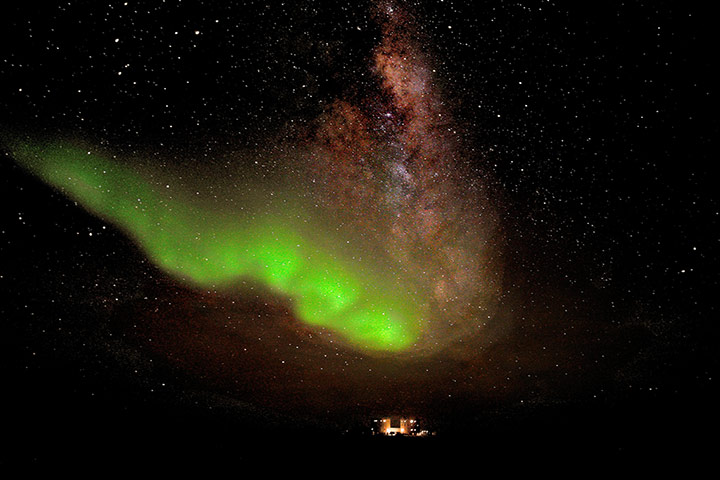
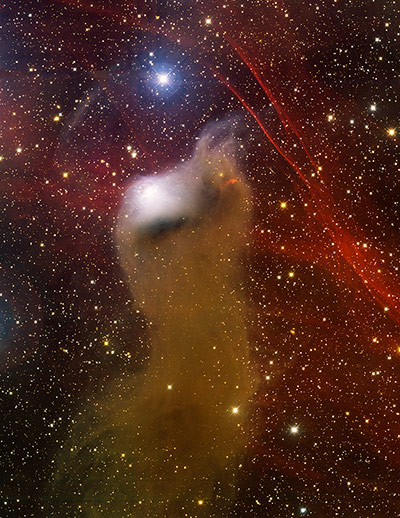
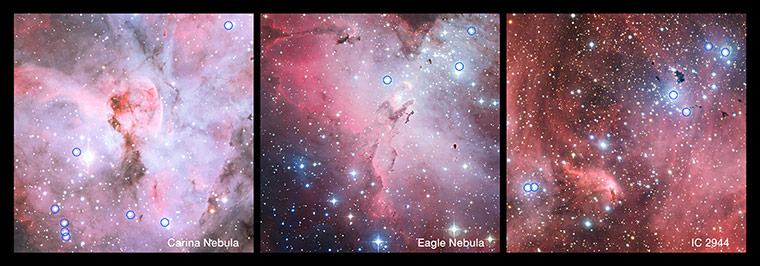
The Aurora Australis as seen from Concordia Research Station in AntarcticaPhotograph: A. Kumar & E. Bondoux/ENEAA/IPEV/ESAA 'reflection nebula' – a cloud of interstellar dust that reflects the light of nearby stars – captured by the Mayall 4-metre telescope at Kitt Peak National ObservatoryPhotograph: NOAO/AURA/NSFA new survey using the European Southern Observatory's Very Large Telescope revealed that some of the brightest, most massive stars do not live alone. Almost three quarters of them have a companion star. Above are the Carina Nebula, Eagle Nebula and IC 2944, with bright stars that were included in the survey marked with circles. Many were found to be 'binary stars'Photograph: ESO
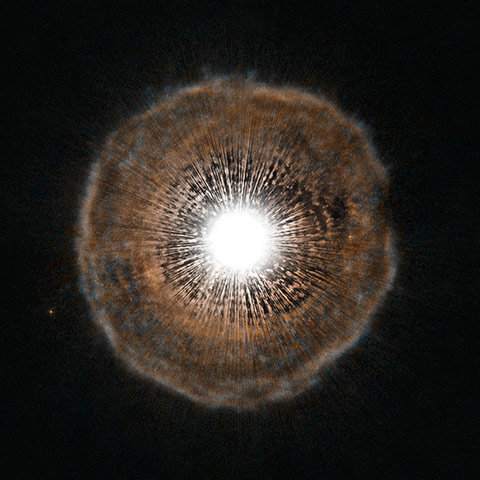
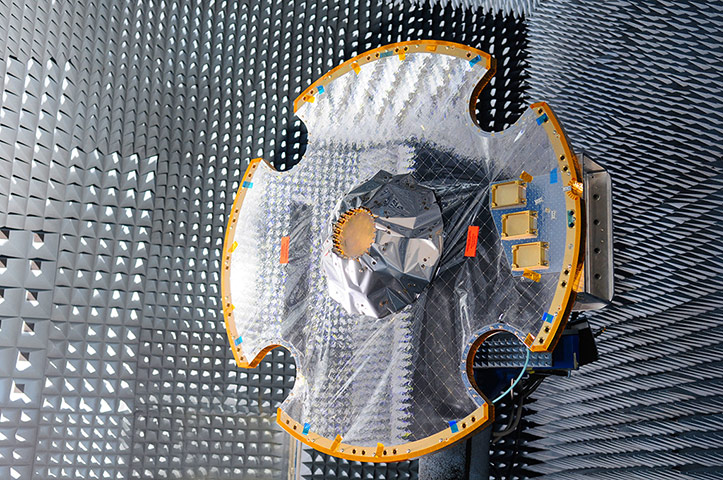
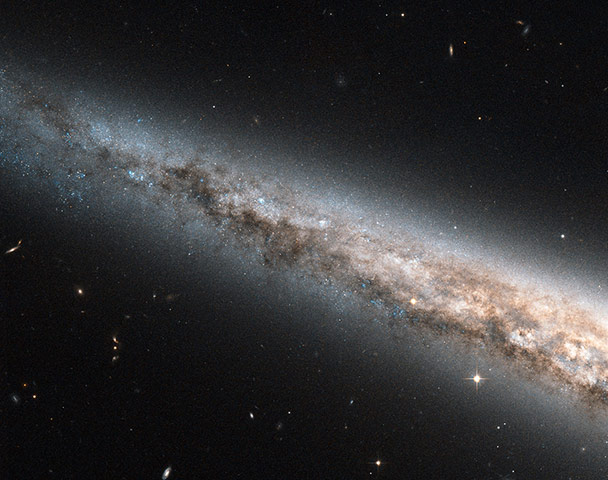
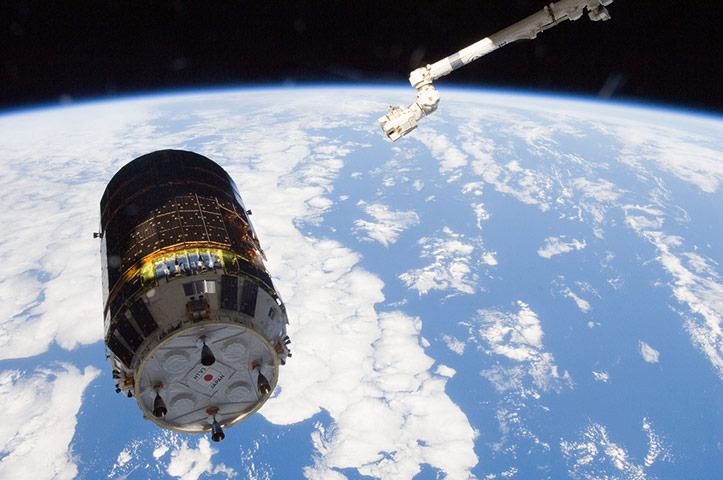
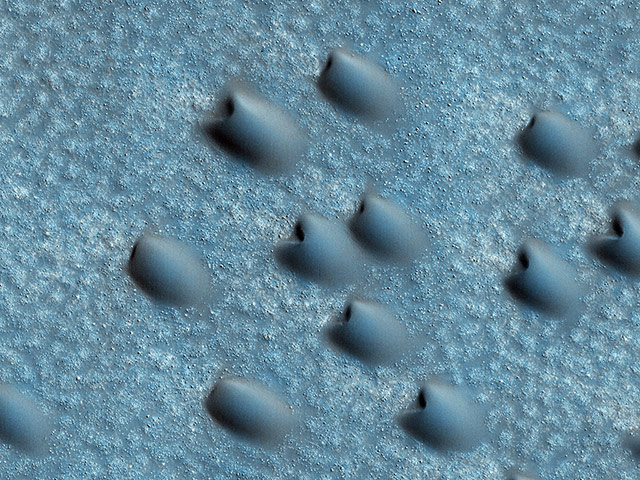
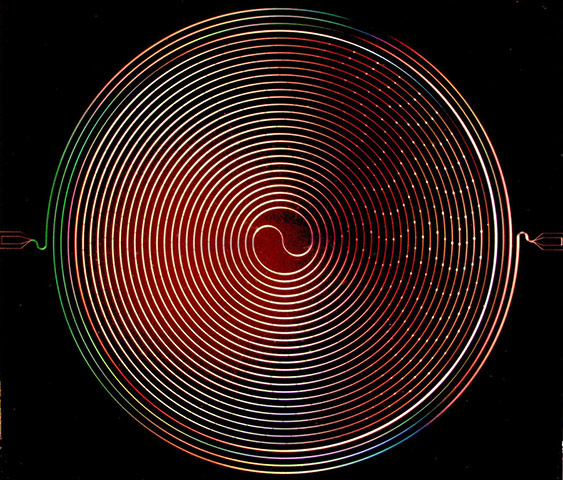
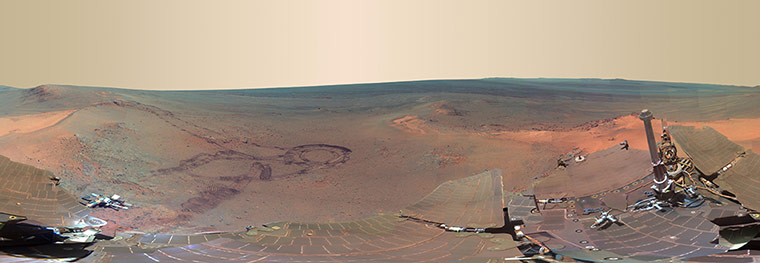
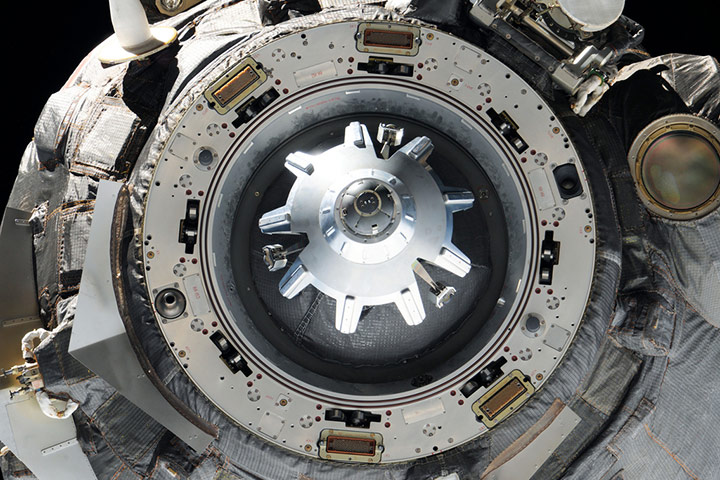
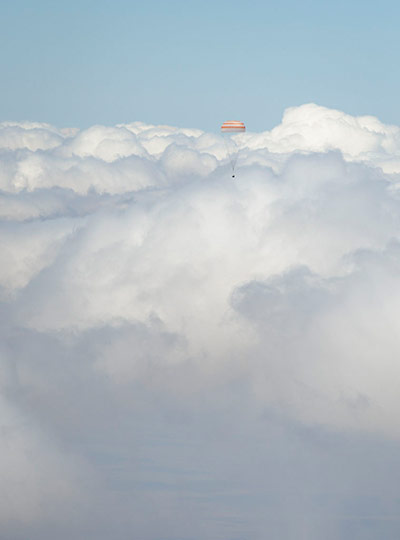
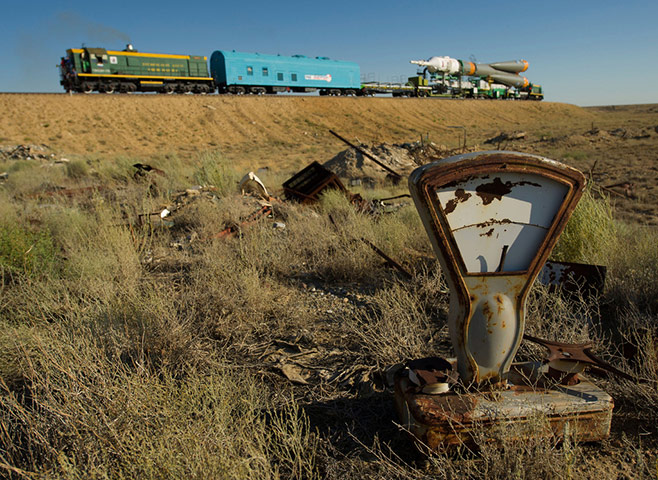
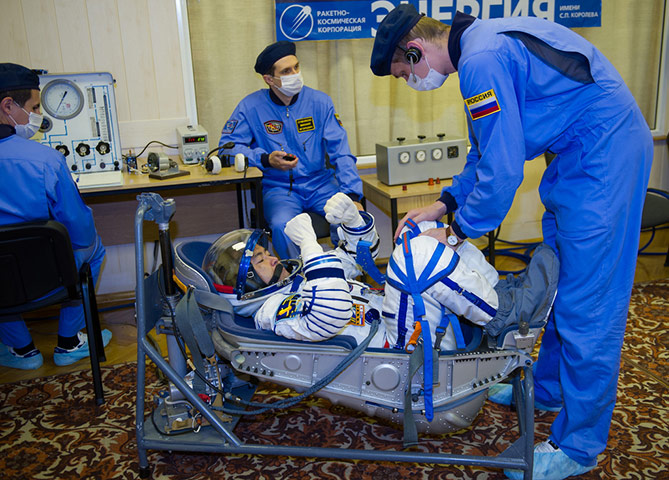
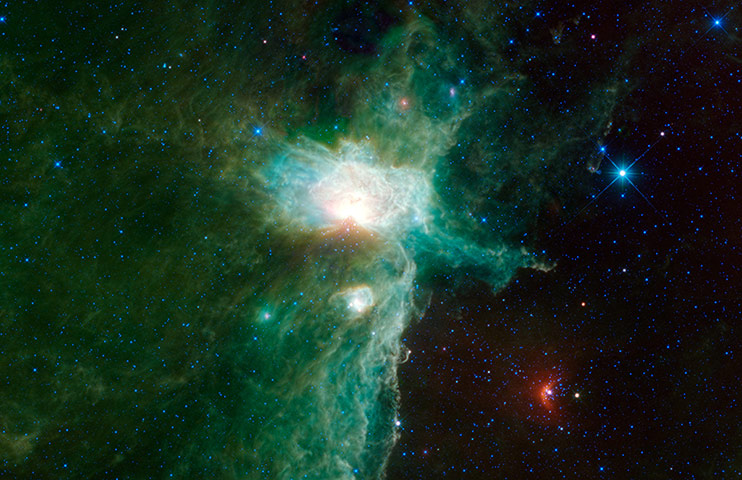
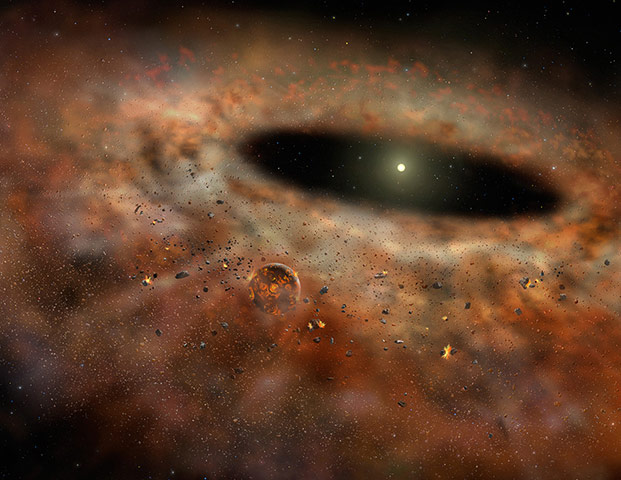
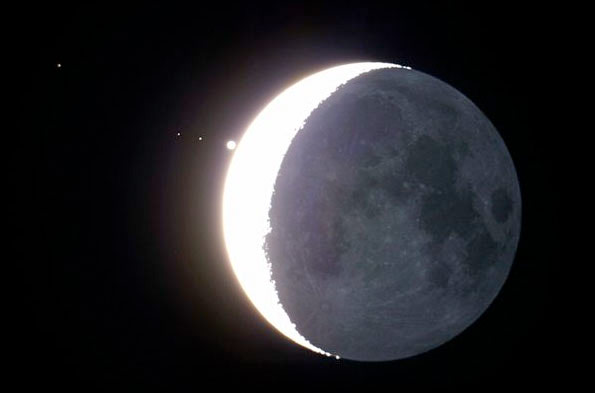
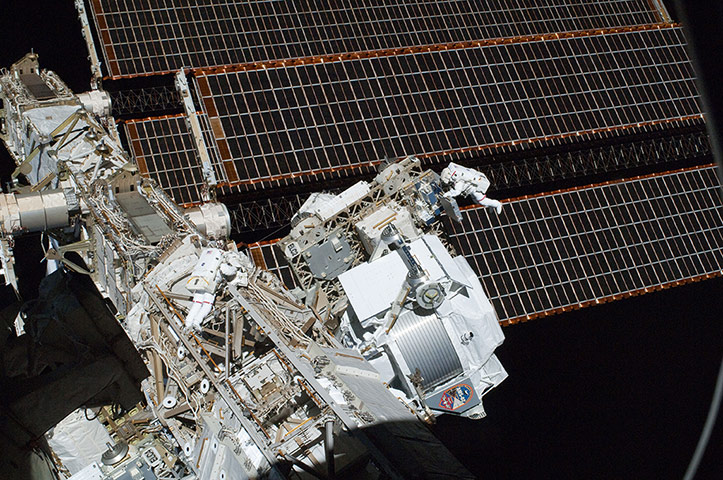
U Camelopardalis is a red giant – a star nearing the end of its life. As it begins to run low on fuel it becomes unstable. Every few thousand years, as a layer of helium around its core begins to fuse, it coughs out a spherical shell of gas, captured in this iris-like image from the Hubble Space TelescopePhotograph: Hubble Space Telescope/ESA/NASAA satellite called Gaia will be launched by the European Space Agency in 2013 with the mission of surveying a billion stars to create a 3D map of the Milky Way. This is the satellite's radar antenna panel, which is being tested at a facility in Madrid . The foam pyramids on the walls of the chamber absorb radio waves to simulate the boundless nature of spacePhotograph: Astrium–A. Martin/ESAAnother Hubble image reveals part of the disc of the spiral galaxy NGC 4565 in exquisite detail. NGC 4565 is an 'edge-on' spiral galaxy, oriented perpendicularly to our line of sight so that we see right into its luminous disc. The edgewise view looks very similar to the view we have from Earth into the core of the Milky Way. In both cases ribbons of dust block some of the light coming from the galactic discPhotograph: Hubble Space Telescope/ESA/NASAThe International Space Station's robotic arm moves toward an unpiloted Japanese H-II Transfer Vehicle as it approaches the station. The vehicle contains food and clothing, an aquatic habitat experiment, a remote-controlled Earth-observation camera for environmental studies, a catalytic reactor for the station's water regeneration system and a cooling water recirculation pumpPhotograph: ISS/NASAA field of crescent-shaped dunes in the northern polar region of Mars. Each dune is about 100 metres across and they appear to be traversing a bumpy, boulder-strewn terrain. The image was captured by the HiRise camera on the Mars Reconnaissance Orbiter Photograph: University of Arizona/JPL/NASAResearchers at Nasa's Jet Propulsion Laboratory in Pasadena, California, developed a new type of amplifier for boosting electromagnetic signals from stars, galaxies and black holes. The device consists of a superconducting material (niobium titanium nitride) coiled into a double spiral 16 millimetres in diameterPhotograph: JPL-Caltech /NASAI'm still here! The panoramic camera on Nasa's Mars rover Opportunity took 817 images of the surrounding terrain during the recent Martian winter – the rover's fifth on the red planet. Nasa combined the images into this 360º panorama. The picture shows the rover's deck and solar panels, tracks it had previously made and a crater that was created by an impact billions of years agoPhotograph: Arizona State University/Cornell/JPL-Caltech/NASAThe docking mechanism of a Soyuz spacecraft as it undocks from the International Space Station. Russian cosmonaut and expedition commander Oleg Kononenko, European Space Agency astronaut Andre Kuipers and Nasa astronaut Don Pettit, both flight engineers, were returning from more than six months aboard the space stationPhotograph: ISS/NASAThe Soyuz falls to EarthPhotograph: Bill Ingalls/NASAThe next Soyuz on its way to the launchpad at the Baikonur Cosmodrome in KazakhstanPhotograph: Carla Cioffi/NASATechnicians at the Baikonur Cosmodrome in Kazakhstan check the pressure inside flight engineer Akihiko Hoshide's spacesuit in preparation for his launch on the Soyuz bound for the International Space StationPhotograph: Irina Peshkova/GCTC/NASAThe candle-like Flame nebula lights up a cavern of dust in this new image from Nasa's Wide-field Infrared Survey Explorer. The nebula is part of the Orion complex, a turbulent star-forming area located near the constellation's star-studded beltPhotograph: JPL-Caltech /NASAVacuum clean: A vast amount of dust in a young star's planet-forming disc has disappeared in the space of just a few years, leaving astronomers scratching their heads. "It's like the classic magician's trick: now you see it, now you don't. Only in this case we're talking about enough dust to fill an inner solar system and it really is gone!" said Carl Melis of the University of California, San Diego, in Nature Illustration: Lynette Cook/Gemini Observatory/AURA The Hubble Space Telescope discovered a new moon orbiting Pluto, bringing its tally to five. The moon, dubbed P5, is in a 58,000-mile-diameter orbit around the icy dwarf planetPhotograph: Hubble Space Telescope/NASA/ESAOur crescent moon, as seen from Turkey, just before it eclipses Jupiter – with Venus soon to follow – during a conjunction on 15 JulyPhotograph: Tunç Tezel/TWANThe scale of the International Space Station becomes clear in this image released by Esa. The astronauts are installing the second Alpha Magnetic Spectrometer, a cosmic-ray detector designed to probe the fundamental properties of matter and the origin of the universe. The control centre at Cern in Switzerland, which processes the vast amounts of data coming from the instrument, was formally opened at the end of JulyPhotograph: ISS/NASA
Sign up to read this article
Read news from 100's of titles, curated specifically for you.