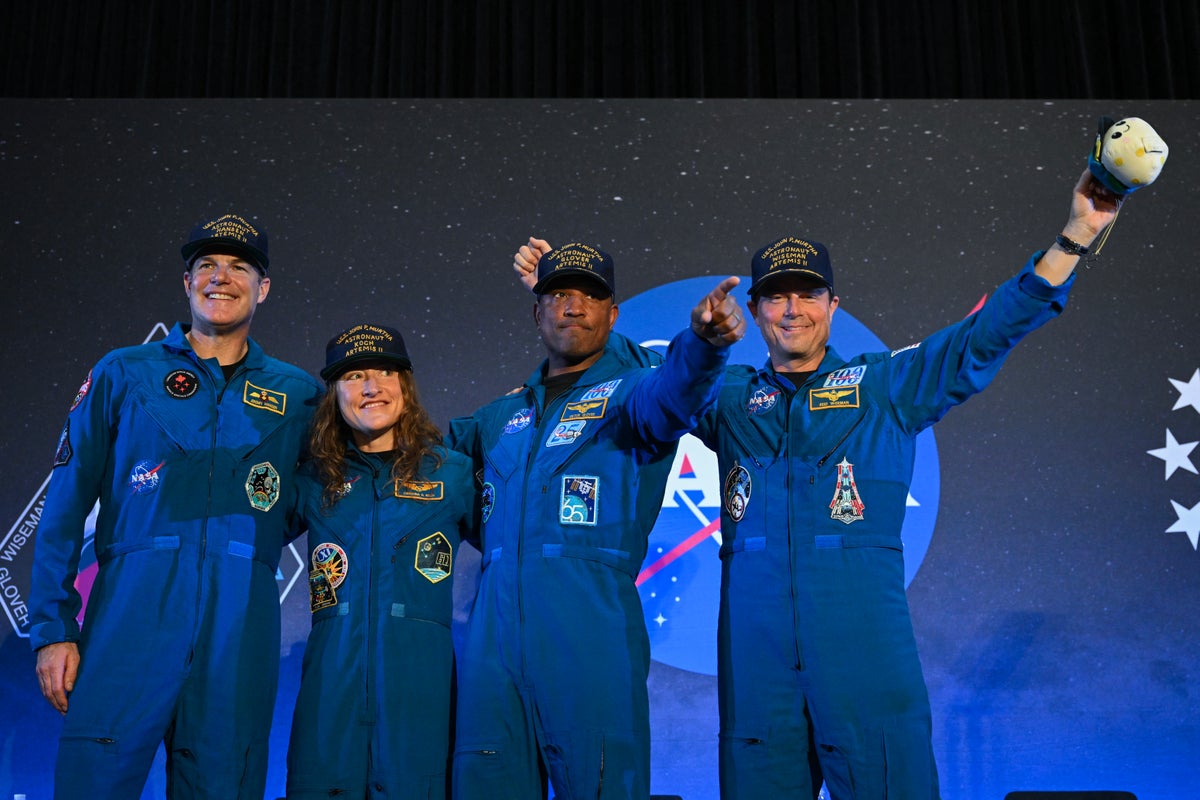
After achieving unprecedented views of the Moon’s far side, witnessing a total solar eclipse from lunar orbit, and setting a new distance record for humanity, Nasa’s Artemis II mission has returned to Earth, prompting the world to ask: what comes next?
The successful lunar comeback, marking humanity’s first journey around the Moon in over half a century, culminated in a jubilant homecoming celebration.
Nasa Administrator Jared Isaacman declared, "to people all around the world who look up and dream about what is possible, the long wait is over”, as he welcomed commander Reid Wiseman, pilot Victor Glover, Christina Koch, and Canada’s Jeremy Hansen. With the crew safely back in Houston, attention now shifts to Artemis III.
"The next mission’s right around the corner," observed entry flight director Rick Henfling following the crew’s Pacific splashdown.
Scheduled for next year, Artemis III will see its yet-to-be-named astronauts practise docking their Orion capsule with one or two lunar landers in Earth orbit. This crucial step involves private space giants, with Elon Musk’s SpaceX and Jeff Bezos’ Blue Origin vying to have their landers ready first.
These companies are also competing for the pivotal Artemis IV moon landing in 2028. Two astronauts are slated to target the Moon’s south polar region, a preferred site for Isaacman’s envisioned $20 billion to $30 billion lunar base.
This area is believed to harbor vast quantities of ice in permanently shadowed craters, which could provide essential water and rocket fuel for future missions.
Preparations are already well underway. The docking mechanism for Artemis III’s close-to-home trial run is at Florida’s Kennedy Space Center, while the latest Starship model is nearing a test flight from South Texas.
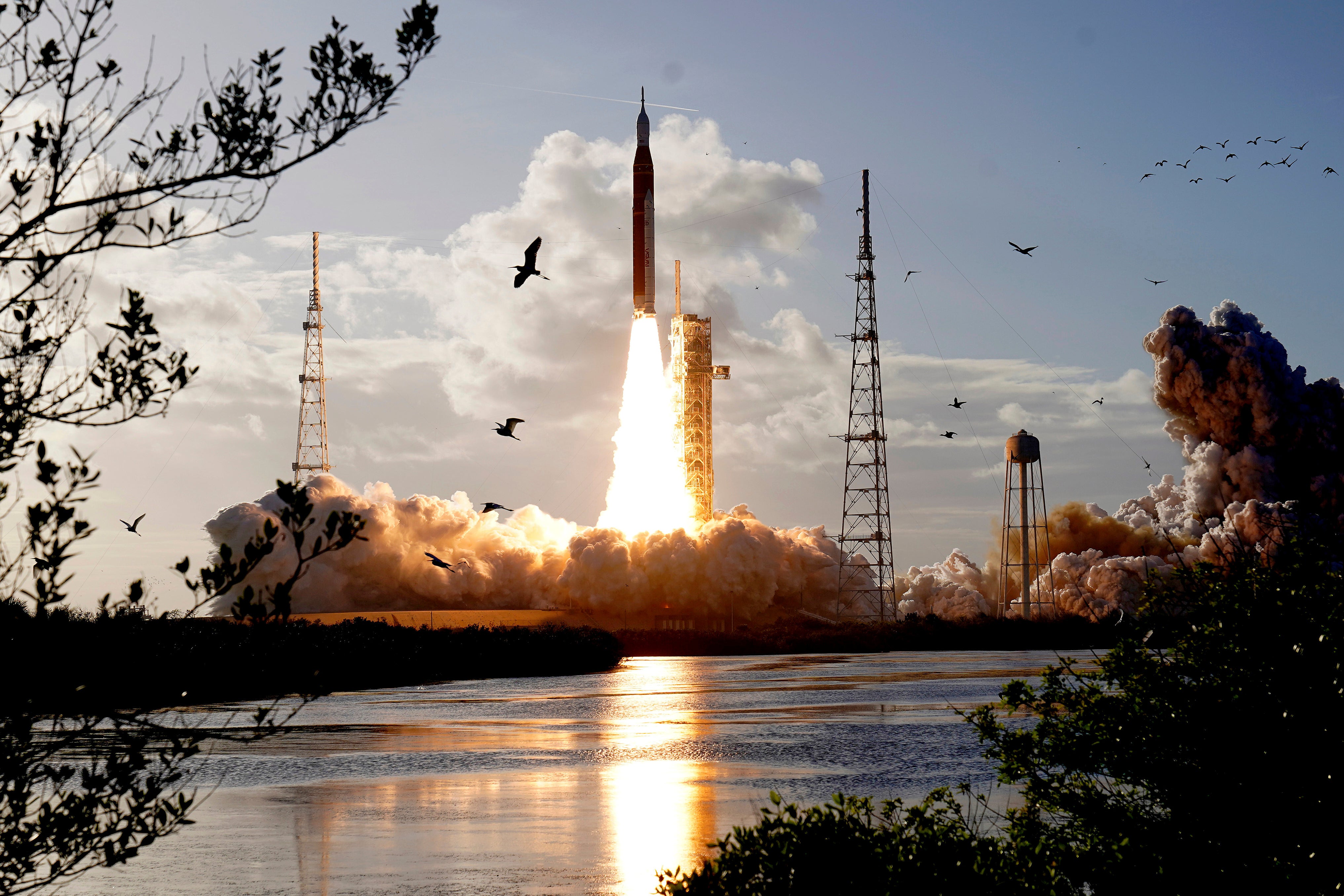
A scaled-down version of Blue Moon is also set for a lunar landing attempt later this year. Nasa has promised to announce the Artemis III crew "soon”, with the mission aiming to reduce risk for subsequent moon landings, much like 1969’s Apollo 9.
Apollo 9 astronaut Rusty Schweickart once described flying the lunar module in low-Earth orbit as "a test pilot’s dream."
However, he acknowledged that "the real astronauts" in the public’s mind were those who walked on the Moon. The Artemis II crew, by contrast, openly displayed their emotions during their nearly 10-day journey, choking up over lost loved ones and those left behind on Earth.
They tearfully requested a fresh lunar crater be named after Wiseman’s late wife, Carroll, who passed away in 2020. They also shared their profound love for one another and for Earth, describing it as an exquisite yet delicate oasis in the black void that requires better care.
Artemis II also made history by including the first woman, the first person of color, and the first non-US citizen to fly to the Moon.
Isaacman praised them as "wonderful communicators, almost poets”, a stark contrast to the more reserved, all-business Apollo crews of the 1960s and 1970s, who certainly did not engage in group hugs.
For those old enough to remember Apollo, the return of Artemis – Apollo’s twin sister in Greek mythology – could not have come soon enough. Author Andy Chaikin, whose 1994 biography "A Man on the Moon" inspired the HBO miniseries "From the Earth to the Moon," felt like Rip Van Winkle awakening from a nearly 54-year nap.
"It’s amazing how far we’ve come and how different this experience is from back then," Chaikin remarked from Johnson Space Center.
Nasa Associate Administrator Amit Kshatriya highlighted the emotional toll of the missions, describing the hardest part as becoming close to the crews and their families before sending them to the Moon.
He anxiously monitored Friday’s re-entry alongside the astronauts’ spouses and children. "You know what’s at stake," Kshatriya confided. "It’s going to take risk to explore, but you have to make sure you find the right line between being paralysed by it and being able to manage it."
Reunited with his two daughters, Wiseman declared "mission complete" and issued a rallying cry to the rows of blue-flight-suited astronauts at Saturday’s celebration.
"It is time to go and be ready," he urged, "because it takes courage. It takes determination, and you all are freaking going and we are going to be standing there supporting you every single step of the way in every possible way possible."
Artemis II astronauts receive hero’s welcome as they return to Houston
With Artemis II, Nasa went back to the moon. What now?
Bill Nye says Trump’s planned NASA cuts are ‘illogical and very troubling’
Bill Maher not convinced by the Artemis II mission: ‘Let’s fix the ****show on Earth’
How the Artemis II crew will survive 3,000C heat during splashdown