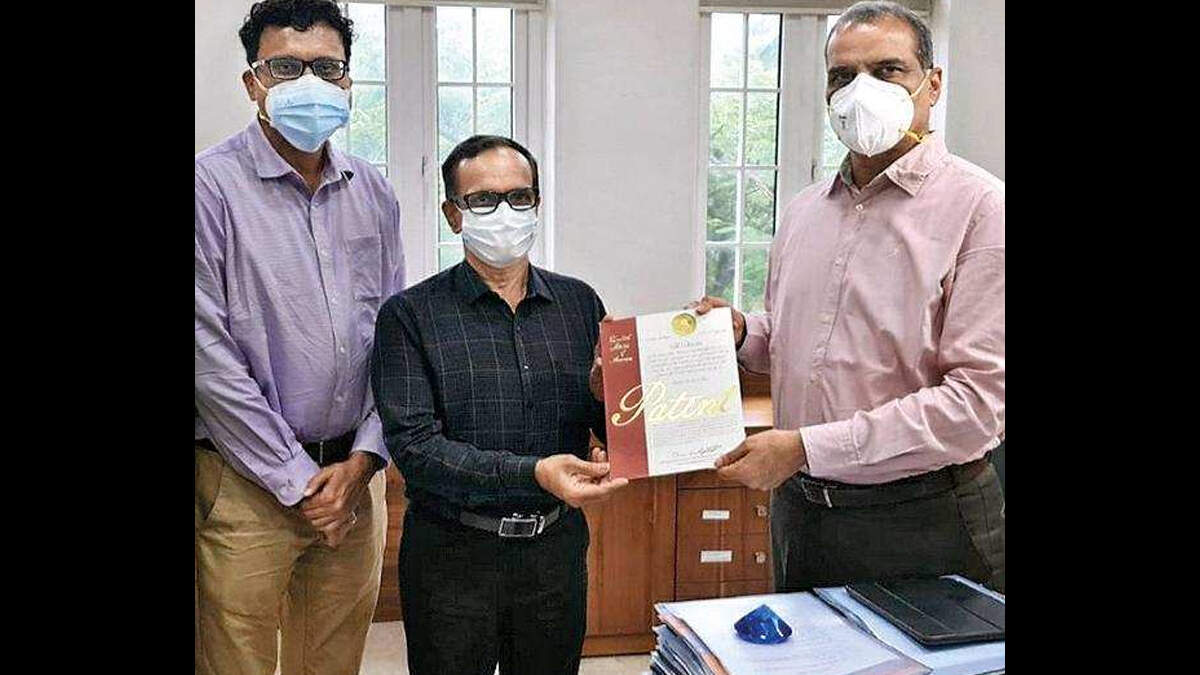
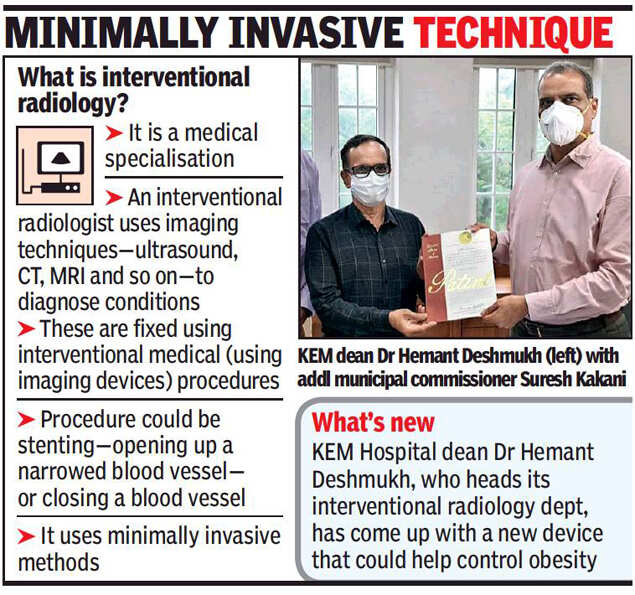
MUMBAI: KEM Hospital dean Dr Hemant Deshmukh, who has performed thousands of interventional procedures, has got a patent for a new device to help control obesity.
“As interventional radiologists, we treat arteries and veins by opening up or closing them as the situation demands,” he said. What is not well known is that plaque buildup not only affects the heart vessels but even the vessels in the abdomen. When the superior mesenteric artery that supplies blood to the small intestine develops blockages, the patient starts suffering from “abdominal angina”.
“The patient develops this angina whenever he or she eats. As a result, they develop fear of food and avoid it, leading to 10 to 20kg weight loss,’’ said Dr Deshmukh. Medical literature mentions some such patients develop cibophobia, which is defined as the fear of food.
It is this connection between the blocked mesenteric artery, cibophobia and weight loss that he, along with Dr Krantikumar Rathod, worked on. “We felt we can narrow the mesenteric artery in morbidly obese people by introducing a stent-like device, which would trigger weight loss,” he said. The narrowed artery induces cibophobia, which, in turn, leads to weight loss.
The doctors applied for the patent in April 2016, and got it earlier this month. The device they designed is 8mm in diameter, shaped like an hourglass, and is 15-20mm long. “We now have to devise the delivery system, make prototypes and plan animal studies,” he said. These steps need to be followed before human trials.
A surgeon TOI spoke to said deliberately narrowing an artery with a device could trigger clots. “As morbidly obese people usually have diabetes or hypertension, introducing such a device needs to be well thought out,” said a bariatric surgeon who didn’t want to be identified. Another doctor said an idea that sounds good on paper may not always work in practice.
Dr Deshmukh said the device, cited in the patent document with an “objective of obesity reduction”, could be used as a bridge treatment before morbidly obese patients go for weight-reduction bariatric surgery. “It will help lose 10-20kg in a few weeks and can be removed thereafter.” The team is also studying its use in managing cardiac disease.