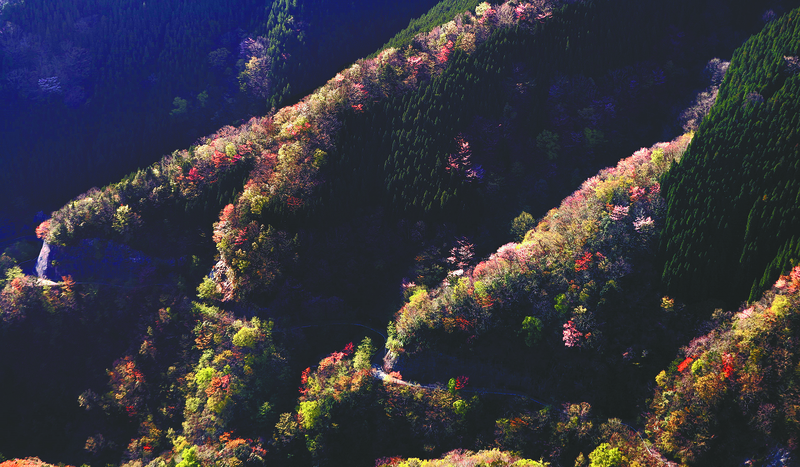
NARA -- Tinged with spring colors from mountain cherry blossoms in full bloom and fresh green trees, the mountain ridges in the Namego Valley of Nara Prefecture are said to have been likened to dragons rising to the sky.
The valley, in a remote part of mountains along winding National Highway Route 309 in the village of Kamikitayama, offers a beautiful and spectacular view in mid-to late April.
"The hardwoods -- such as Mongolian oak, beech and wild cherry blossoms -- growing on the ridge appear to float in the artificial forest of cedar and cypress on the slope," said municipal forestry official Takeshi Kume, 48.
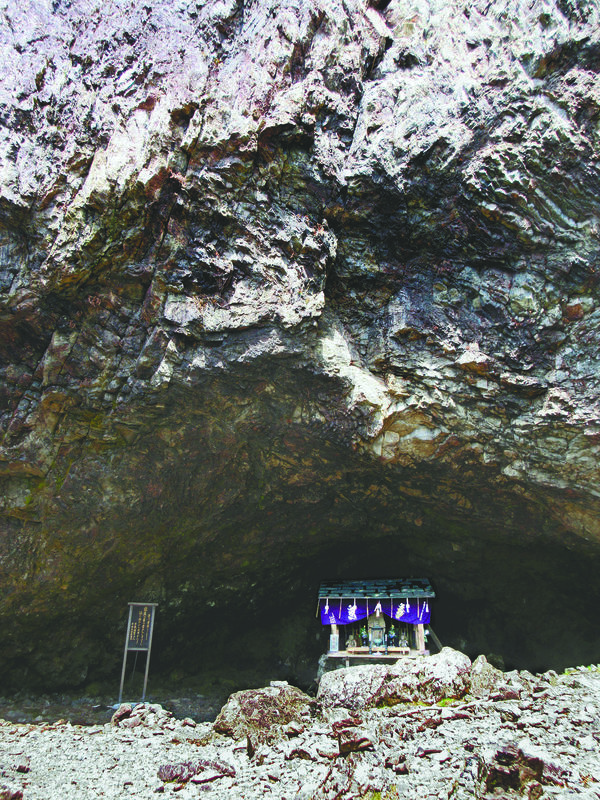
An expanse of the forest is privately owned, and it is not known when and why it was planted in this way.
"Perhaps they wanted to have hardwoods, which have high water retention capacity, as a means to prevent wildfires from spreading," he said.
With forests covering 97% of the area of the village, the forestry industry has been a key part of its history. In the Edo period (1603-1867), the village became an official producer of timber for the Tokugawa Shogunate family, and is said to have paid annual land tax in timber. The villagers continued to live by steadily growing trees for their descendants decades and even centuries later.
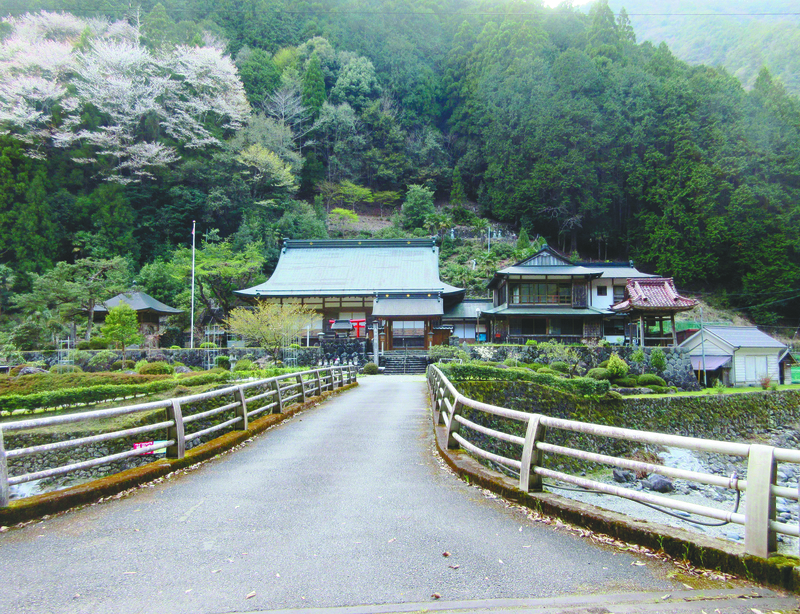
The village's history and folklore museum in the Nishihara district has implements used for forestry industry on display such as wood saws.
"There used to be a lumber mill here, and the village was bustling with many children," said Ikuo Moriwaki, 77, chief of the district.
The timber was tied in rafts at the Kumano River basin and floated down to Shingu, Wakayama Prefecture. It was also taken over the mountains by a ropeway system that connected the village to the coastal area of Owase, Mie Prefecture.
Prosperity in the forestry industry lasted until the mid-1960s. The population of the village, which was 2,000 in 1965, has since fallen to below 500. With it difficult to find those to carry on in the industry, preservation of the mountain has become an issue.
Incorporating the Odaigahara region and its pristine forests, tourism has become Kamikitayama's biggest industry. It was good news for the village when the landscape of the Namego Valley attracted public attention after it was featured on TV show several years ago.
A new lodging facility is scheduled to open in the near future, but those involved are concerned what effect the spread of the new coronavirus will have.
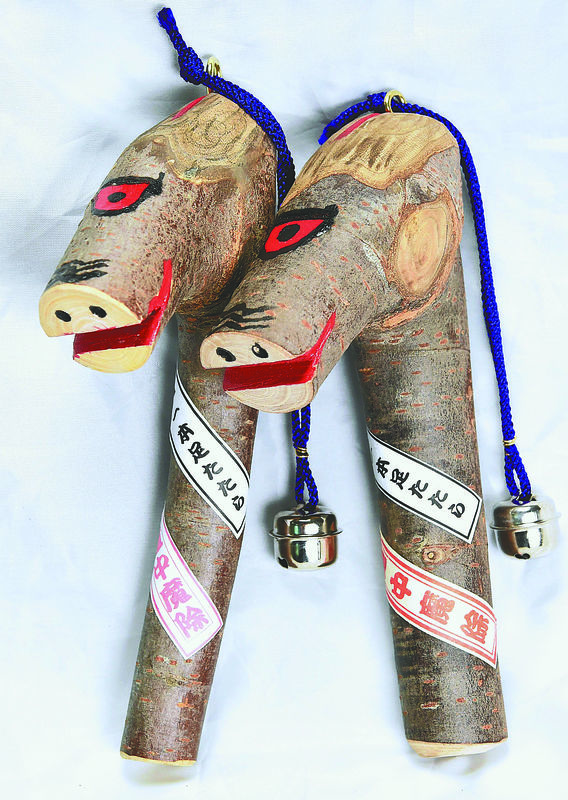
When I visited the village in early April, I bought a folk craft item of a yokai monster called "ippondatara," a simple creation using the shape of a tree branch. The monster was supposed to be a boar whose leg was shot by a hunter. But the adorable face with one red eye reminded me of a dragon.
The cherry blossom season in Namego Valley this year has passed. The valley, however, has another peak in early to mid-November, when the leaves of the hardwoods turn red in color.
I made a wish upon the red eye that by that time, the world would calm down and many people would be able to see the "dragons rising to the sky" with peace of mind.
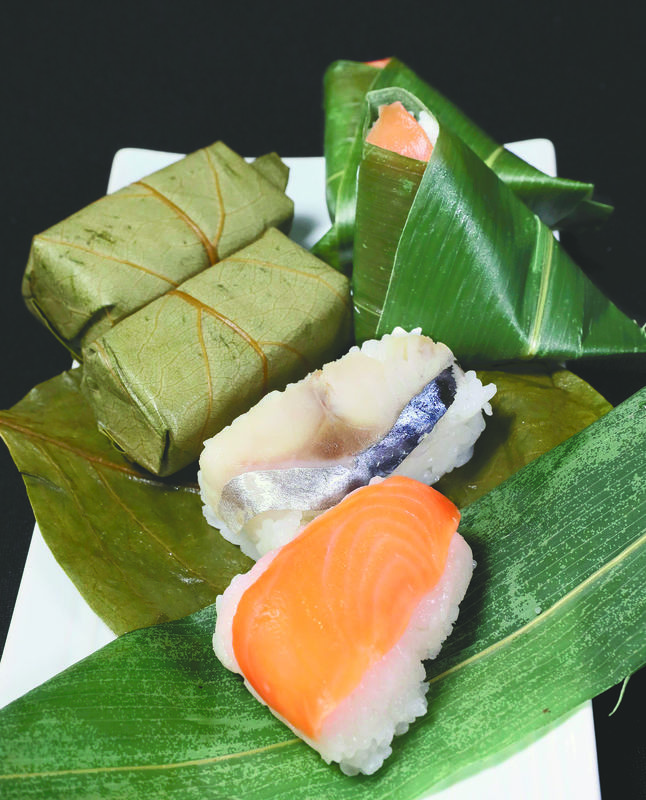
Like Kakinoha zushi, a type of pressed sushi and a specialty of the Yoshino region in Nara Prefecture, Kamikitayama's Izasa zushi is prepared using a leaf.
When the Odaigahara Driveway was opened to traffic in 1961, the predecessors of Izasa Nakatani Honpo chain of sushi bars invented a local specialty using the bamboo grass that flourishes in Odaigahara.
Currently, the firm uses bamboo leaf from other places, which it wraps around salmon for pressed sushi. The sushi is lighter in taste compared to Kakinoha zushi, in which mackerel is wrapped up in a persimmon leaf.
The aroma of the bamboo leaf is slightly transferred to the vinegar-flavored rice. As Nakatani Honpo was originally a rice dealer, the vinegared rice in the sushi is delicious.
The sushi is sold at outlets both inside and out of the prefecture, but Kazuko Ogura , manager of its flagship store, said, "I hope customers can have the experience [of eating this sushi] in the village where the air is clear and the water is pure."
Namego Valley: located on the east side of the Gyojagaeridake mountains in the Omine mountain range. The best time to see cherry blossoms is mid- to late-April, while the autumn leaves turn color in early to mid-November. Visitors can look down into the Namego Valley from National Highway Route 309 at an elevation of about 1,000 meters.
Read more from The Japan News at https://japannews.yomiuri.co.jp/