Australians should take to the streets to protest over the treatment of refugees in Nauru that is “tantamount to torture” rather than just focus on the activities of the border force in Melbourne, Canadian author Naomi Klein has said.
Klein, appearing on ABC’s Q&A program, said the policy of keeping asylum seekers in offshore detention centres was more disturbing than last week’s aborted Australian Border Force operation in Melbourne, which prompted protestors to gather outside Flinders Street station.
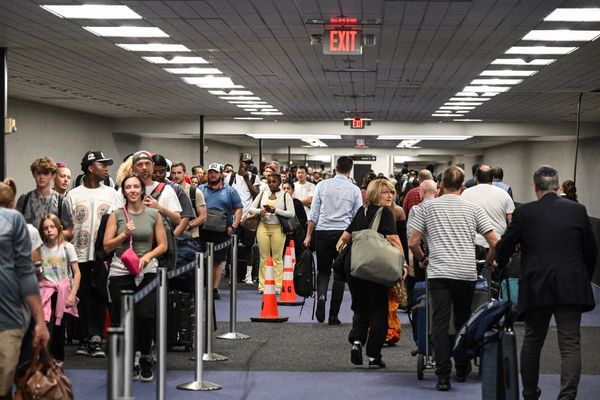
A furious backlash against a plan for border force agents to check the visa status of people in central Melbourne saw the operation hastily ditched before it began. The government has blamed a clumsily worded press release for the furore, denying there would be random checks of the public.
“I’d like to see people rise up in streets of Melbourne and the streets of Sydney about what’s happening in Nauru,” Klein said. “The United Nations has said what’s happening on Nauru is tantamount to torture in some cases. The stories are horrific; people sewing their mouths shut they are so desperate.
“Frankly I’m a lot more shocked by the fact that migrants made refugees by wars that your government and my government have participated in are sent to islands so far away, locked away with no hope so they take their own lives.
“I find that more shocking than they fact they were going to check papers on the streets of Melbourne, although I think that’s a problem too.”
Fellow panellists Tariq Ali, a British author, and Laurie Penny, a British feminist writer, agreed with Klein. Ali said the proposed Australian Border Force action “creates a climate of fear”, adding that he wished he’d joined in the protest himself.
But another panellist, conservative writer and analyst Tom Switzer, said that a distinction needed to be made between the “overreach” of the scrapped visa checking operation and Australia’s overall immigration policies.
“People broadly speaking support the policies,” he said. “It’s brutal stuff, no question, but it sends a deterrent and European governments are looking to the Australian model because border security is now a big issue in European politics.
“There is a widespread tradition in this country that a tough border protection policy helps boost confidence in a large-scale immigration policy.”
Switzer and Klein also clashed over climate change, which is the topic of Klein’s latest book, This Changes Everything, which argues that capitalism is unsuited to tackling the issue of soaring greenhouse gas emissions.
Switzer, who said many environmentalists are “watermelons” because they conceal “socialist agendas”, said Klein’s call to racially reshape capitalism is “a radical agenda, it’s bad politics because stands almost no chance of gaining widespread support, not just in Australia especially in developing countries chugging their smoking path to prosperity”.
“For all its flaws, capitalism is responsible for lifting so many people out of poverty. If you undermine capitalism you are going to entrench poverty and people would rightly say it’s not only immoral, it’s wicked.”
Switzer said that while most conservatives in Australia accept that human activity is influencing the climate, temperatures are only rising “marginally” and they are “not going up in accordance with the models” put forward by the UN’s Intergovernmental Panel on Climate Change.
Klein said conservatives needed to be “scientifically honest” and argued that climate change challenges a worldview that opposes collective action.
“Our attempts to just tinker around the edges, have a carbon trading scheme here, change our light bulbs there, has seen our emissions go up by 63%,” she said. “That model [capitalism] isn’t working. Climate change provides an unyielding science-based deadline. We have to supercharge our efforts.”
Klein added that Australia’s lack of renewable energy in its electricity grid is “scandalous” given its potential solar and wind resources.