Nancy Guthrie's disappearance has taken a new turn in June 2026 after an anonymous tip pushed a volunteer search group in Mexico to look near Nogales, while legal experts say the case could still be prosecuted as a homicide even if her body is never found.
The renewed attention has also sharpened scrutiny of what investigators can prove, and how much circumstantial evidence is enough when there are still no confirmed remains.
Building A 'Body Of The Crime' Without Remains
The latest Nancy Guthrie case update, involving that anonymous tip pointing to Nogales, Mexico, lands in the middle of a legal debate that experts say is uncomfortable but not impossible. Can you prove someone is dead, and that a crime caused it, when you have no remains at all?
Criminal defence attorney Michael T. van der Veen told Newsweek that the early evidence from Guthrie's home is more than background noise. It is the starting point for what lawyers call the 'corpus delicti' — literally, the 'body of the crime.'
'Prosecutors can prove it circumstantially because judges give a jury instruction that circumstantial evidence is just as strong or stronger than direct evidence,' he said. 'Through the circumstantial evidence, the prosecutor can prove the corpus delicti.'
To put it less like a law textbook, jurors do not need a corpse if the surrounding facts leave no reasonable alternative. Guthrie's age, the fact she had a pacemaker, and her need for daily medication all lean in the same direction. 'She was 84 years old with a pacemaker and required daily medication... the odds that she voluntarily went missing are very low,' van der Veen added.
Former police officer and criminal investigation professor Daniel K. Maxwell told the outlet that in a no‑body case investigators face a two‑step task. First, prove a homicide actually occurred. Second, tie a specific person to it.
'The essential elements to prove are that a crime has been committed and the person arrested was responsible for the crime,' he said. 'This would also include eliminating all non‑criminal causes.'
Maxwell stressed that when there is no body, every scrap of physical and behavioural evidence takes on extra weight. Direct evidence includes photos, videos and eyewitness accounts. Indirect or trace evidence runs from fingerprints to blood, hair and fibres.
What Experts Say Happens If Nancy Guthrie Is Never Found
A separate expert, former prosecutor Tad DiBiase, told journalist Brian Entin that he has spent two decades training police and lawyers on how to bring no‑body murder cases to trial, and believes the Guthrie investigation is, in theory, capable of being tried without remains.
He also sounded a note of frustration at how limited the ground searches around the Tucson property appear to have been, arguing that investigators need to be able to show a future jury that they exhausted every realistic chance that Guthrie left or died on her own.
'When you go to trial, you want to be able to say to the jury, "Here's all the searches we did, and we confirmed that there's no way that she walked away on her own. There's no way that she escaped. There's no way that she [died by] suicide",' he said.
DiBiase also pointed out that the case does not neatly fit the pattern of most no‑body murders, which typically involve partners, relatives or people who know each other.
'Fifty-four percent are between people who know each other in a domestic relationship. And then you have a whole bunch of people who just knew each other — maybe they were friends, maybe they were roommates, maybe they were business associates, maybe they were fellow members of organised crime,' he said. 'So you have these categories that these cases fit into. And a stranger-on-stranger no-body murder case with an adult victim is highly, highly unusual.'
Meanwhile, a claim that Guthrie's body had been found in Mexico turned out to be false. The anonymous border‑burial tip now on the table is being assessed for 'specificity, plausibility and consistency with the facts of the case', Maxwell said.
Nancy Guthrie Case Update: Masked 'Porch Guy' And A Missing Link
Despite social media speculation, no one has been formally named a suspect in the Nancy Guthrie case. Investigators are instead circling three unresolved threads.
The first is the masked person seen on doorbell footage in the early hours, the figure online sleuths have dubbed 'porch guy.' The second is a glove recovered near the home which, according to reports, contains DNA from an unidentified male. The third is that distinctive 25‑litre Ozark Trail backpack carried by the man in the video.
The FBI and Pima County Sheriff's Department have said they are combing Walmart purchase records, security footage and digital forensics to connect that backpack to a buyer and, eventually, a name.
Maxwell noted that someone only becomes a suspect when evidence crosses the legal threshold of probable cause. 'What usually moves someone into the suspect category is a combination of evidence that points toward the probable cause threshold,' he explained. Until then, the person on the porch is simply a 'person of interest' with a viral nickname.
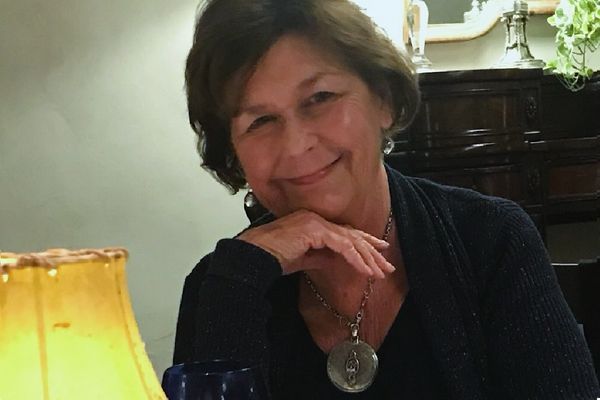
Nancy Guthrie, 84, vanished from her Tucson home overnight between 31 January and 1 February 2026. Detectives quickly ruled out the idea that she had simply wandered off. Her pacemaker app suddenly went offline, blood was discovered on her porch, and a doorbell camera captured a masked person with a backpack approaching her front door in the early hours.
More than 100 days on, the Pima County Sheriff's Office and the FBI have announced no major breakthrough.