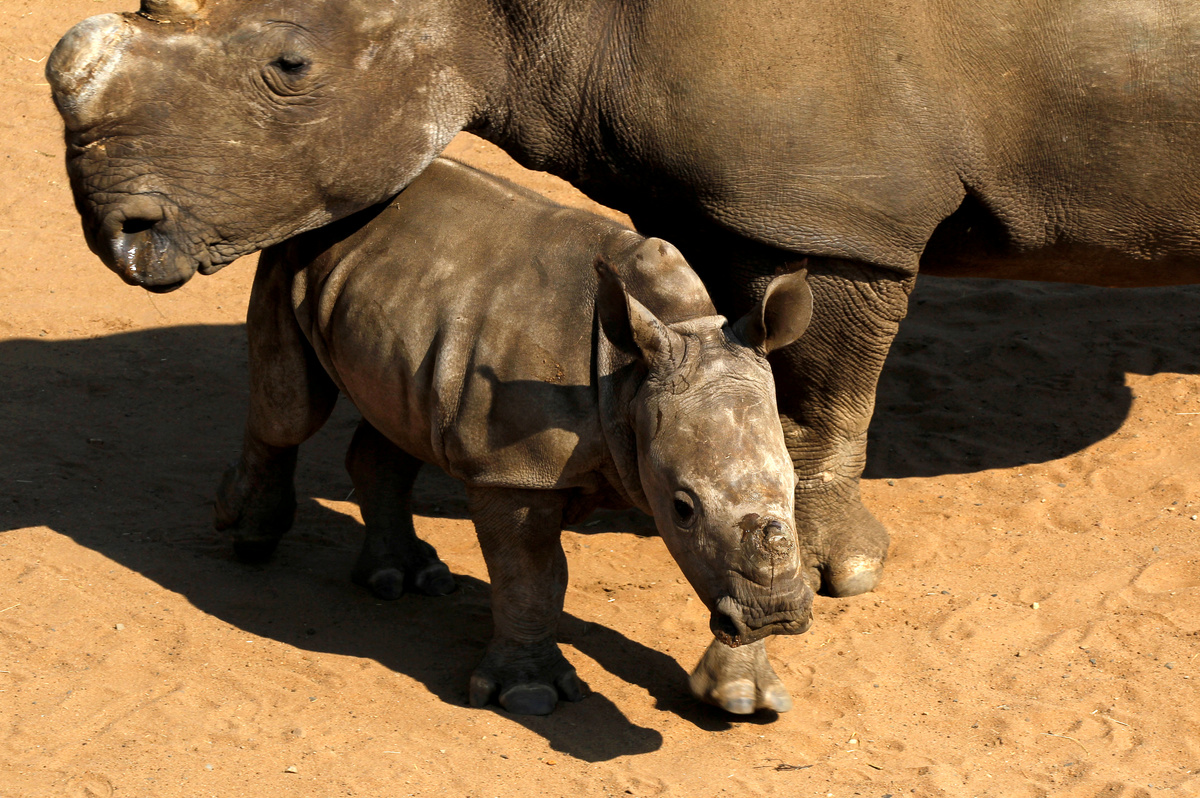
WINDHOEK (Reuters) - Namibia is considering withdrawing from the rules that govern the global trade in endangered species, after countries voted last week to reject proposals to relax restrictions on hunting and exporting its white rhinos.
Namibia has the second largest population of white rhinos after South Africa. It wants to allow more trophy hunting of rhinos and export of live animals, arguing that the funds it would raise would help it to protect the species.
But countries that are party to the Convention on International Trade in Endangered Species (CITES) voted last week against downgrading Namibia's white rhinos from appendix I, the list of species threatened with extinction, to appendix II, a list of species with looser protections.
Minister of Environment and Tourism Pohamba Shifeta said in Geneva on Tuesday that Namibia would convene a meeting with other Southern African Development Community (SADC) member states to consider withdrawing from CITES.
“We had several submissions from SADC for downlisting our white rhino from appendix I to appendix II, but there are some who feel that Namibia’s population is still small and we contested that Namibia’s population is the second largest in the world," said Shifeta.
The Namibian government estimated its white rhino population at 1,037 in 2017/2018. The white rhino populations of South Africa and eSwatini, formerly Swaziland, are already in appendix II.
“If CITES does not really help us to conserve our wild animals but frustrating those that are doing good I think there is no need for us to stay in CITES,” said Shifeta.
Botswana's environmental and conservation minister Kitso Mokaila said that he was greatly disappointed by the outcome.
Mokaila said people in SADC countries have sacrificed to protect wild animals.
“They don’t plough, they don’t rear cattle or sheep or goats because wildlife destroys our livelihood," said Mokaila.
Countries on Thursday also voted overwhelmingly to regulate international trade in giraffes, an endangered species, overcoming objections by southern African states and drawing praise from conservationists.
(Reporting by Nyasha Nyaungwa; Editing by Peter Graff)