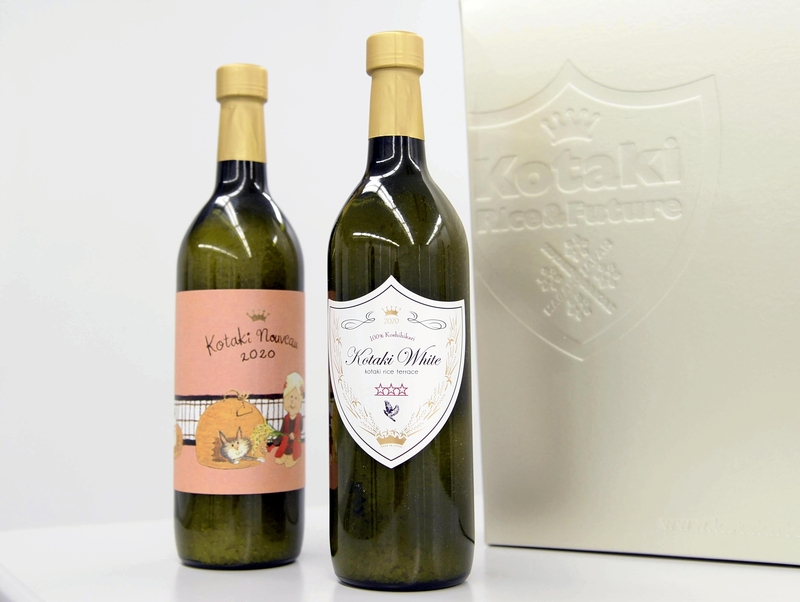
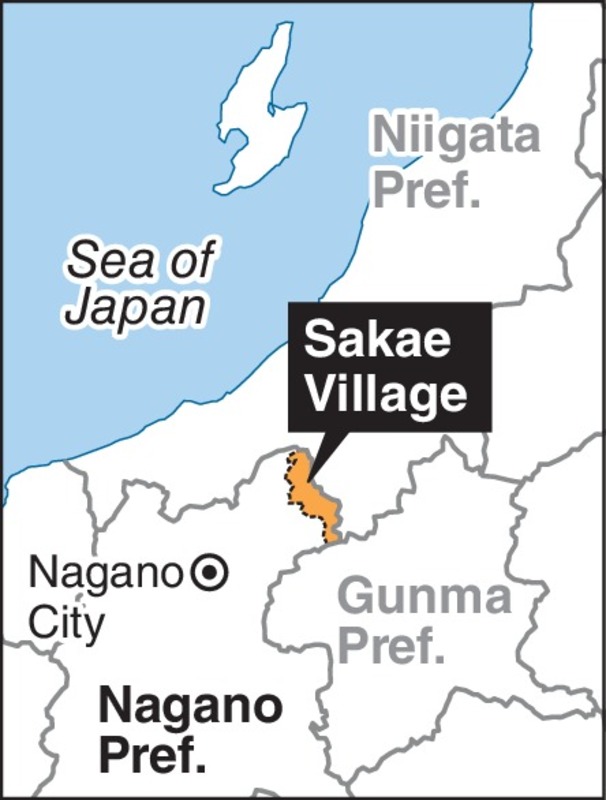
March 12 marked the 10th anniversary of an earthquake that hit northern Nagano Prefecture just one day after the Great East Japan Earthquake. The village of Kotaki in Sakae, rocked by the earthquake that measured an upper 6 on the Japanese seismic intensity scale of 7, overcame the threat of collapse by producing the Koshihikari brand of rice grown in its local terraced fields with help from a long-established children's clothing company, based in the glitzy Ginza district in Tokyo's Chuo Ward.
The company was inspired by the villagers' passion and desire to introduce the world to the sweet taste of its rice cultivated in the melting snow.
Of the village's 17 houses, 10 were either completely destroyed or heavily damaged by the earthquake, and about 70% of the seven hectares of terraced rice fields experienced fissure damage.
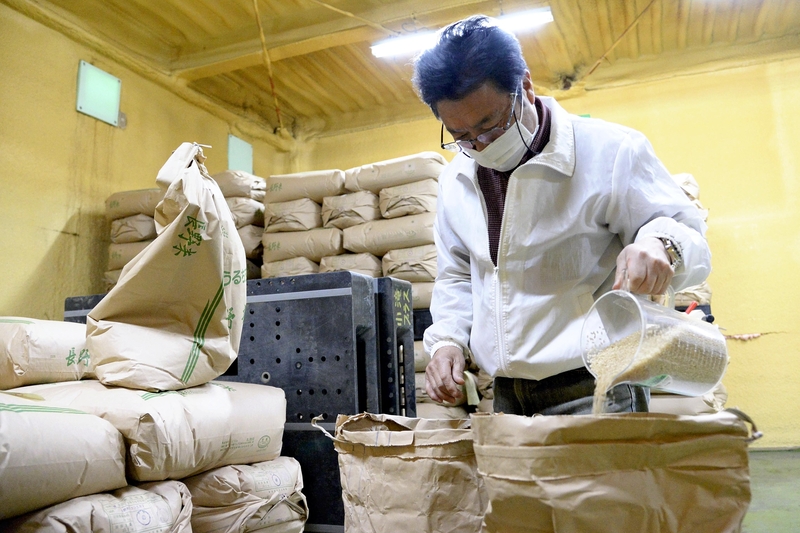
Masayuki Higuchi, 62, who was born and raised in Kotaki, felt a sense of urgency: "If we don't do something, the village will disappear." In 2013, at the age of 54, he retired from his post with the village office and began working to sell Koshihikari rice.
The turning point came in the summer of 2014 when he met Ryo Saegusa, president of children's clothing company Sayegusa & Co. Ltd. in Ginza. At the time, Saegusa was on the hunt for community forests known as "satoyama" where children could commune with nature. After traveling to more than 10 places around the country, he finally came upon Kotaki.
Golden ears of rice were growing as the rivers flowed gently. This was the satoyama he had envisioned. When he tasted Koshihikari rice, he was struck with a thought: "I have to let the world know how delicious this rice is."
Saegusa immediately bought one ton. He felt that the rice's flavor was comparable to wine, in that water and soil played a part in the final product's taste. So, he proposed packaging the rice in wine bottles and selling them.
He named the product Kotaki White and sold 1,000 bottles, each containing 620 grams of rice, at 1,500 yen a bottle in the span of a week during a trial sale in the autumn of 2014.
"The idea of spending money purely on an item's appearance was surprising to me," said Higuchi.
With closer ties established between Kotaki and Ginza, sales went into full swing in 2015. The next year, it won the Japan Gift Awards' prefectural prize. The amount sold increased from 15 tons in 2016 to 19 tons in 2019. Satoshi Shoji, head chef of the Japanese restaurant Ginza Shoji, in Chuo Ward, Tokyo, praises the rice's flavor, saying, "The sweetness is not overpowering, and it tastes good even after it gets cold. You won't get tired of it."
Kiwa Nakano, professor of cultural anthropology at Daito Bunka University, said: "It was good that the residents worked together to maintain the quality of the rice and promote exchanges with the outside world. This is a good hint for local development."
"If it weren't for the earthquake, we wouldn't be shining as brightly as we are now," said Higuchi, with Saegusa adding, "This is the result of respecting each other as business partners and working toward the goal of protecting satoyama."
Read more from The Japan News at https://japannews.yomiuri.co.jp/