Japan is considered one of the world's leading model railroad countries. With its nine-millimeter-wide rail tracks, and smaller than the model railroads common in the United States and Europe, "N-gauge" predominates in Japan.
The Hobby Center Kato Tokyo is a showroom at the headquarters of Sekisui Kinzoku Co., the company that launched N-gauge products in 1965 for the first time in Japan. The showroom explains the model railroad's attraction and the history of its spread throughout Japan, and doubles as a shop selling the company's model railroad products.
Entering the showroom, visitors can see a five-meter-wide, 10-meter-deep diorama with 12 trains, including the Blue Train, a limited express train and a commuter train running simultaneously, going through a tunnel and crossing a railroad bridge. A station, town and mountainside have been crafted true to life.
"I like that my child doesn't get tired of seeing exhibits. As a small recreational place, both parents and children can feel safe here," said Daiki Kimura, 39, a company employee, who came from Yokohama with his family.
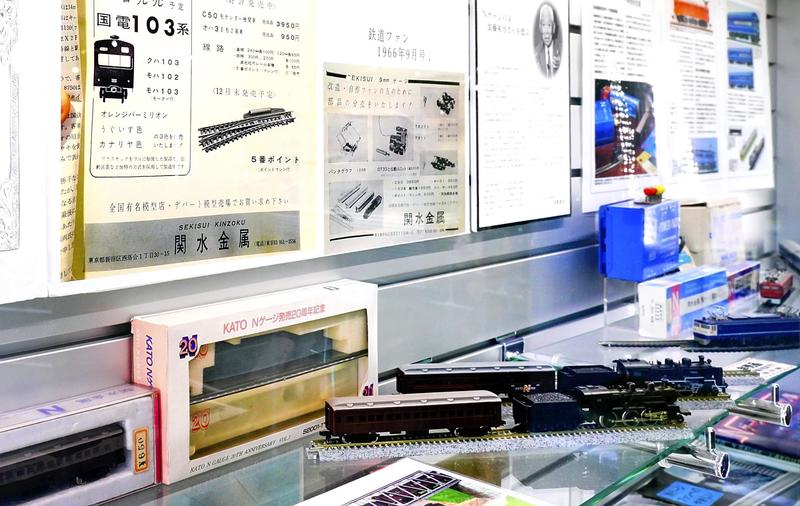
About 50 models and initial advertisements are showcased in a section recounting N-gauge's history. The section tells how difficult it was for Sekisui Kinzoku founder Yuji Kato (1927-2016), called the "father of N-gauge," to bring out his first N-gauge product "C50-type steam locomotive," with the actual model on display.
In the late 1950s and early 1960s, model railroads were gaining popularity, but bigger ones like those made in the United States and Europe were in vogue. Kato, who was making metallic parts for model railroads, thought that N-gauge would be more suited to the smaller Japanese houses. Applying metallic processing techniques to plastic processing, he achieved the mass production of cheaper and more elaborate N-gauge trains than conventional model railroads.
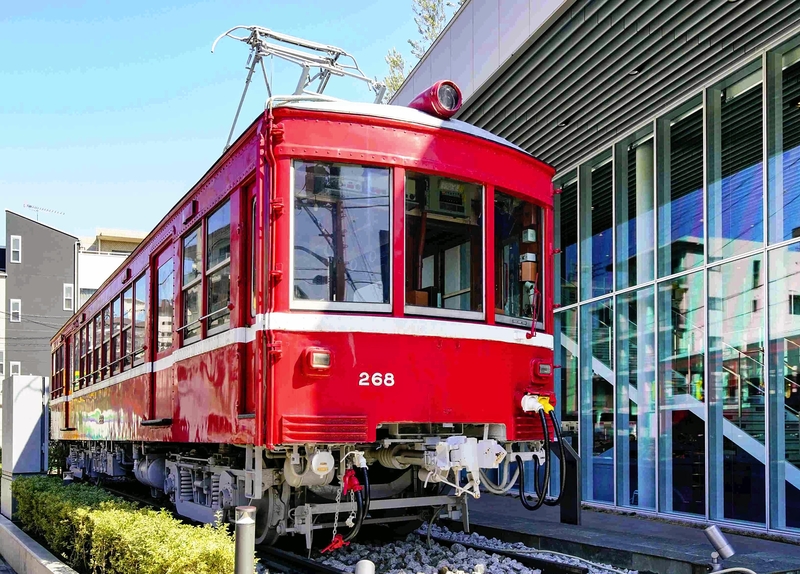
A real Deha268 train built around 1930 is preserved in front of the showroom. The red train with its curved front edges, made with advanced techniques of the day, was Kato's favorite. The train, which Kato and his engineers who were paving the way for the N-gauge produced with much affection, awaits people visiting "the pantheon of N-gauge."
-- Hobby Center Kato Tokyo
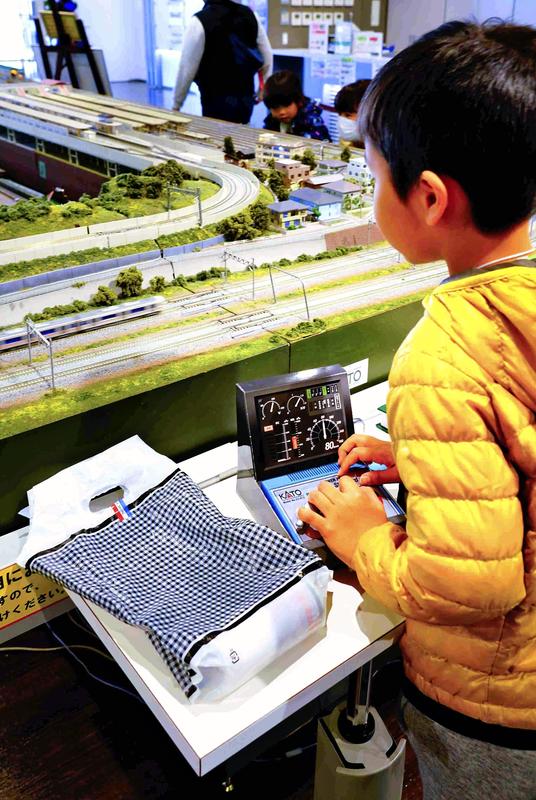
The showroom was originally built in 1974 in Tokyo's Takadanobaba area and was moved to its current location in 1986. It was turned into the present showroom in 2014. Visitors who spent 500 yen or more on products can operate N-gauge trains on the second floor.
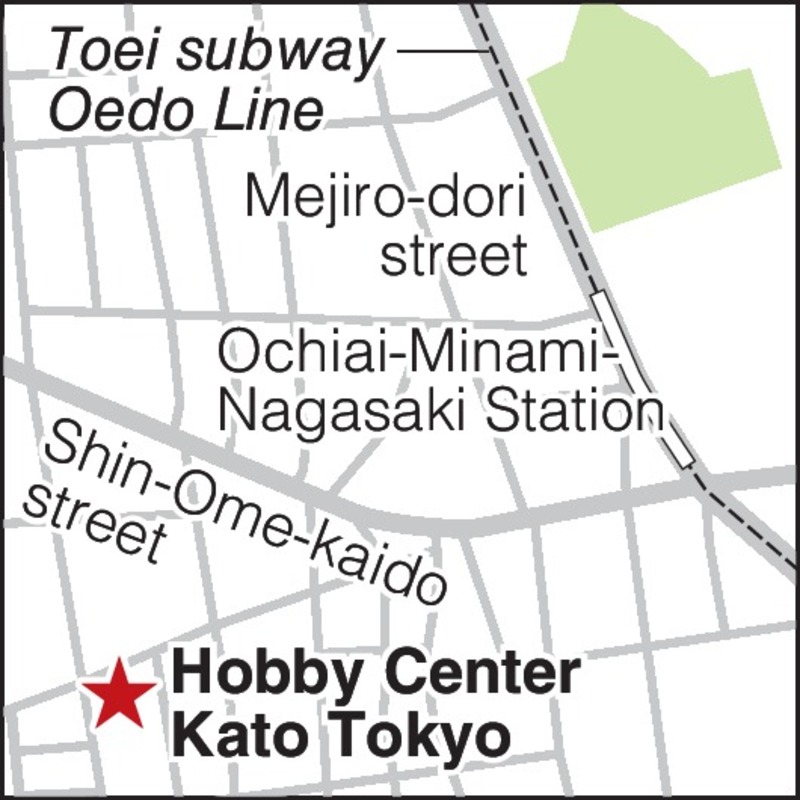
Address: 1-24-10, Nishiochiai, Shinjuku Ward, Tokyo
Open: 11 a.m.-8 p.m. on weekdays; 10 a.m.-7 p.m. on Saturdays, Sundays and national holidays. Closed on the year-end and New Year holidays.
Admission: Free
Information: (03) 3954-2171
Read more from The Japan News at https://japannews.yomiuri.co.jp/