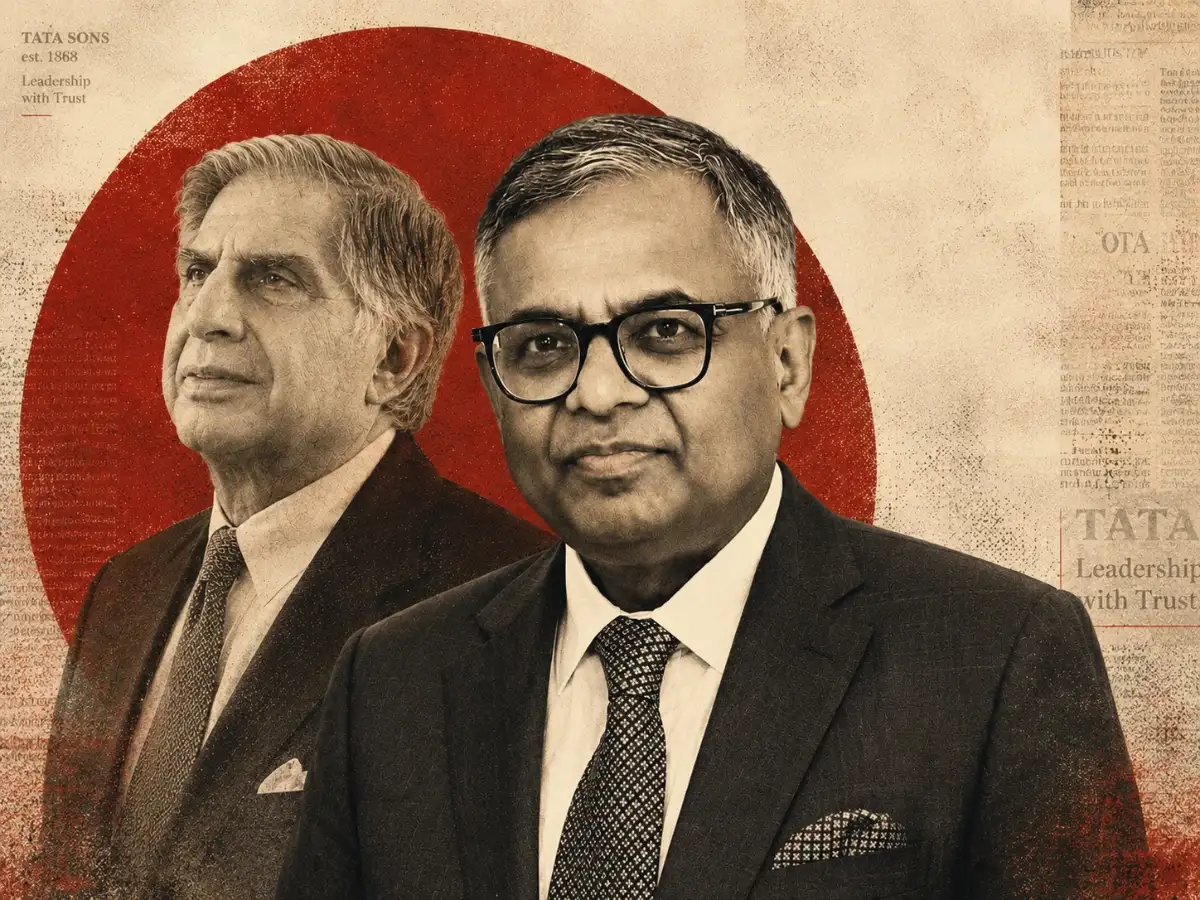
N Chandrasekaran on Wednesday resigned as chairman of Tata Sons, bringing a sudden close to his nearly decade-long tenure. During his time at the helm, he fundamentally reshaped the salt-to-software-to-SUV behemoth, expanding its reach into future-ready industries like aviation, semiconductors, electronics, and digital platforms.
Chandrasekaran, 63, told the Tata Sons board of his decision and explained that despite unanimous recommendations from the Tata Trusts, the nomination committee, and the board to grant him another five-year extension, the proposal stalled after a board member opposed it in February. Pointing out that the decision had been hanging in limbo for six months and emphasising that a massive group like Tata needs clear, decisive leadership during critical project executions, he formally decided not to seek reappointment when his current term ends on February 20, 2027, urging the board to swiftly select a successor.
ALSO READ | N Chandrasekaran resigns as chairman of Tata Sons before AGM
Chandrasekaran’s exit also has implications across the group. He is chairman of Tata Consultancy Services, Tata Motors and Tata Consumer Products, among other Tata companies, and has held a central role across the group’s businesses since taking over Tata Sons in 2017.
Took charge during a time of turmoil
Chandrasekaran, popularly referred to as Chandra in business and media circles, was the non-Parsi Chairman of the Group in its 150-year history and was handpicked by late Ratan Tata himself.
ALSO READ | Why N Chandrasekaran resigned from Tata Sons?
The scale of the Tata Group changed significantly during his tenure. Aggregate revenue rose from Rs 7.89 lakh crore in FY20 to Rs 16.24 lakh crore in FY26, according to the figures provided by the group.
Profit after tax rose more than fivefold, from Rs 32,000 crore to Rs 1.71 lakh crore. The market capitalisation of Tata’s listed companies rose from Rs 9.31 lakh crore in FY20 to Rs 24.39 lakh crore in FY26, although it was Rs 27.85 lakh crore in FY25.
Chandra assumed the top office in 2017 amid a major boardroom turmoil — a tumultuous period marked by trust deficit and leadership crisis following the sudden and bitter ouster of Cyrus Mistry.
He had long been a trusted hand at the Tatas. Before taking the helm at Tata Sons, he was at the corner office of TCS, the group's crown jewel and cash cow.
Chandrasekaran, an alumnus of the Regional Engineering College, Trichy, joined TCS as in trainee/intern programmer in 1987. He subsequently rose steadily through the ranks to become its CEO.
After his resignation, shares of Tata Group companies declined up to 4% this morning, led by its TCS.
Chandra was inducted into the board of Tata Sons October 2016. After the Mistry episode, he was made chairman in January 2017 and took official charge the following month.
The group's protracted legal battle with Mistry & Co consumed a significant part of Chandra's first term. At one point, the NCLAT even held his appointment as illegal and ordered Mistry's restoration to the top office. This, however, was eventually overturned by the SC.
Chandra’s Tata legacy
Under him, Tata returned to aviation, acquired Air India and expanded into semiconductors, electronics manufacturing and batteries. The group also increased its focus on digital businesses and electric vehicles.
The expansion has required large investments and has contributed to disagreements within Tata Trusts over the performance and capital requirements of newer businesses.
As part of a wider rejig aimed at stemming losses, Chandrasekaran also oversaw the selling-off of the company's bleeding mobile phone business (Tata Teleservices) to Airtel.
In May 2018, Tata Steel bought out the insolvent Bhushan Steel for a sum of Rs 35,200 crore — one of the biggest-ever acquisitions in the country's corporate annals.
In more ways than one, one of Chandra's top achievements came about in October 2021 when the Tatas made the winning bid for Air India. It gave the group back the airline that it had founded and subsequently ceded to the government.
In addition to this, Chandra oversaw the big-ticket acquisition of Big Basket in May 2021 worth Rs 9,500 crore. The company reported FY25 revenue of around Rs 9,900 crore, while losses widened to about Rs 2,000 crore.
During a recent board meeting, Noel Tata, Chairman of Tata Trusts, focused his feedback on the ongoing struggles at both BigBasket and Air India—the latter having suffered a fatal crash a year ago and an estimated annual loss of $3 billion.
One of the few sore points for Chandra was the failure to close the deal to sell Tata Steel's European arm to ThyssenKrupp.
Beyond professional milestones
A career Tata Group executive, Chandrasekaran has spent his entire professional life with the conglomerate.
Originally from Tamil Nadu, he is based in Mumbai with his wife, Lalitha.
Media reports describe him as a keen photographer and music enthusiast. He is also a marathon runner and has completed several major races around the world.