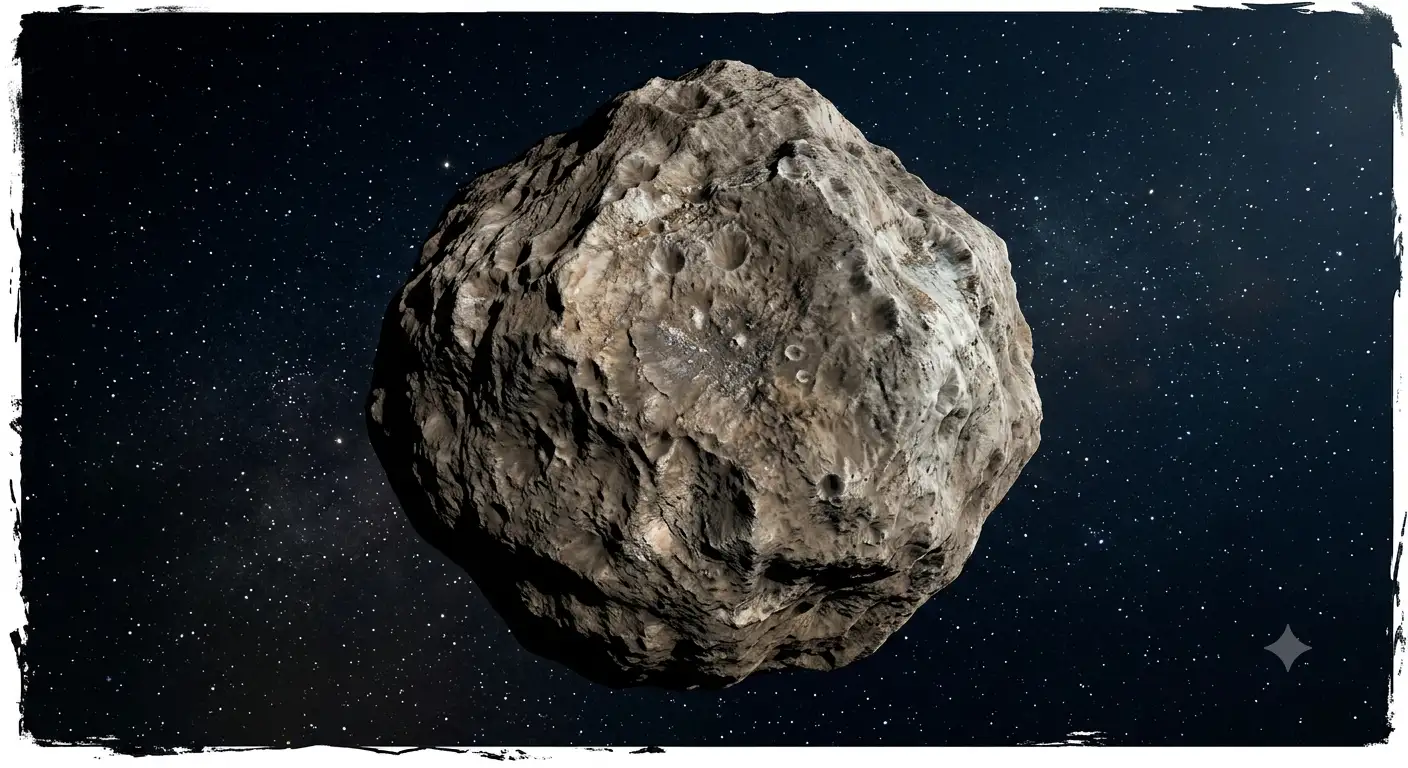
Scientists have finally solved the mystery surrounding the Silverpit Crater beneath the North Sea. Researchers say a 160-meter-wide asteroid slammed into the seabed around 43 to 46 million years ago, carving out the crater and unleashing a tsunami more than 100 meters high. The finding settles a decades-long debate among geologists over how the unusual underwater structure was formed.
ALSO READ: 300-year-old Shiva Lingam-shaped stepwell revived in Karnataka
The discovery identifies Silverpit as one of Earth's relatively rare impact craters, geological scars left behind when space rocks strike the planet at tremendous speeds. The findings come from a study led by researchers at Heriot-Watt University and published in the journal Nature Communications titled 'Multiple lines of evidence for a hypervelocity impact origin for the Silverpit Crater'
Using advanced seismic imaging, microscopic analysis of rock samples and computer simulations, scientists have gathered the strongest evidence yet that the structure was created by an extraterrestrial impact.
ALSO READ: Germany changes sick leave policy
A Hidden Crater Beneath the North Sea
The Silverpit Crater lies about 700 meters beneath the floor of the southern North Sea, roughly 80 miles off the Yorkshire coast in the United Kingdom.
Discovered in 2002, the crater spans about three kilometers (1.9 miles) across and is surrounded by a much larger ring of circular faults extending nearly 20 kilometers (12 miles). Its unusual structure quickly attracted attention from geologists.
Many scientists believed Silverpit was the result of a hypervelocity impact, a collision involving an asteroid or comet traveling at several miles per second. The crater's circular shape, central peak and surrounding fault patterns closely resembled features seen at confirmed impact sites elsewhere on Earth.
But some researchers argued the structure was formed when underground salt deposits shifted over time, while others suggested volcanic activity caused part of the seabed to collapse.
A 160-Meter Asteroid Triggered a Massive Tsunami
Based on seismic data and impact simulations, scientists estimate the object that struck the North Sea was about 160 meters (525 feet) wide and approached from the west at a shallow angle.
While far smaller than the asteroid linked to the extinction of the dinosaurs, it still unleashed enormous destructive power.
"Our evidence shows that a 160-meter-wide asteroid hit the seabed at a low angle from the west," Nicholson said. According to the team's calculations, the impact blasted a towering curtain of rock and seawater into the atmosphere.
"Within minutes, it created a 1.5-kilometer-high curtain of rock and water that then collapsed into the sea, creating a tsunami over 100 meters high," Nicholson explained.
A tsunami of that size would have risen more than 330 feet above sea level — taller than many modern skyscrapers. The impact would also have excavated the crater almost instantly while ejecting vast quantities of rock, sediment and seawater into the atmosphere.
New Evidence Reveals an Ancient Asteroid Strike
To revisit the mystery, researchers turned to newly available seismic data that allowed them to examine the crater's internal structure in unprecedented detail.
"New seismic imaging has given us an unprecedented look at the crater," said Dr. Uisdean Nicholson, a sedimentologist at Heriot-Watt University, according to ScienceDaily.
The team also analyzed rock fragments collected from an oil exploration well near the site. Those samples revealed rare "shocked" quartz and feldspar crystals at the same depth as the crater floor.
The discovery proved crucial because shocked minerals are considered one of the clearest indicators of an asteroid impact.
According to researchers, the microscopic structures found within the crystals can form only under the immense pressures generated when a large space rock collides with Earth.
Scientists Finally Find the 'Silver Bullet'
Among the researchers involved in the new study was Professor Gareth Collins of Imperial College London, who attended the 2009 debate over Silverpit's origin.
Collins developed the numerical simulations used to recreate the impact and compare its effects with the crater's structure.
"I always thought that the impact hypothesis was the simplest explanation and most consistent with the observations," Collins said. After years of uncertainty, he believes the new evidence finally settles the question.
"It is very rewarding to have finally found the silver bullet," he said. Researchers now hope the site can provide new insights into how impacts shape planetary surfaces and subsurface geology.
Why Impact Craters Are Rare on Earth
Although asteroids and comets have struck Earth countless times throughout its history, surprisingly few impact craters remain visible today.
Earth's surface is constantly being reshaped by erosion, weathering, volcanic activity and the movement of tectonic plates. Over millions of years, these processes gradually erase evidence of ancient impacts.
"Silverpit is a rare and exceptionally preserved hypervelocity impact crater," Nicholson said. "These are rare because the Earth is such a dynamic planet — plate tectonics and erosion destroy almost all traces of most of these events."
Scientists estimate there are around 200 confirmed impact craters on land worldwide and only about 33 known beneath the oceans.
Joining the Ranks of Famous Impact Sites
The confirmation of Silverpit's extraterrestrial origin places it among a select group of known impact structures, including Chicxulub Crater, which is linked to the mass extinction that wiped out non-avian dinosaurs 66 million years ago, and Nadir Crater, another underwater impact site confirmed in recent years.
With the debate finally resolved, scientists say Silverpit can now serve as a valuable natural laboratory for understanding how asteroid impacts have shaped Earth throughout its history — and what similar collisions could mean for the planet in the future.