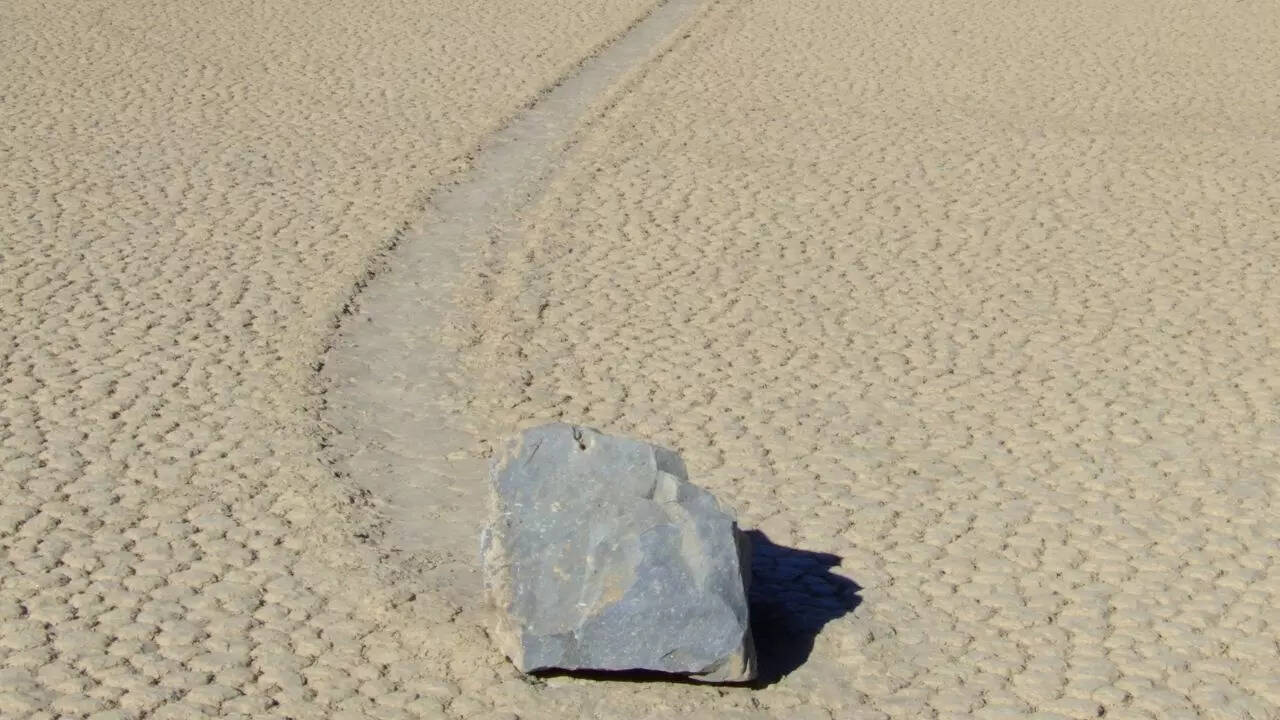
In one of the hottest and driest parts of the world, there is a phenomenon that is most unexpected. At a remote dry lake bed in the world-famous Death Valley area in the United States, large rocks are seen to be in motion.
They slowly slide over the desert floor, with long tracks that do not seem to ever lift. The incredible movement of these rocks in the Racetrack Playa area has been a phenomenon not understood by scientists as well as tourists.
There was never any animal or wind activity that could have caused the movement of the large rocks over the desert surface.
Over the years, several theories were put forward, perhaps wind or even magnetic activity. Recent studies and research in the area made the phenomenon seem like one of the most interesting slow-motion events in nature.
What are the sliding rocks of Racetrack Playa
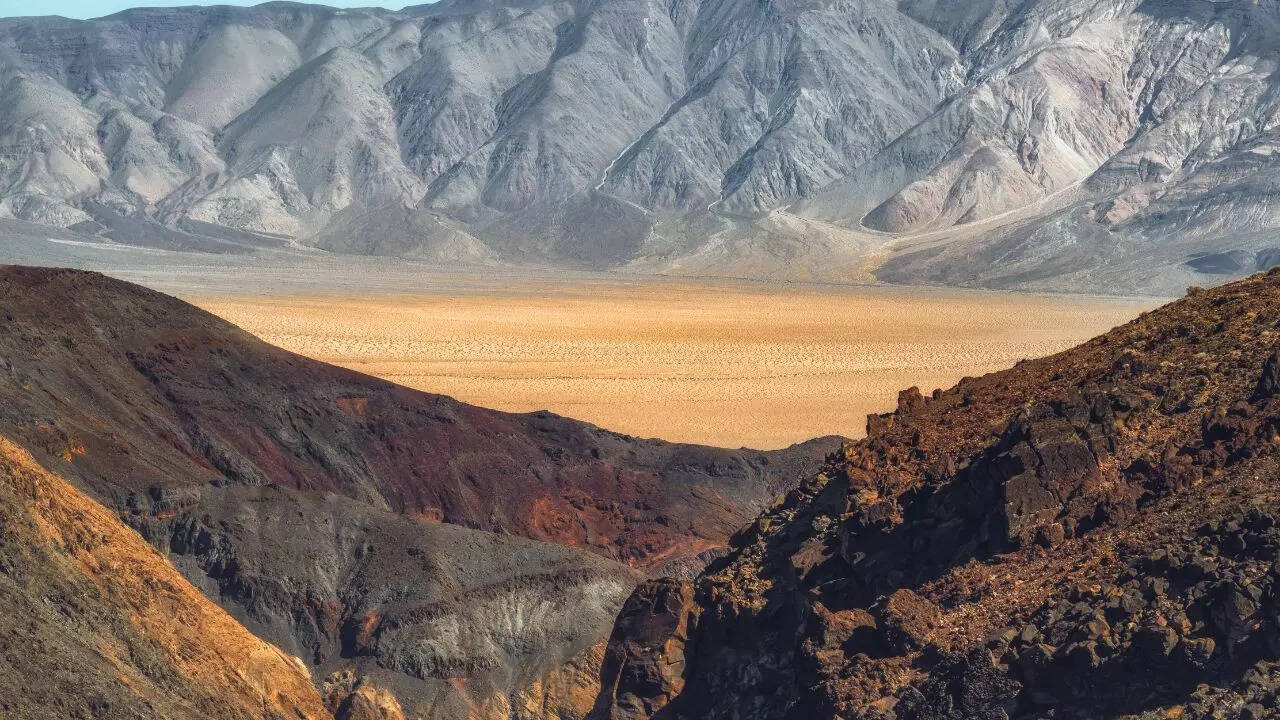
Racetrack Playa, in a remote part of Death Valley, is a dry lakebed that turns a shallow, slick surface after the occasional rain.
The stones scattered across the dry lake, also known as "sailing stones" or "sliding rocks," leave behind long trails etched into the soft mud as if they had been propelled by an invisible force. These trails can extend for tens of meters, often hundreds of meters, sometimes in straight lines or gentle curves, but for decades, nobody has watched them in motion.
How scientists finally observed the rocks move
In 2013 and 2014, a team led by researchers set up on Racetrack Playa GPS-equipped stones, weather stations, and time-lapse cameras. For the first time, they documented rocks actually moving, in the process leaving trails behind. Their 2014 paper, “Sliding Rocks on Racetrack Playa, Death Valley National Park: First Observation of Rocks in Motion”, chronicled for the first time the resolution of the long-standing mystery. The movement associated itself with shallow pools of water, forming after rain; freezing temperatures at night; and thin sheets of ice, which form on the playa surface.
The ice, sun, and wind mechanism
These mysterious moving stones have puzzled scientists for decades, appearing to defy gravity and logic. So how do massive rocks slide across a nearly flat desert floor? The answer is a precise combination of conditions:
- Rainwater collects on the playa, forming a thin layer of water.
- Cold nights freeze the water, creating fragile ice only a few millimetres thick.
- As the morning sun warms the ice, it begins to break into large floating panels.
- Light winds push the ice sheets, which in turn push the rocks, dragging them slowly across the wet mud.
This movement continues until the ice disintegrates or the water evaporates, leaving behind the characteristic trails in the mud.
Why this rare phenomenon only happen occasionally
Sliding stones don't move every year, only when the rare mix of conditions is just right.
Death Valley is one of North America's toughest environments, requiring enough precipitation to create shallow water, severe temperatures to freeze the water at night, and sunlight to melt the ice in the morning. Rock movement occurrences are extremely rare due to the importance of ensuring that all of these components occur in the correct order. As a result, stones may only be moved a few times over a period of years, if not decades.
What the trails reveal
When these boulders move, they leave behind peculiar trails that tell their tale. Some of these trails are straight, some bend gradually, and others intersect each other. The length and direction of these trails would depend on wind direction, patterns of ice breakup, and the duration the ice sheets remained intact.
Over time, hundreds of these trails were mapped by scientists, but it was the recording of actual motion that confirmed the cause.
Visiting the Racetrack Playa
Nowadays, the place is considered a bucket list destination for geologists, photographers, and curious tourists. It’s most accessible in cooler months when conditions are milder, and occasionally when rare winter rain brings the sliding stones to life. If planning a visit to the place, tourists can be prepared to drive through rugged terrain.