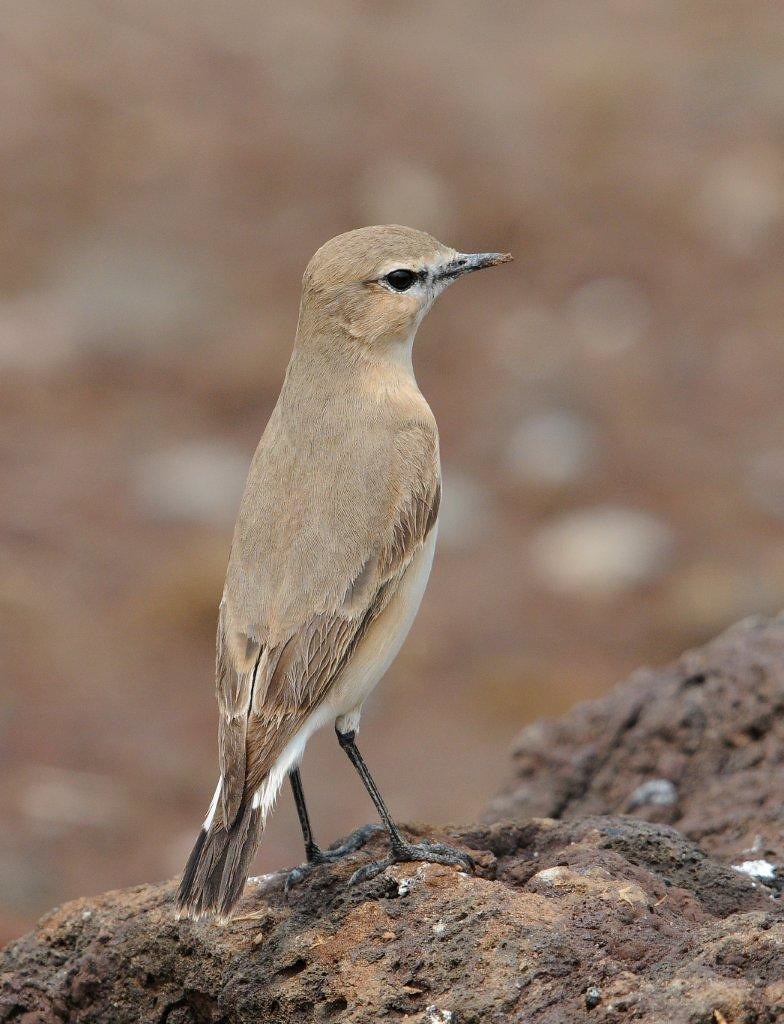
Adult female Isabelline wheatear, Oenanthe isabellina (protonym, Saxicola isabellina), also known as the Isabelline chat, photographed at Ngorongoro Conservation Area, Tanzania (Africa).
Image: Dan Logen, 17 February 2011 [velociraptorize].
Nikon D300, 600 mm lens, ISO 640, f/7.1, 1/1250 sec
Question: This lovely African mystery bird closely resembles another species that is found in the UK, although there are several characters that do set them apart from each other. Can you name what those characters are? Further, this bird's common name is deceptive .. can you explain why?
Response: This is an Isabelline wheatear, Oenanthe isabellina. Unlike other wheatear species, males and females of this species look alike, and they closely resemble female northern wheatears although this species is larger, it stands more upright, is a pale cream colour and has more black on its tail.
The common name sounds like it refers to a person's proper name but it doesn't: Isabelline refers to the bird's colouration. Isabelline, or Isabella, is described as a pale grey-yellow, pale fawn, pale cream-brown or parchment colour.
The name for this colour is based on a number of entertaining (but probably untrue) stories about different queens named Isabella who vowed not to change their royal underpants until a particular war had been won.
You are invited to review all of the daily mystery birds by going to their dedicated graphic index page.
If you have bird images, video or mp3 files that you'd like to share with a large and (mostly) appreciative international audience here at The Guardian, feel free to contact me to learn more.
.
email: grrlscientist@gmail.com
twitter: @GrrlScientist