The natural entrance to the Myall River is likely to be silted over by Christmas, spelling disaster for a tourist hotspot that has already had its economy battered by COVID-19.
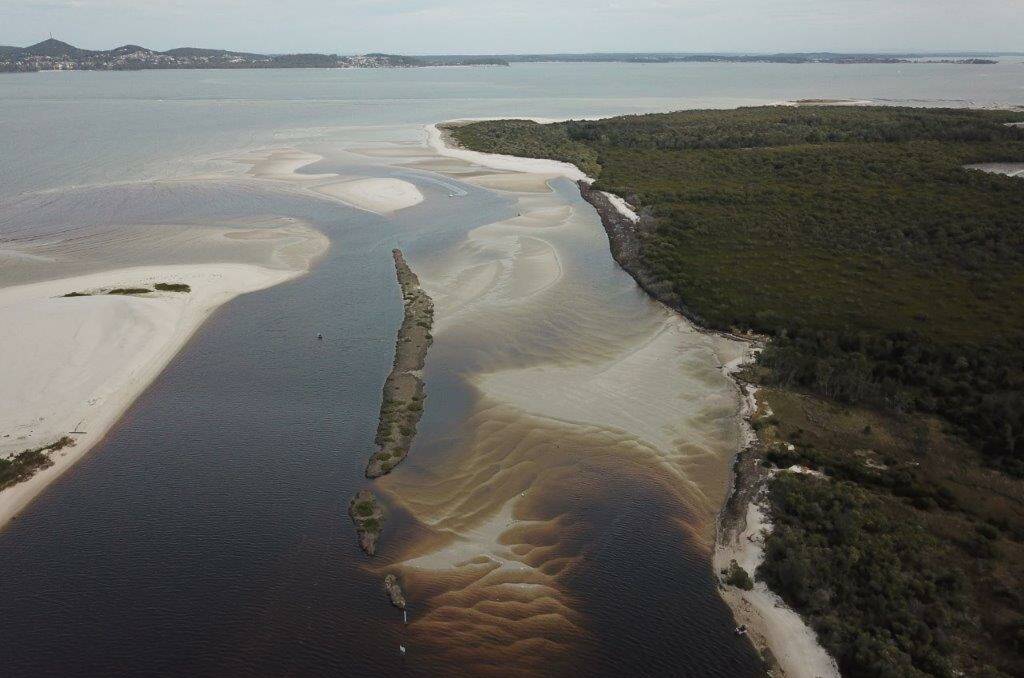
New drone footage of the river mouth, captured by Tea Gardens local Leon Katz, shows the impact of the steady build-up of sand, which has made the channel unpassable for all but the smallest vessels.
The river entrance was dredged last year as part of a five year dredging program.

Myall River Action Group spokesman Gordon Grainger said the speed at which the sand build-up was recurring was a major concern.
"It's certainly spreading quickly," he said.
"It looks like we are going to be right back at where we were before they dredged it."
The river's ability to flush effectively is essential to the health of the extensive catchment area.
In addition, the clogged entrance may increase the risk of upstream flooding.
"Tea Gardens never floods because of the direct flow out into the sea, but if the river mouth is closed and we get flood water coming down from Karuah the town will be inundated," Mr Grainger said.
'The road between Bulahdelah and Hawks Nest would be unpassable like it was in the 1970s."
The Mayall River Action Group is hopeful of reaching agreement on a long-term strategy for dredging the channel.
There is also a push to assist nature to rebuild Myall Point, a sand structure that once jutted into Port Stephens.
The estuary's three lake systems entered the ocean at different points up to about 1000 years ago. Over time the three entrances were blocked through sand movement and the narrow stream which exists today was formed.
Sediment has been used to supply the Jimmys Beach sand transfer system, which pumps sand via a two kilometre pipeline to 10 outlets on Jimmys Beach and Winda Woppa.
The channel was also dredged in 2015 following an eight-year community campaign.
The $3.5 million project resulted in an immediate improvement in the river's water quality and the surrounding environment.
The increased salinity levels also helped to revive the area's multi-million oyster industry.