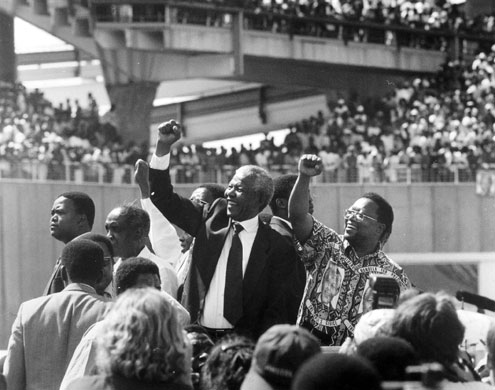
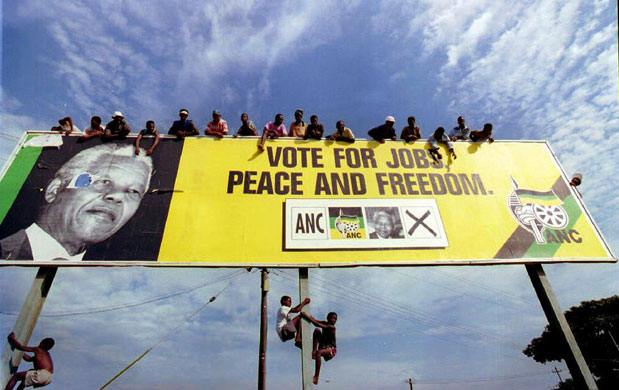
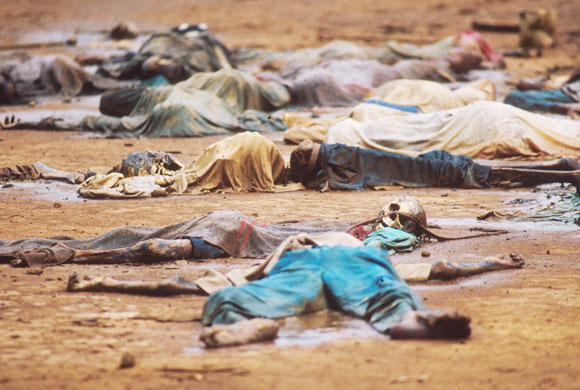
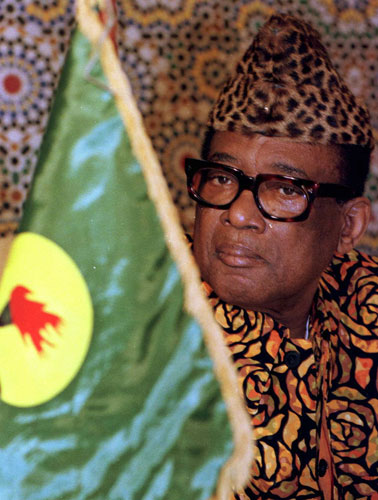
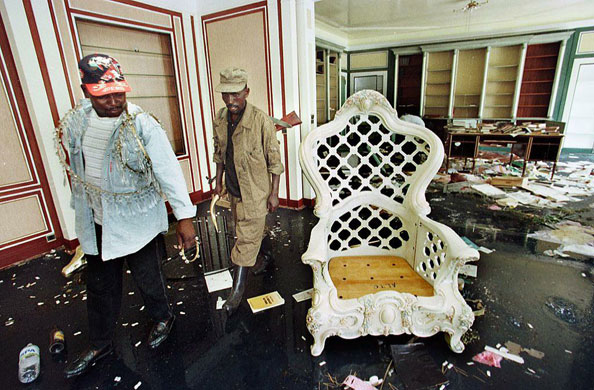
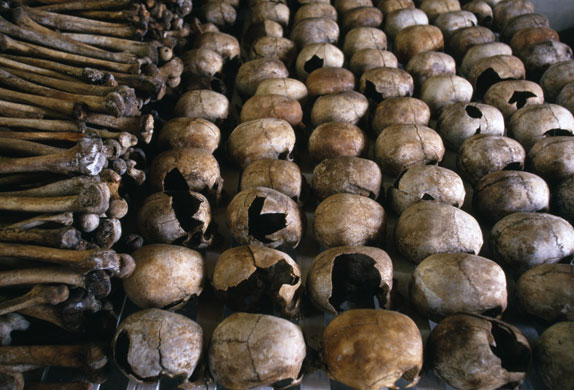
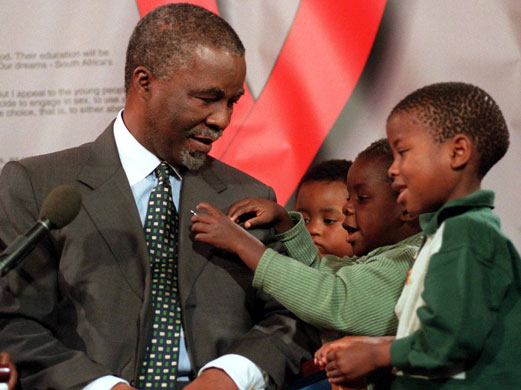
1994: Nelson Mandela makes a clenched-fist salute at an election rally. 'The election not only changed the country but helped to change the continent'Photograph: Don McPhee/Guardian1994: ANC supporters wait for Nelson Mandela on a billboard in a township just outside Durban before a pre-election rally. 'Mandela's election not only liberated the immediate victims of apartheid but every South African of whatever race'Photograph: Alexander Joe/AFP1994: Tutsi victims of a Hutu massacre lie outside the Rukara Catholic mission in Rukara, Rwanda. 'While South Africa was being liberated, another part of the continent was enduring almost unimaginable suffering'Photograph: Scott Peterson/Getty Images
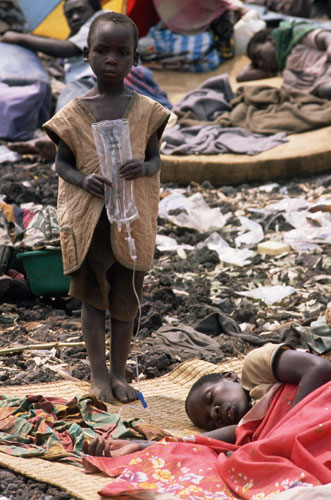
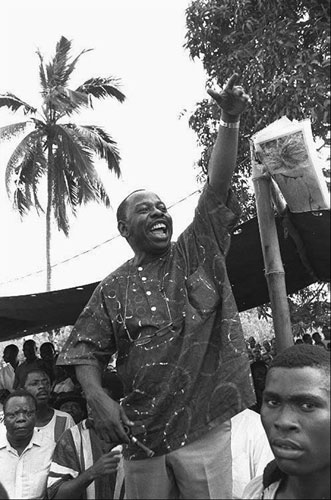
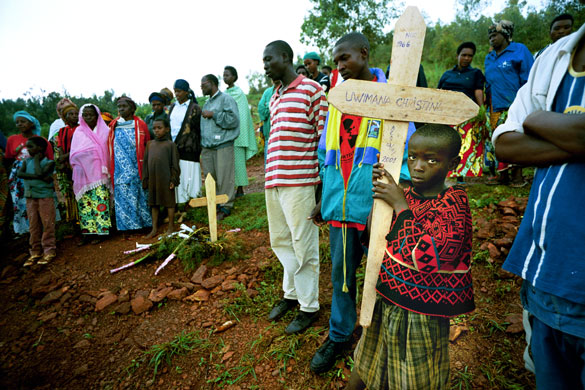
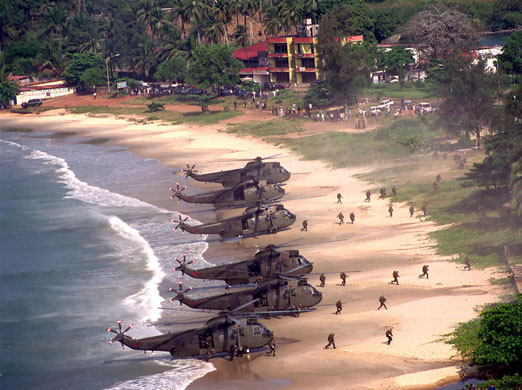
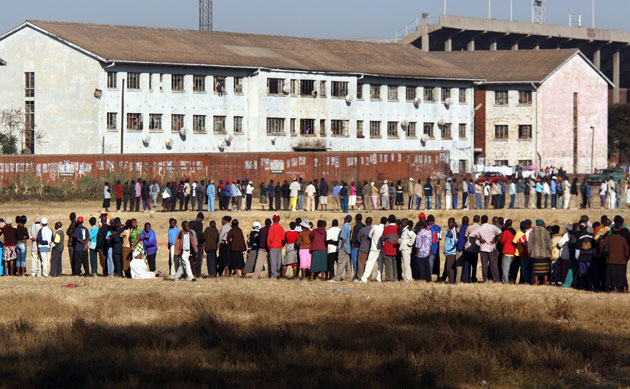
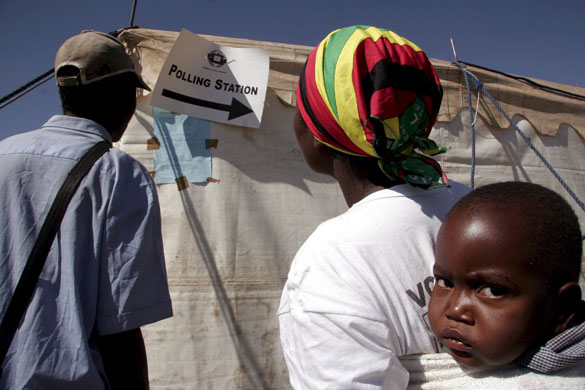
1994: A young Rwandan Hutu refugee holds an intravenous bag for his mother who lies ill with cholera in a refugee camp in Goma, Zaire. 'The genocide was just the beginning of years of suffering as first, millions of Hutus fled the country and then war spread throughout the region'Photograph: Peter Turnley/Corbis1995: Writer, environmentalist and campaigner Ken Saro-Wiwa, executed by the Nigerian army. 'The Nigerian military dictatorship plumbed new depths when they hanged the Ogoni environmental activist because he threatened not only the oil companies but the source of the military junta's wealth' Photograph: Corbis Sygma1996: A Zairian Mai-Mai militia rebel child soldier holds his AK-47 as he prepares to fight Zaire government forces on the Masisi plateau, north-west of Goma. 'What began as a civil conflict in the tiny country of Rwanda, over the next decade spread across the region, costing millions their lives and creating one of the largest armies of child soldiers in the continent'Photograph: Abdelhak Senna/AFP1997: Zairean president Mobutu Sese Seko at the presidential palace in Libreville on 8 May 1997. Days later, rebels ousted him, ending his 32-year rule. 'It was the spread of conflict out of Rwanda that ultimately led to the overthrow of the continent's longest standing dictators'Photograph: Enric Marti/AP1997: Two looters view the ivory throne of ousted Zairean president Mobutu Sese Seko in his devastated house following his overthrow. 'Once the darling of the west, the dictator could never have imagined that solders from a small country more than 2,000km away would bring him down' Photograph: Pascal Guyot/AFP1996: UN security personnel escort Georges Rutaganda, leader of the notorious Hutu militia group which led the 1994 genocide in Rwanda, into a tribunal to face charges of genocide. Rutaganda was convicted and sentenced to life imprisonment. 'Many of the organisers of Rwandan genocide fled to other parts of the continent to escape justice but were tracked down by the international tribunal and convicted of war crimes'Photograph: George Mulala/Reuters1997: 26,000 skeletons and skulls from some of those who had died in the Rwandan genocide were placed in the classrooms of the Murambi school as a memorial in Gikongoro. 'Rwanda has made great strides at reconciliation but there has been little regret from the organisers of the genocide, and the mass murder of Tutsis haunt the country to this day'Photograph: Christophe Calais/Corbis1998: South African deputy president Thabo Mbeki has his Aids ribbon examined by curious children prior to a live television programme broadcast in Johannesburg. 'Mbeki came to power after Nelson Mandela with many people in South Africa and abroad expecting him to be a safe pair of hands. He quickly shocked the nation with his perverse views on the origins of Aids'Photograph: Denis Farrell/AP2001: The funeral of Aids victim Christine Uwimana on the outskirts of Kigali, Rwanda. Her orphan son Claude holds her cross. 'Of all the crises that have stalked the continent over the last two decades, Aids has assaulted every society but combined with conflict, such as in Rwanda, the toll was always much greater'Photograph: Sean Smith/Guardian2000: British Royal Marines land on the beach in the north-west of the Sierra Leone capital of Freetown. They were demonstrating of Britain's ability to deploy troops rapidly. 'One of the legacies of Rwanda was western guilt, which helped prompt Tony Blair to send British troops into Sierra Leone to stem a rebel assault on the capital. The British intervention ultimately ended in war'Photograph: Darren Casey/PA2008: Voters line up to cast their ballots on 27 June 2008 in Harare, Zimbabwe, at the runoff presidential election, which was boycotted by then opposition leader Morgan Tsvangirai, leaving Robert Mugabe as the sole candidate. 'Zimbabweans went to the polls last year believing they could finally force Mugabi from power but when they voted to get rid of him, it turned into a bloody power struggle'Photograph: Getty Images2008: Voters check the initial results after the runoff presidential election in Zimbabwe. 'By the time of the second election, many people had died, and thousands more had been tortured or raped as part of the government terror campaign to defy the pressure to vote against Mugabi'Photograph: EPA
Sign up to read this article
Read news from 100’s of titles, curated specifically for you.







.jpg?w=600)