Picture the bottom of an old fashioned ceramic sink - with a plughole in the middle. On one side of the hole, in big black capitals, are the letters N, I and X. On the other side, N. The sink is wet and the letters are in ink so they are beginning to bend and deform. The X and the second N are running down the plughole, which looks as though it’s taking the place of an O. NIXON is going down the drain.
This was an image created by the editorial cartoonist Jeff MacNelly in 1974, illustrating the decline of President Richard Nixon, who resigned from the White House the same year, following a host of political scandals. The simple genius of MacNelly’s work inspires me to this day. There’s a lot about it to admire about this particular cartoon. It’s almost entirely white which emphasises the blackness of the letters, angled slightly left to right. The only grey in the picture is on the plughole - making it look like chrome - with just a touch more half-tone below which might be reflection or shadow. As well as being piercingly astute, it is boldly aesthetic. And it is funny.
I’d known for some time that being a cartoonist would be a fine kind of employment. I’d grown up pouring over the “funnies” in the Melbourne newspapers (I grew up in Australia). My dad used to clip out his favourites and sticky-tape them to a kitchen cupboard door. Often strip cartoons - like Peanuts by Charles Schultz or B.C. by Johnny Hart. Later, Footrot Flats by Murray Ball became a regular.
And the cartoonists became my drawing heroes. I learned that drawing didn’t have to be about representing things on paper accurately. A drawing didn’t have to look like the thing you were drawing. A drawing could be simple, stylized and, most of all, fun.
Then I discovered editorial cartoons. Once more the cupboard door was my introduction. The Australian political artists Jeff Hook and Michael Leunig were the most posted. Clever, topical, beautifully drawn and funny. This is what I wanted to be. In one picture Micheal Leunig could say more with his sad little characters than whole books of wordy introspection. It was utterly inspiring.
There were others of course too. Once you’ve seen something that fires the imagination you want to see more; Ron Cobb for his draughtsmanship and Bruce Petty for his passion - then Pat Oliphant for his insight and wit and Jeff MacNelly for his ironic artistry. Not so editorial but every bit as fun were the bizarre drawings of Bernard Kliban, Gary Larson and Jerry Van Amerongen. And there was Bill Watterson - creator of Calvin and Hobbs, perhaps the finest cartoon strip of them all.
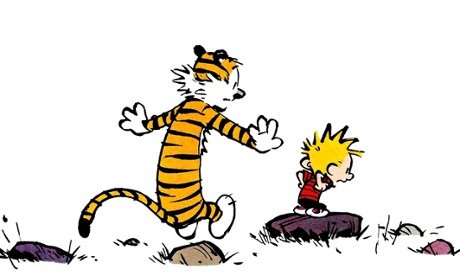
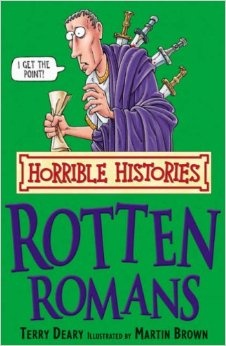
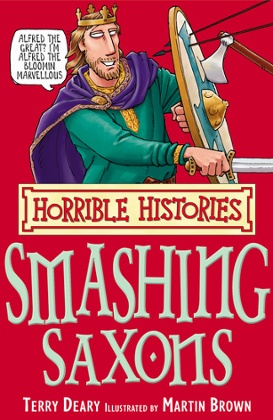
All these people and more had a profound effect on what I did and do, and what it means to draw and even, what a drawing is. Perhaps that’s why the Horrible Histories turned out the way they did. Because I didn’t get there from children’s book illustration, I came from cartoons.
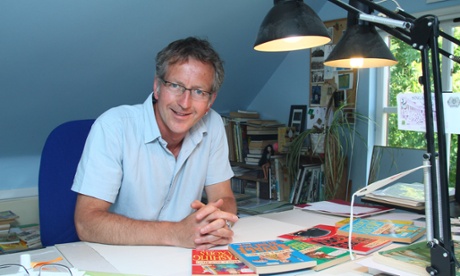
Martin Brown is an illustrator most renowned for illustrating The Horrible Histories books written by Terry Deary. He recently toured schools in Orkney and Shetland as part of the Scottish Friendly Children’s Book Tour.