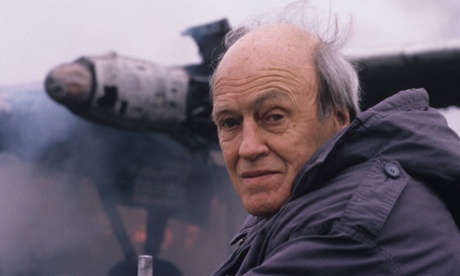
When I was eight or nine, my hobbies were playing football, reading and picking my nose (not all at the same time). I think I already knew that I’d never be a professional footballer, and that the opportunities for professional nose-pickers were, at best, limited. But it seemed that writing funny books for a living might just be possible, and my inspiration, above all others, was Roald Dahl.
My mum and dad used to take me to Dudley Library once a month, and I’d borrow as many books as I could carry. The football stories of Michael Hardcastle were particular favourites, as were the Five Find-Outers mysteries of Enid Blyton. But Roald Dahl did something other writers didn’t do, something extra-special: he made me laugh. And not just laugh but snigger and snort and guffaw. It was around this time that I started trying to write my own funny stories and silly poems.
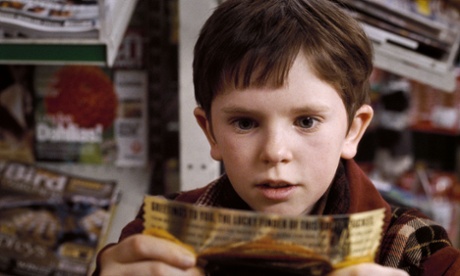
Fast-forward 30 years. I’m an actual writer and, just as incredibly, an actual dad. Both jobs are great, but neither is particularly easy. As a dad, I’ve had to sit through all 88 minutes of Alvin and the Chipmunks 2: The Squeak-quel. And you never do quite get used to treading barefoot on Lego. But there are upsides, too. One of my greatest pleasures in life, in fact, has been reading Roald Dahl with my daughters, revisiting my favourites. Charlie and the Chocolate Factory. The Witches. Danny the Champion of the World. The BFG. Revolting Rhymes.
Those books were just as brilliant as I remembered, but there was one thing that really struck me this time around: I’d forgotten – or possibly hadn’t realised – just how deliciously dark Roald Dahl’s stories were.
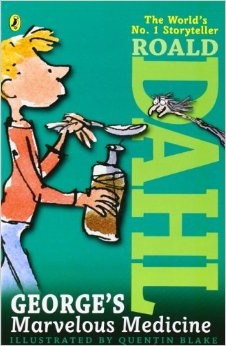
George’s Marvellous Medicine, for example, is pretty much about a little boy who is trying to poison his (admittedly awful) granny. In some of his other books, children get hurled out of windows or plucked out of their bedrooms at night, or turned into blueberries or mice. The wonderfully-named Aunts Spiker and Sponge, from James and the Giant Peach, are truly terrifying creatures. And if there are two more stomach-turningly disgusting people in the whole of fiction than Mr and Mrs Twit, I’m yet to meet them.
There’s a definite Roald Dahl influence in my Squirrel Boy series: there’s a slice of magic (the main character, Walter, turns into a rodent-based superhero whenever he eats a nut); there are eccentric grown-ups (Walter’s sidekick is his incredible 73-year-old next-door neighbour, Mrs Onions); and there is, I hope, lots of excitement and humour.
However, as much as his books are an inspiration to me, Roald Dahl the man is an even greater inspiration: he was a hero and a spy in the second world war; he overcame several tragedies (including the death of a daughter); and, as well as his many classic children’s books, he wrote excellent short stories for adults, and screenplays (including Chitty Chitty Bang Bang).
For me, writing funny books is a great job, but can also be really difficult: trying to get the wording exactly right to make the joke as funny as possible, and all the while trying to maximise the tension in the plot. I was relieved to find out that Roald Dahl struggled with these things, too, constantly editing and rewriting each book until it was as polished as it could possibly be. There’s something comforting about this: that even the master storyteller didn’t find it easy.
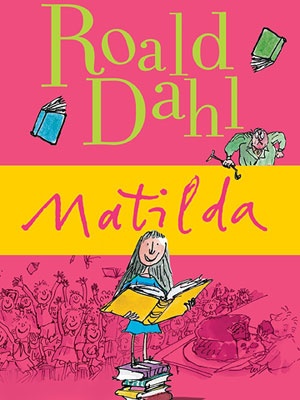
There’s a lovely bit in Matilda, where Miss Honey asks our young hero if she thinks that all children’s books ought to have funny bits in them.
“I do,” Matilda replies. “Children are not so serious as grown-ups and they love to laugh.”
And that, in my opinion, is one of the many reasons that generations of kids will continue to enjoy Roald Dahl’s fantastic books.
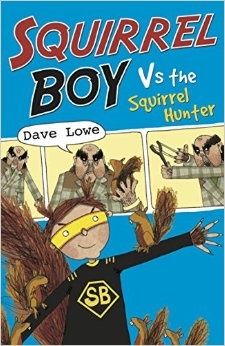
After realising he would never play for West Bromwich Albion, Dave Lowe became a writer. His first series, Stinky and Jinks, sold over 10,000 copies. His new series features Squirrel Boy and is illustrated in comics style panels by Cate James.