Anyone who has sat in the dark and watched the beautiful, glowing images of a silent film come to life on the screen has plenty to thank Kevin Brownlow for. Since the 1960s he has been on a quest to collect, preserve and restore these fragile artefacts of early cinema – thousands of which were lost, binned, or melted down for their silver content. He even won an honorary Oscar in 2010 for his efforts. But perhaps less well known is Brownlow’s career as a film director; not just with the various documentaries and TV shows related to his passion for silent movies, but in feature films that are as good as any of the more celebrated products of British cinema’s 1960s and 70s golden age.
Brownlow, in conjunction with co-director (and historian) Andrew Mollo, has two brilliant features on his CV: It Happened Here, released in 1964, and Winstanley, released more than a decade later in 1975. But that was it. Brownlow, now 87, seems pretty sanguine about it. “We did try,” he says. “If producers had been enthusiastic, I’m sure we’d have made at least one more feature.”
Things might have been different, perhaps, if they hadn’t got themselves fired (by Bryan Forbes, no less) from The Breaking of Bumbo, an adaptation of the Andrew Sinclair comic novel, after a row over casting. (Bumbo eventually came out in 1970, with Sinclair as director, and without Brownlow and Mollo’s choice in the lead role.) But it’s not as if Brownlow didn’t have anything else going on: he published The Parade’s Gone By, his seminal history of silent cinema, in 1968 (and followed it up with two more: The War, the West and the Wilderness in 1979, and Behind the Mask of Innocence in 1990); he was also the editor on Tony Richardson’s The Charge of the Light Brigade (also 1968), an authentic masterwork of the period.
The two Brownlow/Mollo films that were finished and released were both essentially self-produced, tiny-budget affairs, but amazingly consequential in their impact, then and now. From our vantage point they look bizarrely prescient – which is why film-maker and curator Stanley Schtinter is hosting a rare cinema screening of both films at the Close-Up Film Centre in London tomorrow.
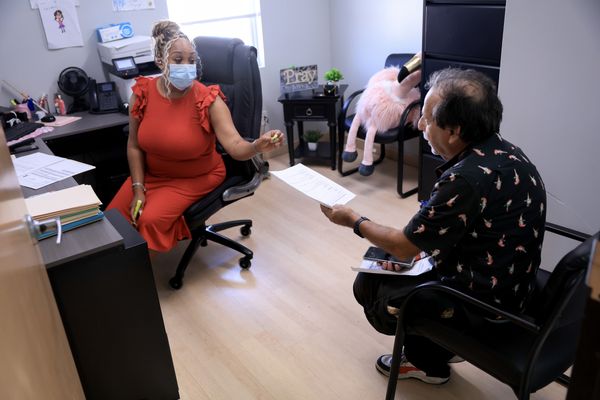
The earlier film, It Happened Here, is perhaps the most obviously resonant. A sort of hybrid alternative-history drama-newsreel, it posits an England occupied by the Nazis, its inhabitants caught between bending the knee to the invaders and standing up to them. As much as anything else, it pushes back against the idea that England possesses a natural sense of liberalism. Not only do we hear at length from dyed-in-the-wool English Nazis – played, says Brownlow, by real-life fascists, including a BUF group leader called Frank Bennett – but we also see the incremental submission of middle-of-the-road “apolitical” types (including the central character, an Irish nurse). The British “partisans” that Brownlow and Mollo confect are just as brutal as their German counterparts, enthusiastically machine-gunning captured soldiers in a field.
The story behind the film’s genesis is remarkable. Brownlow says he was inspired by hearing a man shout in German in the street in London’s West End. “I was doing a dreary job taking film cans to the local laboratory, and a Citroën, the kind the Gestapo took over in their occupation of Paris, screeched to a halt beside me. The driver yelled at somebody in the doorway of a delicatessen in German. I’d just been reading things by George Orwell and I thought: my God, what a story it would make.”
Even more remarkably, Brownlow was only 17 when he started shooting the film in 1956: “I was earning four pound 10 a week, and I was completely addicted to film. This was my feeble attempt at doing a big picture.” Mollo was even younger, but fortunately for Brownlow had a job at Woodfall, the film company co-founded by Richardson, who gave the pair £3,000. “Andrew insisted that everything be absolutely authentic – even the tank that opens the picture. He had an uncanny ability to find exactly what we needed for the next bit of filming. I just don’t know how he did it.”
The cherry on top was a chance encounter with a legendary figure in the cafe of what was then the National Film Theatre. “Andrew and I were watching a von Stroheim film and in the interval we went to the coffee bar – and there was Stanley Kubrick. We admired him tremendously for what he’d done with Paths of Glory, so we went up to him. Kubrick said to us: ‘I once did what you are doing but I ran out of stock. Could you use some more?’ He was fantastic and sent us a huge crate packed with 35mm raw stock from Dr Strangelove, which he was doing at the time. It was so generous, and kept us going at a time when nobody was interested. But we were very worried we were going to get a double exposure with Peter Sellers!”
In retrospect, It Happened Here is a fascinating oddity, of a piece with the kind of radical TV being turned out at the time, such as Peter Watkins’s pseudo-documentary Culloden, which was broadcast in 1964, the same year that Brownlow’s film premiered at the Cork film festival. Even more amazingly, Watkins – who would shortly embark on his celebrated nuclear-detonation film The War Game – was Brownlow’s assistant, and actually helped film parts of It Happened Here. “I can tell you, we used to have terrific rows about films and how to do realistic-looking scenes. It was really fascinating,” Brownlow says.
Brownlow and Mollo stumbled into a censorship row with their fascist footage; not surprisingly, the film’s Hollywood distributors balked at showing such nakedly antisemitic material and removed it. Brownlow felt it was necessary: “I tried writing the words myself, and asked other people to. But it never rang true until we got a bunch of these people in front of the camera. It was absolutely chilling.” With the help of Kubrick’s lawyers, Brownlow and Mollo eventually got the rights back and restored the scene – which, as he says, is chilling.
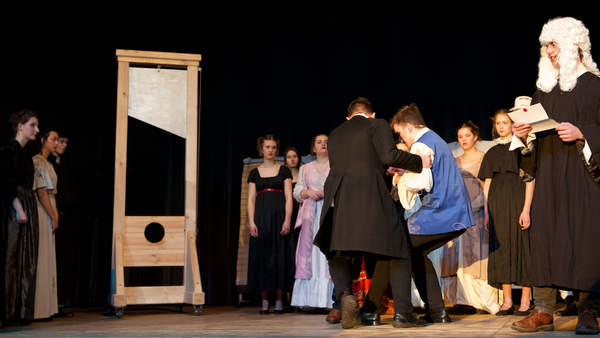
Cut to a decade later; the other side of The Charge of the Light Brigade, Bumbo and The Parade’s Gone By, and Brownlow and Mollo released Winstanley in 1975. Like It Happened Here, it was filmed almost entirely with non-professionals; the lead actor, Miles Halliwell, was a schoolteacher who brought the source material, David Caute’s Comrade Jacob, to the film-makers’ attention in the first place. Authentic and awkward, imbued with a deep sense of spirituality and a radical political consciousness, Winstanley is perhaps the closest British cinema ever got to Pasolini. It revolves around Gerrard Winstanley’s Diggers and their attempt, just after the English civil war, to take over common land on St George’s Hill, near Weybridge in Surrey.
Winstanley’s messianic socialism aligned the film with the New Left politics of the period – even if Caute later criticised the film for what he considered its reluctance to “penetrate the intense religious motivations of the time”. I am not sure that is true; Halliwell’s Winstanley comes across as a deeply spiritual figure, if a bit more well-spoken than the historical figure was supposed to be.
Historical accuracy was, naturally, a vital element of Winstanley, with Mollo to the fore again. Brownlow says: “He just went straight to the man who was the keeper of the armoury in the Tower of London, who gave us all the original 17th-century armour we needed for the opening battle scene.” But a large part of the film’s consequentiality was the way it tapped into the squatter culture of the 1970s; in another serendipitous connection, the notorious “king of the hippies”, Sid Rawle, was cast as a disquieting “ranter”. “I was very interested that the squatters were mirroring a lot of what went on in the 17th century,” says Brownlow. “Sid knew a lot about that period and he was very vocal about it.”
Brownlow’s sideways step into silent film preservation may be British cinema’s loss, but it is certainly the wider film culture’s gain. Meanwhile, we should all celebrate these two unique films while we can, born out of the partnership of two exceptional people. “Andrew was very, very hard to please, but when he was satisfied, then I knew we’d got it. And I just went on until we did.”
• It Happened Here and Winstanley, plus a Q&A with Kevin Brownlow, is at the Close-Up Film Centre, London, on 6 December.