
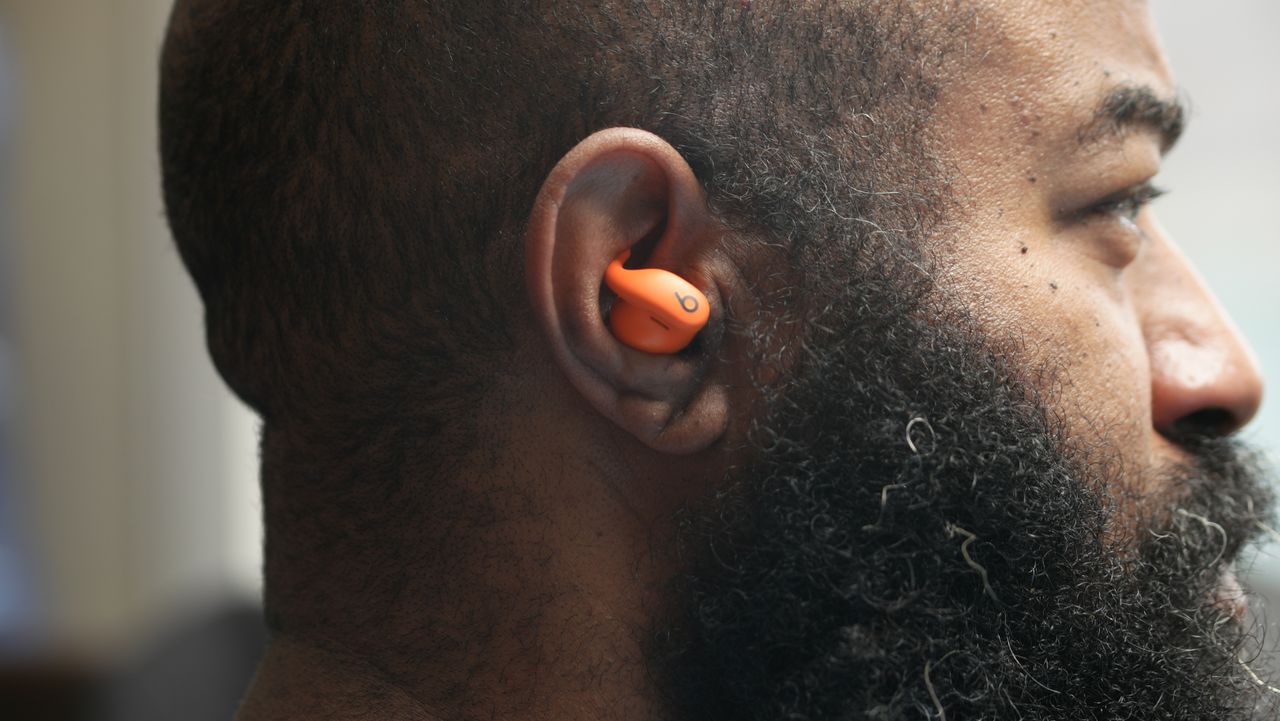
There is no shortage of headphones in the consumer audio space that have long, forgettable names. Sometimes it’s just that brands have confusing product tiers or groupings. Beats wanted to take some of the guesswork out of their line and has added one of their highly lauded earbuds under the banner of one of their best sellers, the Powerbeats Pros.
In September of 2025, Beats updated and rebranded their Beats Fit Pro to the new Powerbeats Fit. That means buyers now have two choices in the Powerbeats lineup. I’m going to tell you what the new Beats Powerbeats Fit has to offer and how they’ll differ from the Powerbeats Pro 2, so you can decide which is for you. Let’s go!
Powerbeats Fit: Price, availability, and specs
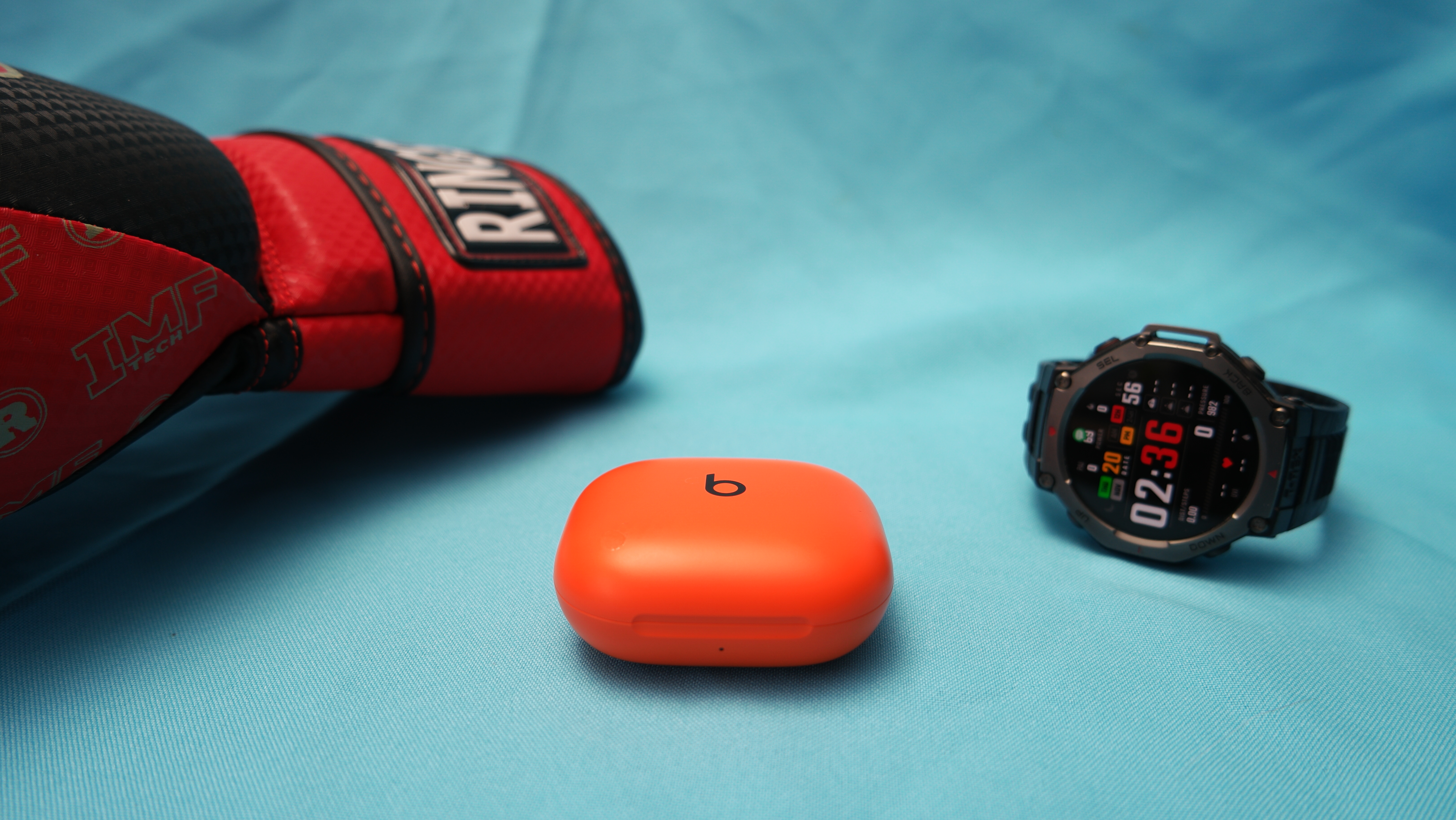
Launched in the summer of 2025, the Powerbeats Fit are available for $199.99 directly from Apple.com or in Apple stores. You’ll find them at other big box retailers like Best Buy or Target as well.
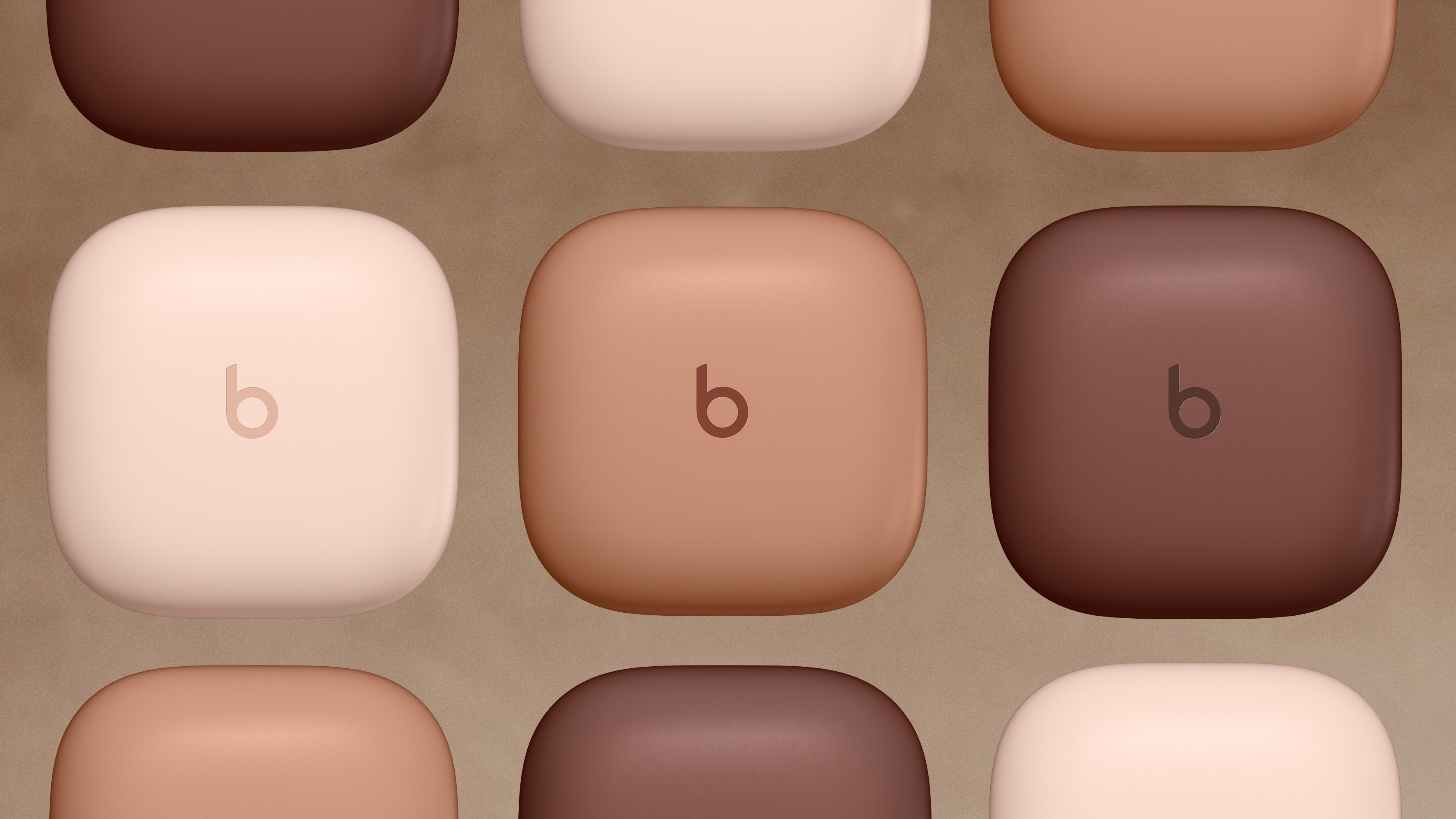
They launched in four different colors: Jet Black, Gravel Grey, Spark Orange, and Power Pink. Beats tends to release new colors, so you’ll likely see new colors at some point in the not-so-distant future.
Categories |
Beats Powerbeats Fit |
|---|---|
Conectivity |
Bluetooth 5.0 |
Speakers |
9.5mm transducers |
Codec support |
SBC, AAC |
Weight |
5.78g per earbud, 49.75 for the case |
Battery life |
Up to 27 hours of listening time with ANC/Transparency On - 6 hours of earbud usage with 21 additional hours from the case. Up to 30 hours of listening time with ANC/Transparency Off - 7 hours of earbud usage with 23 additional hours from the case. Fast Fuel: 5 minute charge = up to 1 hour of playback (ANC On) Full System Charge (buds + case) = 2 hours |
Charging |
USB-C |
App support |
Android, iOS |
Microphone |
6 mics total |
Colors |
POWER PINK, GRAVEL GRAY, JET BLACK , SPARK ORANGE |
Ear tips |
Large, medium, small, extra small |
Beats Powerbeats Fit: What I like
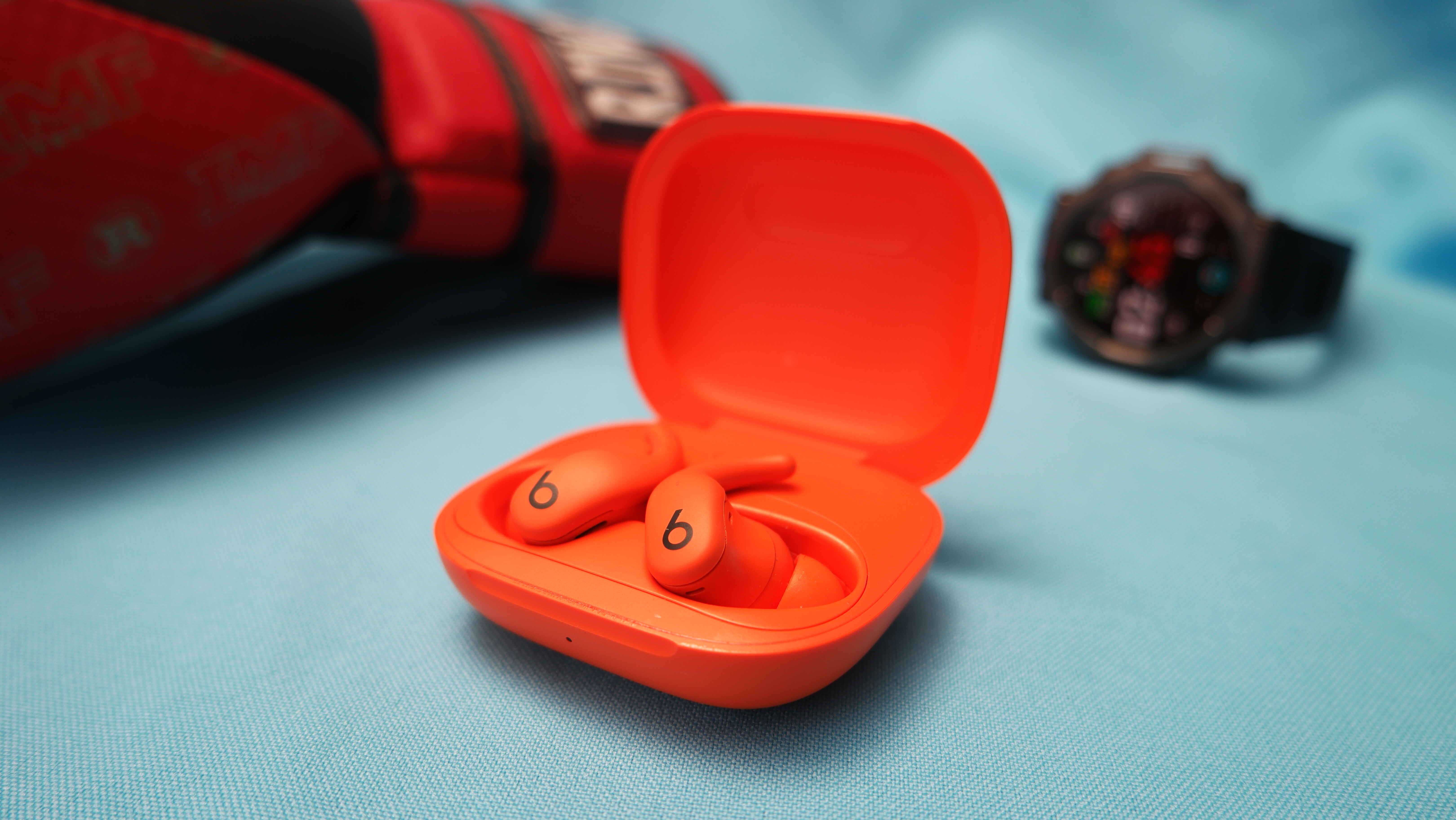
Beats Fit Pro have been one of my all-time favorite fitness-focused Bluetooth earbuds, along with the Powerbeats Pro series. Though they do sound quite good, that isn’t my primary reason for loving them for my workouts. They are incredibly comfortable for me, yet so locked in my ears that dynamic HIIT workouts don’t dislodge them or make me feel like I need to reseat them. In that regard, Beats has taken my experience to the next level!
First up, though subtle, Beats has made two highly impactful quality-of-life changes. The wingtips, which slide into and press against your ear’s concha to lock them in, have been refined and, according to Beats, are roughly 20% more flexible. I can’t tell you they are precisely that, but I can say they definitely feel more “bendy” than before.
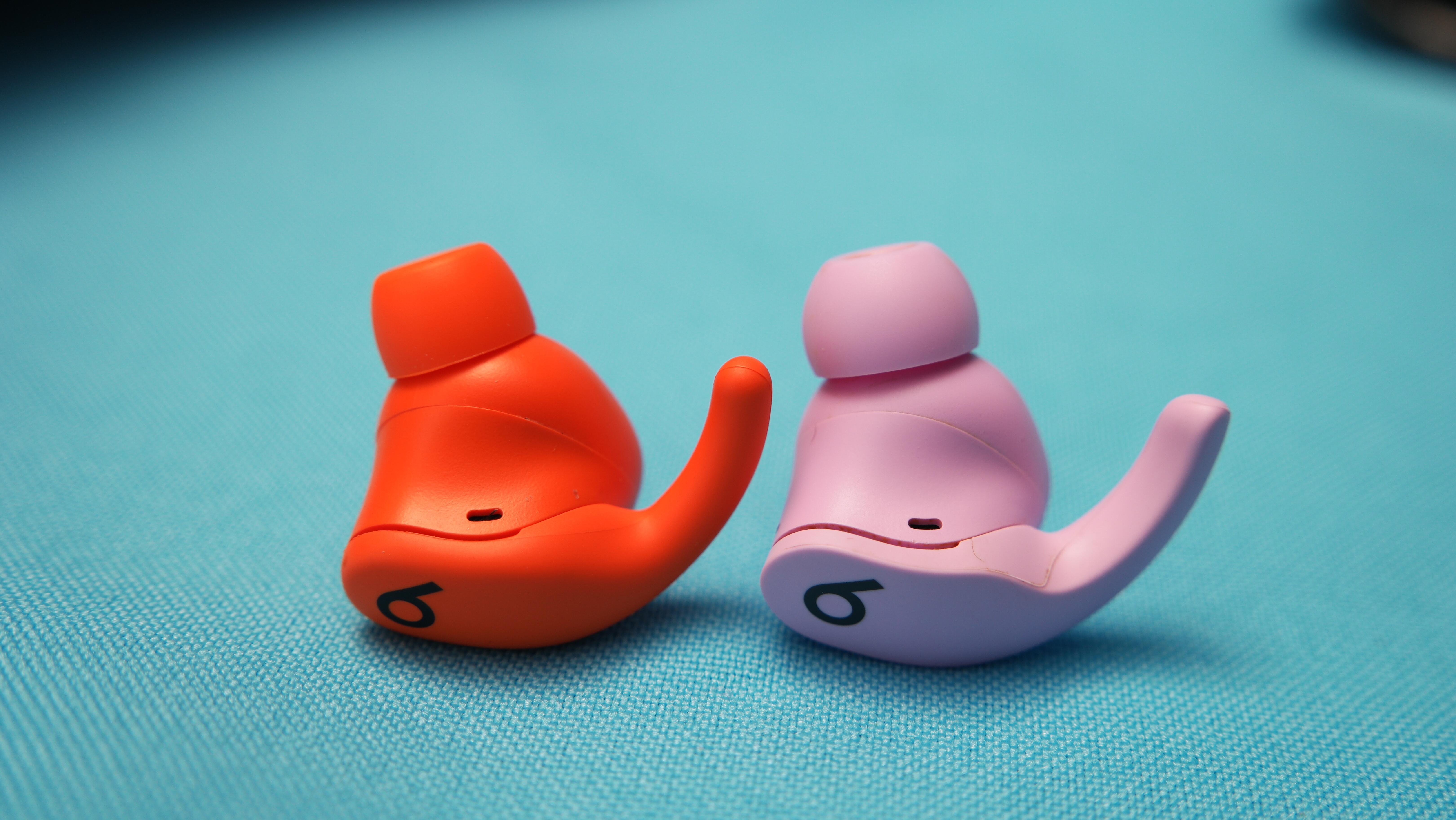
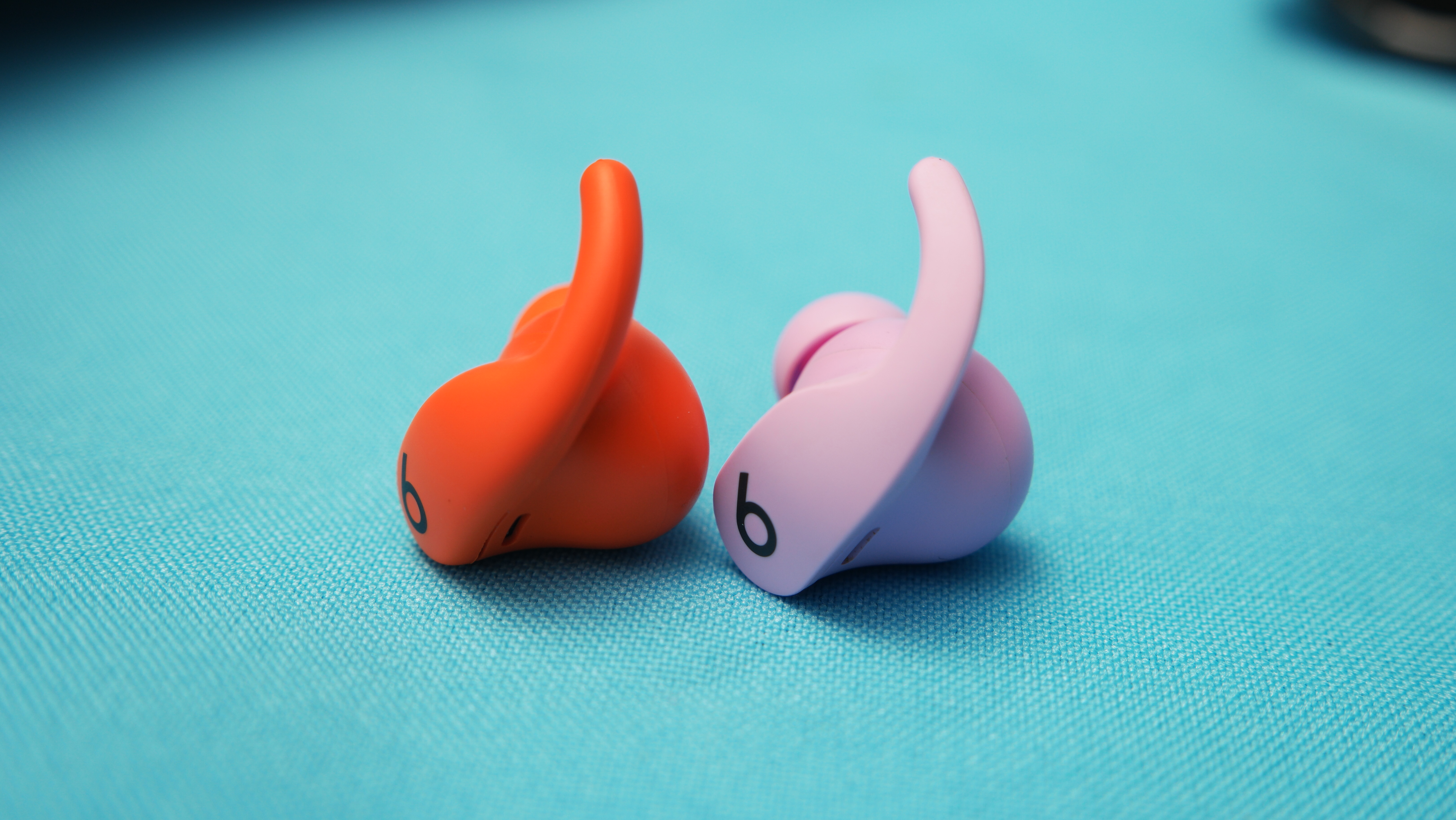
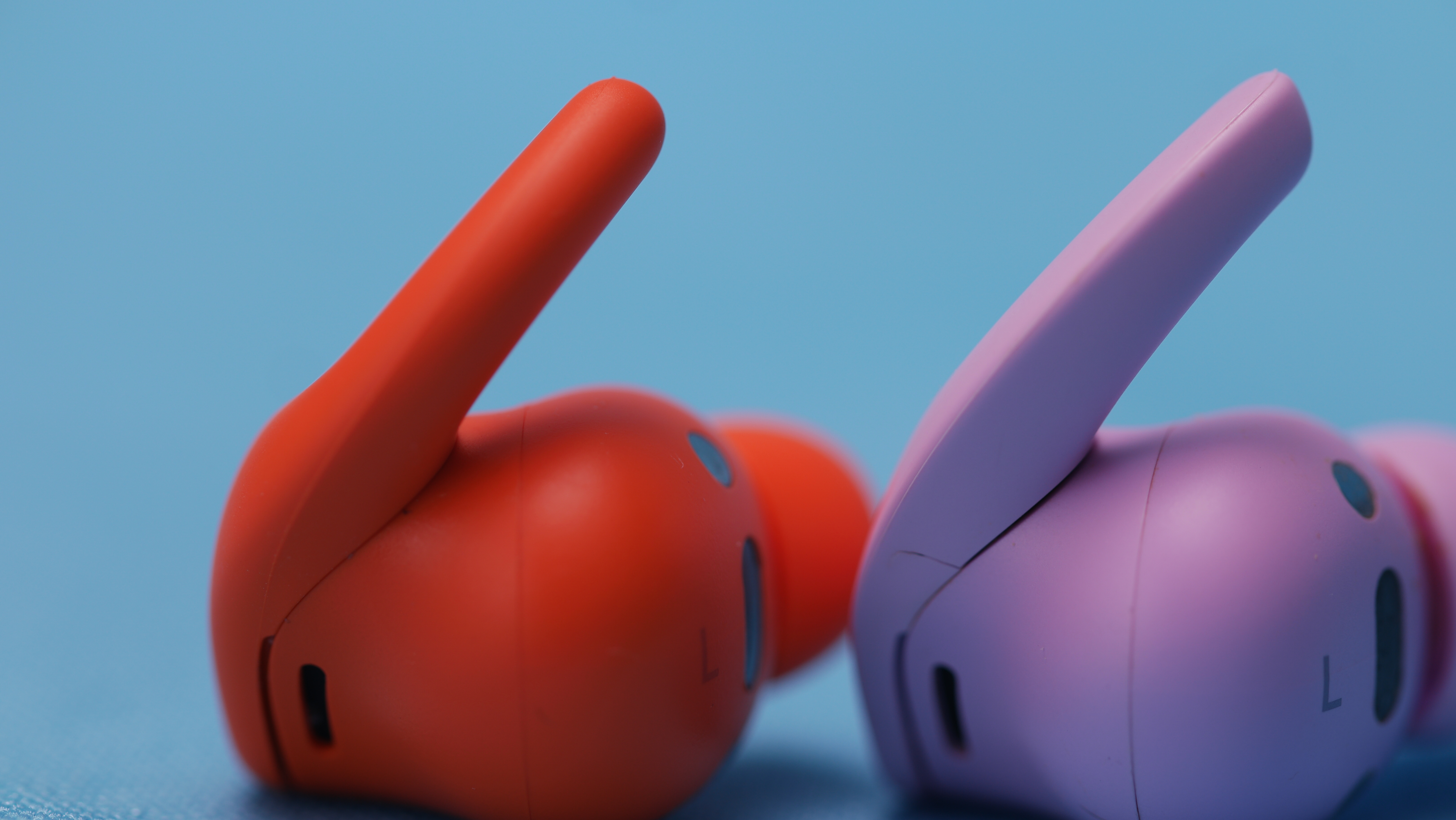
And, comparing them side-by-side, you can see they’ve smoothed out what were once very angular edges along the entirety of the wingtips. Both refinements combine like Voltron to form a fatigue-fighting wingtip that's even more comfortable for me than the Beats Fit Pro’s already were.
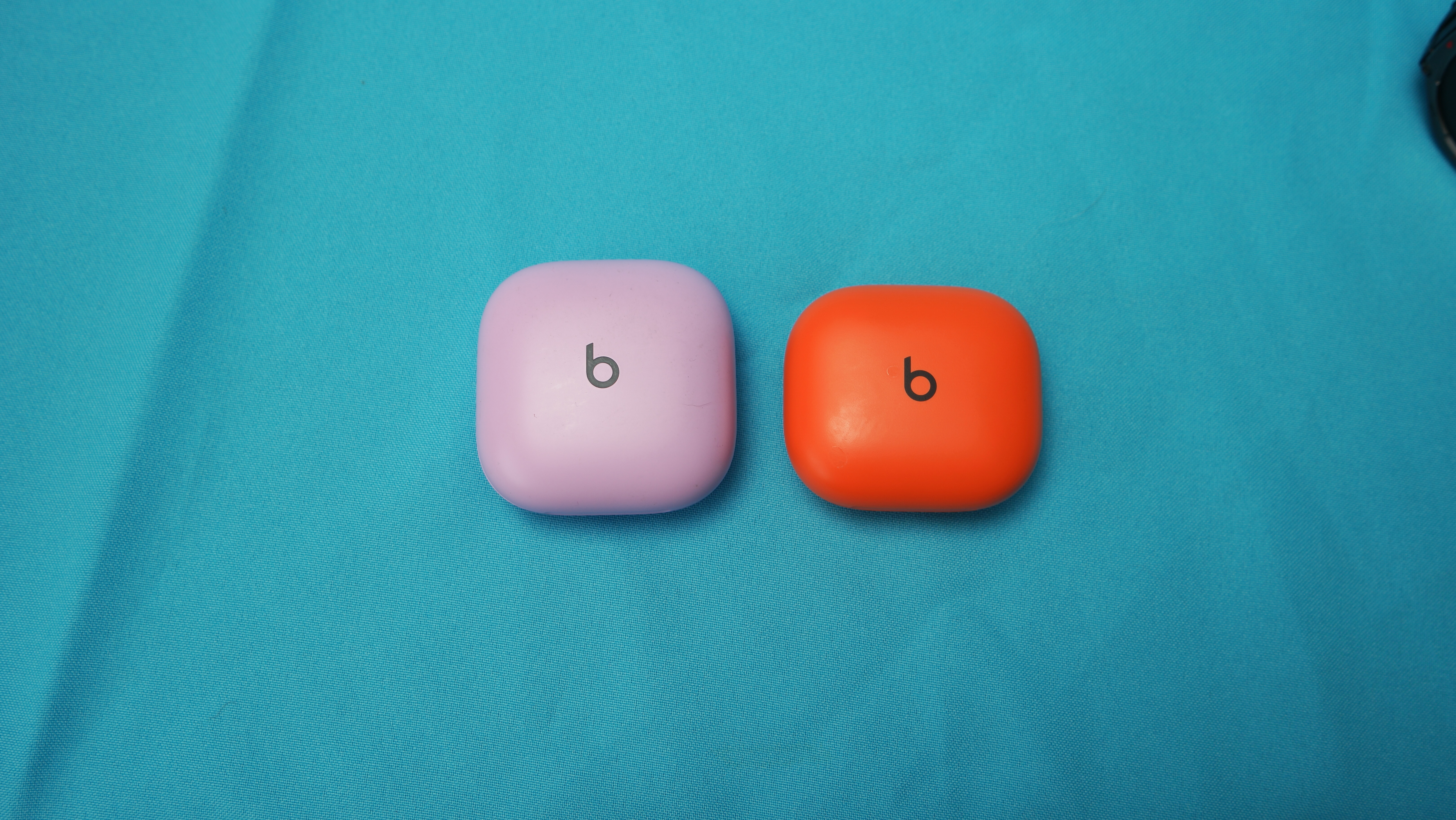
Since I live in California, I spend a decent amount of time outdoors, and the second quality-of-life evolution here is a smaller case that is now IPX4 water-resistant. The previous model lacked official water-resistance certification, and it was too large for my jeans’ coin pockets, so it was often in my gym bag or backpack rather than on my person as my everyday carry earbuds. The Powerbeats Fit has changed that, so now they go with me everywhere in those little pants coin pockets.
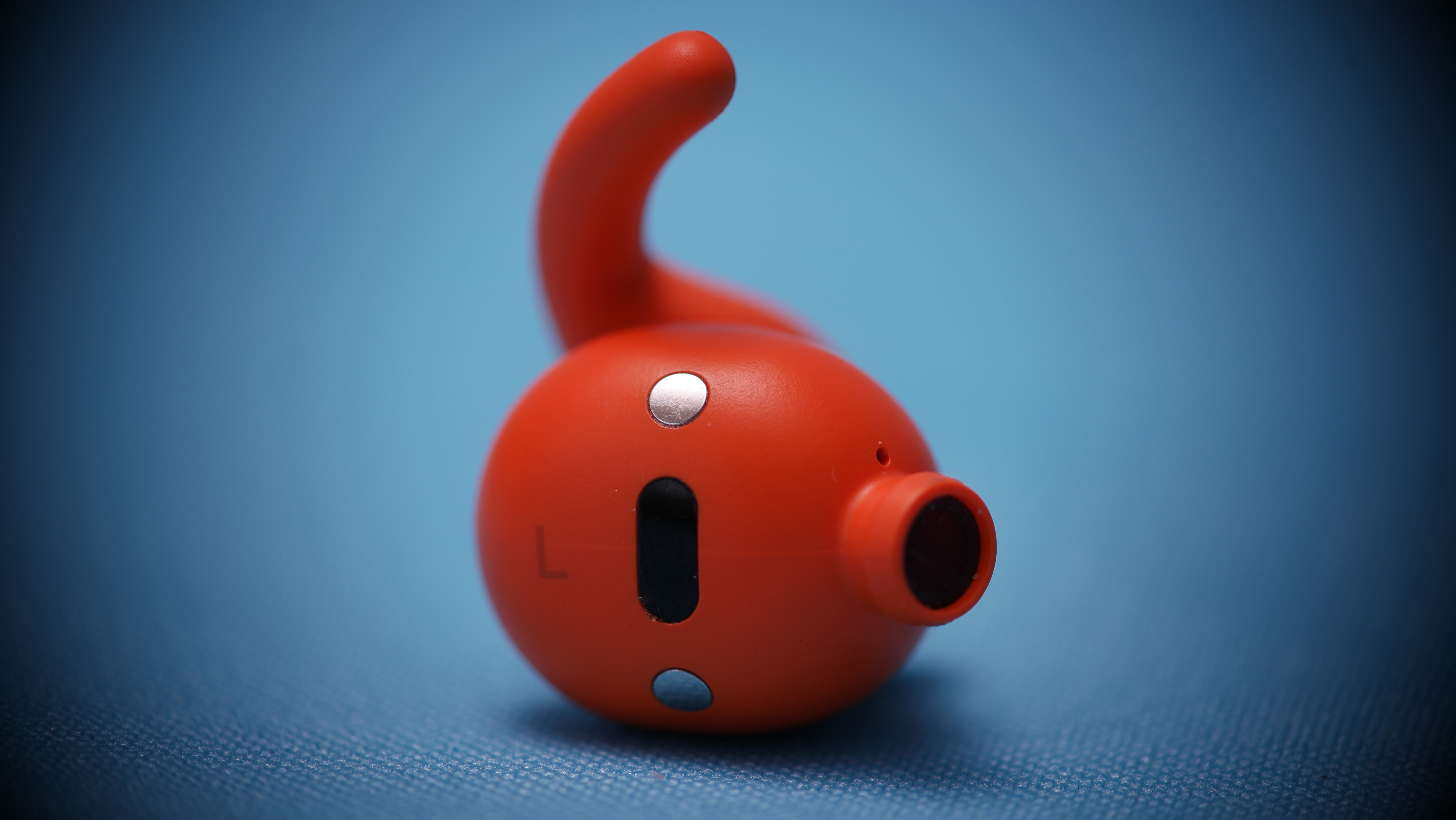
I’ve used a lot of workout earbuds over the years I’ve been reviewing consumer audio products, and, aside from Jabra’s now-defunct line of excellent earbuds, Beats have been my choice for serious workouts. The active noise-cancellation on the Powerbeats Fit is respectable, allowing me to hone in on the mind/body connection during challenging lifts and really focus on technique, which is crucial as I work toward a 500lb deadlift.
That ANC won’t unseat Bose’s QC Ultra (2nd Gen) earbuds, but at $100 less, they do a good job of hushing low-frequency sounds and softening higher-frequency ambient noise. They’re also surprisingly capable of hushing sudden loud noises. With the music playing around 60%, the majority of sounds in the gym are drowned out—even the clank of plates. Push the volume a bit higher, and you’ll hear nothing but the music.
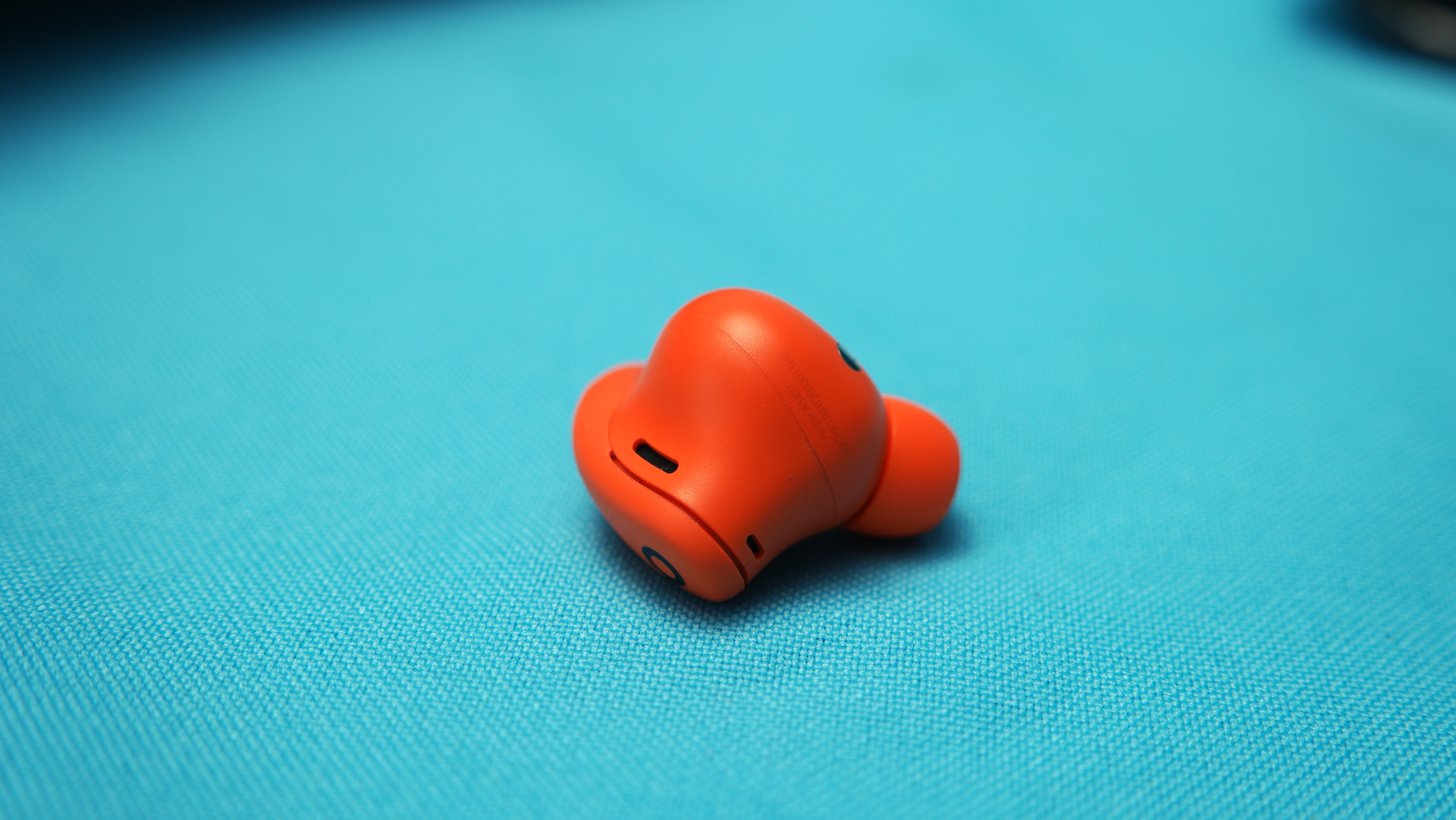
The transparency mode is excellent and sounds very natural. Not having to remove the earbuds when having brief conversations with folks I see at the gym regularly is something some folks may take for granted, but I wouldn’t buy any earbuds that don’t have as high-quality a transparency mode.
When I’m lying down on a flat bench, or enduring the hellish torture of burpees or mountain climbers, the Powerbeats Fit stay in place. On cardio days, even 45 minutes into a tempo run, or during interval sprints, my ears never feel fatigued by the wingtips, and the earbuds stay in pace.
All of that is well and good, but it all means little if the sound quality is trash. Fortunately, it is far from that.
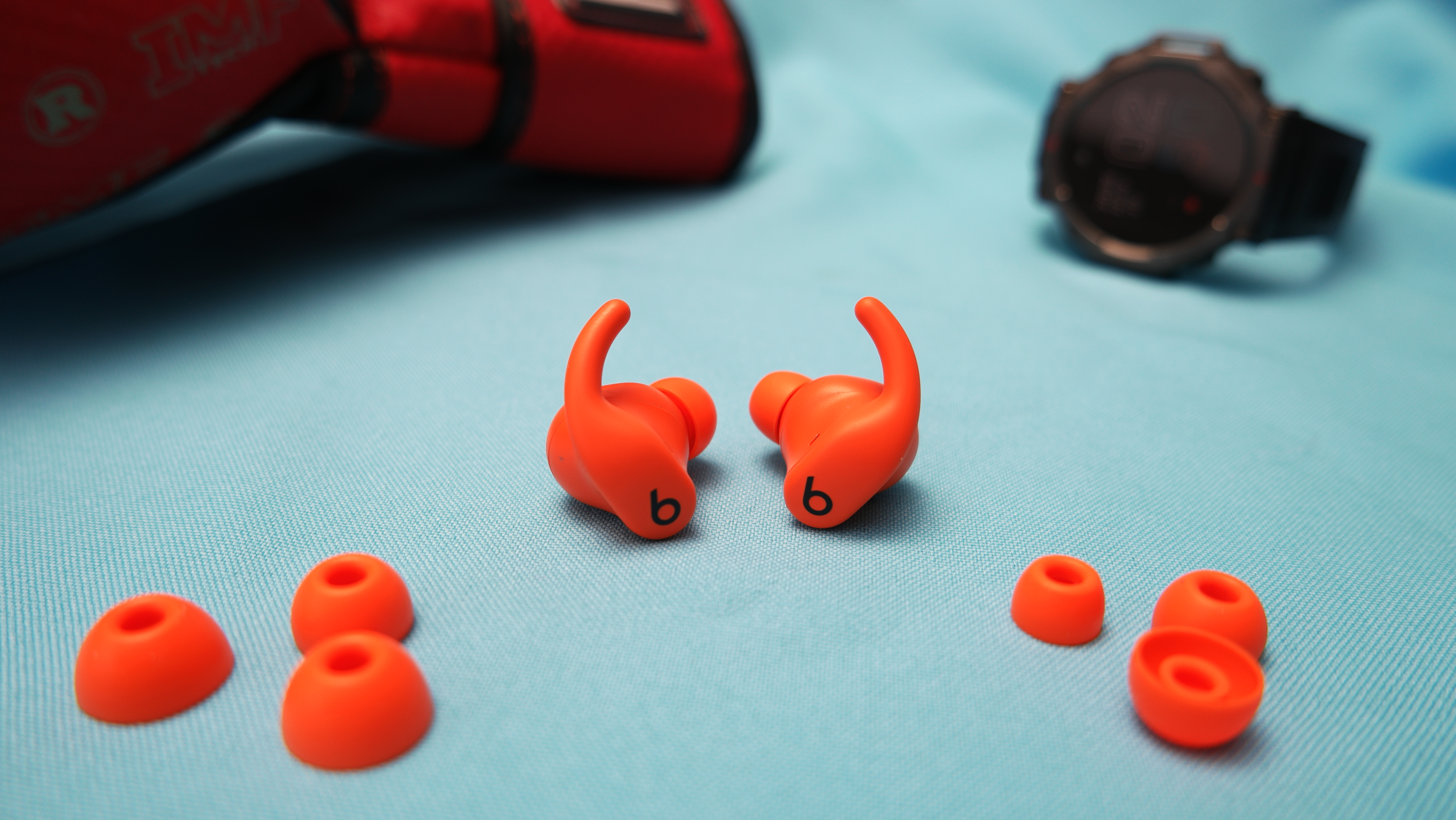
The Powerbeats Fit have bass-forward “V-curve” tuning with a bit of a scoop in the mids. Bass is tight, sub-bass has a deep, resonant rumble that is serious workout fuel, and there is satisfying clarity and sparkle in vocals and instrumentation.
Art Blakey’s “Moanin’” is one of my favorite tracks for testing how analytical or smooth a product’s high-frequency response plays. I’ve talked about the shrill horns on that track before. Those highs are bright and sparkle, right to the edge of fatigue. They don’t go over the edge, though some tracks, which are notoriously bright to the point of being fatiguing if you’re using analytical IEMs, may still be fatiguing for those with sensitivities to brighter treble frequencies. The brightness is never sibilant, though.
Listening to the title theme from the movie “Get Out,” “Sikiliza Kwa Wahenga,” the lyrics are still haunting, but the soundstage is more intimate. You get that same sense of intimacy when listening to Paul Simon’s “Diamonds on the Souls of Her Shoes,” but clarity and instrumentation are solid once you get past the song’s intro.
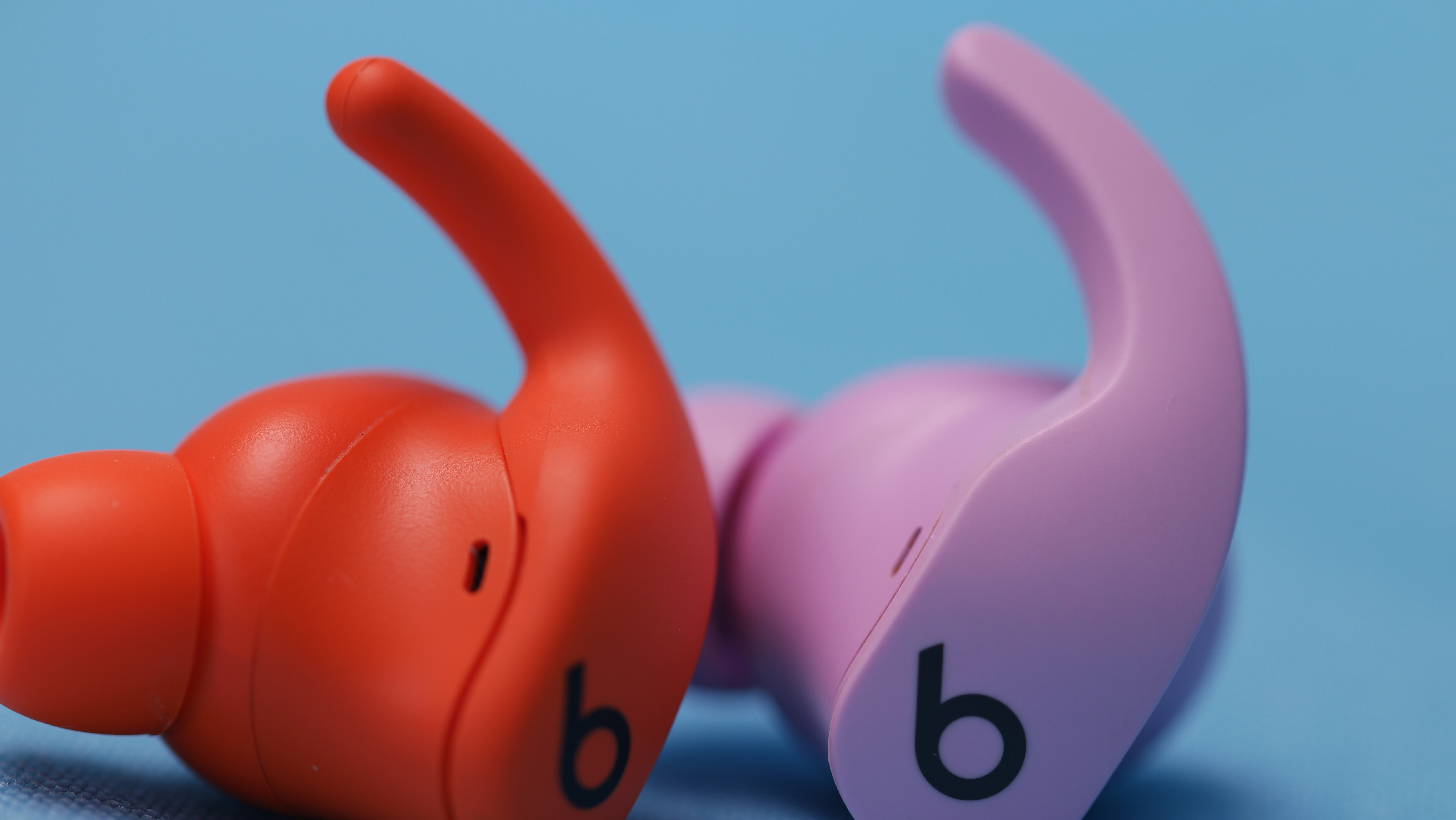
On tracks like Charles Mingus’ “Moanin’” or Michael Abel’s “Violin Duel,” the imaging is good, and though the soundstage isn’t expansive, you still get a good picture of the staging of each instrument.
One of the highlights of the Powerbeats Fit's listening experience is its digital signal processing (DSP). At varying volumes, music dynamics are robust and complete. Bass still has some weight, and treble clarity remains.
What won’t remain is the music when you take out one earbud. Or both! The wear detection, picked up by the optical sensors, is fast. Remove an earbud, and the music pauses instantly. Put it back in your ear, and the music picks back up where it left off, without delay.
Apple vs. Android
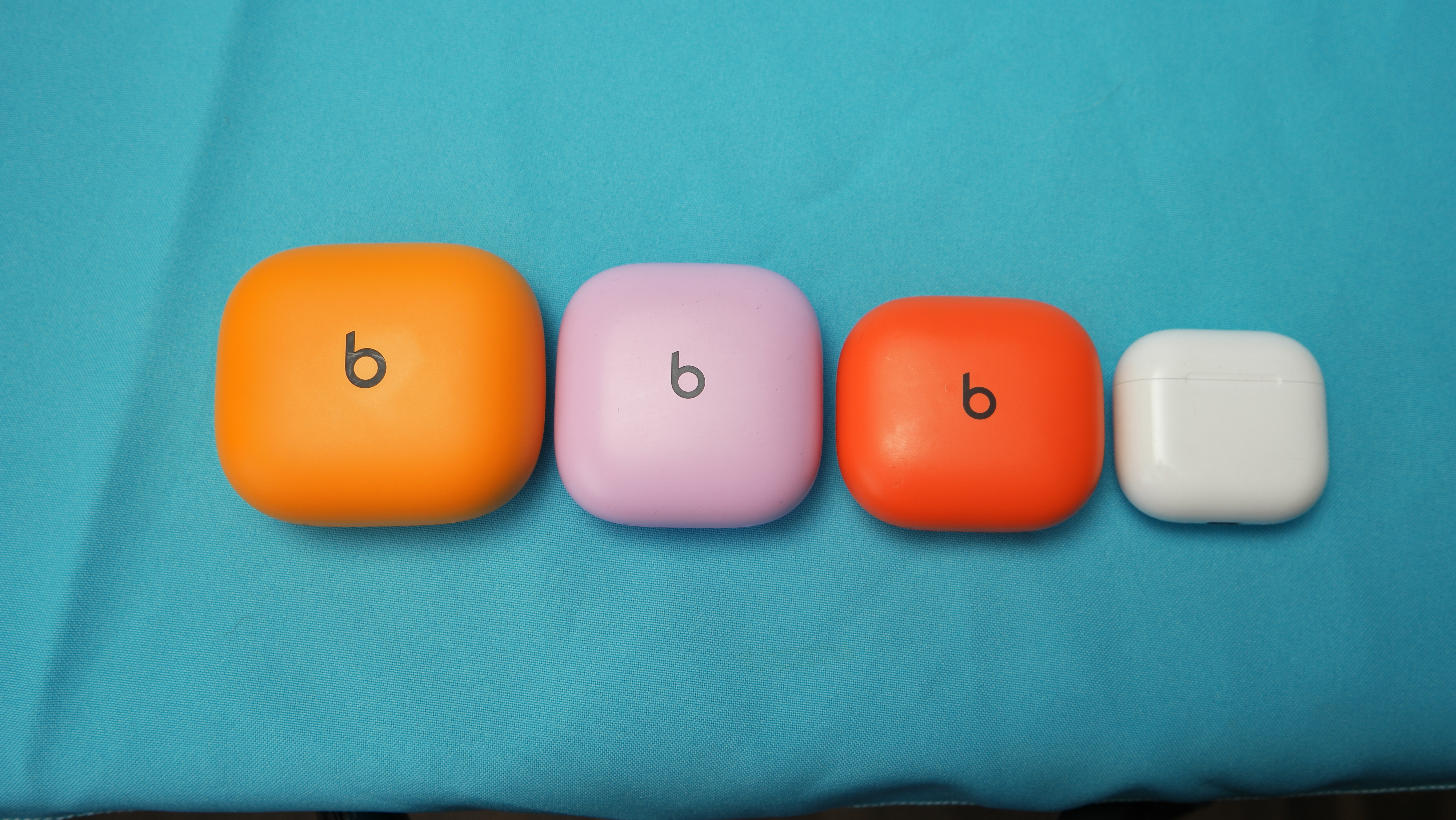
While Beats' most recent Powerbeats Pro 2 come equipped with Apple’s newer H2 chip, which enables features like an Adaptive Transparency mode when connected to Apple products, the Powerbeats Fit got the H1 chip. This still gives you access to a solid stable of features like Spatial Audio with Dolby Atmos on FaceTime calls, but that’s a moot point here. The great thing about the Powerbeats line is its feature parity with iOS and Android devices.
Using the Beats app on Android ensures you have full access to all Powerbeats Fit features, including the Ear Tip Fit Test, tone control, and button customization. Spatial audio is also supported, but you won’t get head tracking or the ability to scan your ear geometry to personalize the Adaptive EQ. Still, those features, along with Locate My Beats and one-touch pairing, ensure the Android experience is enjoyable and well-appointed.
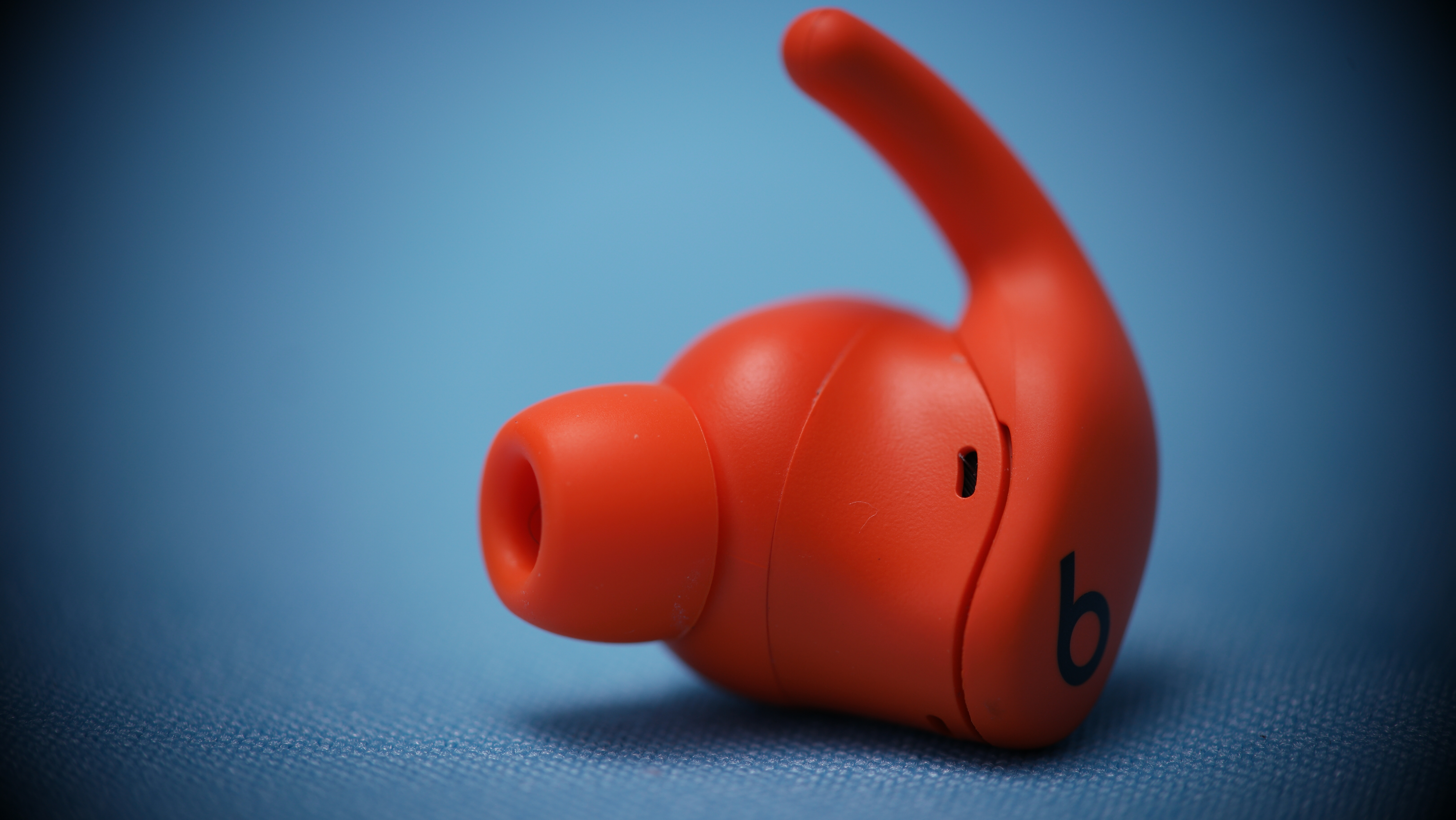
Speaking of the customizable controls, one of my favorite elements of the Powerbeats experience is the mechanical buttons used instead of touch-sensitive control surfaces. Especially for fitness-forward earbuds, I prefer mechanical buttons because moist hands can trip up touch-sensitive controls.
Beats' "b" mechanical button implementation works with rock-solid consistency, and that is the hallmark of a class-leading product: reliability. They just work. Every time.
Beats Powerbeats Fit: What could use improvement
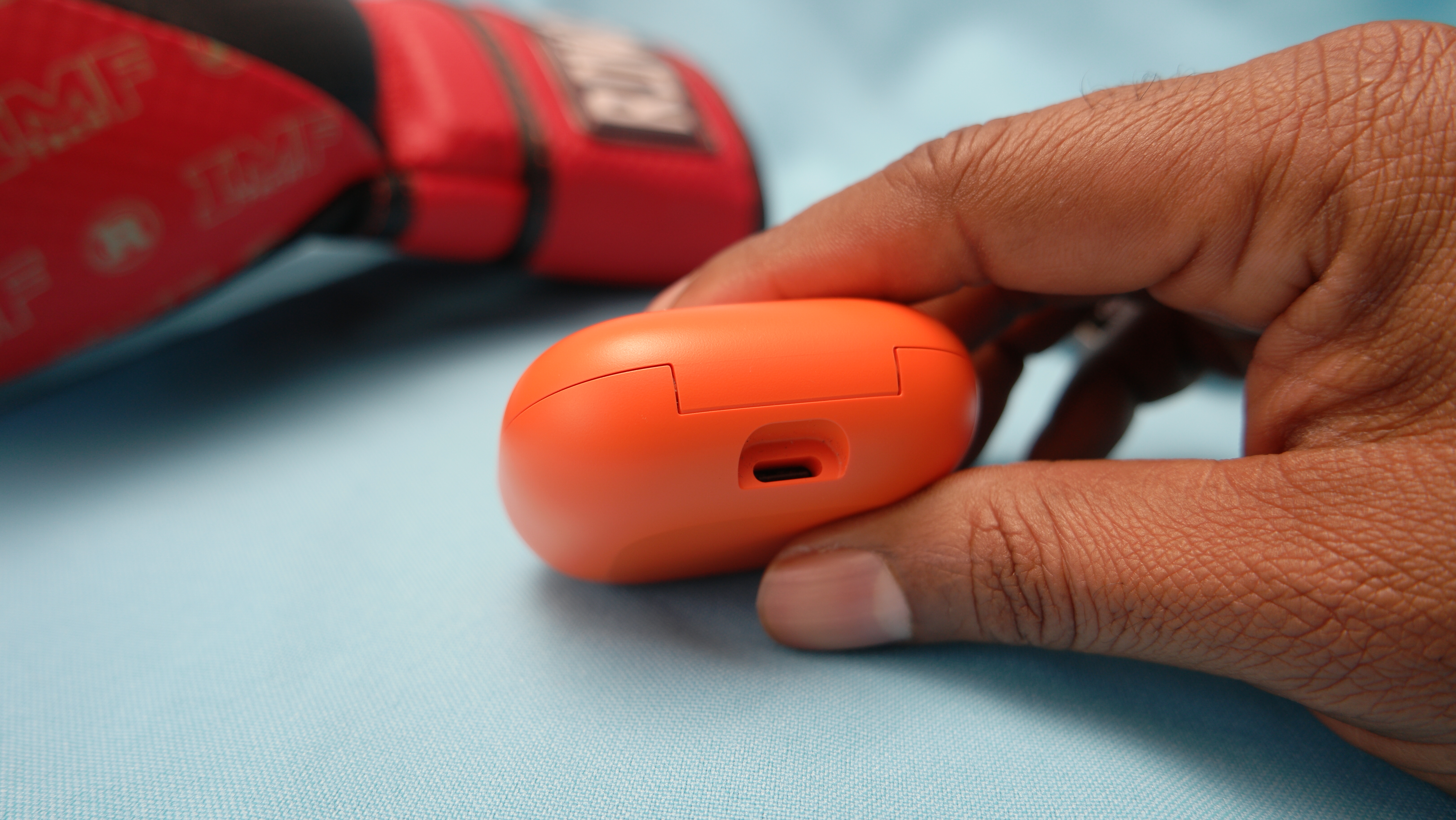
I’ve said it in reviews of earlier Beats products, which are equally capable on iOS and Android, but the lack of inclusion of HiRes Wireless Audio codecs like LDAC is a missed opportunity. And while we’re talking about inclusion, being in California also means a lot of time on the sand, so I’d love to see an IP rating that includes dust ingress for reassurance.
Frankly, I’ve worn previous Beats products at the beach and never had any problems, so I don’t know that this is critical, but as a fitness-forward product, it’s better to have that certification and not need it than need it and not have it.
The tuning for the Powerbeats Fit is definitely bass-forward, though not at the expense of the mids, but there may be those who would like to alter that a bit. I would love to see a five-band EQ in the Beats app for Android.
The Powerbeats Pro 2 now have a wireless charging-enabled case, and I need that on the Powerbeats Fit as well.
Powerbeats Fit: Competition
The biggest competitor to the Powerbeats Fit is its own product. The previous Beats Fit Pro are still available online -for now- and are priced lower than the Powerbeats Fit. Though the wingtip has improved and the case is smaller and much more pocket-friendly, the improvements aren’t so dramatic that I would tell someone not to buy the Beats Fit Pro instead. It would really depend on how they’re going to use it.
In terms of anything else that feels locked in, like the Powerbeats Fit, there are open-ear products like the Bose Ultra Open Earbuds, but then we’re talking about a completely different sonic experience.
Should you buy the Beats Powerbeats Fit?
You should buy it if..
- You need workout earbuds that feel unshakeable
- Like the earbuds, your life is fitness-forward
- You want earbuds with a great transparency mode for outdoor activities and solid ANC for indoor gym use
You shouldn't buy it if..
- You want hires audio
- You want hands-free Gemini activation
Arguably, the Powerbeats Fit are the best workout earbuds with wingtips that you can buy. They sound really good for fitness-forward lifestyles, with engaging thump and solid clarity. Their lack of hires audio would be nice to see in the next generation, but with these being fitness-focused, I can forgive that.
They aren’t the most inexpensive earbuds, and I wouldn't fault anyone for picking up the previous-gen Beats Fit Pro at a more wallet-friendly cost, or waiting for a sale on these. That said, I spend a decent amount of time exercising, and I can definitely recommend the Powerbeats Fit if you want a daily-carry pair of earbuds that are equally adept at taking a conference call or shrugging off streams of sweat, while staying locked into your ears during an intense workout.
New name, similar game
The improved fit, more eartip options, and a smaller case make for solid updates to what was already an excellent pair of fitness-forward earbuds.
FAQ
What are the main differences between the Powerbeats Fit and Powerbeats Pro 2?
The Powerbeats Fit and Powerbeats Pro 2 are powered by different chips, with the Fit featuring an older Apple H1 chip and the Pro 2 sporting the newer H2 chip. The Fit are also more compact, with small wingtips versus the earhooks on the Pro 2. Finally, the Fit have shorter battery life, and the Pro 2 has Qi2 wireless charging.
Do the Powerbeats Fit support Android?
The Powerbeats Fit are compatible with Android phones, although they aren't as integrated into the OS as with iOS. While iPhones support features like Automatic Switching, Audio Sharing, hands-free Hey Siri, and Find My, Android features are mainly confined to the app and include one-touch pairing, customizable controls, battery status, and Locate My Beats.
Are the Powerbeats Fit waterproof?
The Powerbeats Fit have a water a dust resistance rating of IPX4. This means there is no official dust protection rating, although earbuds can withstand sweat and are splash-proof from any angle.