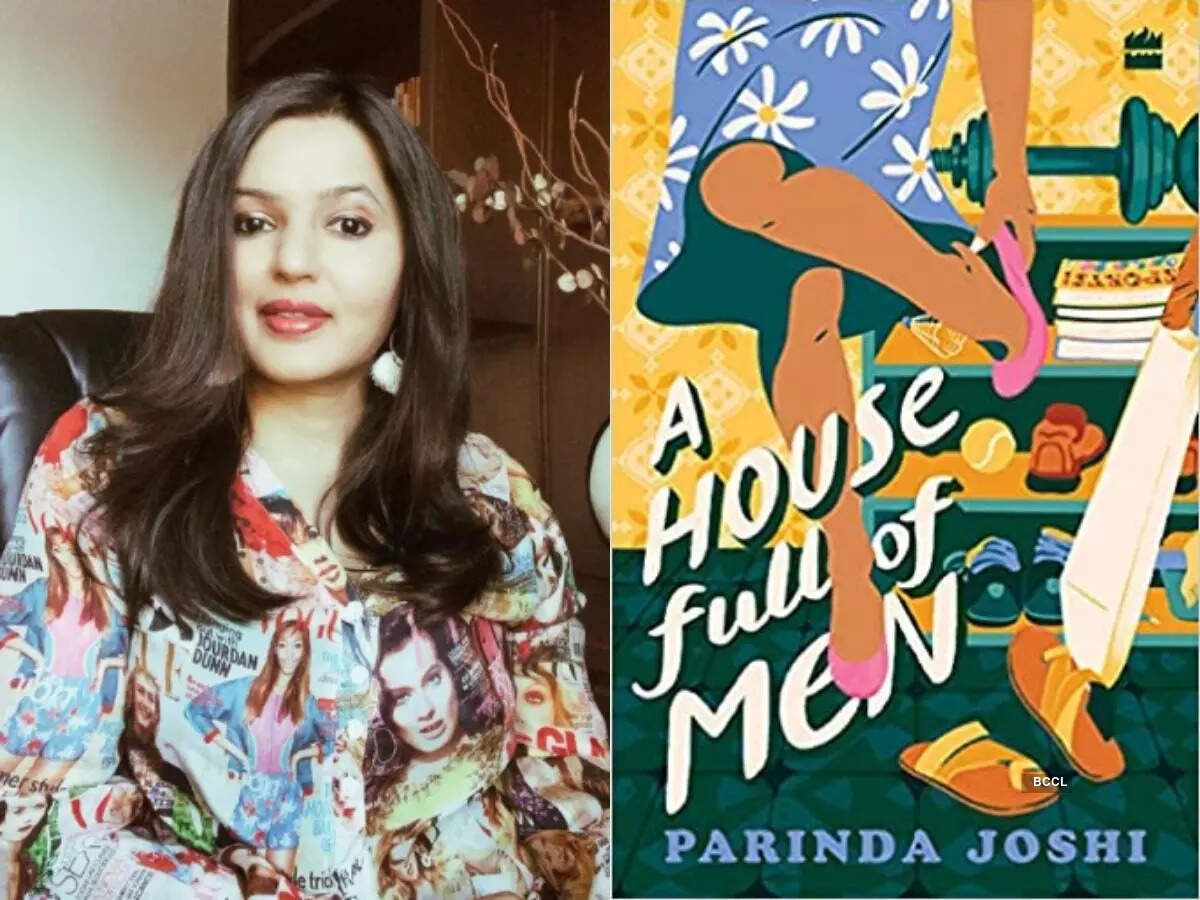
Imagine being the only woman in a room full of men-- that would make many women feel uncomfortable. And what if it turns out to be a home full of men? Disastrous! This was the thought that inspired Indian author Parinda Joshi to write her new fun read, aptly titled, 'A House Full of Men'. And add to it the chaos, masala, and drama of a dysfunctional family living in Lucknow and it surely makes for an entertaining story. 'A House Full of Men', which was published by HarperCollins India in 2021, follows 25-year-old Kittu, a travel writer from Lucknow who has traveled out of the city only twice in her life so far. The first was for her grandmother's last rites; the second time she traveled for a wedding only to return for her mother's funeral at home. As Kittu navigates through life as the only woman in her house, she also comes to understand herself and others in the process. 'A House Full of Men' is an engaging read, with eccentric characters that would stay with readers long after they have read the book.
'A House Full of Men' is Parinda Joshi's fourth novel. Interestingly, her third novel 'Made in China' was adapted into a film of the same name starring Rajkummar Rao, Boman Irani, Mouni Roy, Sumeet Vyas, Paresh Rawal and others and the author had co-written the film's screenplay. From working at a start-up to writing books to screen-writing, author Parinda Joshi has done it all. In an exclusive interview, she tells us about her latest book 'A House Full of Men', the craft of writing stories, and journey as an author. Excerpts:
1. What was the inspiration for writing your latest book 'A House Full of Men'?
Many years back in one of my first jobs in Los Angeles, I had to make a product pitch to the leadership team. When I walked into the conference room I froze for a while because I saw 14 men seated there, and not a single woman. It was a very male-dominated space with most men in their 50s, it was my first time presenting to so many men at the same time. It was a bit intimidating and at that moment it felt like a conspiracy as if I was being set up for failure. Of course, after I took a deep breath and presented, things went fine but my own reaction to that situation stayed with me. So many years later when I was looking for a topic for my novel, I decided to change the boardroom full of men to a house full of men to make it more relatable to people. It's the story of a dysfunctional family, set in Lucknow-- a city that's very close to my heart. I wanted to create a family that is progressive, educated, and loving but also dysfunctional at the same time.
2. How long did it take you to write this book?
I have a full-time job in a start-up in Silicon Valley and so I take a long time to write a book. The characters stay with me for a very long time. As I grow the characters also grow with time, and the novel evolves. 'A House Full of Men' took three years to write; it was supposed to be published in 2020 but then Covid happened!
3. You aren't a trained writer and it's commendable that you have published four books. How did you hone your writing skills?
I used to write blogs and articles for GQ and other publications earlier. So I always had that latent desire to write. When I wrote my first novel, it was pure luck that I got published. But then I realised that I really needed to up my game and so I enrolled in multiple writer's groups over the years. A bunch of us (aspiring writers) would meet up here in Berkeley and critique each other's works. I also read a lot of blogs, articles, read extensively across genres, and took writing classes.
4. Talking of films, your earlier book 'Made In China' was adapted into a film. Did its fame make you feel any pressure for your new book to be as good?
I didn't think about it that way. 'Made In China' being adapted into a movie was completely coincidental. It was very surreal when it happened and I still can't believe it. The film was very different from the book-- the book was more zany comedy. The protagonist is this businessman who goes to China and things go wrong. Whereas, the movie was more of a drama; there were more characters in it, the dialogues were very different all leading to a different end product. It was a fabulous team and I learned that whole process of screenwriting... I didn't think I could get lucky twice. Though I feel blessed that few production houses have shown interest in my new book; let's see how it goes.
5. Tell us about your writing process?
It's hard as I'm also a mother, and juggling between home and work is not easy. But writing is very close to my heart and I can't stay away from it for too long. I do most of my writing at night, especially during weekends. I don't have a daily schedule to write. And I keep going back to the story-- editing and refining the story till I'm satisfied with it.
6. The characters are very real in 'A House Full of Men'. Which character do you relate to the most from this book?
I love the grandfather because I love people with a wry sense of humour. I'm a big fan of PG Wodehouse for the same reason. The witty sarcasm, delightful humour, the saucy wit-- that's what the grandfather also has. It is delivered in a deadpan manner and I am like that, too, a bit (laughs).
Whereas, the most challenging character to write was Kittu's because she goes through so many ups and downs. She is very conflicted, she is not controversial so she suffers silently, and a lot of times she goes overboard with overthinking too. After years of being subjected to that male (dominated) energy she has fallen silent; I'm not that person, so it was hard for me to write that character.
7. What, according to you, is the role of literature in bringing a change in society?
The role of literature is an important one. As writers, we have the privilege and the platform to express our opinions. But I'm a non-controversial person in real-life. My go-to strategy is to just wrap up important issues in humour and make it more thought-provoking. I never address hot burning issues (in my books) just for the sake of it because I think I can't do justice to them. I'm glad that a lot of issues organically made their way into the book... I mean even I, like most Indian women, have been subjected to casual sexism. I wanted to weave in this part of our daily lives and it happened subconsciously in 'A House Full of Men'.
8. You said you are a huge fan of the dysfunctional family genre. What are your favourite books in this genre?
I'm a very observant person. Pre-pandemic, one would always find me in cafes or malls; I pick upon people's quirks. Over the years I have seen several dysfunctional families... More than books my interest in the genre started with shows, some of them being 'Two and a Half Men', 'Everybody Loves Raymond', 'Schitt's Creek', Woody Allen movies, and 'Kapoor and Sons' when it comes to Bollywood.
READ MORE: