The men of my tribe [extended family] threw my relative Kawthar Bashar al-Husayjawi, 15, into a pit and put a little dirt over her body. They had killed her hours earlier with 10 bullets, and split her small head with an axe. My family then joined others in coming on to the streets to dance and celebrate her death.
Kawthar lived in al-Nahrawan, a district in the south-east of Baghdad. She had been taken out of school and at age 13 forced to marry an alcoholic years older than her.
She was subjected to a year of violence and mistreatment before fleeing back to her family, who initially subjected her to house arrest and constant pressure to return to her husband and abuser. She threatened to end her life and, eventually, was officially divorced in court late in 2025.
Soon after, her cousin was released from prison and asked Kawthar’s parents for her hand in marriage. Kawthar refused as everyone knew the groom was involved in dealing in drugs and alcohol. Her family ignored her and gave their approval as, according to their custom, “a man’s word is not broken by a girl.” Her mother and female relatives at home could not join her in saying no.
In early May, as the day of the wedding and what she believed would be a new phase of rape and violence grew closer, Kawthar left the family home. She had been denied the chance to go to school or learn how to earn money, so she left with nothing except her clothes and a head covering.
After fleeing, she was spotted by a neighbour who abducted her for three days and, she says, subjected her to terrible things that she did not disclose. Although she assured her family that she had not absconded with him willingly – and even after surveillance cameras appeared to support her account of being dragged by force – her family refused to believe her.
Kawthar’s father, uncle and fiance interrogated her about what had happened during those three days before taking her to an open area on the outskirts of Baghdad. I have tried to imagine what she was feeling in that car with three men from the family that was supposed to be her circle of safety. Did they tell her her fate? What were her last pleas? Was she screaming, hoping their consciences would wake up? Or did she wonder how her father could do this to his daughter?
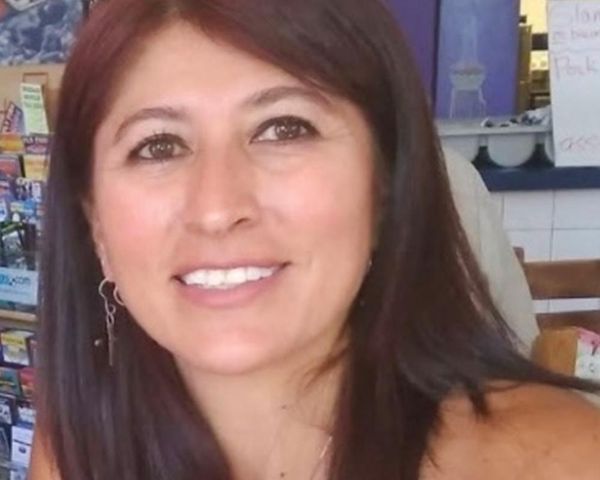
On social media, I saw her childlike face, the last time she wore her school uniform. An old picture that doesn’t show all her beautiful features. Videos soon spread of members of the tribe dancing happily at her murder. I did not see anyone grieving within the family. On the contrary, the men were celebrating.
When I heard the news, I was at home on a normal afternoon, until my father came in with the news of her disappearance and murder. If I had heard this story from a stranger, in a post on Instagram, I probably would not have believed it. How can a person carry all this ugliness in their heart and inflict it upon their daughter? But it happened here to a girl I knew and once sat with.
I tried to remain calm and thought that at least the police would punish them for their deed. Instead, an officer allegedly asked for a bribe to say she had been kidnapped and not killed. The men moved Kawthar’s body more than once out of fear. A body with 10 bullets in it, and without a shroud or ritual washing, passed between holes. If the living have no humanity, where is the sanctity of the dead?
In the end, this is what pushed me to speak. I and other women in the extended family (not in coordination as we felt unable to trust anyone) began sending her name and photo and the pictures of her killers to media pages and platforms hoping for justice for this child and allow her to at least be buried with dignity. I was afraid that the case would be buried like the hundreds of other stories in which women and young girls die for nothing more than trying to survive.
What terrifies me most is how easy murder has become for men in Iraq. They no longer fear the law or the state, because they see corruption everywhere. Everyone concealed what happened. Apparently a lawyer will take on the case, the body will be located and her brother will turn himself in as the sole perpetrator so that the case will be closed as an “honour” killing.
Although Iraqi law does not directly mention the phrase “honour” killing, there are mitigating excuses in law that address the crime of killing motivated by honour. Someone killing his wife or close female relative after finding in an act of adultery shall be punished by imprisonment for a period not exceeding three years. In many cases, the crime is not viewed as a deliberate, fully constituted murder, but rather as a family incident that got out of control.
Iraq’s new laws permitting children as young as nine years old to marry is terrifying to me, because a child pulled out of school and pushed into early marriage becomes more vulnerable and less able to protect herself or object to the violence she is subjected to. Kawthar had not yet reached an age that allowed her to understand life, yet everyone was treating her as a woman who must be subdued, monitored and punished.
-
This piece was produced in partnership with Jummar Media