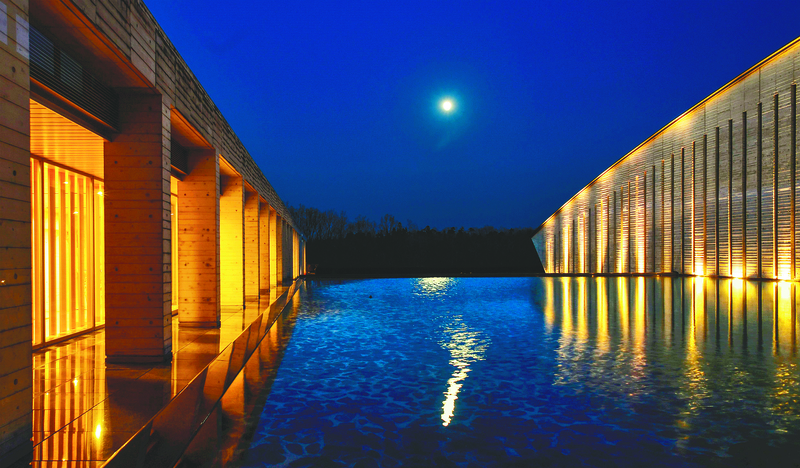
The view from the glass lobby was beautiful but I felt something was missing. There was a gentle curve to the exterior wall of the exhibition room, the water of the pond's surface waved in the wind, and a small green mountain stood off into the distance. The stage was set but the scenery's main character appeared only once night fell.
Soon the sky grew darker and darker. The mountain's edge glowed gold and a round, reddish moon slowly appeared and rose in the deepening darkness. The Okuda Genso Sayume Art Museum in Miyoshi, Hiroshima Prefecture, is known as the museum with the most beautiful view of the moon in Japan.
Influenced by home
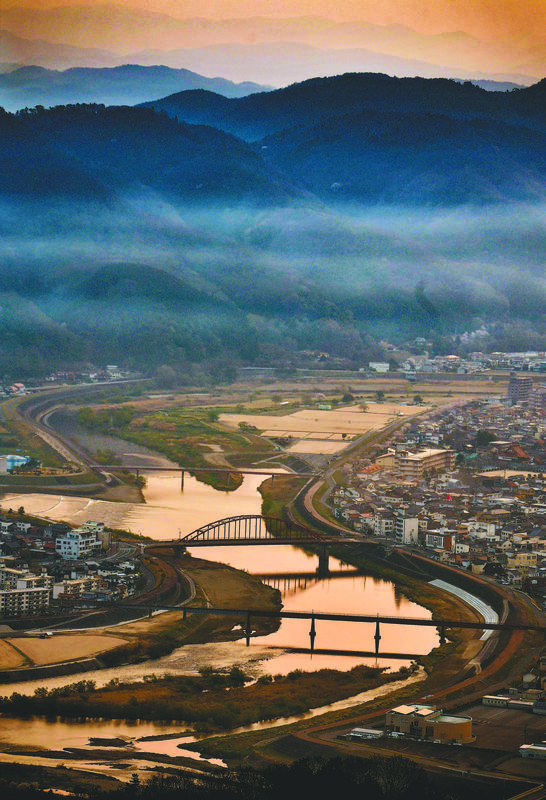
The couple of Japanese-style painter Genso Okuda (1912-2003) and his wife, doll maker Sayume Okuda, 83, dreamed of building their museum someday and kept many of their works without selling them. It was their hometown, Miyoshi, that announced its intention to house the museum.
Genso recalled his childhood hometown in his autobiography, stating "The sun, the clouds, and the moon were all about to be caught if I held out my hand." Many of his paintings centered around the moon as a motif. Among them, "Taigetsu" is an important piece that earned him his second special prize at the Nitten exhibition.
It depicts the moment when the moon is about to appear from behind a mountain in his hometown. "The view from the lobby was designed to reproduce the piece Taigetsu but now, the trees in front of the museum have grown and a portion of the mountain cannot be seen from here," museum curator Kenji Watanabe said.
The museum opened in 2006, however, Genso passed away three years prior. It is said that the blueprints for the museum were placed in his coffin.
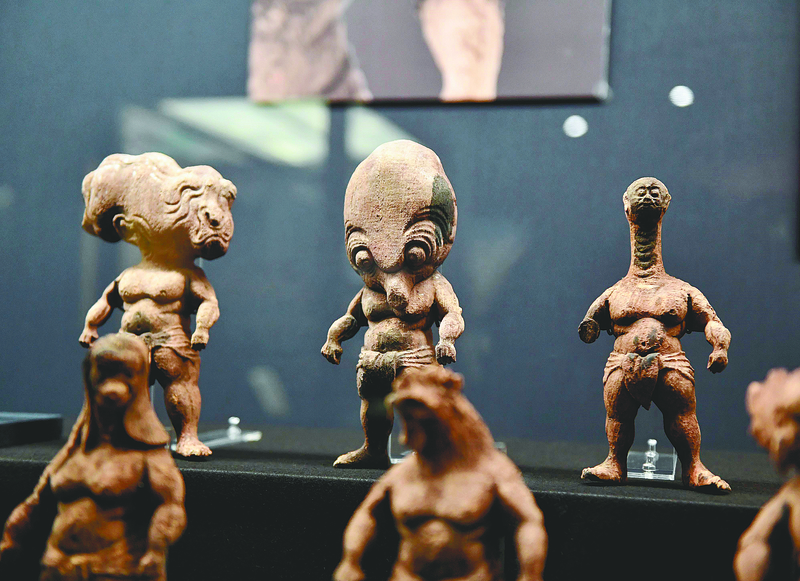
Lunar inspiration
"In Mr. Genso's work, the moon, while not the main theme, has a rich expression," said Watanabe. Then I saw the museum's permanent exhibition. In his art, either a moon surrounded by a ring of pale light or only the moonlight itself was depicted. The moon shone in many ways. Then, I saw Sayume's work; A woman's doll with six hands looking up at the sky. The piece's description included words from the artist herself. She wrote that there was a full moon on the night Genso died. "While I was making [the piece], I felt that two hands weren't enough to be offered to Okuda who passed away as though he was drawn to the moon," she wrote.
On nights with a full moon, the museum's opening hours are extended until 9 p.m. I witnessed a full moon from the lobby and I felt as though the moon had come to share many things with me. I could have gazed upon it forever.
Miyoshi's delish dish
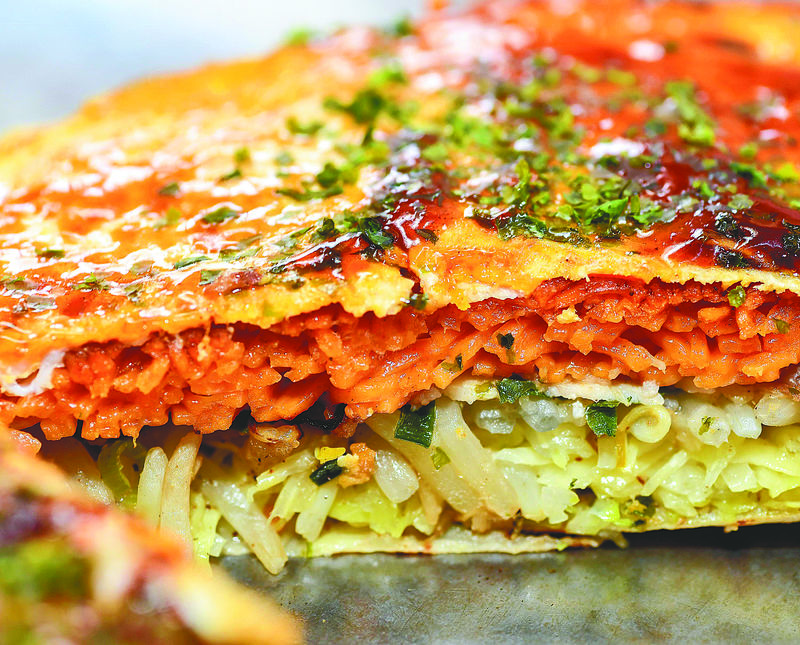
Hiroshima Prefecture is the home of the okonomiyaki pancake. Okonomiyaki has different flavors depending on the cities within the prefecture, such as Shobara, Fuchu, Mihara and Takehara. In the case of Miyoshi, there's a variation called Miyoshi karamen-yaki.
In 2012, the Miyoshi Chamber of Commerce and Industry's youth group launched a project to create a new specialty dish. The noodles used in the karamen-yaki, are called karamen and are made by kneading red peppers developed by a local noodle manufacturer. The sauce is a limited-time-only product that is twice as spicy as the traditional sauce brewed by a local brewer. The karamen-yaki, which is a combination of noodles and sauce made by local companies, won the first prize in a competition of okonomiyaki held in the prefecture in 2014. Currently, roughly 30 stores in the city serve the dish, and its popularity has spread nationwide, including Tokyo.
Read more from The Japan News at https://japannews.yomiuri.co.jp/