Umeko Tsuda (1864-1929), one of the first Japanese women to study in the United States, dedicated her life to educating women in Japan.
Interest has been growing in the pioneering educator since the announcement that her picture will feature on the new 5,000 yen bill.
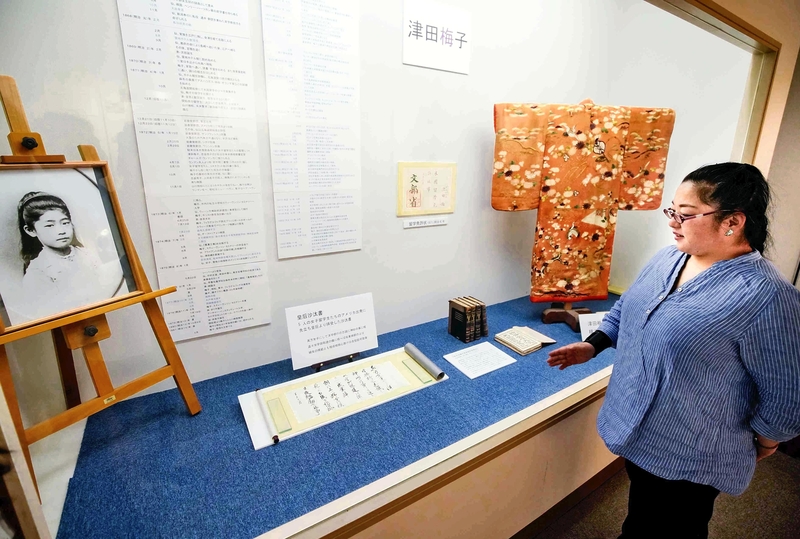
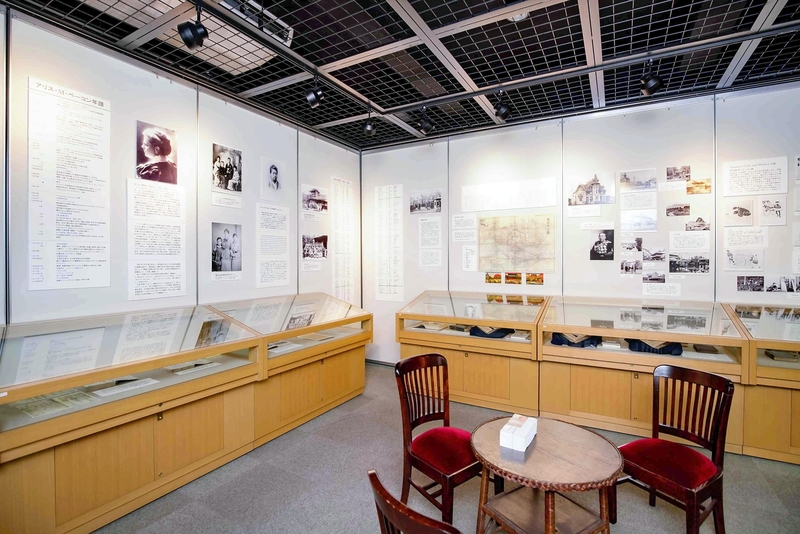
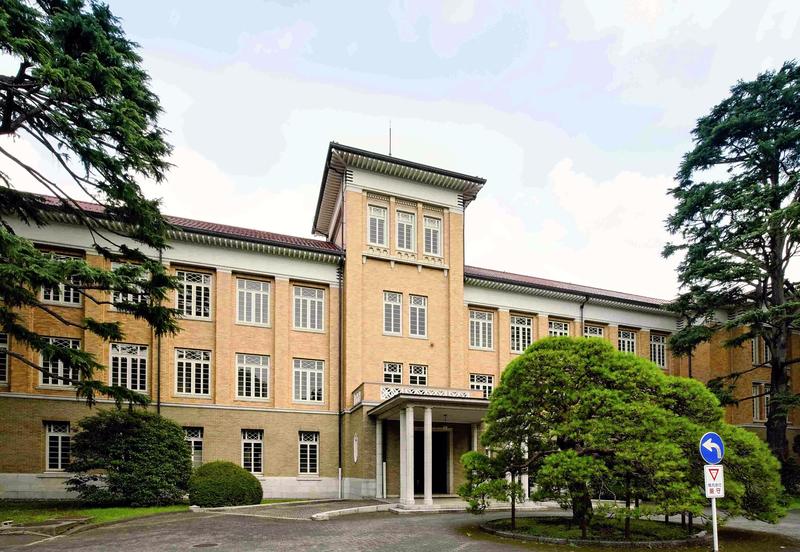
Tsuda University, the institution she founded, is holding a special exhibition at the Tsuda University Archives, featuring about 50 items related to its founder, including some of her personal belongings and books written by people linked to her.
Items displayed at the archives include a red kimono that 6-year-old Tsuda wore when she left Yokohama Port for the United States in December 1871; a photo taken in Philadelphia when she was about 11 years old; and a document given by the then-Empress to the women going abroad to study.
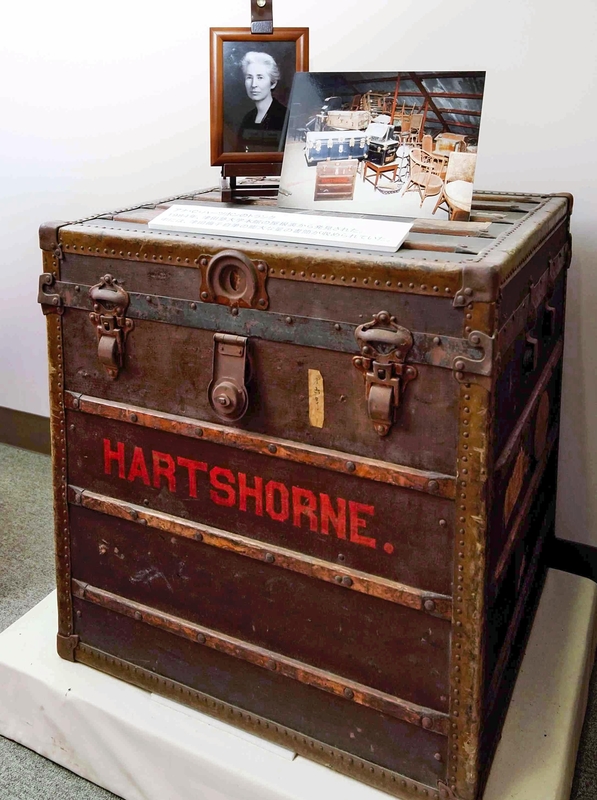
Also exhibited is a trunk that belonged to Anna Hartshorne, a friend of Tsuda's who supported her when she was establishing the Joshi Eigaku Juku school, the predecessor of Tsuda University that opened in Tokyo's Kojimachi district in 1900.
The trunk, which was found in a loft of the university's main building in 1984, contained items belonging to Tsuda and letters she had written.
Although Tsuda went to the United States at a young age, there are no records of her experiencing homesickness or hardship. "She could barely speak English other than the words 'Yes,' 'No,' and 'Thank you,' but it seems she was a pretty levelheaded child," explained archive manager Yuki Nakada.
Tsuda returned to Japan at age 17 and went back to the United States to study at a university, after which she founded Joshi Eigaku Juku.
Focusing on women 16 years old and above, the school accepted women in their 20s and women with children, providing they had a strong academic ability. Although the school was strict, it gained popularity as its graduates were easily able to secure jobs as English teachers
Since Tsuda was chosen to appear on the new bill, the number of people visiting the archives has increased.
"This university pioneered higher education for women. I hope visitors who come to the exhibition will learn about women's history and the social situation in the Meiji era [1868-1912]," Nakada said.
-- Tsuda University Archives
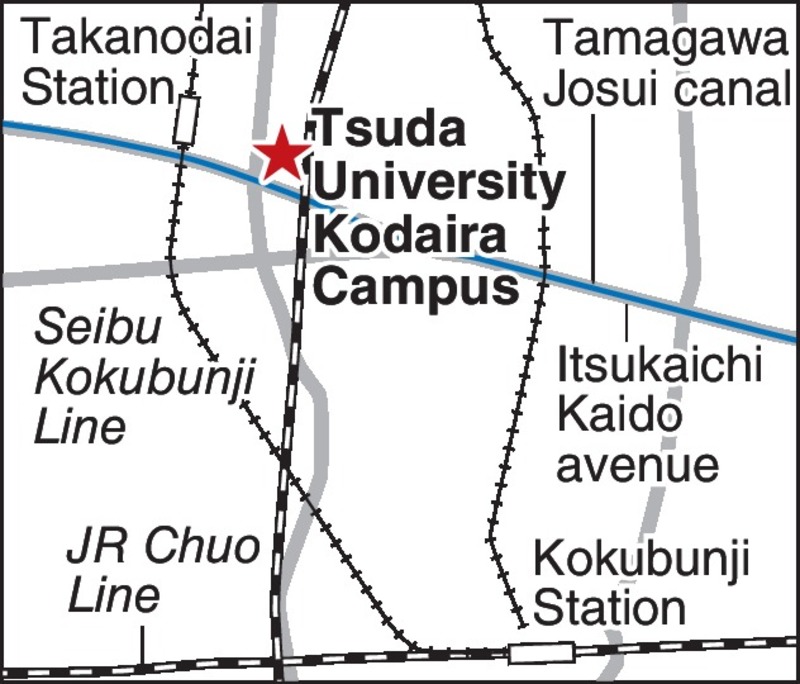
Opened in 2000, it is holding a special exhibition to mark the 90th anniversary of Umeko Tsuda's death. Visitors must first go to the gatekeeper's station at the university's main gate. Groups are recommended to contact the archives in advance. About a 10-minute walk from Takanodai Station on the Seibu Kokubunji Line.
Address: 2nd floor Hoshino Ai Memorial Library, 2-1-1 Tsudamachi, Kodaira, Tokyo
Open: 9 a.m.-4 p.m. from Monday to Friday (Closed when the library is closed)
Admission: Free
Infomation: (042) 342-5219
Read more from The Japan News at https://japannews.yomiuri.co.jp/