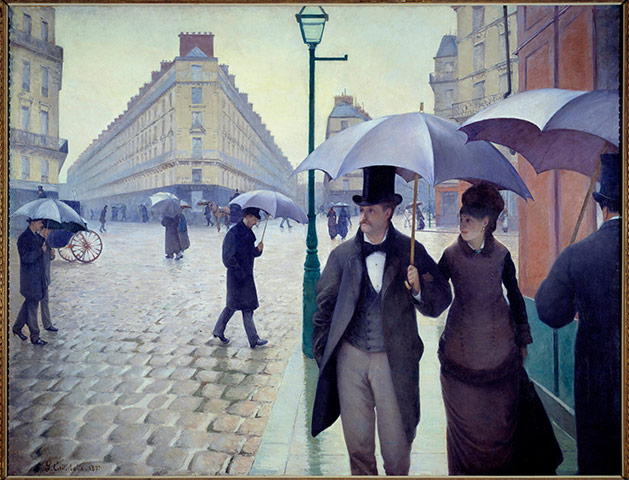
This picture throws you into Haussmann’s new Paris with its wide boulevards and grand buildings. A couple walk towards us at a clip. All the action happens on the right – fast walking, swerving umbrellas – whereas on the other side of the black post, life is slower, lonelier and uncomfortably wet. I feel a twinge of envy as I think about this comfortable, affectionate couple going home to tea and a warm fire
Photograph: White Images/Scala, Florence
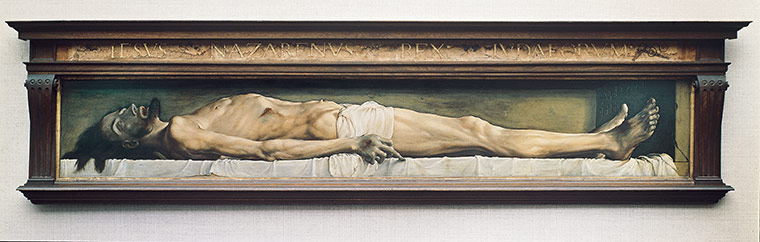
This stark, life-size image of Christ in the tomb is one of the great depictions of death and decay in western art. It’s a painting that seems to assault the nose as much as the eyes, a pathological vision that famously caused the great Russian writer Fyodor Dostoevsky to remark that it 'could rob a man of his faith'
Photograph: Kunstmuseum, Basel, Switzerland/The Bridgeman Art Library
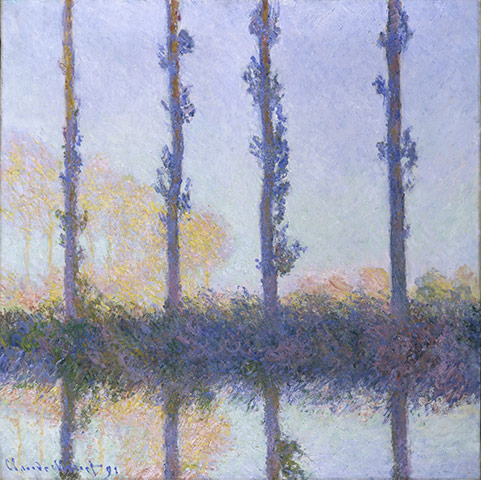
Monet changed the way painters in the west saw and depicted light. The Four Trees is a great artwork because it conveys the sense of a bright morning with freshness and brilliance; because it’s formally thrilling (I pity anyone who didn’t feel a little shock of delight at first seeing that grid of dark lavenders over the palest blue and gold); and because it’s part of impressionism’s great project of teaching the 20th century a new way of seeing
Photograph: The Metropolitan Museum of Art/Art Resource/Scala, Florence
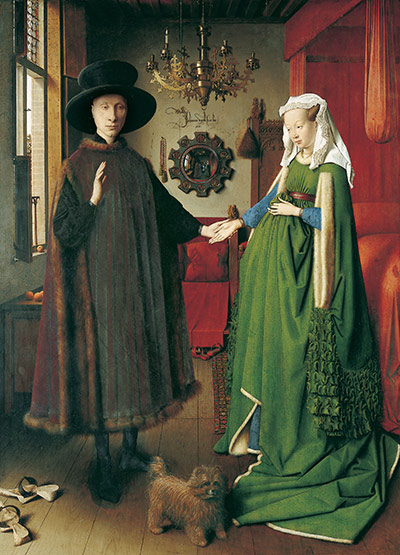
I’ve been fascinated by this painting ever since I was a child. The thing I love is the mirror. You’re right there with the couple having their portrait painted, and you can see the workings of the scene reflected in it. The painting has a lifelike quality: you can almost reach out and touch this moment from six centuries ago
Photograph: National Gallery, London
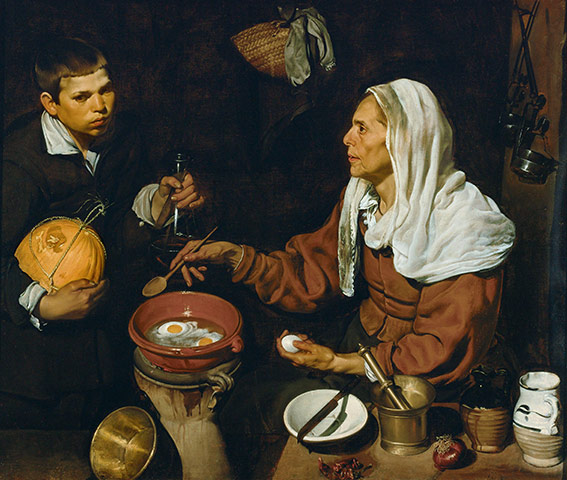
Velázquez wasn’t even 20 when he painted this, and we don’t know the full story behind it, but I would assume he knew the woman well because he has captured her so beautifully. Is the boy her grandson? She’s not looking directly at him. What is she thinking? I love the way the artist plays with light, having it pick out kitchen utensils. When I look at the painting, I see the joy of cooking and the joy of the kitchen. It gives you so many clues about the way people lived and how little has changed
Photograph: National Gallery of Scotland/akg-images/Erich Lessing
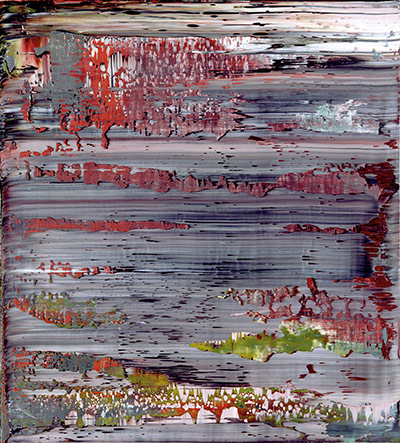
Richter is always pushing his own boundaries. In his abstract paintings, he builds up the surface with a visceral sensuality. You’re drawn into the paintings and you can see for ever: there are islands there, your eye is brought in and out of focus. You feel this depth as much as you see it
Photograph: Gerhard Richter, 2011
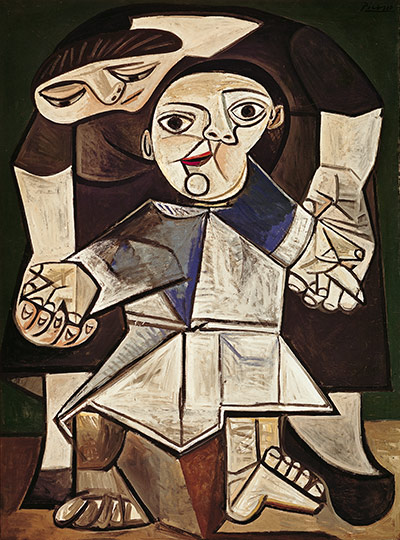
Picasso captures a totally universal subject that everybody has experienced and witnessed. Today, thousands of depictions will be made of this subject all over the world, most with a camera: Uncle Charlie teaching little Edna to walk, photographed by mum. But most will not be able to show us what Picasso does. The child, both thrilled and frightened; the anxious mother, whose supple hands clasp the child’s still awkward fingers. Cubism allows him to give us that detail. It is a wonderful, touching work
Photograph: Succession Picasso/DACS 2011/Bridgeman Art Library
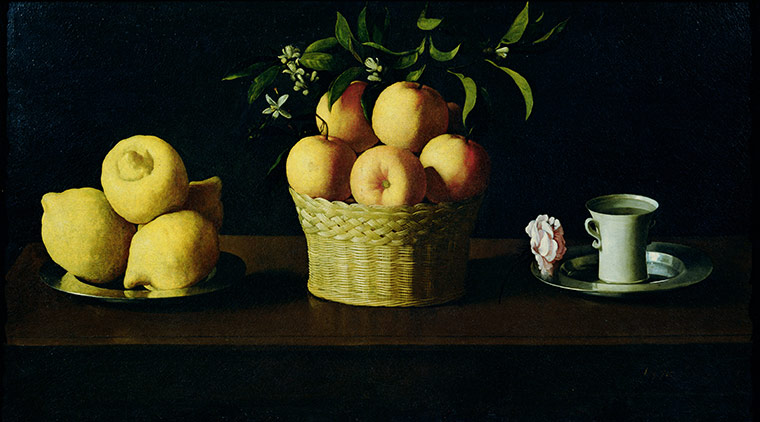
The artist creates a kind of hyper-reality here: when I see a bumpy, thick-skinned lemon at a stall, I feel I am looking at an image from this painting. Great art stops us in our tracks, gives us an insight into reality, makes us think, helps us understand the structure of things. That a painting can do this with the humble lemon, some oranges, a rose and a cup of water is testament to its power and greatness
Photograph: The Norton Simon Collection, Pasadena, CA, USA/Bridgeman Art Library
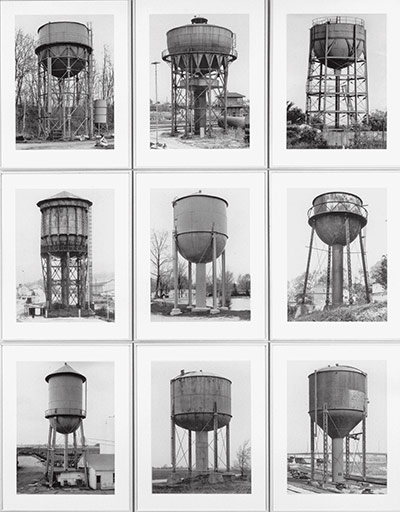
Great artists make you look at the world differently. That’s exactly what Bernd and Hilla Becher have done for industrial architecture. The German artists spent decades travelling around, obsessively cataloguing those grim, ubiquitous structures – gas cooling towers, pitheads, pylons – that most of us think of as ugly, and many of which have now disappeared. In the Bechers’ work, they become like people, each with their own character
Photograph: The Artists/Konrad Fischer Galerie
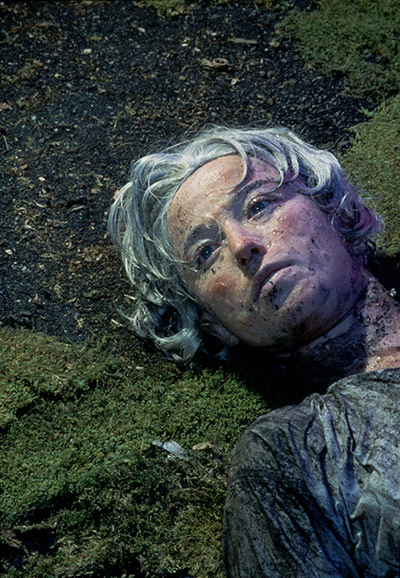
This disturbing work looks like a crime scene or something from a film by David Lynch. Is it a picture of a dead woman, or is it a film still? By always using herself as a subject, Sherman complicates things further. Photographed over the decades, in 'pictures' that are never titled and so are never able to take on a fixed meaning, her ever-changing self has become an artwork in itself. And her pictures pose so many questions they end up questioning the entire medium. It is astonishing to be able to do that – to unfix meaning, go beyond your moment
Photograph: The artist/Metro Pictures, New York
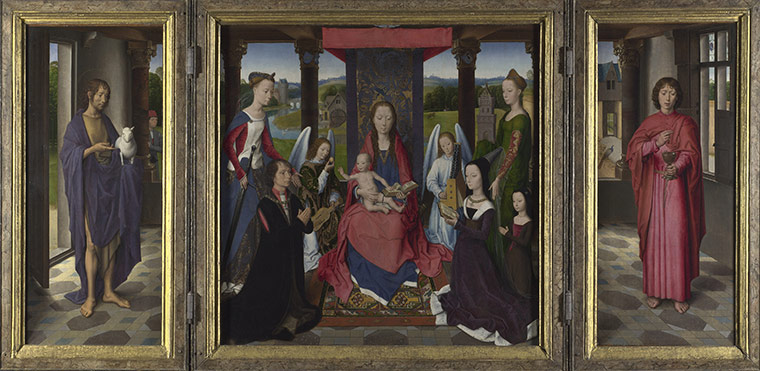
I love this work's formality, the way no one seems to be touching anyone else but everyone is, through gesture and glance. The figures seem suspended in these almost abstracted spaces. And the group of Madonna and very cheerful Christ child, angels and saints, with Sir John Donne of Kidwelly, his wife and daughter, all held below a red canopy as rich as a Barnett Newman stripe
Photograph: The National Gallery, London/Scala, Florence
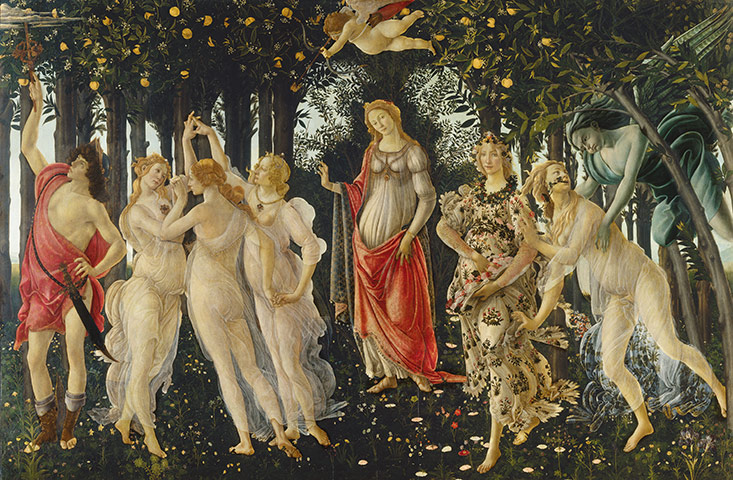
Italian Renaissance paintings by Botticelli, Piero della Francesca, Mantegna ... what makes them great? I haven’t lost the ideas explored by art historian Jacob Burckhardt in the 19th century – that great works have the capacity to encapsulate ideas about the world. They will have a quality of ethereal and spiritual poetry (as in the works of Botticelli). And they must be transcendent: that is, the artists are striving to communicate to their own age, but in a language visually understandable to other ages
Photograph: Photo Scala, Florence/Courtesy of Ministero per i Beni e le Attività Culturali