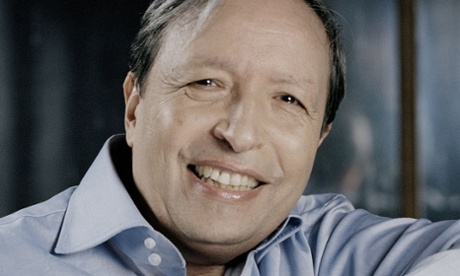
Murray Perahia’s place among the great pianists of our time is not disputed, although his self-effacing pianism means that the quality of his playing can be underestimated. There was a full house, however, for his latest London recital, and no one who was there is likely to have left disappointed.
Some among the audience might have been less satisfied with the choice of repertoire. The first half of Perahia’s previous London recital, two years ago, consisted of one of Bach’s French Suites, and sonatas by Haydn and Beethoven. This programme followed the same pattern before the interval – Bach’s sixth French Suite BWV817, followed by Haydn’s A flat Sonata and his F minor Variations, and then Beethoven’s Moonlight Sonata, Op 27 No 2.
Interpretatively, though, none of the performance could be faulted. Perhaps the French Suite was occasionally a little glib, with some movements dispatched just a little too peremptorily, but the sonatas were both beautifully structured, and the Variations made full use of the range of luminous tone colour that has been so characteristic of Perahia’s playing ever since he won the Leeds piano competition in 1972.
Chopin’s B minor Scherzo, another Perahia favourite and taken at blistering speed, closed the second half, but César Franck’s Prelude, Chorale and Fugue before it was something rather different: not, one might have thought, usual Perahia territory. The sheer lucidity of his playing, the transparency of his textures, and his ability to articulate internal voices within them, worked wonders on the weighty, organ-like keyboard writing, with its slithering chromaticisms and terraced dynamics. The way in which every strand of the fugue was delineated and its final climax built majestically, layer by layer, was exemplary.