Get all your news in one place.
100’s of premium titles.
One app.
Start reading

'Murder hornet' nest vacuumed out of tree in Washington

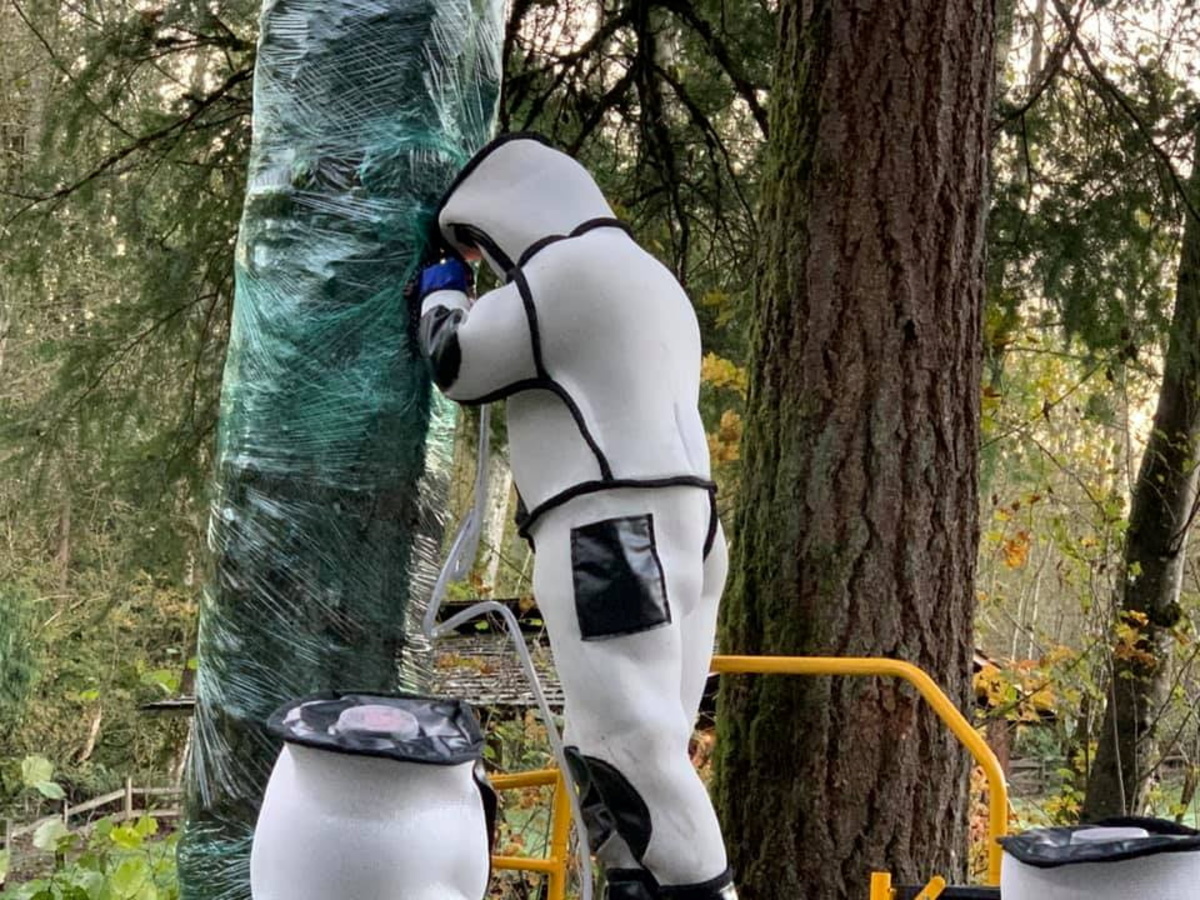
A Washington State Department of Agriculture (WSDA) entomologist completes an operation to remove a colony of Asian giant hornets by vacuum from a tree after they were discovered near Blaine, Washington, U.S. October 24, 2020. WSDA/Handout via REUTERS

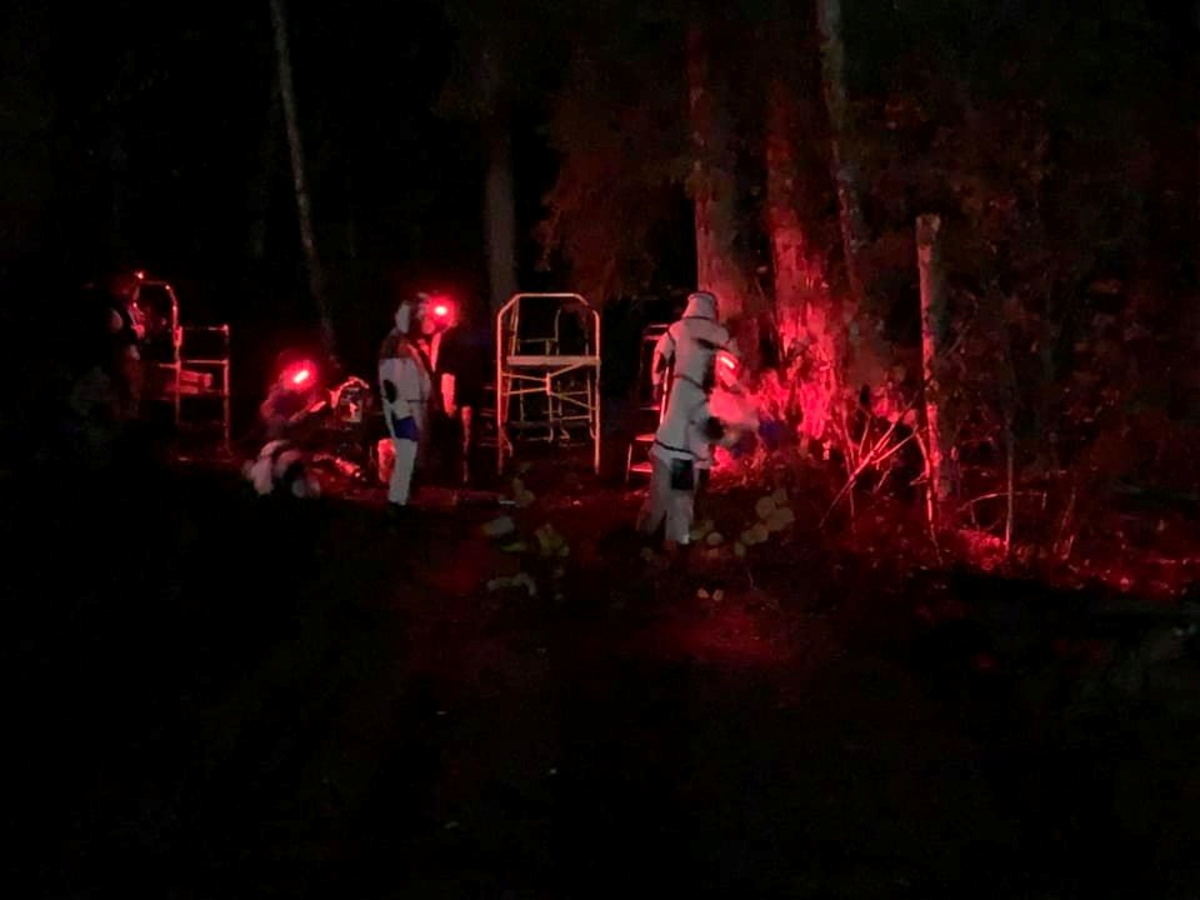
A team of entomologists in full-body protective gear vacuumed Asian giant hornets out of a tree in Washington state on Saturday, eradicating the first nest of the so-called murder hornets found in the United States.

The state's agricultural department said it had spent weeks searching for and trapping the hornets, which attack honeybee hives and could pose a threat to humans, because they can sting repeatedly with venom that is stronger than a honeybee's.

The state's entomologists succeeded by attaching radio trackers to three hornets they had trapped earlier in the week, one of which they followed to the nest, located in a tree near Blaine, Washington, on Thursday.
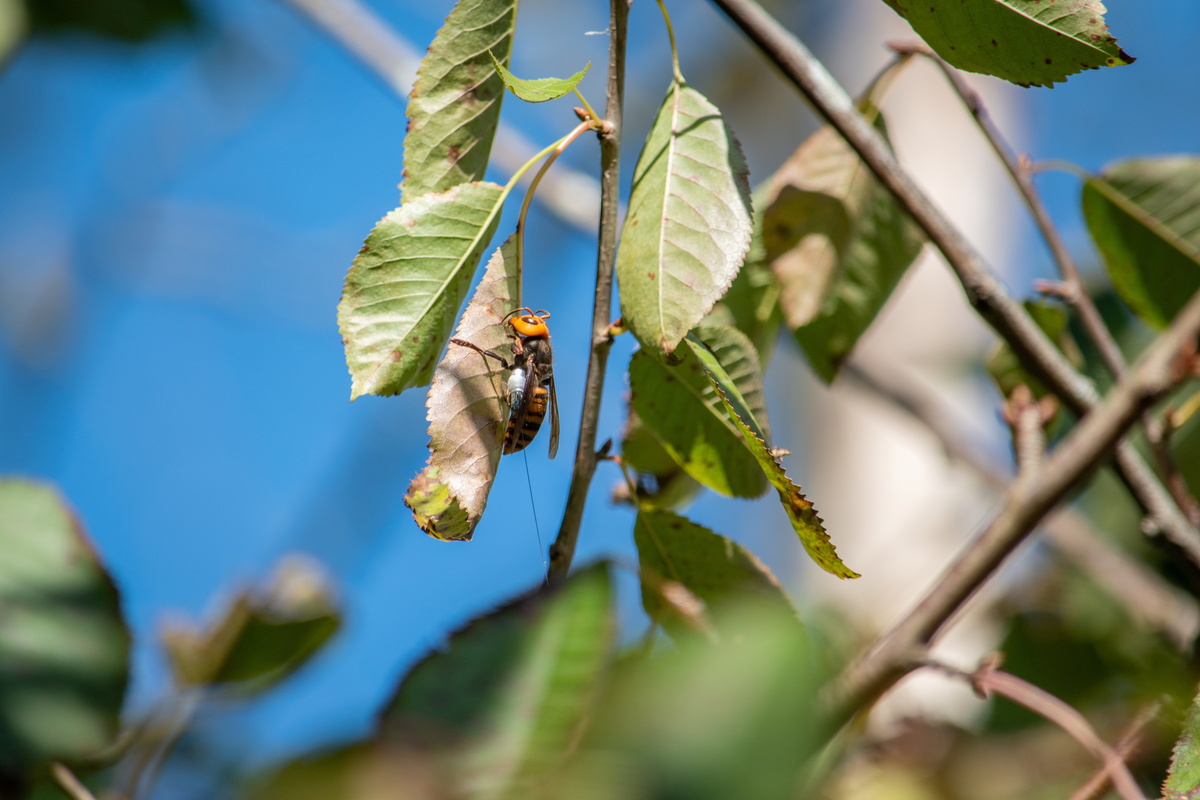
A radio tracking device fitted by Washington State Department of Agriculture (WSDA) entomologists is seen on one of three Asian giant hornets before they led researchers to a colony in a tree near Blaine, Washington, U.S. October 22, 2020.WSDA/Karla Salp/Handout via REUTERS

They returned on Saturday to make the extraction.

"Got 'em. Vacuumed out several #AsianGiantHornets from a tree cavity near Blaine this morning," the agriculture department said on Twitter, adding that more details would be provided at a news conference on Monday.

The stinging hornet, the world's largest, can grow as large as 2-1/2 inches (6.4 cm) in length and is native to Southeast Asia, China and Taiwan. It was first discovered in the United States in December by a homeowner in Blaine.
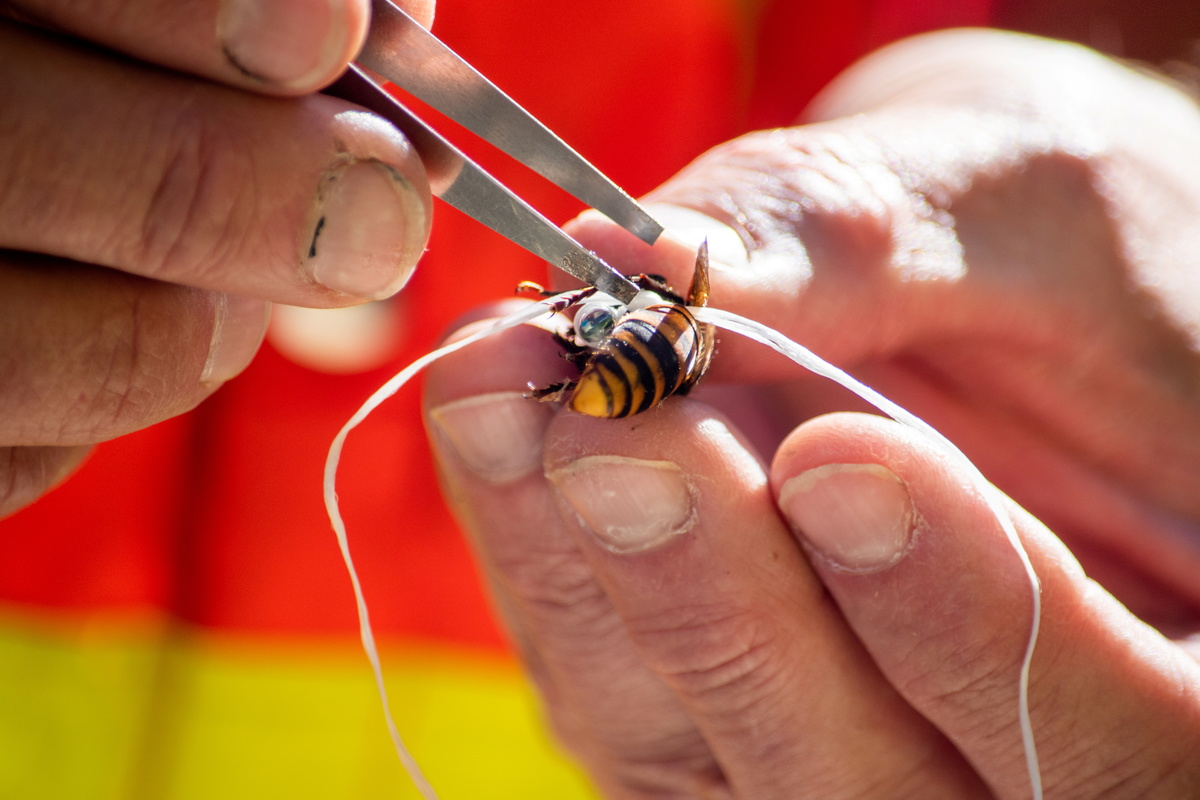
A radio tracking device is fitted by Washington State Department of Agriculture (WSDA) entomologists onto one of three Asian giant hornets before they led researchers to a colony in a tree near Blaine, Washington, U.S. October 22, 2020. WSDA/Karla Salp/Handout via REUTERS

Aside from the danger to humans, the hornet presents a threat to agriculture and the apiary industry, officials have said, because it is a known predator of honey bees, with a few of the hornets capable of wiping out an entire hive in hours.

(Reporting by Nathan Layne in Wilton, Connecticut; Editing by Daniel Wallis)
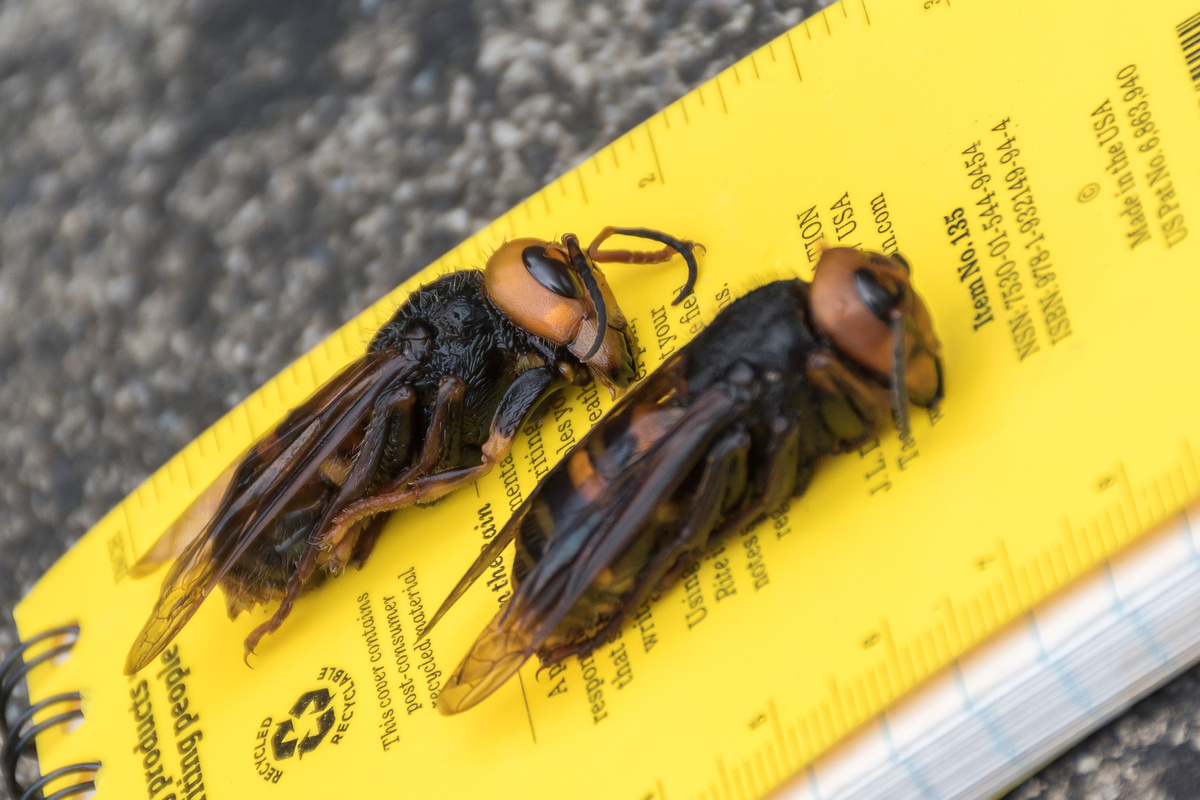
A pair of Asian Giant Hornet caught in a trap by Washington State Department of Agriculture entomologist Chris Looney lie on a notepad near Blaine, Washington, U.S. April 23, 2020. Karla Salp/Washington State Department of Agriculture/Handout via REUTERS
Washington State Department of Agriculture (WSDA) entomologists begin an operation to remove colony of Asian giant hornets from a tree by vacuum near Blaine, Washington, U.S. October 24, 2020. WSDA/Handout via REUTERS
Sign up to read this article
Read news from 100’s of titles, curated specifically for you.
Already a member? Sign in here
Related Stories
Top stories on inkl right now
One subscription that gives you access to news from hundreds of sites
Already a member? Sign in here
Our Picks
Fourteen days free
Download the app
One app. One membership.
100+ trusted global sources.