
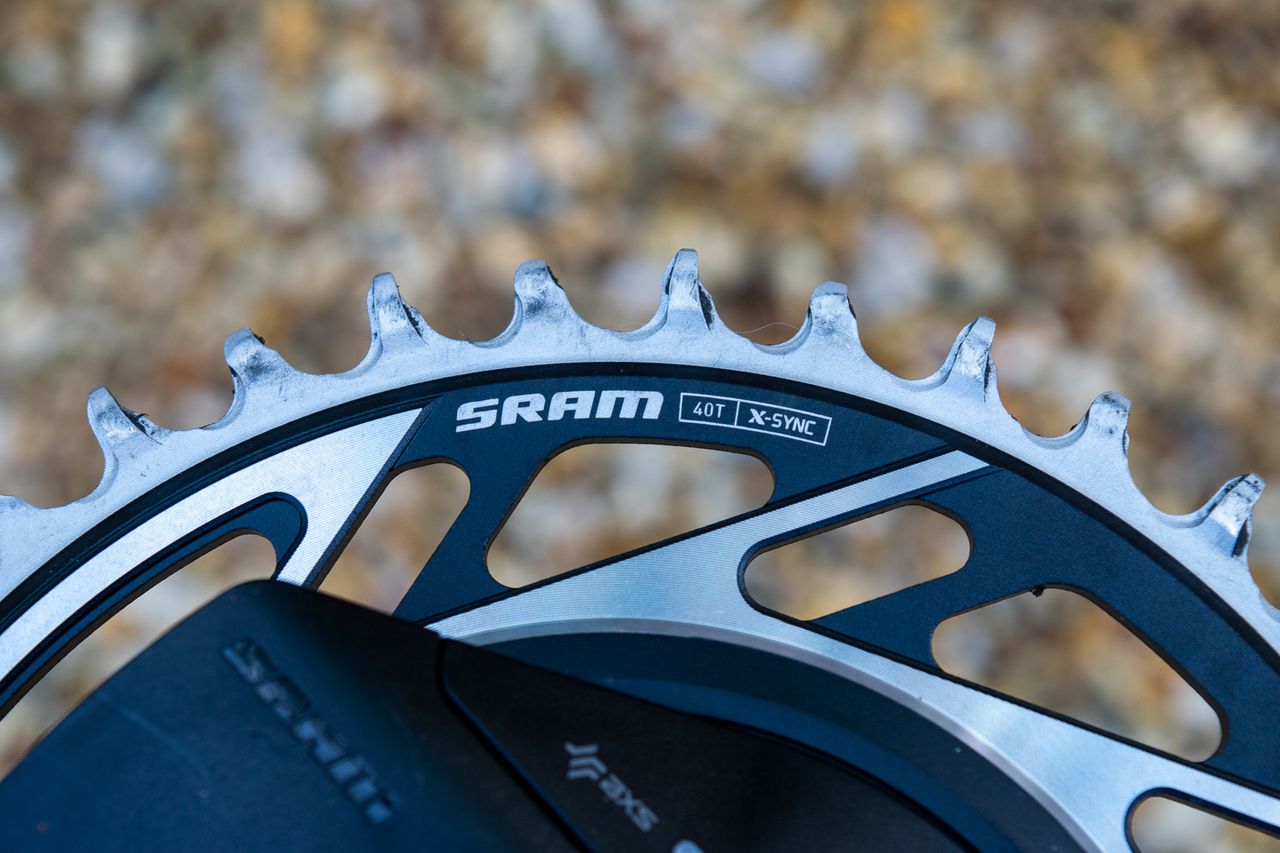
The UCI’s defeat in not one but two Belgian courts represents a significant success for component manufacturer SRAM, which is celebrating not just the legal victory but also the wider implications as it pushes for more industry involvement in UCI decision-making.
On Wednesday, SRAM’s October victory over the UCI at the Belgian Competition Authority was upheld by the Market Court in Brussels, which rejected the UCI’s appeal against the BCA ruling that had put a halt to its gear restriction protocol.
That protocol, designed with a view to improving rider safety by reducing speeds, was based on a maximum gear ratio equivalent to a 54T at the front and 11T at the rear, whereas SRAM’s top-tier road groupset comes with a 10-tooth smallest cog. SRAM argued that the proposed trials ‘exclusively and unfairly’ impacted SRAM, both in terms of the teams and riders it supplies, as well as the reputational and financial damage linked to the possible perception of its groupsets as unsafe.
“This case began as a dispute about our 10-tooth cog. Today's ruling is much bigger than that,” said SRAM's CEO, Ken Lousberg, in a statement sent to Cyclingnews.
“The Brussels Court of Appeal has issued a groundbreaking ruling on how sports federations across Europe must exercise regulatory power. The Court upheld the Belgian Competition Authority's previous findings that open, transparent, objective, and non-discriminatory governance is the legal standard for rule-making in sport.
“It endorsed that reasoning in full, applying well-established European Court of Justice case law in a way that will guide federation governance well beyond this case, and sharply rebuking the UCI's appeal.”
The UCI has not responded to requests for comment on the latest ruling.
The 'disc brake fiasco' and industry exclusion
To understand the broader point SRAM is trying to make, there is some interesting reading buried in the Market Court’s 50-page ruling document.
In excerpts of internal minutes from a meeting with the UCI in April 2025, SRAM representatives noted: “They [UCI] seemed motivated by the disc brake fiasco a few years ago in order to exclude the industry from what they consider as the stakeholder groups.” [Editor's note: this has been translated from French as it appears in the ruling document, which notes that it was 'freely translated' from the original English'.]
Disc brakes were first introduced to the pro road peloton in 2017, with the adoption of the technology controversial at first, but now ubiquitous.
The proposed gear restriction tests stemmed from the work of SafeR, a safety group set up in 2024 comprising the UCI, and the associations of riders, teams, and race organisers. SRAM argued that both it and other equipment manufacturers were not adequately consulted on the protocol – arguments that were supported in both court rulings.
“For SRAM, our legal action was always about how the stakeholders of this sport work together to improve every part of it, including rider safety, in a clear, transparent, and fair way,” said Lousberg. “What comes next is the work this sport has needed for a long time: building that process together, with the common goal of improving our sport.”
Lousberg then pointed to the potential role of the World Federation of the Sporting Goods Industry (WFSGI), which already had an influence in this case, having written a long letter to the UCI expressing concerns over the gear restriction protocol on behalf of a ‘unified industry’.
“The WFSGI, as the neutral voice of the cycling industry, is the natural partner in that work alongside the teams, athletes, race organisers, and the UCI,” Lousberg said.
“The door is now open, and there should be a seat for everyone willing to help build the future the sport deserves through collaboration, not exclusion. The first step is straightforward: the UCI should bring the WFSGI into rule-making as a full partner and start this reform now. SRAM is excited to get to work.”