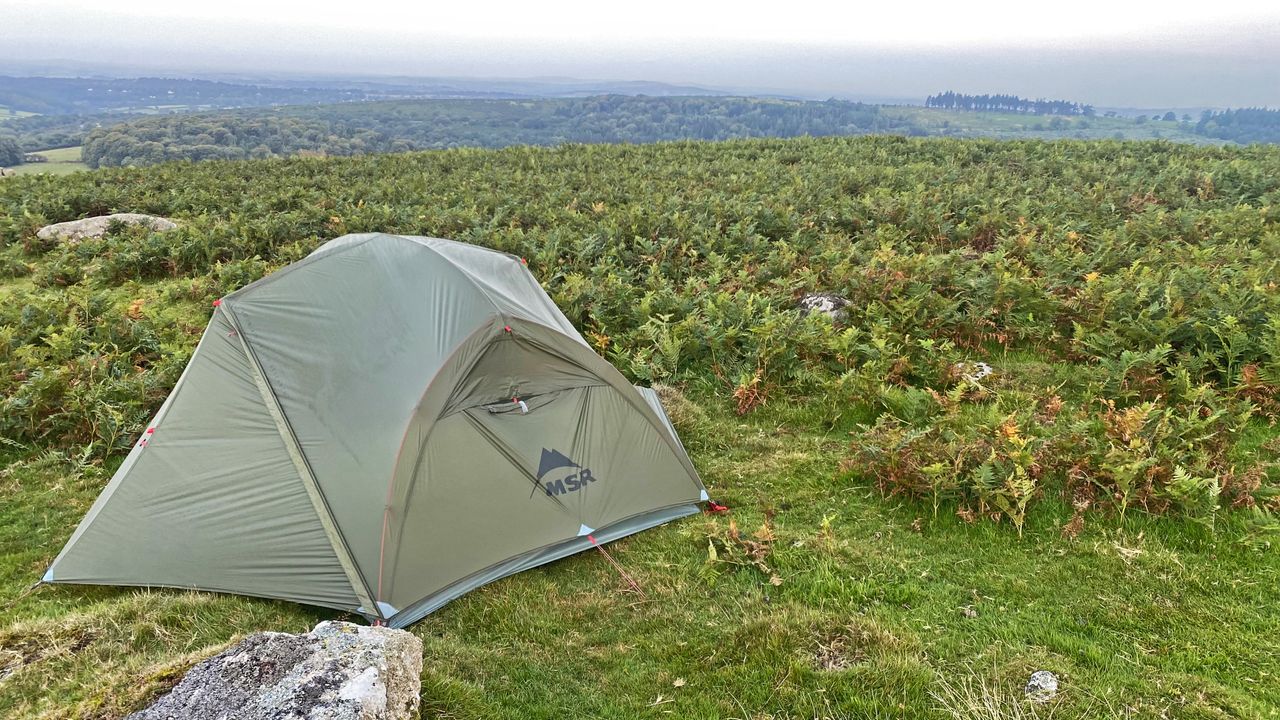
The Hubba Hubba is one of the few tents that genuinely earns the word iconic. When MSR launched the original back in 2004, its clever ‘brow pole’ and freestanding hub design set a new benchmark for lightweight backpacking shelters.
It offered something unusual at the time: a tent light enough to carry, protective enough for 3+ seasons, and spacious enough for two people to sleep comfortably with their gear. Many brands have since followed the template, but the Hubba Hubba remains the reference point.
The company has refined the design over the years – including the popular MSR Hubba Hubba NX – and the family has grown to include everything from solo shelters to the bigger Mutha Hubba, plus bikepacking-specific versions, such as the MSR Hubba Hubba Bikepack 2.
But 2026 marks the biggest step forward in more than two decades. Two fully reworked models, the ultralight Hubba Hubba LT and the more rugged Hubba Hubba HD, are arriving in Europe this January after an early US release. Both come in 1-, 2- and 3-person sizes and represent a complete reimagining of the platform.
I was invited to Cascade Designs’ European base in Cork this summer for an early look at the Hubba Hubba LT, and I’ve spent the past five months testing the LT2 in the wild. From long, wet hauls through the Wicklow Mountains to wind-battered pitches on Dartmoor’s tors, I’ve had plenty of time to see what this next-generation Hubba Hubba is really capable of.
MSR Hubba Hubba LT2 review
Price and availability
The Hubba Hubba LT 2-person tent is already available from Cascade Designs and retailers such as REI in the United States for a list price of $549.95 (the LT 1-person tent is $469.95 and the LT 3-person shelter is $629.95).
From January 2026, the LT2 will also be available in the UK and across the EU (RRP £560), as will the sturdier Hubba Hubba HD (RRP £590). Universal MSR tent footprints start from $48.95.
Specifications
- Style: Semi-geodesic dome
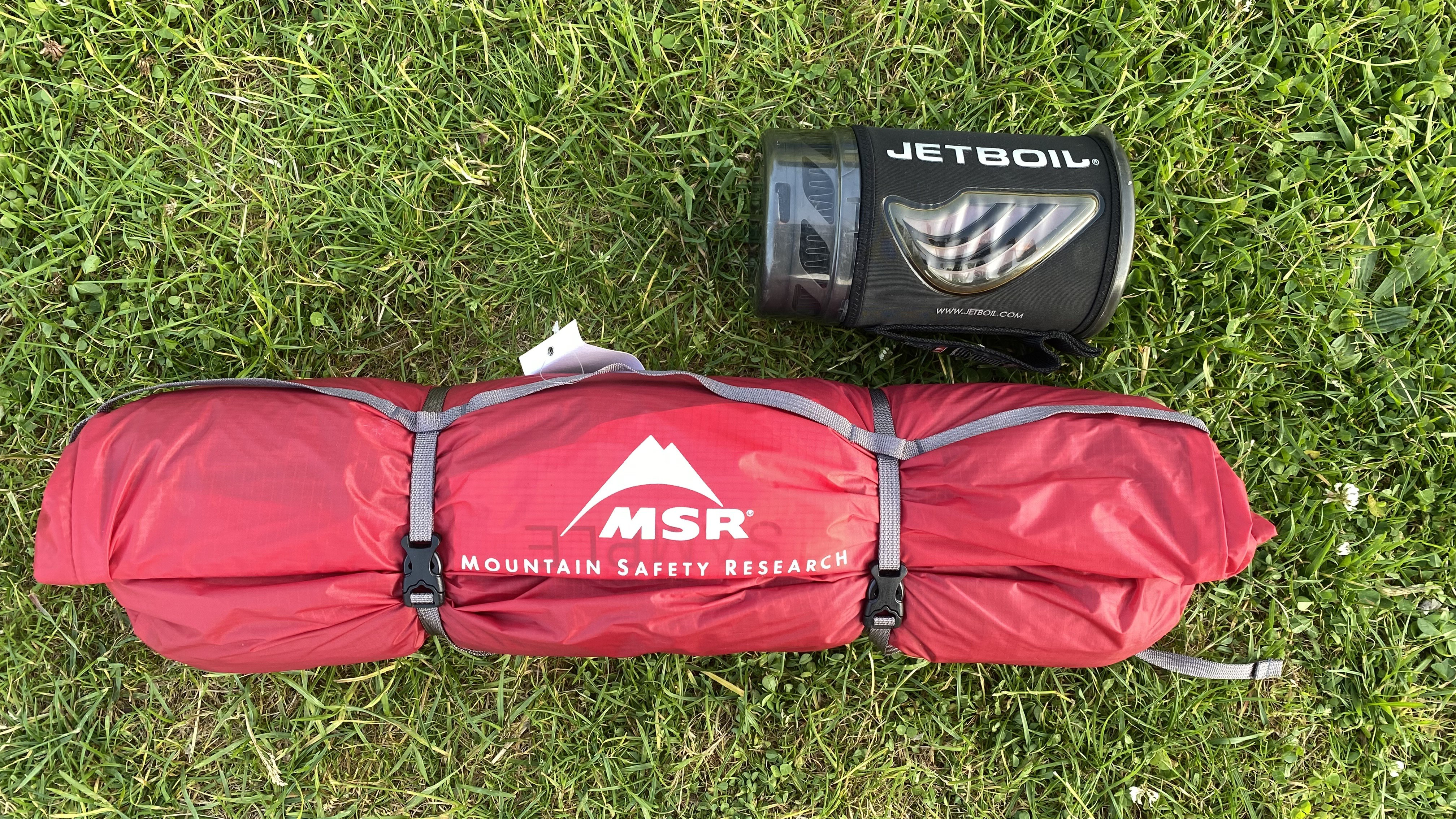
- Pack size: 51 x 14cm
- Inner dimensions: 2.24m x 1.32m
- Peak height: 1.02m
- Weight: 1.54kg
- Seasons: 2+
- Capacity: 2-person
- Vestibules: 2
- Fly: Solution-dyed 20D ripstop nylon, 1200mm polyether urethane & PFAS-free silicone
- Canopy: Tent body: Solution-dyed 20D polyester micromesh & Solution-dyed 20D ripstop nylon, 1800mm polyether urethane & PFAS-free DWR
- Floor: Solution-dyed 20D ripstop nylon, 1800mm polyether urethane & PFAS-free DWR
- Poles: DAC NFL 9.3mm
- Pitch time: 8–10 minutes
- Colour: Green
- Extras: Footprint
Design and materials
Viewed from the outside, the Hubba Hubba LT looks pretty similar to the NX. Working on the principle of 'it ain't broke, don't fix it', MSR's designers have retained the tried-and-tested symmetrical semi-geodesic dome shape.
Thich has proven itself more than capable of standing up to feisty winds, and the colour scheme is only subtly different (the new fly is a slightly lighter shade of green, still excellent for discreet pitching when you're wild camping).
Less obvious to the eye, but very important, the fabrics used in the lightweight nylon flysheet (plus the groundsheet and internal mesh walls) are solution dyed in the new model, which cuts carbon emissions by at least 80% (as compared to the materials previously used by MSR and others).
The new Hubba Hubba LT doesn’t have the highest hydrostatic head rating in the tent world (1,200mm for the fly and 1,800mm for the floor), but the tent is perfectly capable of keeping you dry, and the non-mesh elements of the main canopy have a HH of 1,800mm and have been coated with DWR.
If you want a solid 3-season shelter, though, you’ll need to go for the slightly heavier (1.80kg) but much more protective Hubba Hubba HD, which has less mesh and a flysheet with a hydrostatic head of 3,000mm.
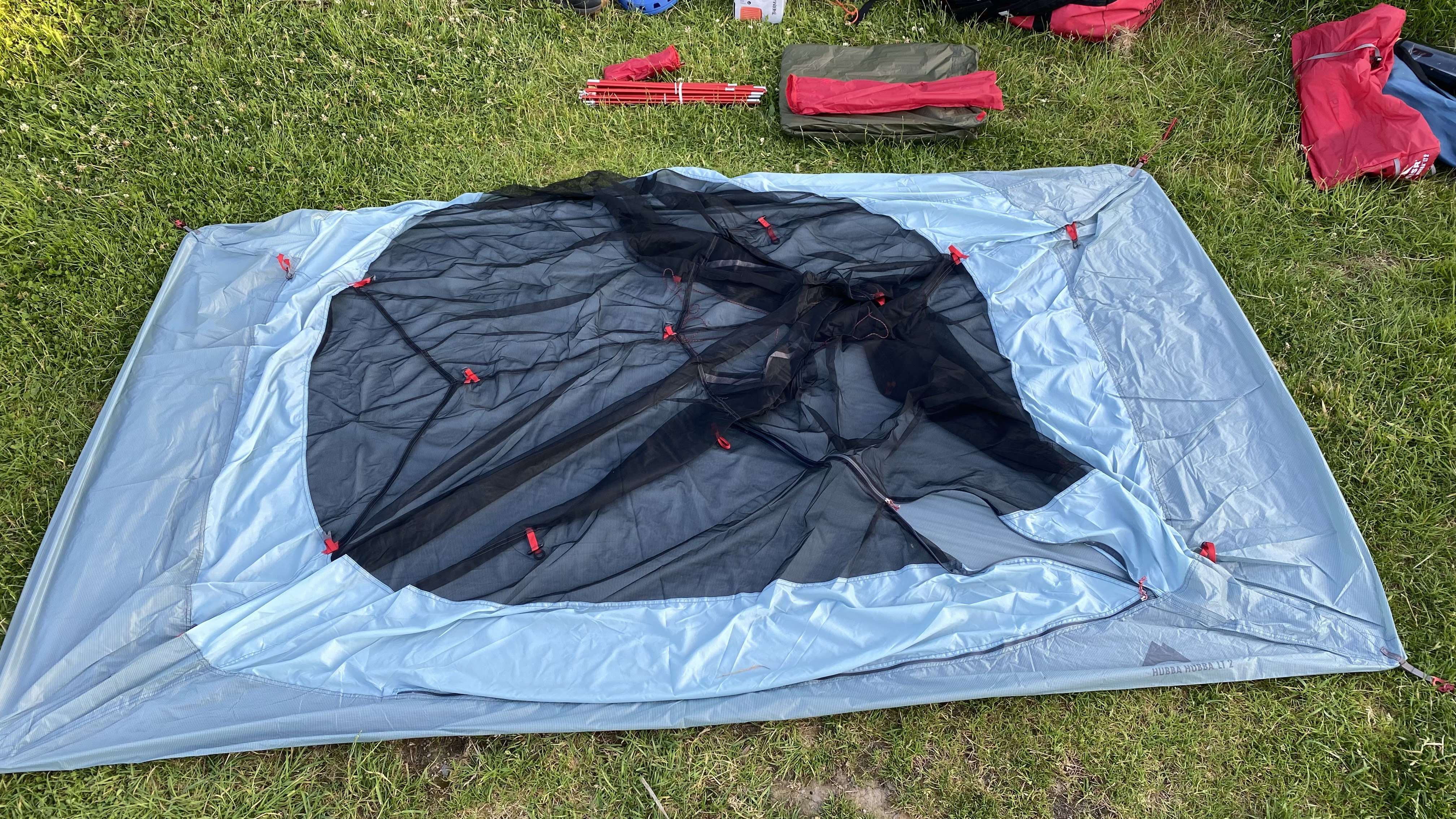
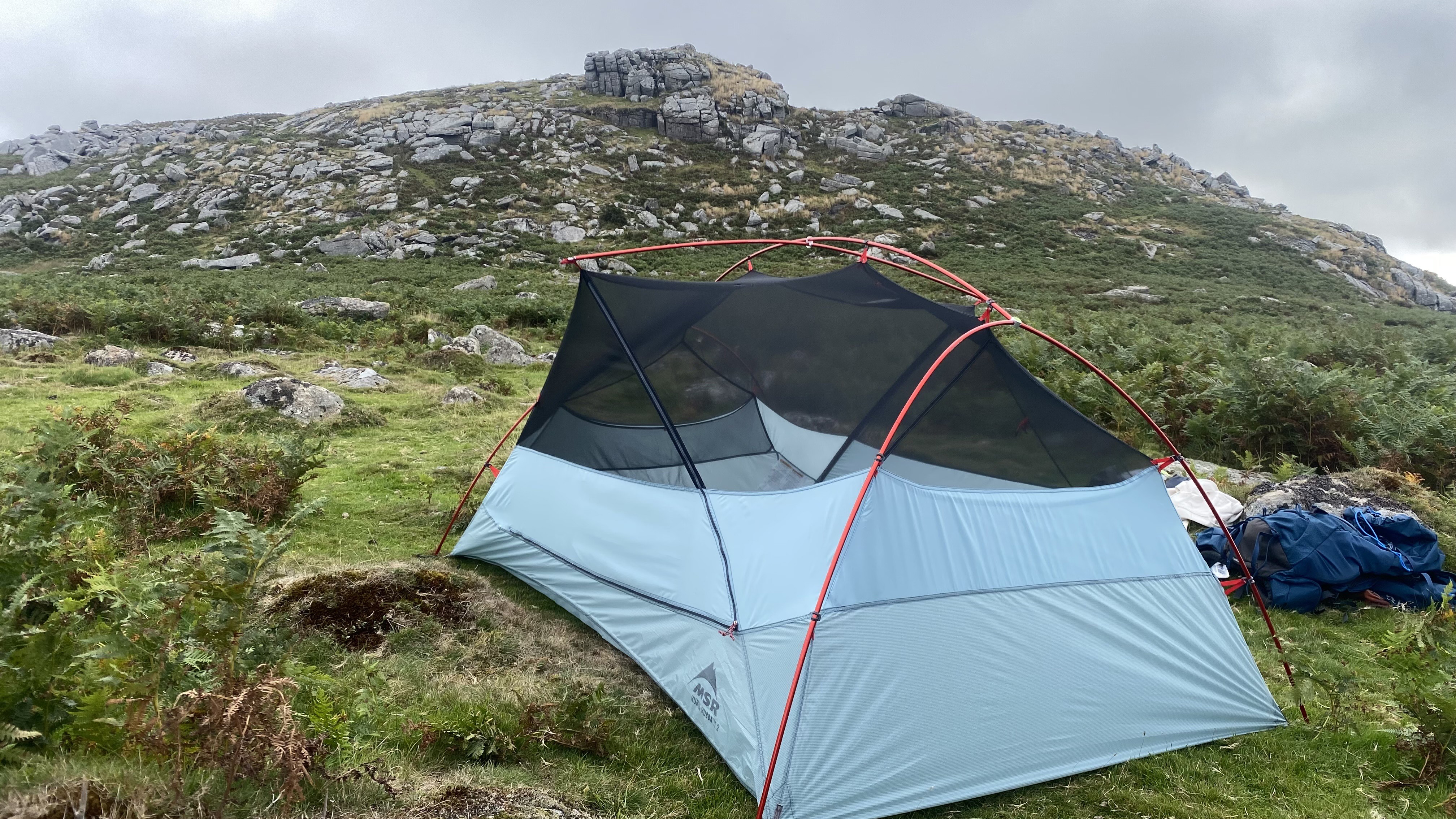
Where the changes are more apparent is in the design of the DAC pole system. It remains a single-unit set-up, with an umbilicus connecting the pieces, but the four legs in the )–|–( shape have been lengthened, and that brow pole (a massive innovation when launched) has been extended, all of which increases the internal floor space of the tent, improves the headroom and lengthens the two vestibules.
The components used in the corner hardware (where the poles slot into the feet at the extremities of the groundsheet) have also been upgraded, with lightweight metal used to improve durability. The lightweight but impressively tough ‘mini groundhog’ pegs are also new.
The whole set-up, bag and all, weighs in at 1.54kg, which is 180g lighter than the NX (the minimum weight is actually 1.36kg, but you really have to strip it down to achieve this). For a spacious, high-performing 2-person tent, this is exceptionally light.
Performance on the trail
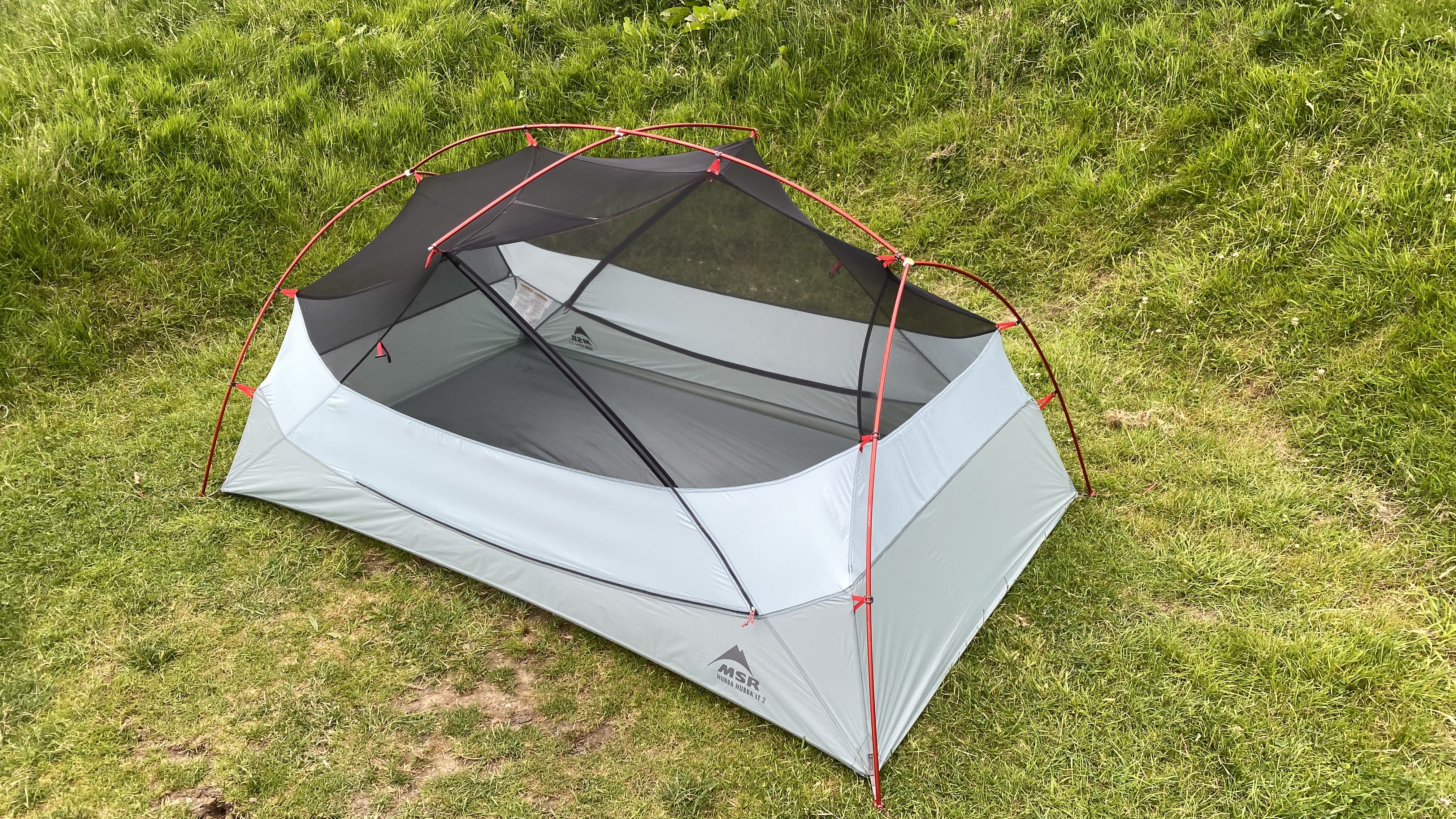
Immediately after collecting my test tent from Cascade Designs, I loaded it into my backpack and hit the trails, walking in the wonderful Wicklow Mountains and setting up camp in several places.
It was midsummer, and Ireland was in the grip of a most unusual heatwave (I’m far more used to fending off the driving rain when I’m in the Emerald Isle – there is a reason the country is so green), so I was instantly appreciative of the amount of mesh that has been employed in the construction of the LT’s inner.
The liberal use of this solution-dyed micromesh is one way MSR have shaved some grams from the carry weight of the new tent, but it’s also excellent for ventilation and airflow, ably assisted by the vents on the fly (more about those later).
I was even able to take the flysheet off entirely, to enjoy some sensational stargazing through the mesh, while being kept safe from the millions of midges that suddenly filled the mountain air.
Since summer, I have mainly been using the Hubba Hubba LT while wild camping on Dartmoor, where it has faced far cooler and more challenging conditions, including driving rain and high winds. The reduced weight and bulk of the shelter have been brilliant for packing it into such places, and I’m very impressed at how easy this tent is to carry on all kinds of backpacking adventures.
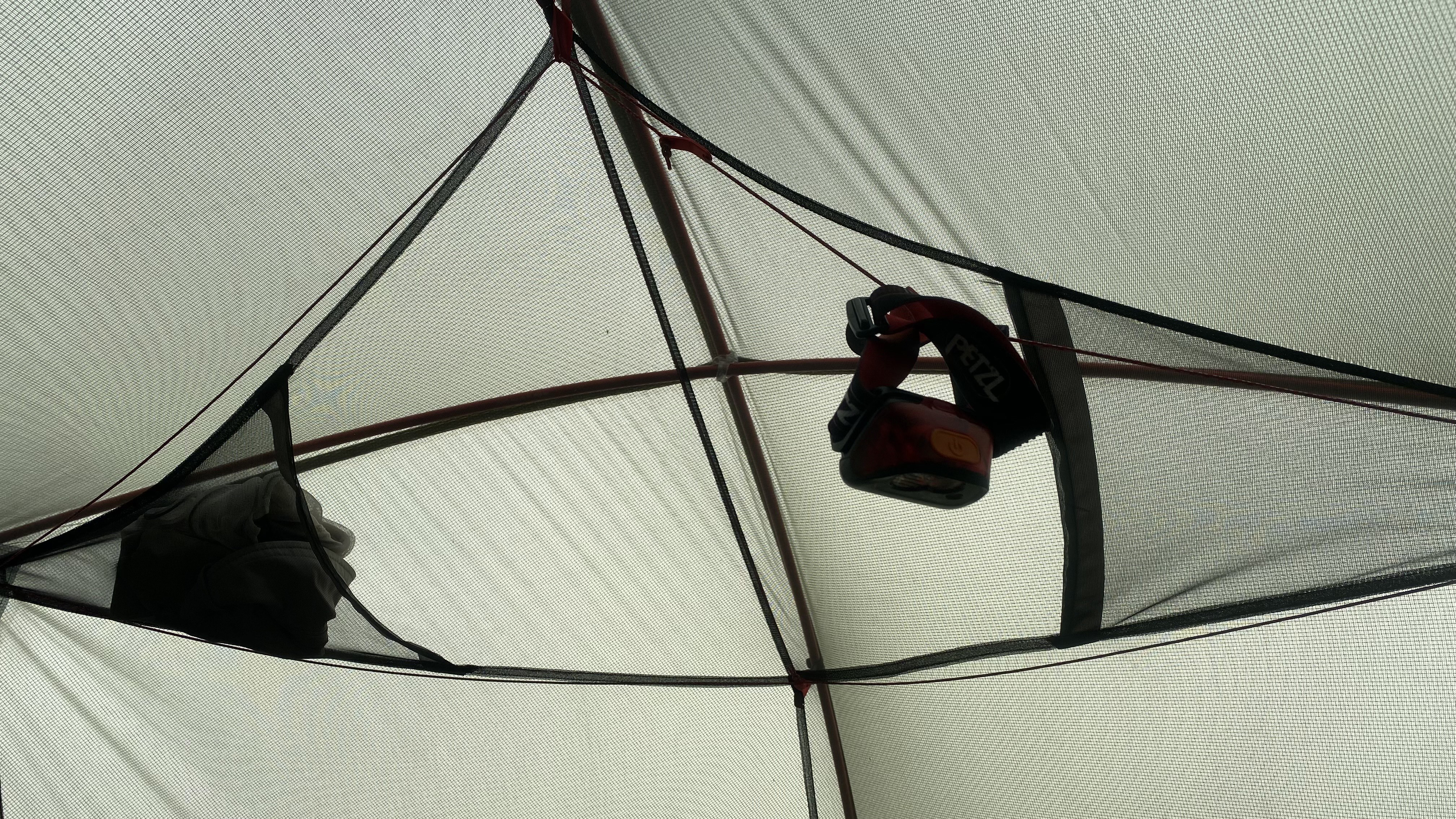
Considering its packability, it offers 5-star accommodation on the trails and at crags and campsites, with lots of room and numerous smart features that improve comfort levels and capability, from the rain gutters to the gear loft and internal clothes lines.
As mentioned above, there is considerably more floor space in this new design (32 sq ft in total), which means you can comfortably get two people side by side, even when using large camping mats such as the sumptuous Therm-a-Rest NeoLoft sleeping pad (a magnificent mattress that I’ve loved sleeping on this year).
If people are happy to use smaller mummy-shaped mats, and they all get on pretty well, then you could quite easily sleep three people in this tent. There is extra headroom too: just 2cm, but in the tight confines of a backpacking tent, it all makes a massive difference.
The shape of the vestibules is also different to the NX, with the porches on both sides being bigger (longer but slightly narrower), offering more storage space for hiking boots and walking shoes, and additional room for activities such as making a brew on a camping stove in wet weather.
The other significant change is to the design of the door openings, which have gone from the standard D to a triangular shape, with two separate zips meeting at the pointy bit. This increases the durability of the zips and means you always know where the puller is (handy when you can't find your head torch).
Lastly, cable ports have been added to the wall pockets, so you can plug things like smartwatches, phones, and speakers into powerpacks for use and charging, without wires dangling.
On the downside, while it’s nice to be able to use the inner tent as a standalone shelter on dry starry nights, when conditions are wet it would good to be able to put the tent up fly first, and that’s not possible with the Hubba Hubba LT.
Also, the increased use of micromesh is brilliant for keeping cool and reducing condensation in summer, but it does affect the insulating ability of the tent and means it’s quite chilly in colder conditions.
Whereas the older Hubba Hubba NX could handle 3 seasons (often more), now you need to choose between the lightweight Hubba Hubba LT or the more robust, protective, and warmer Hubba Hubba HD.
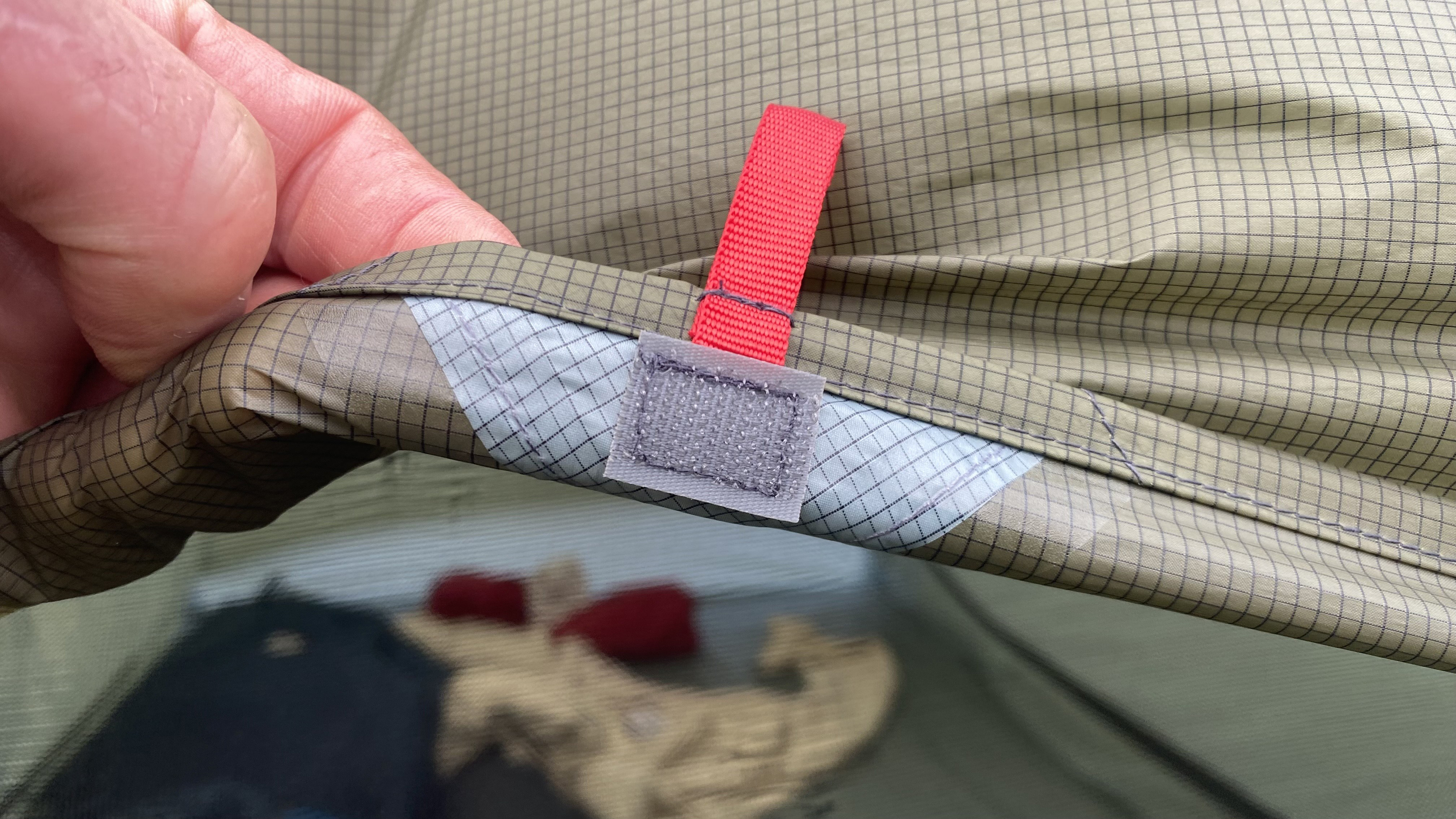
Lastly, something that became a real issue when I was camping on Dartmoor in windy conditions, the Velcro closures on the air vents in the new fly are sadly somewhat lacking. If you happen to pitch your tent with those openings facing the incoming wind, you’re in for a noisy night.
You also need to ensure the guys are pulled very tight, because those extended legs on the new pole system do bend in the wind and bash you in the face while you’re sleeping (or trying to).
Verdict
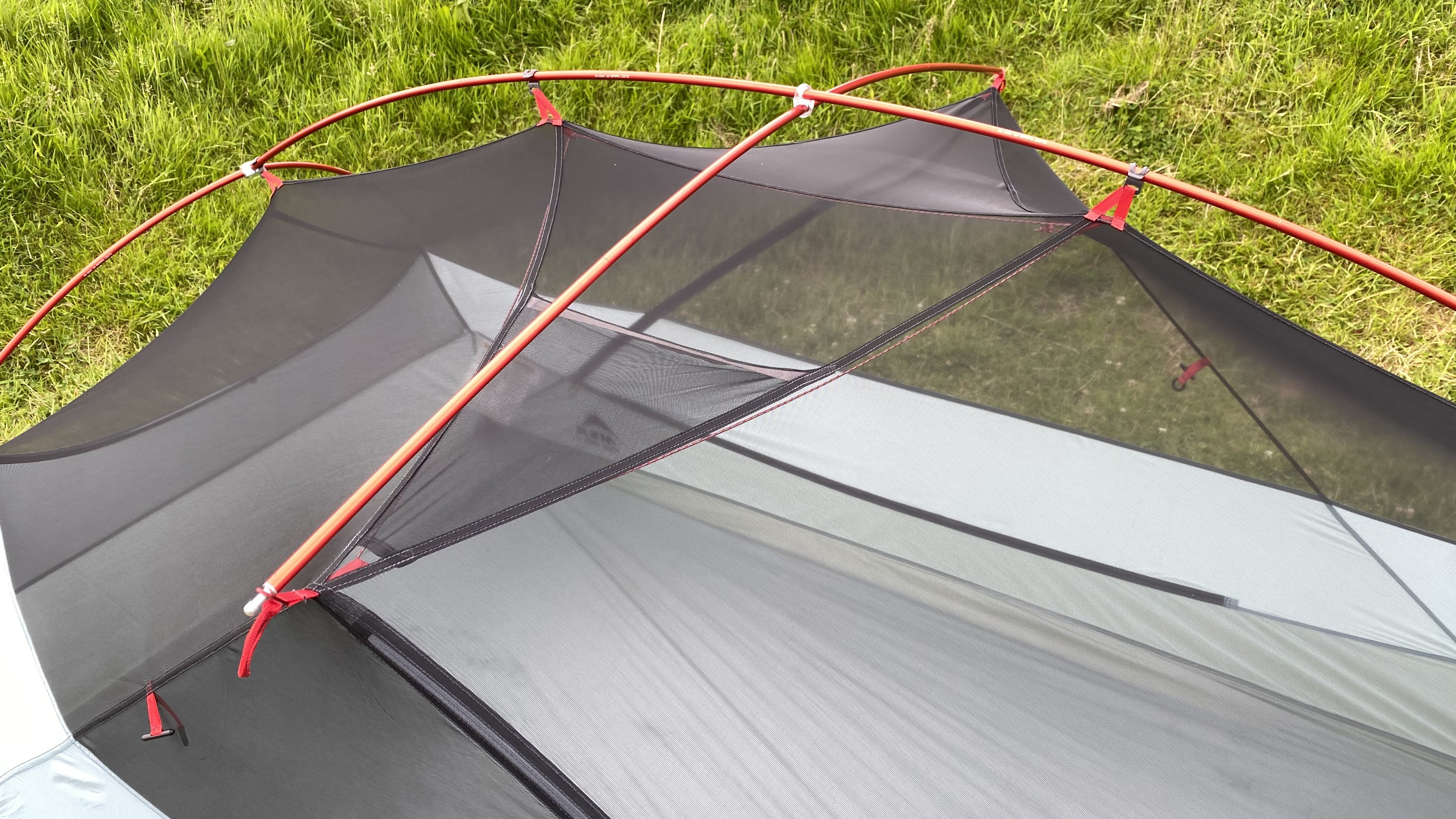
There are some genuinely great changes here, to an already excellent tent, and I really appreciated the additional headroom, floor and porch space while testing the LT2. The eco-conscious use of materials is excellent, and lots of the smaller tweaks and little additions genuinely add to the functionality of the tent.
It’s important to realise that the Hubba Hubba LT is very much a 2-season tent, and for a 3+ season shelter that will keep you cosy further into the darker, chillier months, you’ll need to go for the Hubba Hubba HD.
Also consider
Another superb lightweight 2-person backpacking shelter is the Nemo Dagger Osmo 2P Tent, which offers slightly less internal room but has better vestibules and lots of very good features.
For a (very slightly) heavier, but considerably more affordable 2-person backpacking shelter, check out the Alpkit Ordos 2. If you’re hiking alone – or prefer your own (very small room) while out on the trail – the Lifesystems Solo Peak Tent is an excellent microshelter for backpacking, fastpacking and bikepacking adventures.