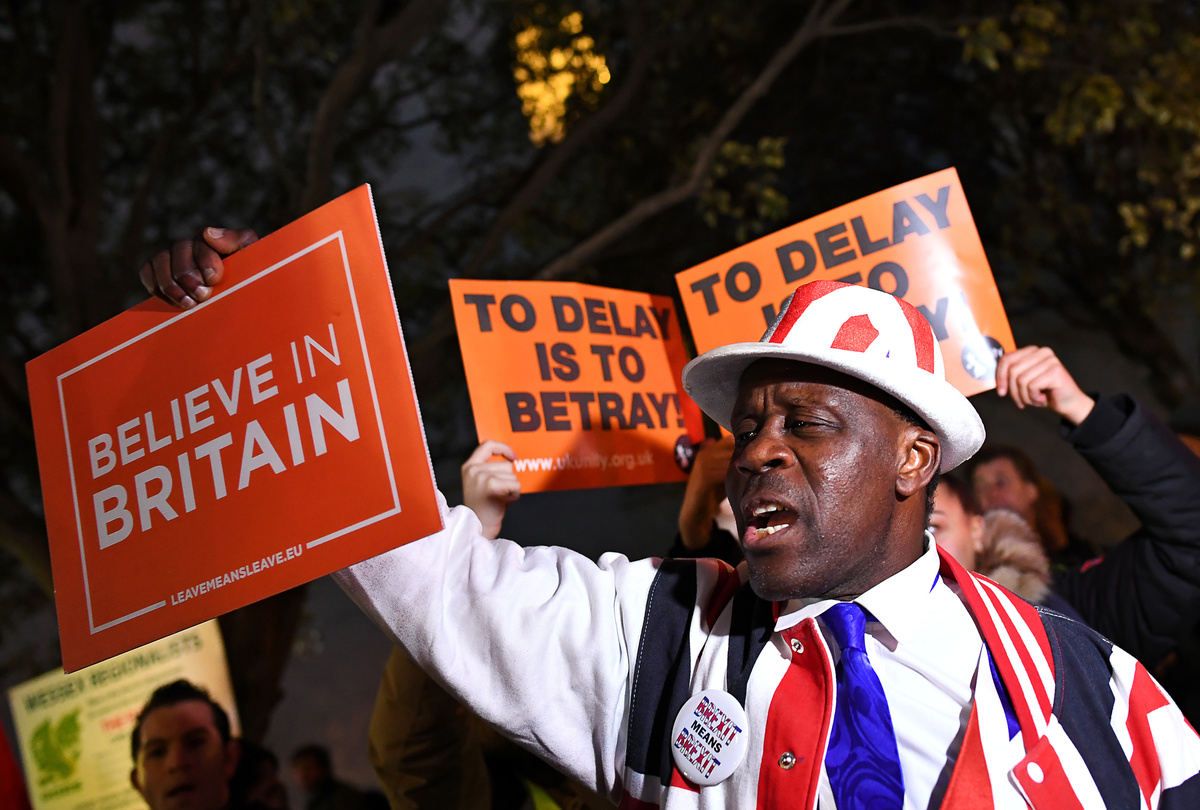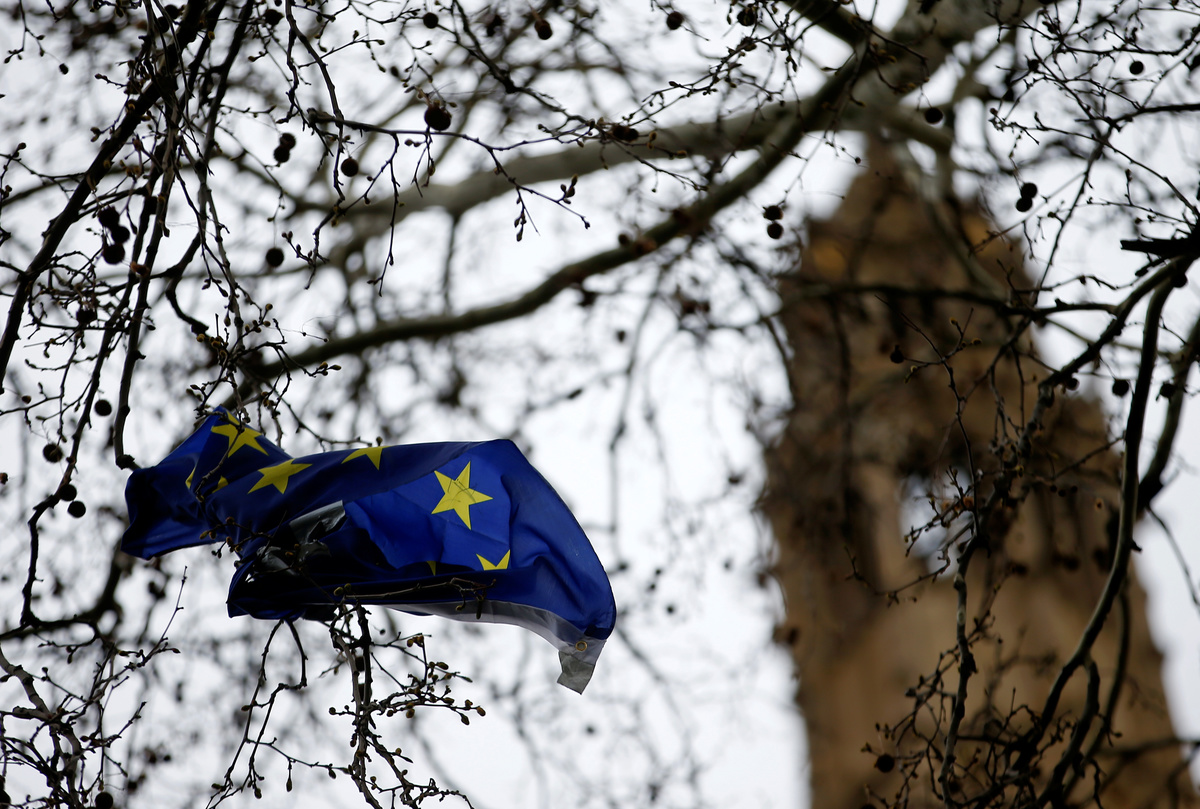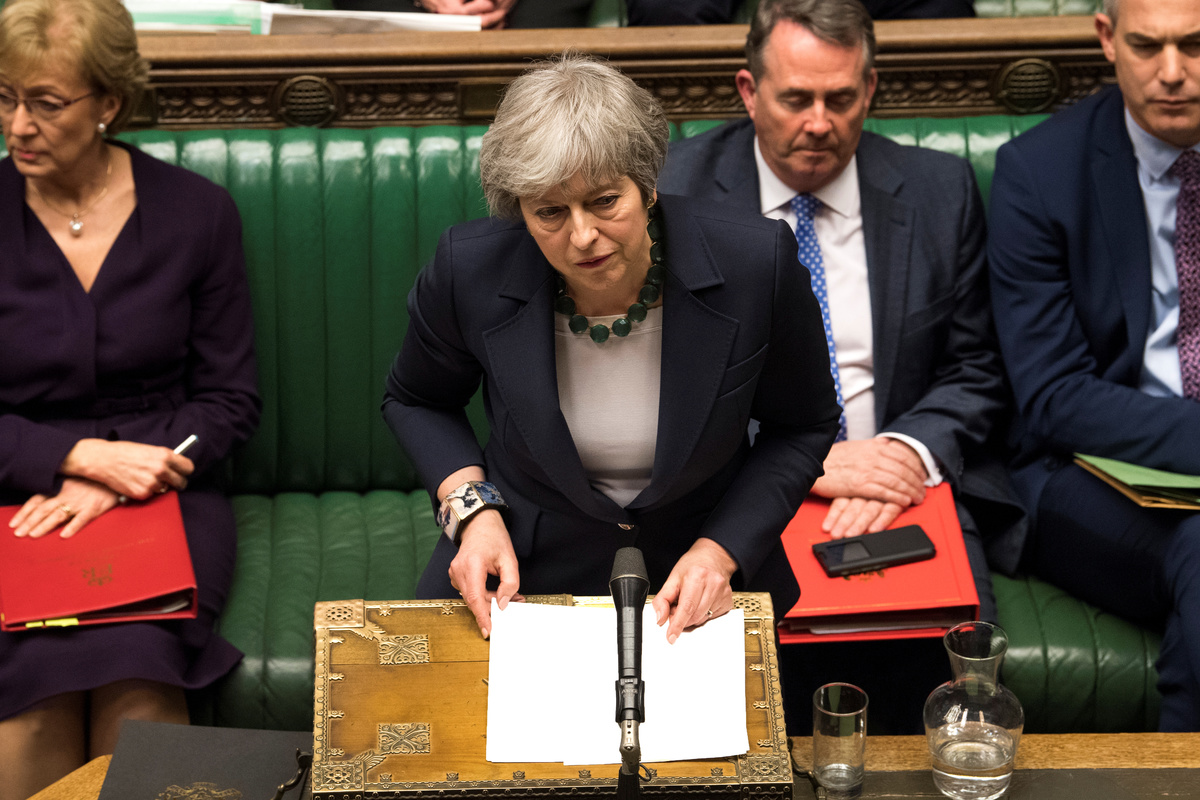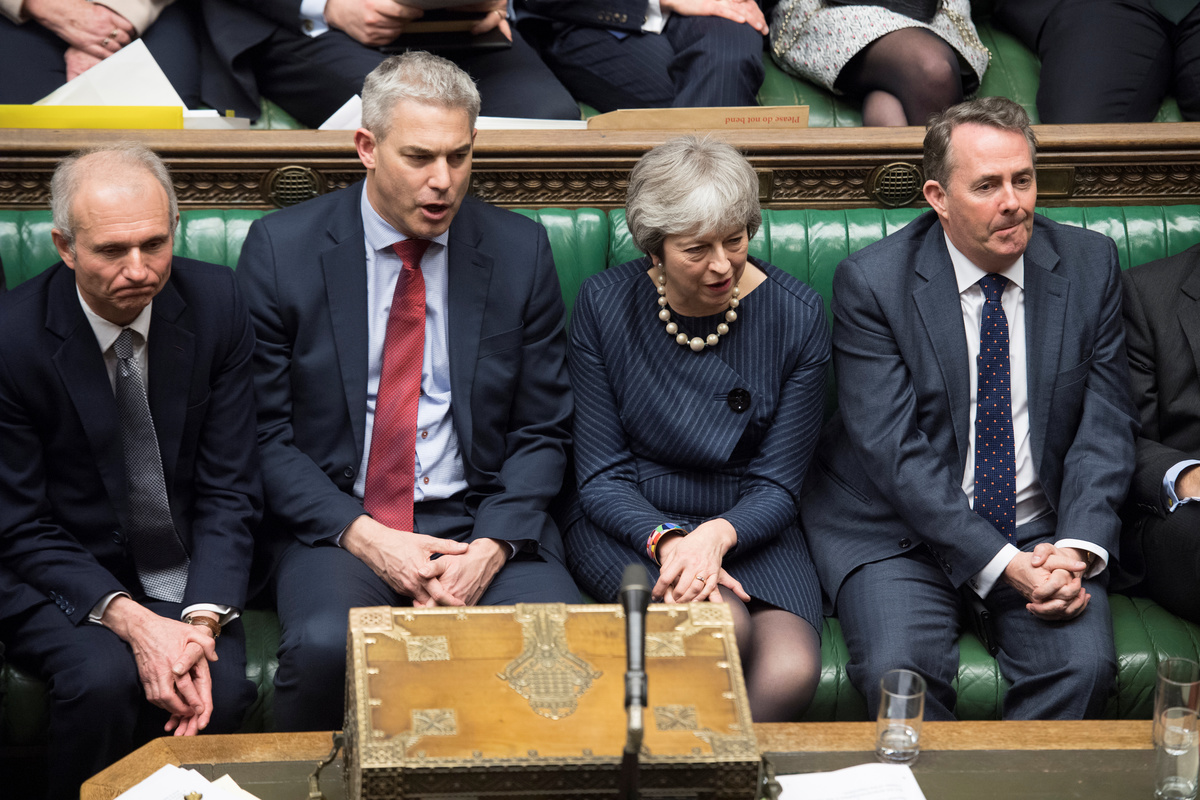
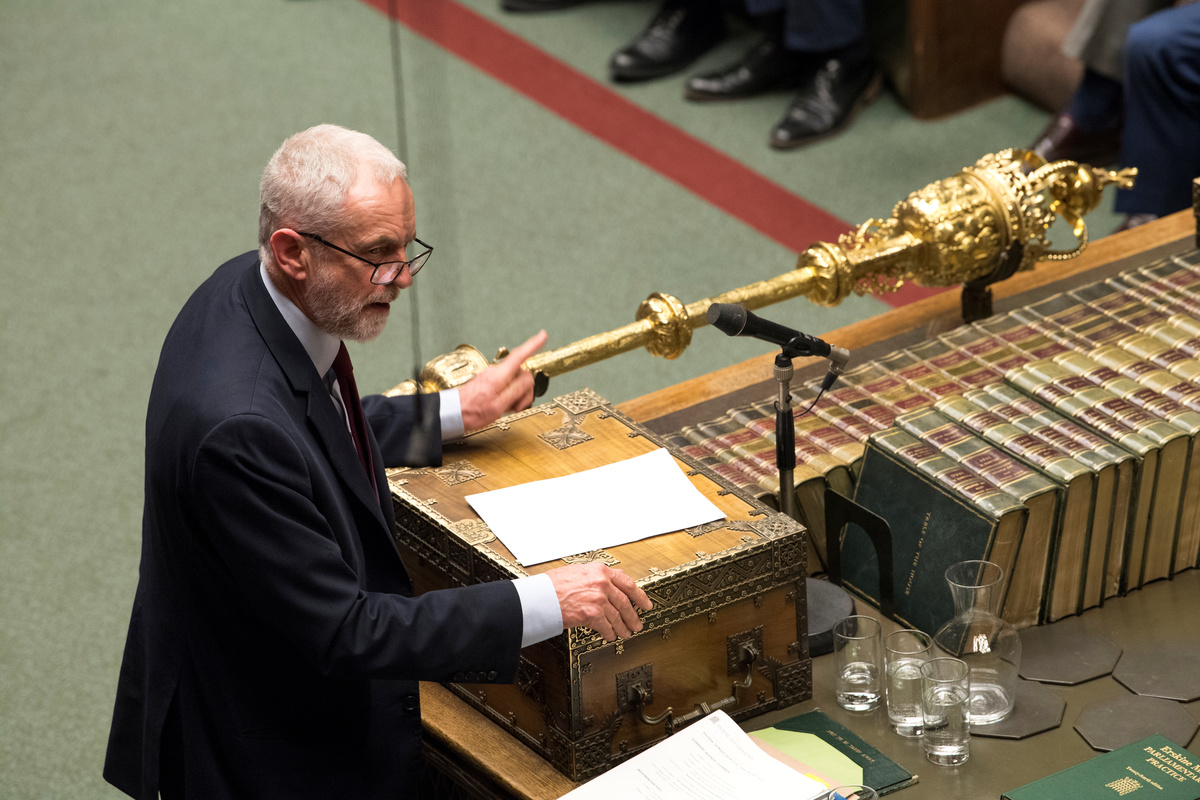
LONDON (Reuters) - British lawmakers voted overwhelmingly on Thursday to seek a delay in Britain's exit from the European Union, setting the stage for Prime Minister Theresa May to renew efforts to get her divorce deal approved by parliament next week.
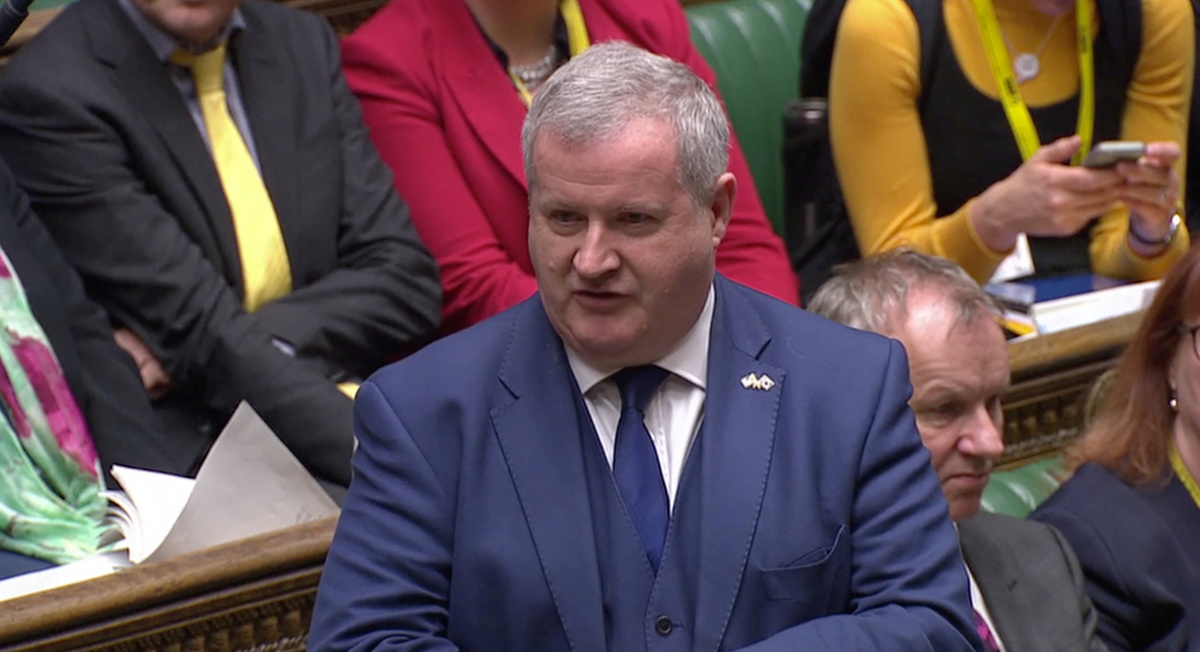
Lawmakers approved by 412 votes to 202 a motion setting out the option to ask the EU for a short delay if parliament can agree on a Brexit deal by March 20 -- or a longer delay if no deal can be agreed in time.
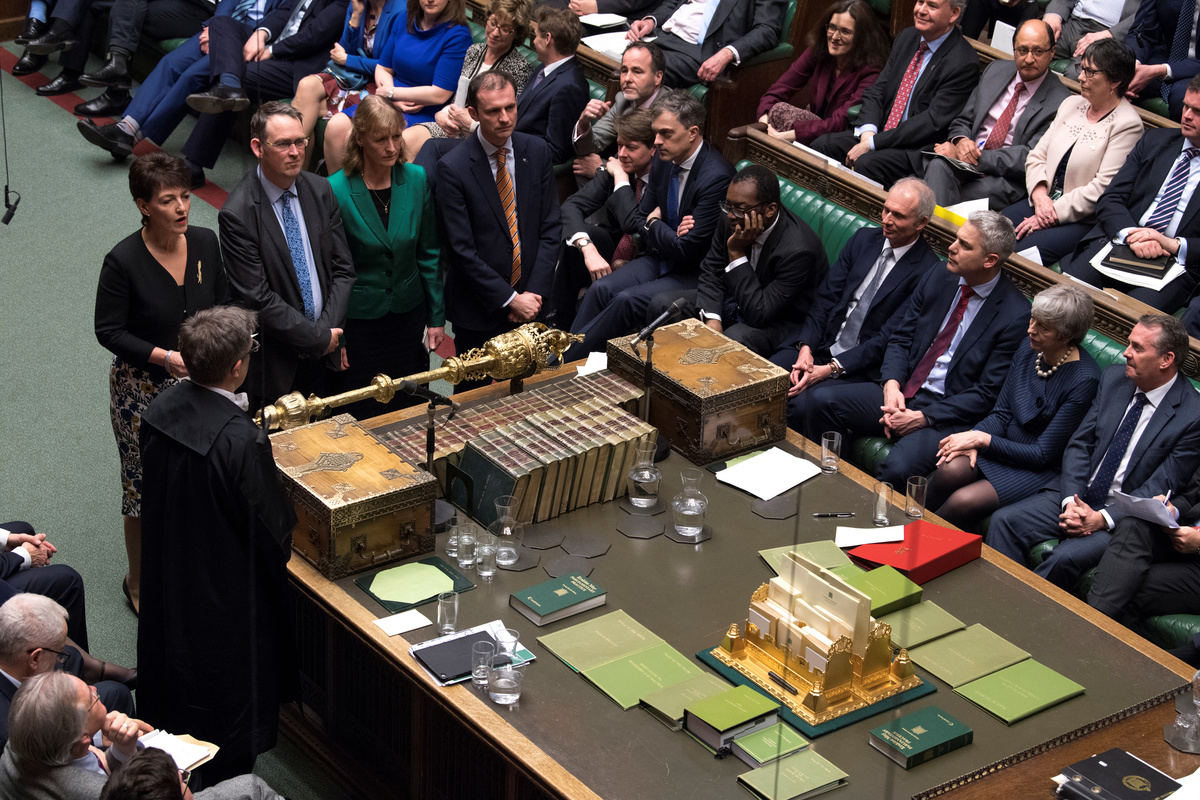
The vote makes it likely that the March 29 departure date set down in law, which May has repeatedly emphasised, is likely to be missed, although it is unclear by how long.
The short delay envisaged in the motion could last until June 30, but the longer extension is not currently time-limited. Either would require unanimous approval from the other 27 EU members, whose leaders meet in a summit next Thursday.
May hopes the threat of a long delay will push Brexit supporters in her Conservative Party and members of the Democratic Unionists, the small Northern Irish party that props up her minority government in parliament, to back her deal at the third attempt.
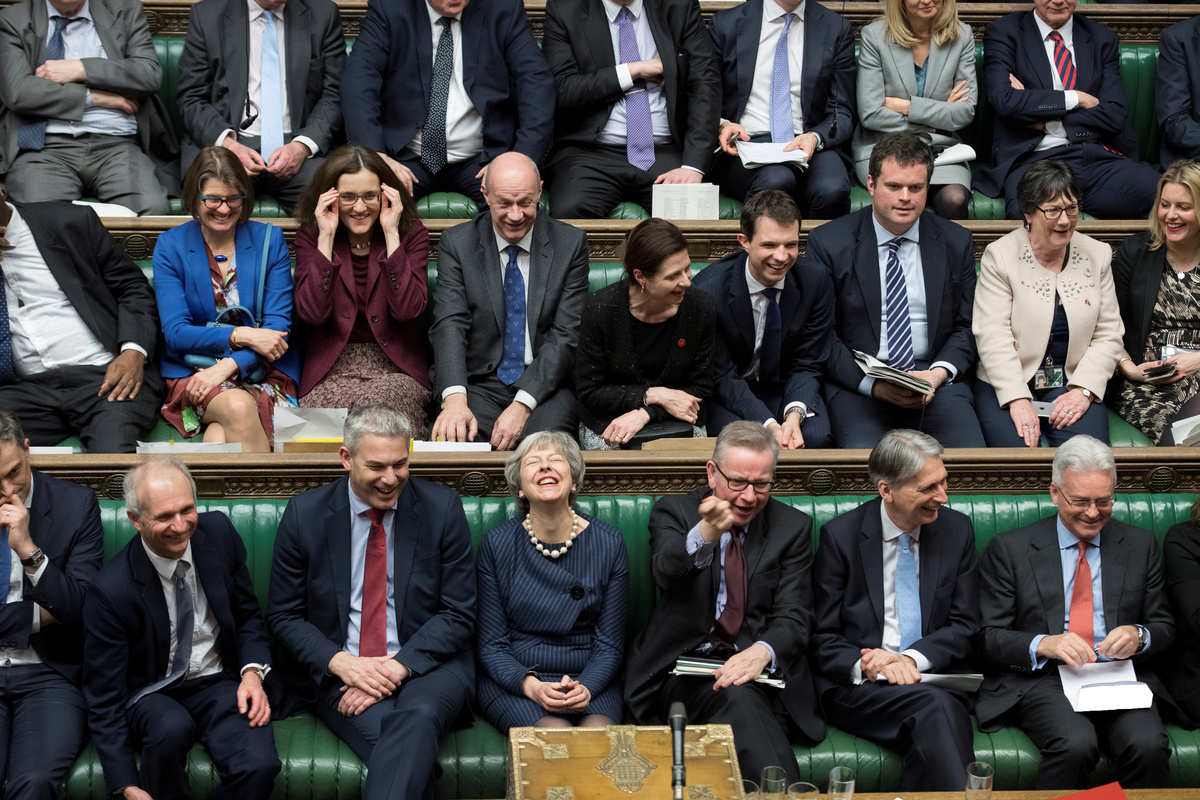
A new vote on May's deal is likely next week, when those lawmakers must decide whether to back a deal they feel does not offer a clean break from the EU, or reject it and accept that Brexit could be watered down or even thwarted by a long delay.
Her spokesman said ministers had agreed to "redouble their resolve" to secure a deal.
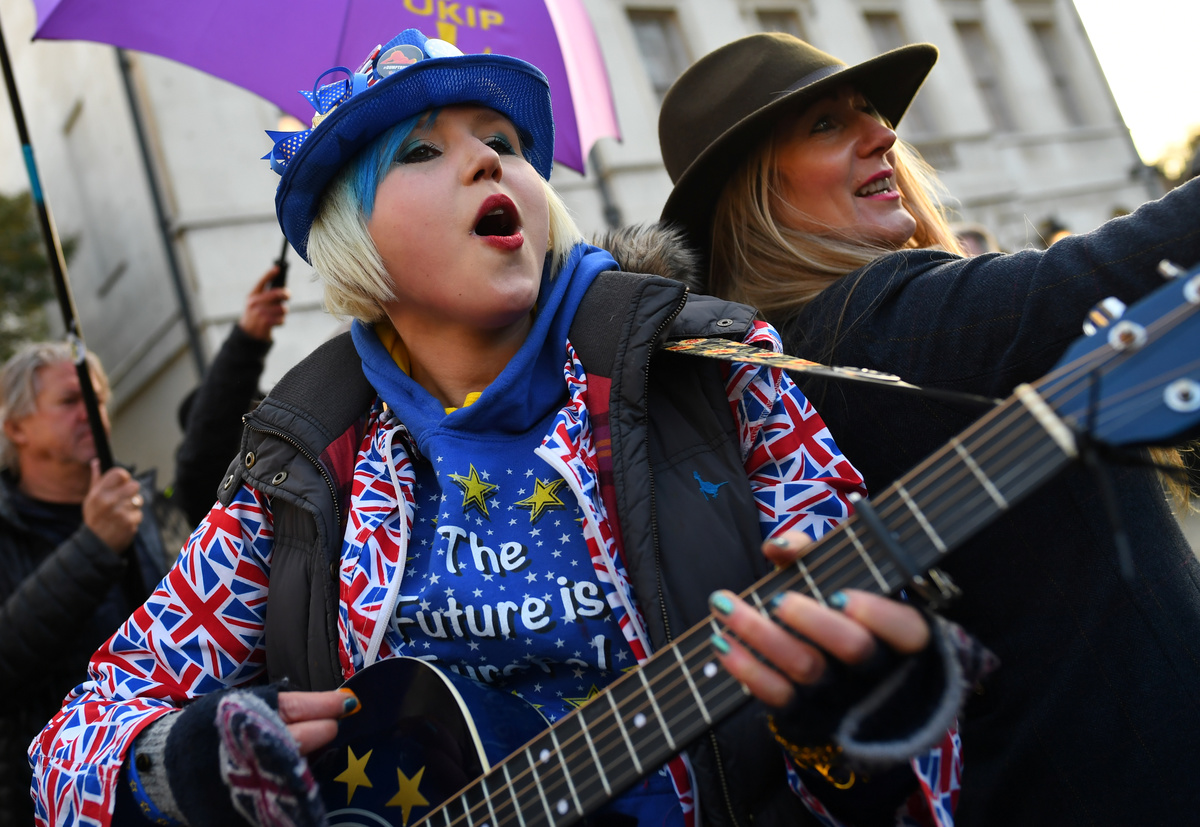
Earlier on Thursday, lawmakers voted by 334 to 85 against a second referendum on EU membership. Few opposition lawmakers backed the measure and even campaigners for a "People's Vote" said the time was not yet right for parliament to vote on it.
BREXIT DELAYED?
The government narrowly averted an attempt by lawmakers to seize the agenda on March 20 with the aim of forcing a discussion of alternative Brexit options - possibly limiting May's options when she takes her case for delay to the EU.
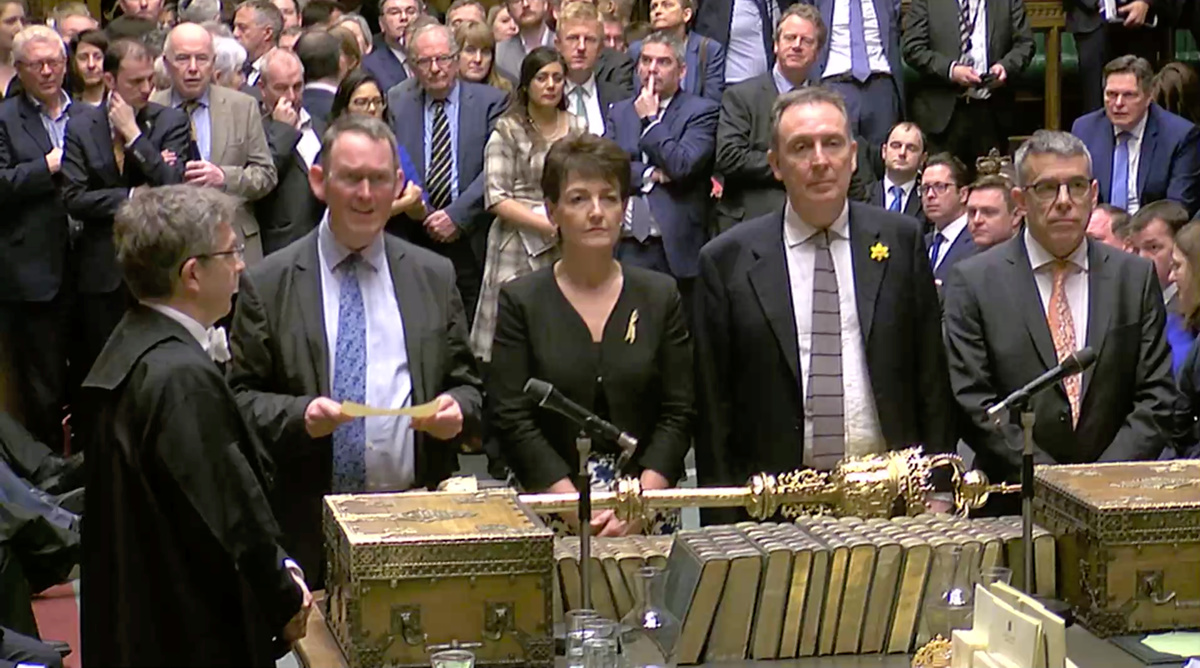
Thursday's vote does not mean a delay is guaranteed; EU consent is needed, and the default date for Britain to leave if there is no agreement is still March 29. May's spokesman said the government was still making preparations for a no-deal exit.
Her authority hit an all-time low this week after a series of parliamentary defeats and rebellions. But she has made clear her deal remains her priority, despite twice being overwhelmingly rejected, in January and again on Tuesday.
May's spokesman said earlier on Thursday that she would put that deal, struck after two-and-a-half years of talks with the EU, to another vote "if it was felt that it were worthwhile".
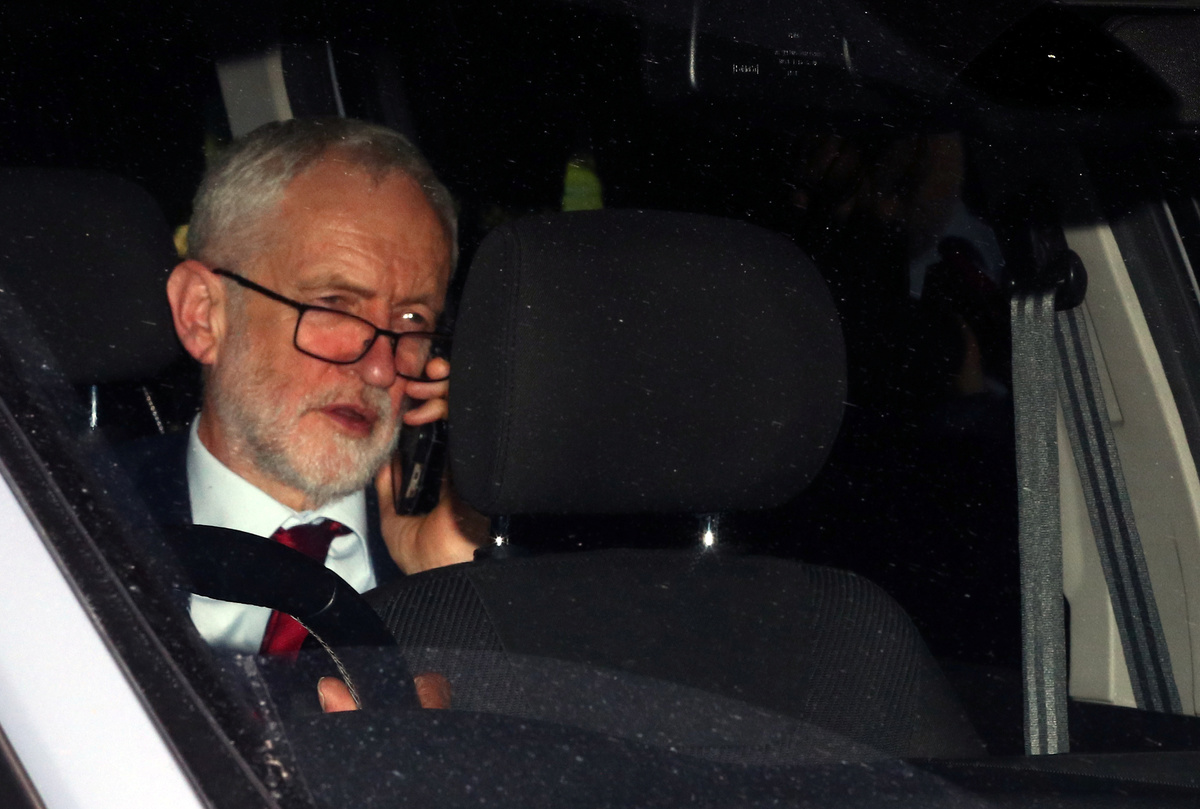
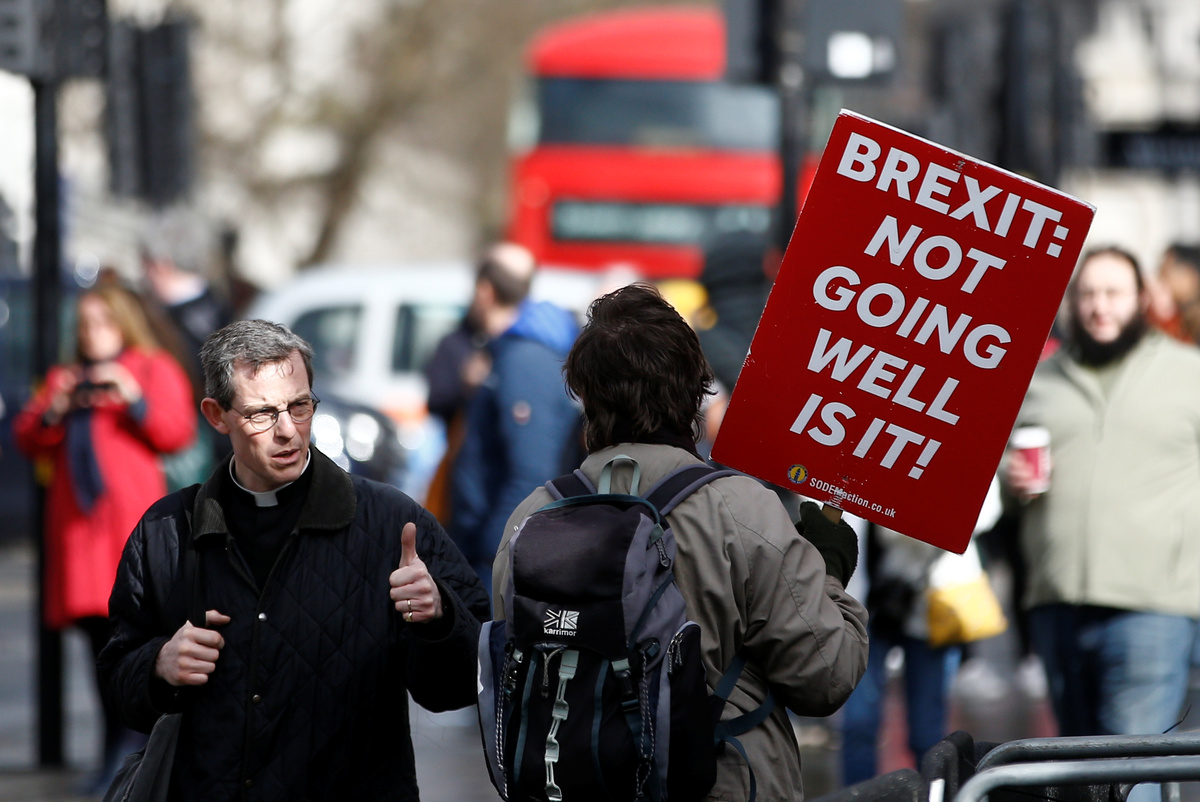
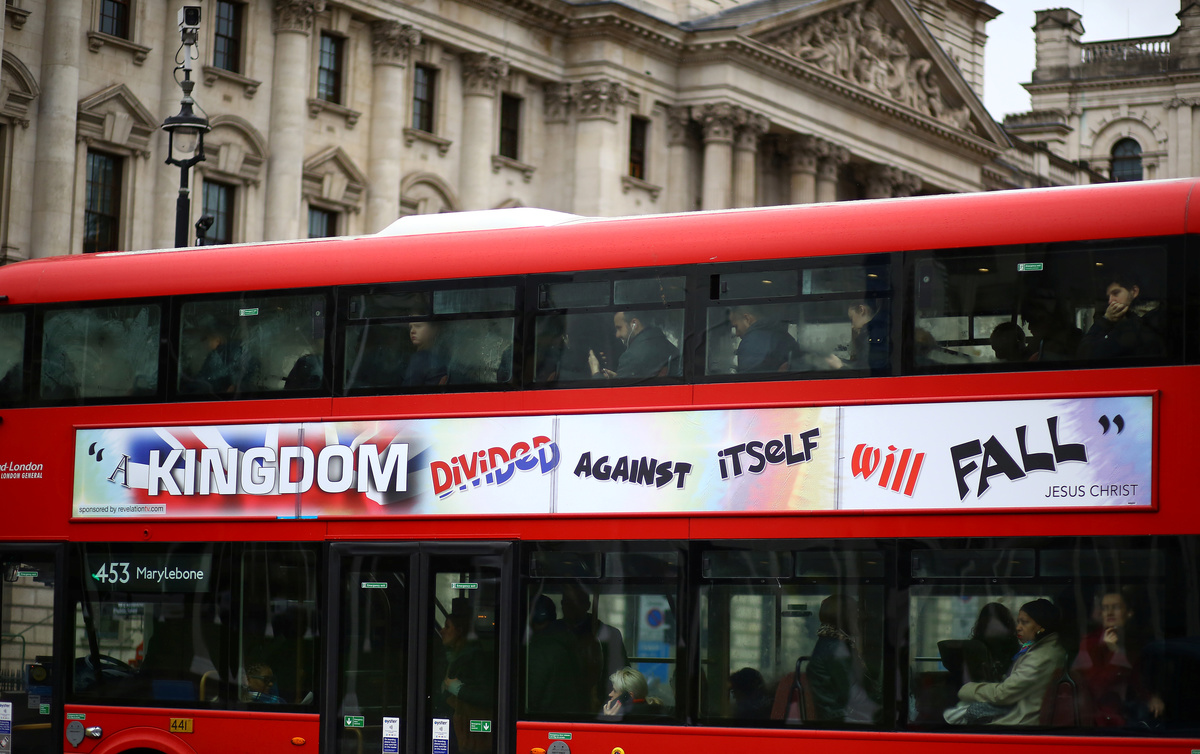
Britons voted by 52-48 percent in a 2016 referendum to leave the EU, a decision that has not only divided the main political parties but also exposed deep rifts in British society.
Sterling, which swung more wildly this week than at any point since 2017, fell on Thursday from nine-month highs as investors turned cautious about May's chances of getting her Brexit deal approved next week.
"SHE DIDN'T LISTEN"
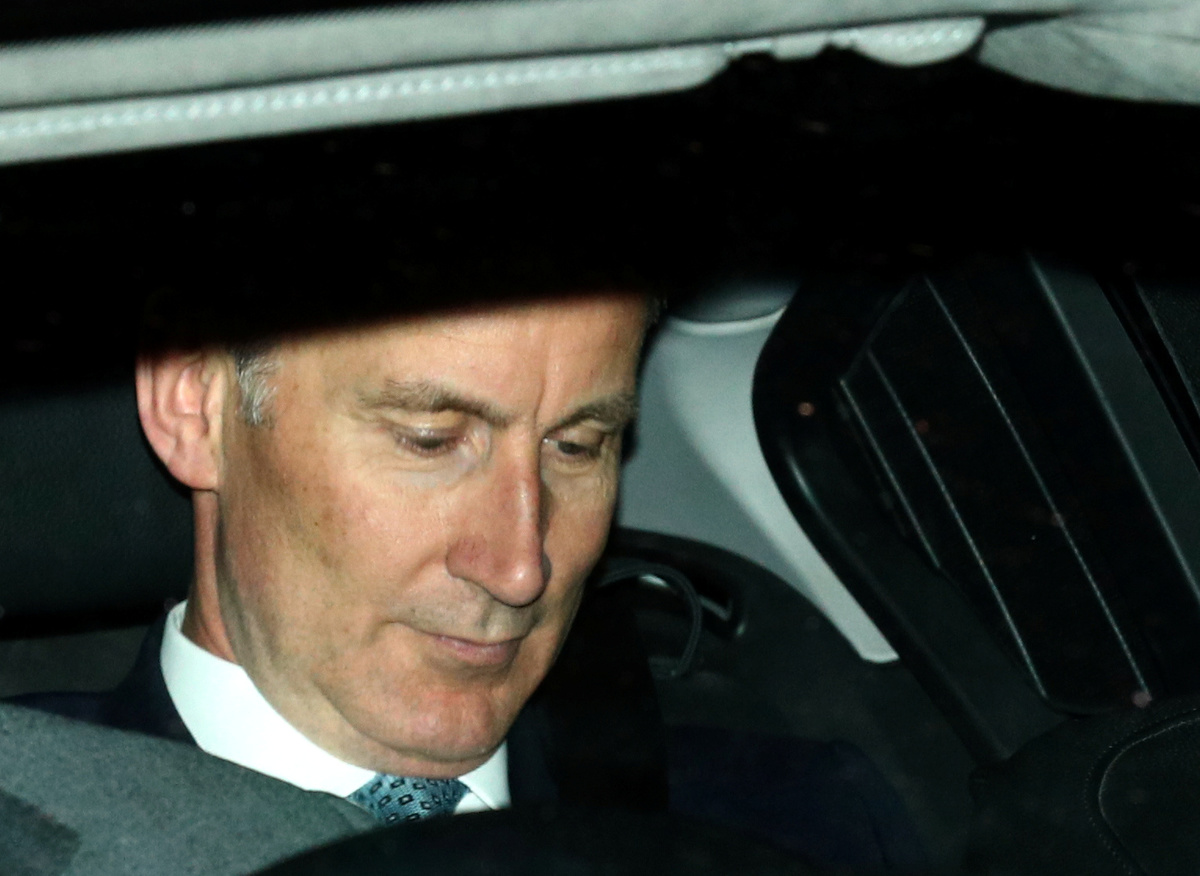
U.S. President Donald Trump, who had earlier said he looked forward to negotiating a "large scale" trade deal with Britain after Brexit, added to May's headaches by criticising her handling of the crisis.
"I will tell you, I'm surprised at how badly it's all gone from the standpoint of a negotiation," Trump told reporters in the Oval Office as he met Irish Prime Minister Leo Varadkar.
"But I gave the prime minister my ideas on how to negotiate it and I think you would have been successful. She didn't listen to that, and that's fine. But I think it could have been negotiated in a different manner, frankly."
Business leaders warn that tearing up 40 years of agreements with the EU and its market of 500 million people without a transition deal would cause chaos. Brexit supporters say that, in the longer term, it would let Britain forge trade deals across the world and thrive.
EU leaders meeting next Thursday will consider pressing Britain to delay Brexit by at least a year, European Council President Donald Tusk said.
"I will appeal to the EU27 (remaining members) to be open to a long extension if the UK finds it necessary to rethink its Brexit strategy and build consensus around it," he said.
France said that a short Brexit delay merely to discuss May's existing deal was "out of the question".
But there was no immediate sign of any major shift in the views of Conservative hardline eurosceptics who have so far thwarted the prime minister.

Lawmaker Andrew Bridgen accused her of pursuing a "scorched earth" policy of destroying all other Brexit options to leave lawmakers with a choice between her deal and a long delay.
May also needs to win over the Northern Irish Democratic Unionist Party (DUP), which has so far refused to back her plan.
DUP leader Arlene Foster said the party was working with the government to try to find a way of leaving the EU with a deal.
(Writing by Michael Holden, Giles Elgood and Guy Faulconbridge; Additional reporting by William Schomberg, Paul Sandle, Michael Holden, Andrew MacAskill and Kate Holton in LONDON, Alastair Macdonald, Alissa de Carbonnel, Francesco Guarascio and Jan Strupczewski in BRUSSELS; Editing by Janet Lawrence and Kevin Liffey)