Zurich is all too easy to dismiss as a city of bankers. A giant Swarovski crystal tree graces its annual Christmas Market, its streets are unfeasibly clean, and even its graffiti looks tidy. Yet it is also a city of surprise, not least of which is its fast-expanding arts scene, and its unusually sparky ballet company. The morning that I visit Zurich Ballet, ahead of their Edinburgh performances from 27-29 August, there isn’t a pointe shoe to be seen in the studio. Far from rehashing a predictable repertory staple by Balanchine or MacMillan, the dancers are hunkered down in the witty, deceptively anarchic-looking choreography of contemporary dance-maker Ohad Naharin.
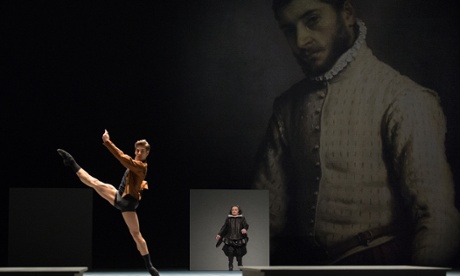
The energetic vibe in the company is due to Christian Spuck, who has been its artistic director for the last three years. The German choreographer was just 42 when he took on the post, known principally for his clever, vividly experimental takes on the conventions of narrative ballet. His works play with text, video, and fragmented storylines. In Sonett, which Zurich are bringing to Edinburgh, there is a female actor – dressed as Shakespeare – who not only recites sonnets, but questions the sexual identity of the lover(s) to whom they’re addressed.
When I talk to Spuck in his office – a light-filled room, with picture-windows over Lake Zurich – he admits how daunting it was to be offered the post. “I was still quite young to be director of a company this size, and I was stepping into the shoes of Hans Spoerli [the previous director], who was Swiss and had been here for 16 years. Not everyone was happy. There were people who said, ‘in one and a half years he’s out’.”
But the Opera House wanted Spuck precisely because it was interested in a new theatrical voice, one who would challenge the ballet audience and push the art form forward. And while the choreographer doesn’t look like a natural stirrer – he is neatly bearded and measured in conversation – his passions and curiosity are clearly a force to be reckoned with.
Born in Marburg in Germany, Spuck had always wanted to dance, but was discouraged by his parents, who didn’t believe it was appropriate for a boy. He persevered though, and at the age of 20 presented himself for audition at the prestigious John Cranko School in Stuttgart. They decided to take a punt on him, even though he was starting very late, but training was hard. “I was the worst in the class” he grimaces. After he graduated, Spuck wondered if would do better in contemporary dance. He successfully auditioned for Anne Teresa de Keersmaeker’s company Rosas and while the experience didn’t suit him as a performer – “I wanted to dance more steps” – it proved a crucial step in pushing him towards a choreographic career.
“De Keersmaeker always made us create most of the material for her, she made us take drumming classes and learn music. I learned so much from her, about the architecture of space, about how to hear music differently. I always call that year with her my second education.”
Eventually, Spuck got a job with the corps of Stuttgart Ballet, but his focus was now on making dances. By 2001, he’d become the company’s resident choreographer and was receiving commissions to create work around the world. It was a very good time for him. “I had an idea that some day I would like my own ensemble. When you work with dancers all the time, they become much more secure in your style, they understand it so much deeper. But I had no plan of when that would happen.”
Then out of the blue came the offer to run Zurich Ballet, which although a middle-scale company is nonetheless a prestige institution, in receipt of generous public funding. If Spuck felt some qualms about his ability to direct such a company, however, he had none about moving to Zurich. “It has the feel of a big city even though it’s so small. They speak three different languages here and lots of outsiders come in to work. There is a lot of money for culture and it feels very lively. People may look quite conservative because the etiquette is strong, but often they are quite wild, quite open. I really like it.”
So far, Zurich has proved receptive to Spuck’s ideas. One of his first moves has been to build a new and younger audience, instigating special pricing schemes and developing education programmes with schools. Christopher Parker, a British dancer who first joined the company in 2007, says: “Before, when I met people my age in the city they would say they never went to the ballet, it was for the rich people, it was old-fashioned. Now they’re all interested.” Fellow dancer Daniel Mulligan concurs. “People come up to me and say they’ve read all about us, seen us on social media. It feels pretty cool.”
As for the company itself, Spuck is aiming to develop dancers who can think as well as they move. And while he has a limited number of classics in the repertory, most of the work is new or recently made, ranging from choreography by himself and established figures such as William Forsythe, to less well-known names like Douglas Lee and Edward Clug, and one or two small pieces by company members. Spuck has so far failed to secure a work by a woman – “Crystal Pite always starts running away when she sees me, because she’s promised me a new work, but she’s so busy” – however, that too, is on his agenda.
One busy choreographer he has nailed down is Wayne McGregor, whose new ballet Kairos is also showing in Edinburgh. The ballet is set to Max Richter’s arrangement of Vivaldi’s Four Seasons, and in addition to McGregor’s usual, complicated choreographic permutations it also challenges the dancers to make a range of small but split-second decisions about when and how they enter the main stage space.
McGregor says that although he already knew Spuck well, coming into Zurich Ballet was a revelation. “The dancers are lovely and the opera house is exceptionally supportive. I was so surprised. They want to give you a lot of time, they want to have a conversation with you about creativity.”
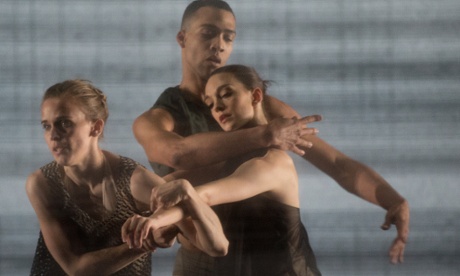
The dancers themselves are equally positive. Juliette Brunner says “I have never worked with anyone like Wayne: so intelligent, so creative. It was amazing.” Mulligan agree “It’s impressive the kind of people we’ve had to work with. I think we’re really lucky.”
Next year, the dancers will be experiencing another of the greats, Alexei Ratmansky, who is working with the company on a reconstruction of the original 1895 Swan Lake. Ratmansky’s last project was a highly acclaimed reconstruction of Sleeping Beauty for American Ballet Theatre, and Spuck is still reeling over the fact that the Russian choreographer is coming to them next. “I said to him why, Alexei? Everyone in the world wants you. But he said he kind of liked the idea of a place like Zurich.”
It’s a tribute to Spuck’s enterprising spirit that Ratmansky said yes. Running Zurich Ballet, as both choreographer and director, is sometimes a struggle. “When I’m in the middle of a big creation, it’s hard to come out of the studio and go back into the office.” But he sees both functions as part of the same big, creative opportunity. “It’s such a privilege to be making artistic decisions, not only about my own pieces, but about how this company will grow. At the moment I’m a very happy man.”
- Zurich Ballet perform at the Edinburgh Playhouse, 27-29 August