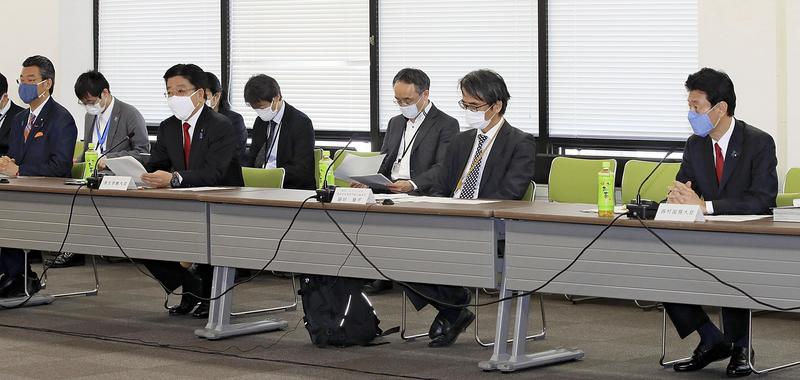
A key government panel called Friday for movement restrictions to be continued, including people refraining from outings and having businesses remain closed, even after the nationwide state of emergency expires on May 6.
The panel of experts considering measures to combat the new coronavirus issued the draft proposal to extend the restrictions during a meeting held in Tokyo. The panel also said that in areas where the number of new infections falls to a certain level, school activities and other events must be resumed only after the risk of infection spreading has been reduced as much as possible.
The draft proposal credited the government's declaration of a state of emergency in April with creating a downward trend in the number of new infections across the nation. However, the panel said maintaining the existing extensive "movement restrictions" would be necessary for the time being due to the number of patients -- especially those with severe cases -- receiving treatment at hospitals not having declined and medical care facilities remaining under immense strain.
The panel expressed concern that infections could spread again if the restrictions were eased, and warned that the results of efforts made by the public so far -- such as refraining from going outside – could end up being for naught.
The panel, which is chaired by Takaji Wakita, head of the National Institute of Infectious Diseases, also gave two criteria for determining when the restrictions could be eased: the extent of infections, namely the number of new infections and the proportion of patients whose source of infection is unclear; and the state of the medical care system, such as clarifying the division of roles among medical facilities and securing accommodation facilities that accept patients with mild cases.
In areas hit hard by the coronavirus, tough restrictions on movement will need to be retained, according to the draft proposal. However, the panel also accepted that people could be getting tired of being homebound, so it was necessary to consider the reopening of schools and ways to allow parks to be used.
The panel also proposed shifting to new lifestyles in areas where the number of people infected with the coronavirus was limited. It called for measures adopted to stop the spread of the virus to become regular parts of daily life. These steps included maintaining a distance from others and avoiding what the Health, Labor and Welfare Ministry calls the "three Cs" – closed spaces, crowded spaces, and close-contact settings.
Prime Minister Shinzo Abe has announced a plan to extend the state of emergency beyond May 6. After hearing the opinions of the expert panel, Abe also will seek advice on details such as the duration and scope of areas that the extended declaration should cover from a coronavirus response advisory council, which is due to hold a meeting as soon as Monday. Following this, Abe likely will issue the extension at the government's Novel Coronavirus Response Headquarters.
Economic Revitalization Minister Yasutoshi Nishimura said at the start of the meeting, "We'll consider holding another meeting of the expert panel before hearing the views of the advisory council."
Read more from The Japan News at https://japannews.yomiuri.co.jp/