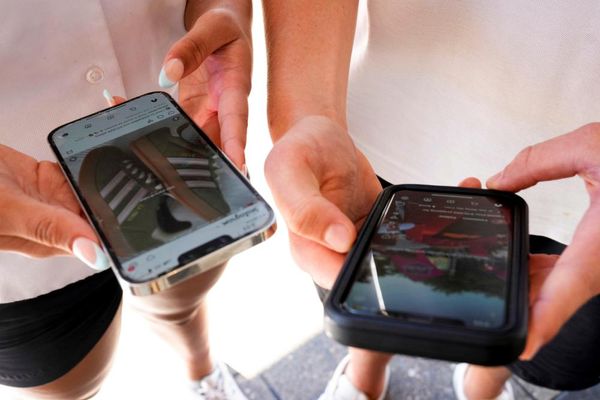
Next Thursday, Christine Allison will visit her local polling station in Guildford, Surrey, and vote according to the conscience of someone she has only met on the internet. On polling day, she will go to her local village hall and place her cross next to the Liberal Democrats even though she is a lifelong Labour supporter. The 42-year-old teacher has agreed to swap her vote with a partner nearly 200 miles away, in the small market town of Selby in north Yorkshire, who will in turn cast a vote for Labour even though she is an ardent Liberal Democrat.
There are thousands more like Allison - strangers in constituencies across the country meeting online and trusting each other to vote on their behalf. Think of them as the electorate's avant-garde: a network of smart voters striking deals across tactical voting networks with the aim of circumventing the UK's venerable voting system that has rendered their votes irrelevant in previous general elections.
Like other vote swappers, Allison lives in a marginal constituency with little chance of her preferred candidate winning. Rather than "waste" her vote on a candidate almost assured to come third, she has decided to swap with someone in a similar boat. What both have in common is a desire to keep the Conservatives from winning in the seats where they live. In effect, Allison gets to vote Labour in Selby while her partner gets her preferred choice in Guildford, and both get to cast an anti-Tory vote where they live. Two votes for the price of one.
The pair struck their deal on Tacticalvoter.net, a kind of virtual clearing house that pairs Liberal Democrat and Labour supporters who live in different constituencies. In simple terms, Tactical Voter - the political equivalent of internet dating - matches up anti-Tory voters in marginal constituencies where the centre-left has a decent chance of unseating the Conservatives - in other words, in the 230 seats where the Conservatives are vulnerable to a clear challenger.
The practice of vote swapping surfaced in the UK during the last general election, when such organised, online tactical voting helped unseat at least two Conservative MPs in Cheadle and Dorset South. In Allison's case, the aim is to help keep out the Conservatives in Guildford, where the Lib Dem hold is an extremely marginal 538. Her preferred choice has practically no chance of winning. Labour polled just over 6,000 votes in the last election - well below the two other main parties. "I have never been fortunate enough to live in a constituency where my vote would have made a difference to the result," she explains. "Vote swapping is a way of circumventing that system."
Britain is yet to see the likes of Vote-Auction.com (although ballots have been for sale on eBay) but it is no stranger to tactical voting. According to the Oxford English Dictionary, the first known use of the phrase appeared during the general elections of 1974. But it took the light of the internet to formalise the practice into a sophisticated network.
In the US election of 2000, the US Green Party developed vote-swapping exchanges that allowed supporters of Ralph Nader living in safe Democrat states to exchange votes with Democrats in swing states. Despite a number of legal challenges and a flurry of site lock-downs, up to 36,000 voters were paired in this way. It was not enough to stop Bush winning in Florida, but it was not far off, either.
According to Professor Stephen Coleman, of the Oxford Internet Institute, the UK is perhaps more susceptible to vote swapping than the US. Because of the large number of elected representatives (659) in Britain, the chances of affecting the course of an election is potentially far greater. "I think what we are seeing here is do-it-yourself proportional representation," he says.
"This is essentially a case of people deciding that the electoral system doesn't satisfy them. Increasingly, people's preferences are no longer on the basis of loyalty and tradition, but on the basis of volatility and antipathy and lots of people are saying, 'I don't care who gets in as long as it's not a Conservative' or sometimes the other way around."
The UK vote-swapping community may still be small, but it only takes a few thousand tactical voters to swap seats in targeted constituencies to cause major upsets. Shadow chancellor Oliver Letwin, with a majority of 1,114, is ninth on Tactical Voter's "hit list". Tory grandees David Davis (majority 1,903) and Theresa May (3,284) are not far behind. It would take more than the entire vote-swapping community - thought to be about 5,000 active participants in 2001 - to unseat Michael Howard (5,907), but even he could lose his seat if two in every three Labour supporters in Folkestone & Hythe switch to the Lib Dems. Indeed, the Conservatives hold more votes than the combined Labour and Lib Dem vote in just 63 seats.
For vote swapping to steal such outstanding scalps it needs people to painstakingly match up potential swappers in constituencies where the tactic might actually affect the result. There are, as yet, not enough people to achieve this, but what the resurfacing of vote-swapping networks proves is that the controversial practice is here to stay. It is, moreover, already developing new, potentially more effective, strains that threaten to hurt Labour just as much this time around. Sites such as Backingblair.co.uk, which actually urges you to sack him, and Libdemthistime.co.uk - backed by the music producer Brian Eno - are attempting to mobilise the anti-war protest vote to give Blair a bloody nose - or worse.
Vote swappers such as Allison might be electoral pioneers, but she laughs off any suggestion that she's a geek. She doesn't even have an internet connection at home. According to Jason Buckley, campaign manager of Tacticalvoter.net, most vote swappers are politically aware individuals with clear party allegiances - often with a history of political activism. Naturally, they also have a good grasp of the electoral system, most are motivated mainly by self-interest and some are extremely picky about who they are prepared to swap with. Allison exchanged several emails with her partner before deciding to commit to a swap.
According to the Tactical Voter database, 65% of vote swappers are male and few match the profile of the typical floating voter. "What's interesting from my correspondence is the age of the users: lots of middle-aged couples and silver surfers," says Buckley. "About a fifth of our registrations come from couples or family groups. Our typical tactical voter user is a 40-something professional, not happy about the war but far unhappier about Michael Howard."
A few disgruntled Conservatives questioned the legality of vote swapping in 2001, citing rules, set down by the Electoral Commission, that it is illegal to exchange your vote for a "consideration". In other words, to sell your vote for money or payment in kind. Although it has yet to be contested in the courts, the Electoral Commission has indicated that swapping does not constitute a consideration as - ultimately - what the parties are doing is swapping the pledge to vote, not actual votes, a subtle difference.
"Last time, we had a lot of people trying to abuse the system," says Buckley. "We had a lot of spam registrations and quite a few instances of Tories registering on the site and then revealing, when they were paired up with their partners, that they were not serious vote swappers. It is a typical spoiler tactic but such a stupid thing to do because what else is going to make absolutely certain that somebody votes tactically against the Tories than someone wasting their time like that?"
What is also surprising, given that at least two Conservative MPs fell prey to vote swapping in 2001, is that the Tories have failed to mobilise vote-swapping sites of their own.
According to Ian Bruce, the former Conservative MP for Dorset South who was a victim of tactical voting in 2001, the party needs to think seriously about adopting such tactics. "There are things we should have done prior to this election to get ourselves into a position where we can make exactly the same sort of tactical voting appeal," he says. But according to Conservative Central Office, there is "no party line" on the development of such tactics.
Above all, what vote swapping is really doing - aside from scourging the Conservatives - is giving people the chance to alter Britain's electoral system without an act of parliament. Despite Conservative whispers that tactical voting is being secretly backed by Labour - Tactical Voter is funded in part by the New Politics Network, an organisation born out of the ashes of the Communist Party of Great Britain, while the musician Billy Bragg, a committed socialist, bankrolls a similar network in Dorset - many of its participants desire electoral reform as much as anything else.
Indeed, if you want to call Jason Buckley anything, call him the leader of the Proportional Representation Party. It is worth remembering that a move away from Britain's venerable first-past-the-post system - recently hinted at by the prime minister - would make the practice of vote swapping redundant.
· If you'd like to comment on any aspect of Online, send your emails to online.feedback@guardian.co.uk.