Some might think finding a mouse would come as no surprise given there's plague causing destruction across regional NSW, with thousands descending on farms every night.
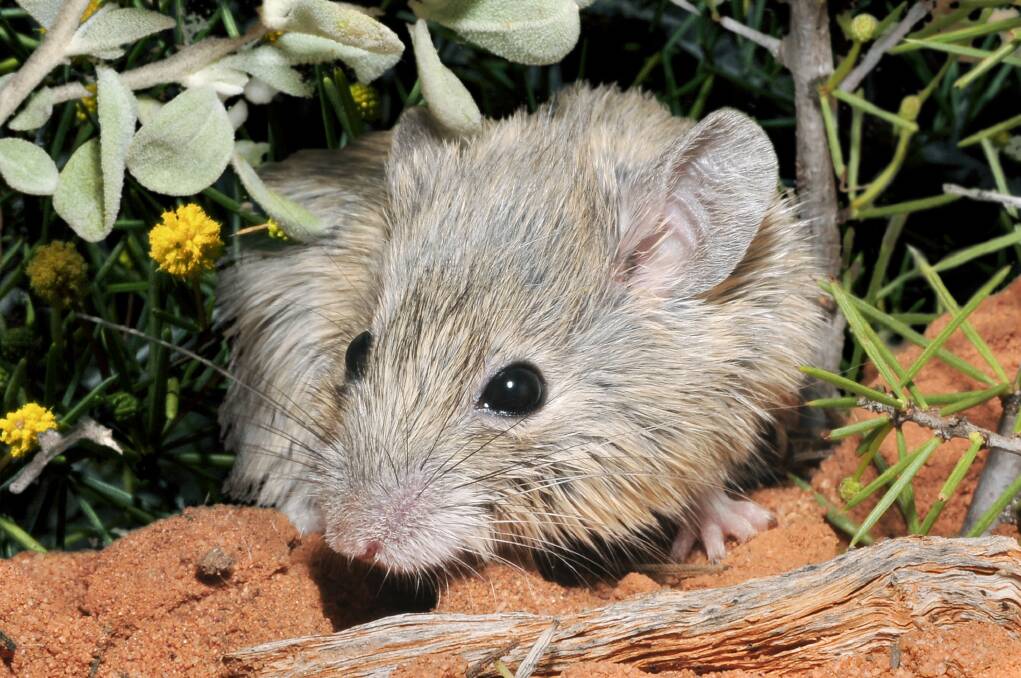
But one has been missing for more than 150 years, which is why Emily Roycroft was so excited when her ANU study inadvertently discovered Gould's mouse.
During genetic testing, the island dwelling Shark Bay mouse was found to actually be the previously considered extinct Gould's mouse, which was once widespread across Australia.
The study, led by Dr Roycroft, intended on comparing the genetics of eight extinct species of native Australian rodents to 42 of their living counterparts. During these tests, a bizarre finding was made, showing that one of these extinct species was still alive. Dr Roycroft and her Australian-based team contacted colleagues at the National History Museum in London to reference the DNA to confirm that it was the same animal.
"It is exciting that Gould's mouse is still around, but its disappearance from the mainland highlights how quickly this species went from being distributed across most of Australia, to only surviving on offshore islands in Western Australia," Dr Roycroft said.
"It's a huge population collapse."
She said while the Shark Bay mouse was actually the Gould's mouse, they would retain their current common name (Shark's Bay) but their scientific name would revert to its original: Pseudomys gouldii.
Another surprising discovery made in the study was many of the extinct species had relatively high genetic diversity, which is typically an indicator of a species more likely to adapt and survive. Dr Roycroft described this as exciting but sobering, as it was an indication of how quickly these species collapsed.
"The resurrection of this species brings good news in the face of the disproportionally high rate of native rodent extinction, making up 41 per cent of Australian mammal extinction since European colonization in 1788," Dr Roycroft said.
She said more funding and adequate recovery plans is needed for mice because their reduced genetic diversity puts them at great risk despite being listed as vulnerable by the Australian Wildlife Conservancy.