Motorcycles have been making a comeback on the nation's roads. Jump-started by pandemic demand for socially distanced commuting and leisure, domestic motorbike sales soared in the first half of this year, and are on track to hit the highest level in more than two decades.
From January to June, 143,959 bikes with engine capacities of 51cc or higher were sold in Japan, a 28.2% increase from the same period in 2019.
With recent July and August figures up 19.3% from 2020 and 30.1% from 2019, annual sales are poised to exceed the 290,000-mark for the first time since 1998.
Bikes with engines between 51cc and 125cc have accounted for a little under half of sales. Classified as "Gentsuki nishu" (Class 2 motorbikes), these are the utilitarian bikes commonly used to scoot around town in the course of daily life.
Motorcycles have been gaining particular traction among people in congested urban areas, who want to avoid crowded trains when commuting and shopping during the pandemic.
Female motorcycle enthusiasts are said to be another growing contingent, a trend fueled in part by the popular anime "Super Cub," about a girl's life-changing travels on a motorbike.
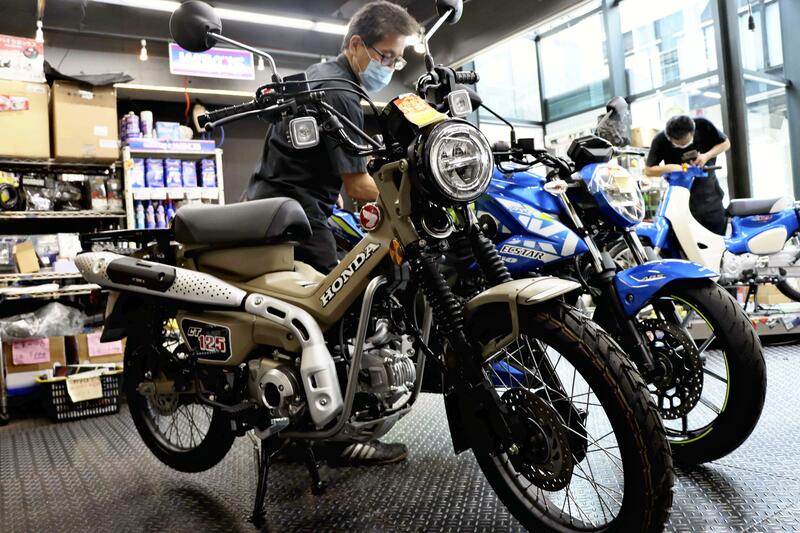
Honda Motor Co.'s CT125 Hunter Cub, released in June last year, has become a popular entry-level choice for its comfortable riding position and compatibility with everyday use.
Suzuki Motor Corp. has also reported a 40% increase in Class 2 motorbike shipments in the first half of this year, compared to the same period last year.
Dealerships have struggled to keep up with the surge in demand. Delivery lead times have been running around two to three months at the SCS Ueno Shinkan dealership in Taito Ward, Tokyo.
Sales of more powerful mid- and large-size motorcycles have also been brisk, rising to 76,187 units in the first half of 2021, a 21.2% increase from the same period in 2019.
The focus on motorcycle touring as a form of socially distanced recreation has enticed older generations to hop back on the saddle, in many cases for the first time since youth.
But these veteran riders will have to share the road with many first-time motorcycle license holders.
Hinomaru Driving School in Meguro Ward, Tokyo, reported a 50% jump in students registering for their motorcycle classes from January to August, compared to the same period in 2019. "The rise of teleworking has given more office workers a chance to enroll," said Hinomaru president Waka Tomita.
This is surely welcome news for an industry that had seemed to have lost its former luster in recent decades.
Back in 1971, around 710,000 bikes were being sold annually in Japan. But by 2009, sales had plummeted to around the 180,000-mark, as vehicle exhaust regulations took certain models out of commission and young people generally shifted away from motorcycles in favor of other modes of transportation.
All the while, manufacturers have been working to keep consumers connected to motorcycles, by launching rental services and other initiatives.
Although the pandemic has provided a helpful tailwind for these efforts, manufacturers will still have to contend with the push toward decarbonization, as the Tokyo metropolitan government has set a target of reducing the number of new gasoline-fueled motorcycles sold in the city to zero by 2035.
If electric bikes become mainstream, the availability of inexpensive yet high-mileage batteries will become the keys to their future staying power.
Read more from The Japan News at https://japannews.yomiuri.co.jp/