I am an AI power user and have tested and reviewed nearly ever feature available and in beta for some of the world's top tech. Each day I make the rounds with ChatGPT, Gemini, Perplexity, Claude and yes, even DeepSeek.
I’m constantly hopping between tools. But recently, I realized I’d been overlooking one simple setting inside Claude that quietly makes a big difference in how useful it feels.
If you've used Claude, you know that it's arguably the least flashy of all the chatbots, which is why some of its best features are hidden or less marketed. One preference in particular is buried in Claude’s settings that changes how it talks back to you.
Most people never touch it. Once I did, Claude felt sharper, clearer and much more “me.” Here’s why this tiny setting matters.
Claude’s Response Style / Personalization settings
The feature is Claude’s Response Style / Personalization settings. Instead of you having to say “be concise” or “be more direct” in every prompt, you can set that once and have Claude follow it by default.
Similar to Gemini Gems or ChatGPT's GPTs, this setting creates a more personal experience.
You can set it up in two ways:
Option 1: Pick a preset style (the easy way)
This is a preference that nudges Claude’s tone, length and structure. In Claude’s settings, you can choose from built-in styles like:
- Concise (shorter, tighter answers)
- Explanatory (more detailed reasoning)
- Formal (more polished tone)
- Normal (balanced default)
Option 2: Create your own custom style (the powerful way)
You can go a step further and write your own instructions for how Claude should respond.
For example, I set mine to something like: “Be direct, prefer clarity over flowery language, ask clarifying questions when needed and prioritize practical examples.”
Now Claude follows that by default.
How to toggle it (step-by-step)
- Open Claude
- Click Settings (usually in the bottom left or top menu)
- Go to Response Style / Personalization
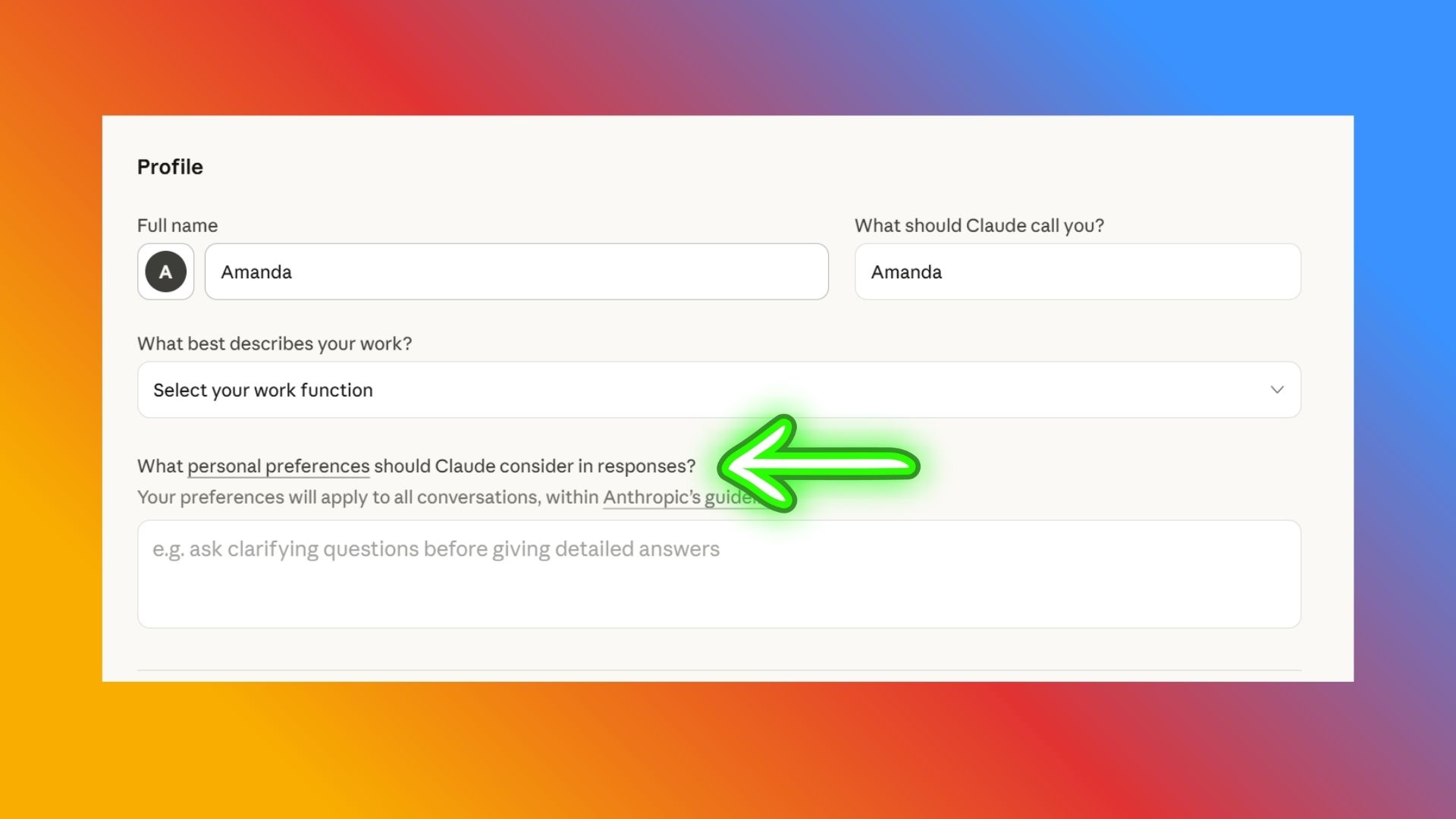
- In the open text box labeled, “What personal preferences should Claude consider in responses?” type how you want Claude to work with you. For example: “Explain things clearly but briefly," “Assume I’m comfortable with technical details,” “Be friendly but professional”
- Click Save. Your preferences will now apply across all your chats (within Anthropic’s guidelines).
Before I turned this on, Claude often gave me beautifully written but slightly long, cautious answers that felt a bit over-polished.
After adjusting my style, the answers got clearer and recommendations felt more practical. Claude asked better clarifying questions instead of guessing it pushed back more when my prompts were vague.
Out of all the chatbots, Claude is my favorite for consistently pushing back and it refuses to move forward if it's unclear. Using these preferences, it started feeling even sharper.
Three ways this actually helps me every day

1. Outlines
When I’m brainstorming angles or drafting outlines, Claude now gives me sharper starting points instead of generic lists. It has gone from giving “Here are several possible approaches…” to “Here are the three strongest directions, ranked.”
That is a huge time saver because it eliminates the guesswork.
1. Better feedback
When I paste my messy thoughts or very rough draft, Claude used to mostly rephrase things (whether it needed it or not). Now, it actually points out:
- where my logic is weak
- where a paragraph drags
- where a hook isn’t strong enough
3. Clearer thinking on tricky topics
When I’m wrestling with complicated subjects — like how benchmarks can be misleading, where model limits really lie or the ethical tradeoffs baked into AI — this setting changes the quality of Claude’s thinking.
It’s less prone to oversimplifying or sounding overly confident, and more likely to carefully distinguish between evidence, uncertainty, and opinion. That level of precision makes a meaningful difference.
Bottom line
Claude has always been good at writing and clarification, but this change makes it less of a one-size-fits all chatbot. Tiny tweaks like this can dramatically change how useful a model feels.
Most users never touch AI settings. They just open the chat and start typing. But if you use Claude for writing, editing or thinking, setting your preferred response style can make your answers faster, sharper and more useful.
Give it a try and let me know what you think in the comments.

Follow Tom's Guide on Google News and add us as a preferred source to get our up-to-date news, analysis, and reviews in your feeds.