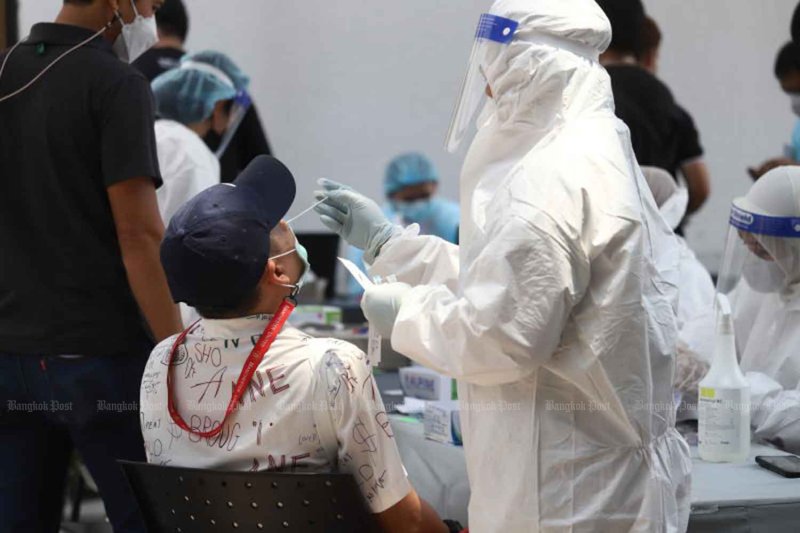
The NB.1.8.1 strain has become the dominant Covid-19 variant in Thailand over the past year, although health authorities say there is no evidence it spreads faster or causes more severe illness.
Department of Disease Control (DDC) director-general Dr Montien Kanasawat said Covid-19 cases had risen slightly from the previous week, but no cluster outbreaks or new deaths had been reported.
Authorities urged the public to continue taking basic precautions, particularly to protect young children, the elderly and people with underlying health conditions. People visiting crowded places were advised to wear masks and wash their hands regularly, while those experiencing symptoms should seek medical attention.
The DDC said 3,642 Covid-19 cases and one death have been recorded this year as of May 23.
Most infections were found among people aged 30–35, followed by those aged 60 and older and those aged 20–29. Although cases have increased over the past month, they remain below the five-year median.
Data from the Public Health Research Institute covering Jan 1, 2025, to April 23, 2026 showed that NB.1.8.1 accounted for 50.95% of tested samples, followed by JN.1 at 24.97% and XEC at 9.14%.
DDC deputy director-general Dr Direk Khampaen said Covid-19 is now treated as an endemic or seasonal disease in Thailand, though he stressed that good hygiene and other preventive measures remain important.