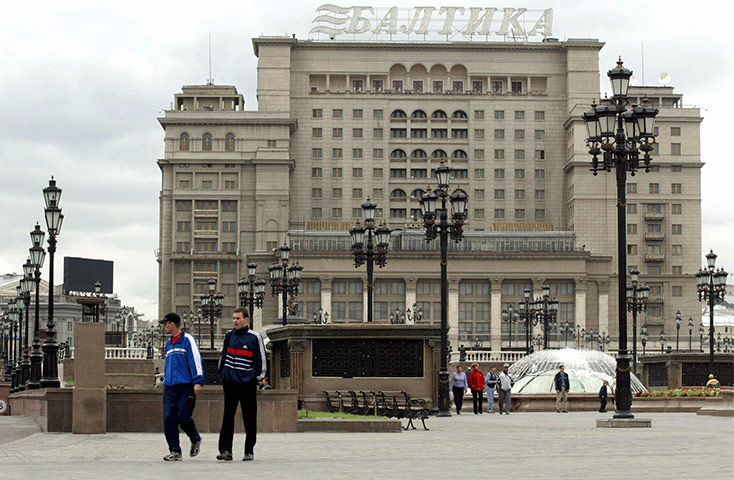
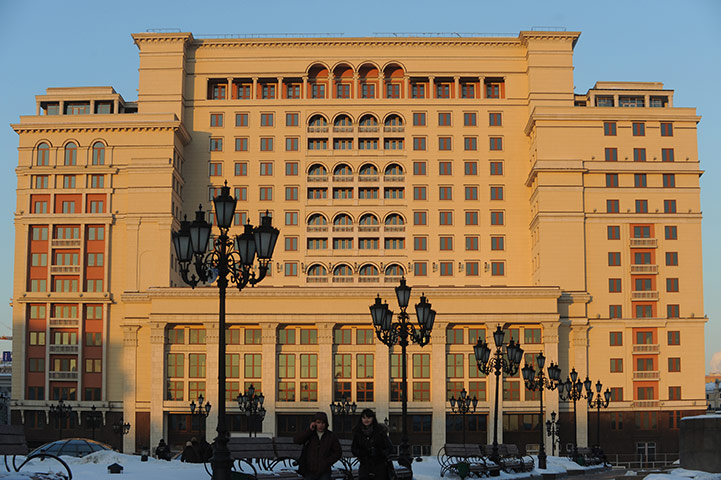
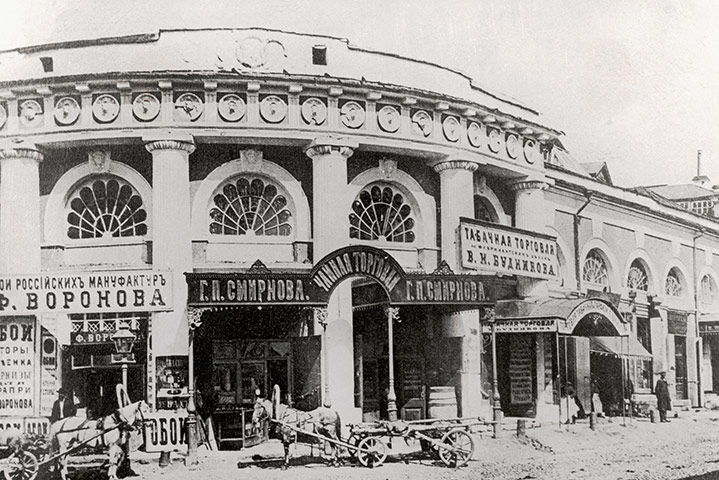
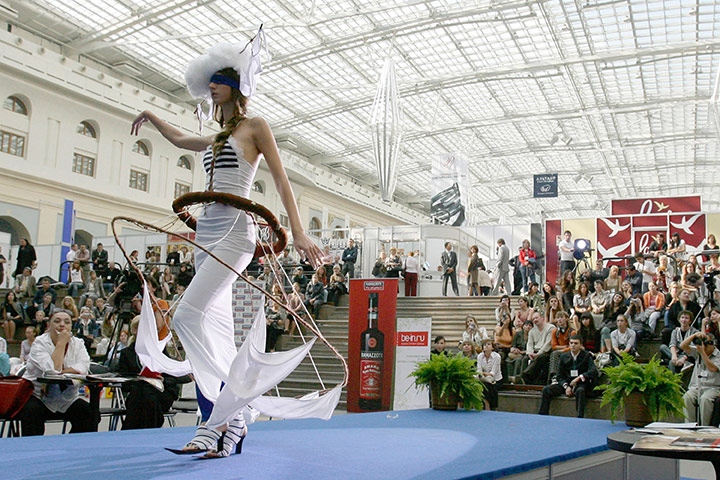
The Hotel Moskva (Hotel Moscow). The hotel next to Red Square was famous as the image on the Stolichnaya Vodka label. Luzhkov demolished it amid furious controversy in 2005, with the loss of unique Stalin-era frescoes and other designs Photograph: Natalia Kolesnikova/AFP/Getty ImagesThe reconstructed Hotel Moskva. It has now been rebuilt in what critics say is a less-than-faithful replica. (They describe its beige colour scheme as 'inauthentic', with the building an 'insipid pastiche' of the original.) It is due to reopen later this yearPhotograph: Natalia Kolesnikova/AFP/Getty ImagesThe old Gostiny Dver in Moscow, one of the city's most oustanding landmarks, just 150 metres from the Kremlin and Red Square. Rebuilt by LuzhkovPhotograph: Imagno/Getty Images
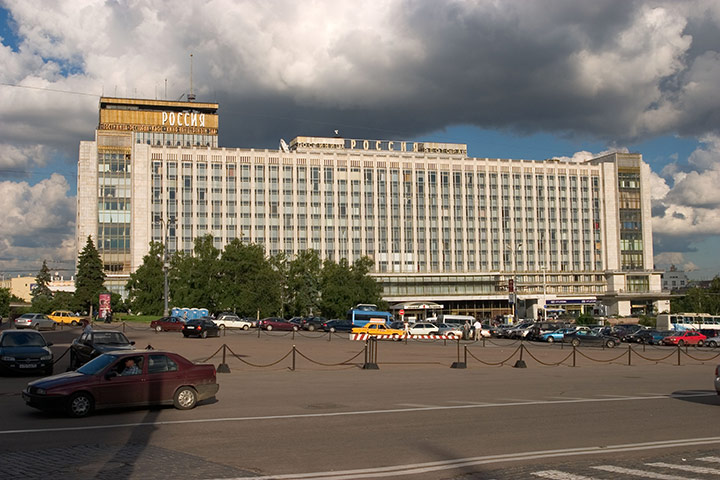
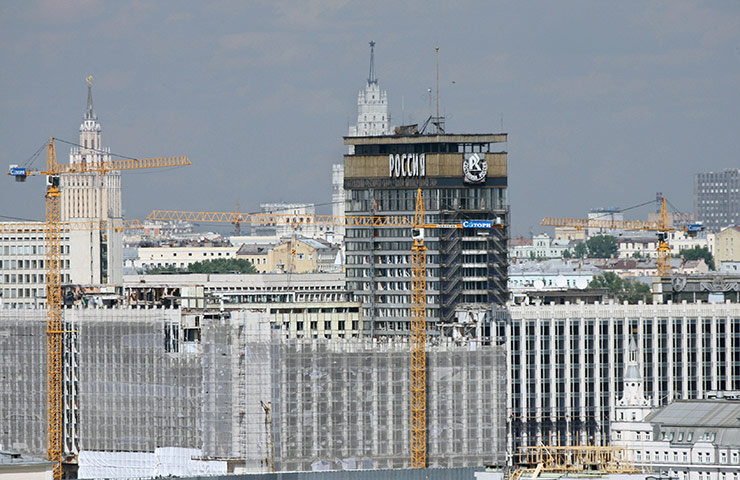
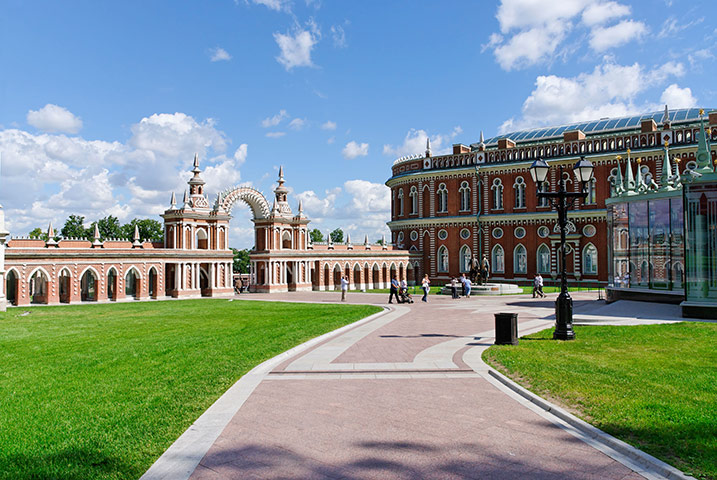
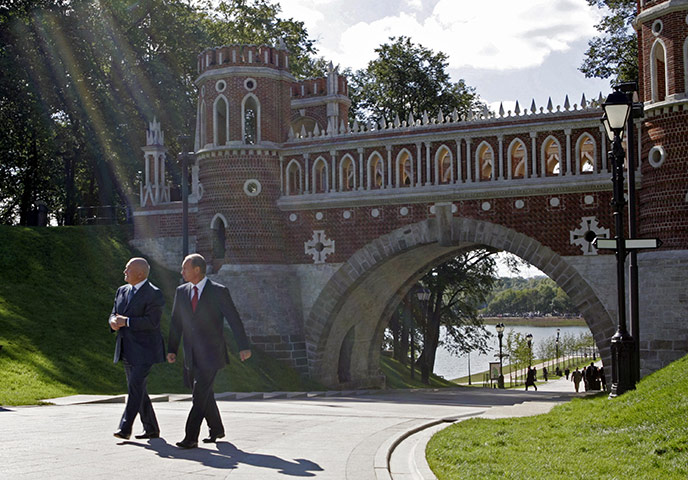
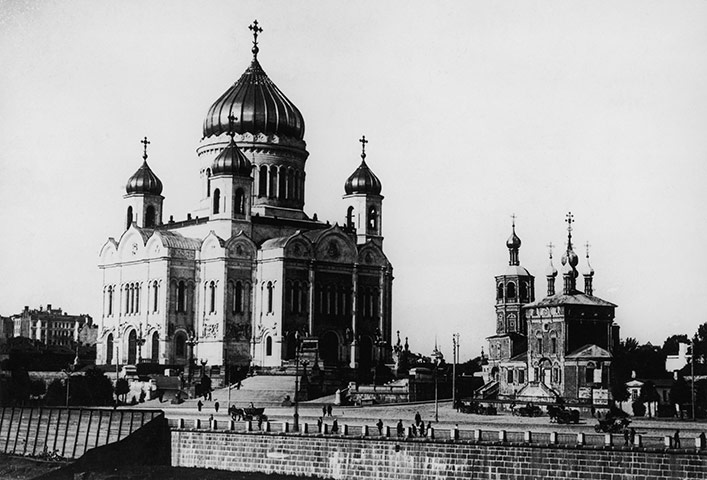
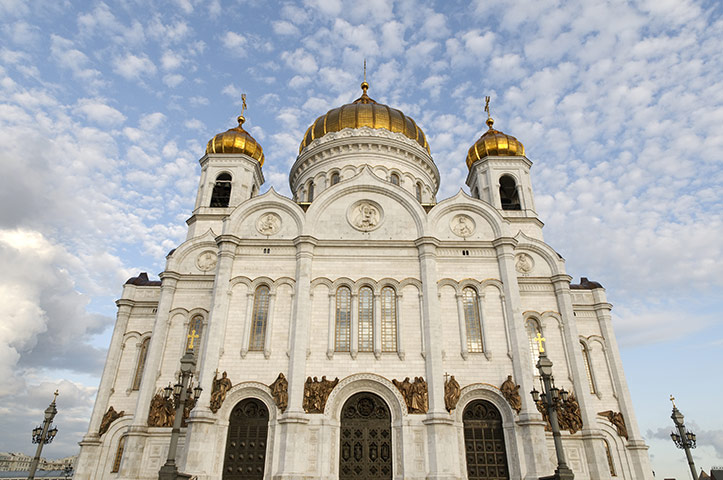
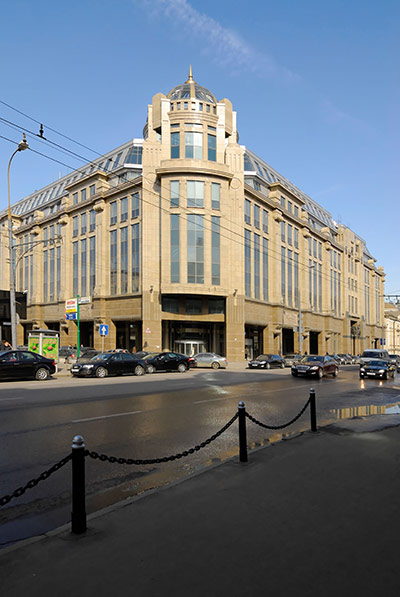
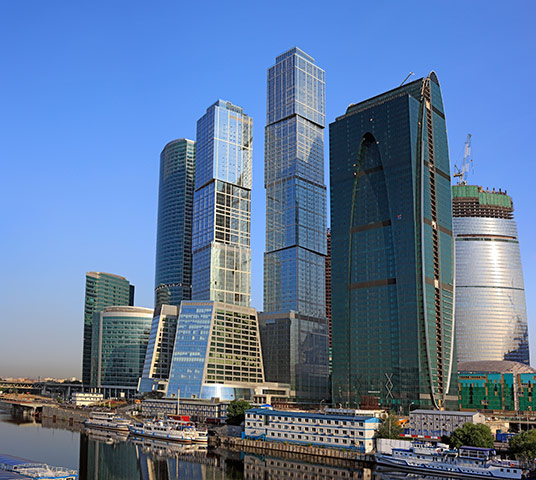
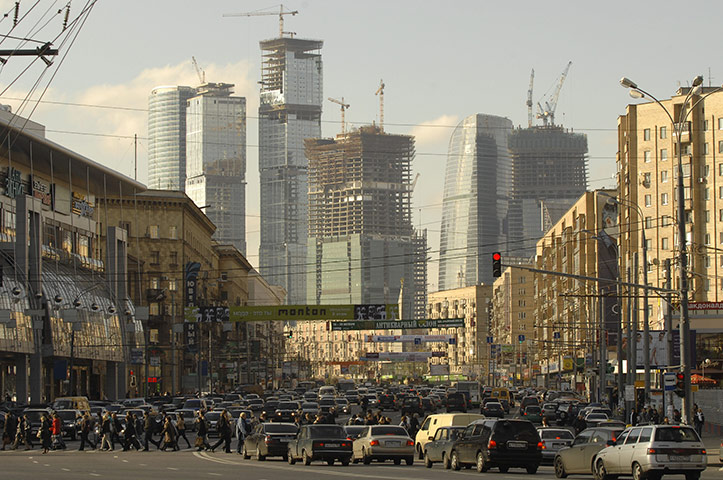
Luzhkov also rebuilt the late 18th century Gostiny Dvor, another famous central Moscow landmark, covering it with a controversial glass roof. Conservationists say it could have been restored but was instead recbuilt with radical and inappropriate changes Photograph: RIA Novosti/AlamyThe Hotel Rossiya was razed four years ago for a new shopping and office complex. The original 1960s building was a vast hotel to house 6,000 party delegates Photograph: Bernie Epstein/AlamyThe Hotel Rossiya redevelopment was delayed by legal wrangling and then frozen by cash problems. It is now a derelict wasteland surrounded by gigantic advertising hoardings that block views of a 15th-century church. Pictured while being knocked downPhotograph: Tass/AlamyIn 1776, Catherine the Great built a huge palace at Tsaritsyno on the outskirts of Moscow. For more than 200 years the palace remained incomplete, one of the city's most famous ruins. Luzhkov spent more than $200m 'finishing' the palace, cutting down thousands of trees in the landscaped park, and reconstructing bridges, follies and pavilions. The shape, colour, and the new palace roof have nothing in common with Catherine the Great's original design, critics say Photograph: Rusig/AlamyThen Russian president, Vladimir Putin, and now former Moscow mayor, Yuri Luzhkov, walk in the grounds of the restored Tsaritsyno palace in September 2007Photograph: Vladimir Rodionov/AFP/Getty ImagesThe Cathedral of Christ the Saviour in Moscow. Demolished by Stalin in 1931, the cathedral was rebuilt by Luzhkov in the mid-1990s soon after he became mayor. It is now the largest orthodox cathedral in the world. It replaced a giant unfinished statue of Lenin, which ended up being used in Soviet times as an enormous open-air swimming pool.Photograph: Topical Press Agency/Getty ImagesThe Cathedral of Christ the Saviour is close to the Kremlin and the Moscow river, one of the city's most visible landmarks. Luzhkov decided to use plastic rather than metal for its sculptures, attracting criticismPhotograph: Travelif/Getty ImagesThe Art Nouveau Voyentorg department store, built before the Bolshevik revolution and which belonged to the Red Army's trade department. Luzhkov demolished the building in 2003, and replaced it five years later with a very ugly and over-sized replica. The store is 300 metres from the Kremlin Photograph: AlamyLuzhkov was building the Moscow International Business Centre, better known as Moskva-City, a huge skyscraper city to rival London's Canary Wharf. Built on a brownfield site, the project boasts a cluster of eight or nine 60-storey skyscrapersPhotograph: Ivan Vdovin/AlamyMoskva-City international business centre while being built Photograph: Tass/Alamy
Sign up to read this article
Read news from 100’s of titles, curated specifically for you.