
Scott Morrison has used a stunning international organised crime bust to pressure the opposition to back new wide-ranging surveillance powers.
More than 20 murder plots were foiled, mass drug importations stopped and more than 100 people charged in the audacious sting.
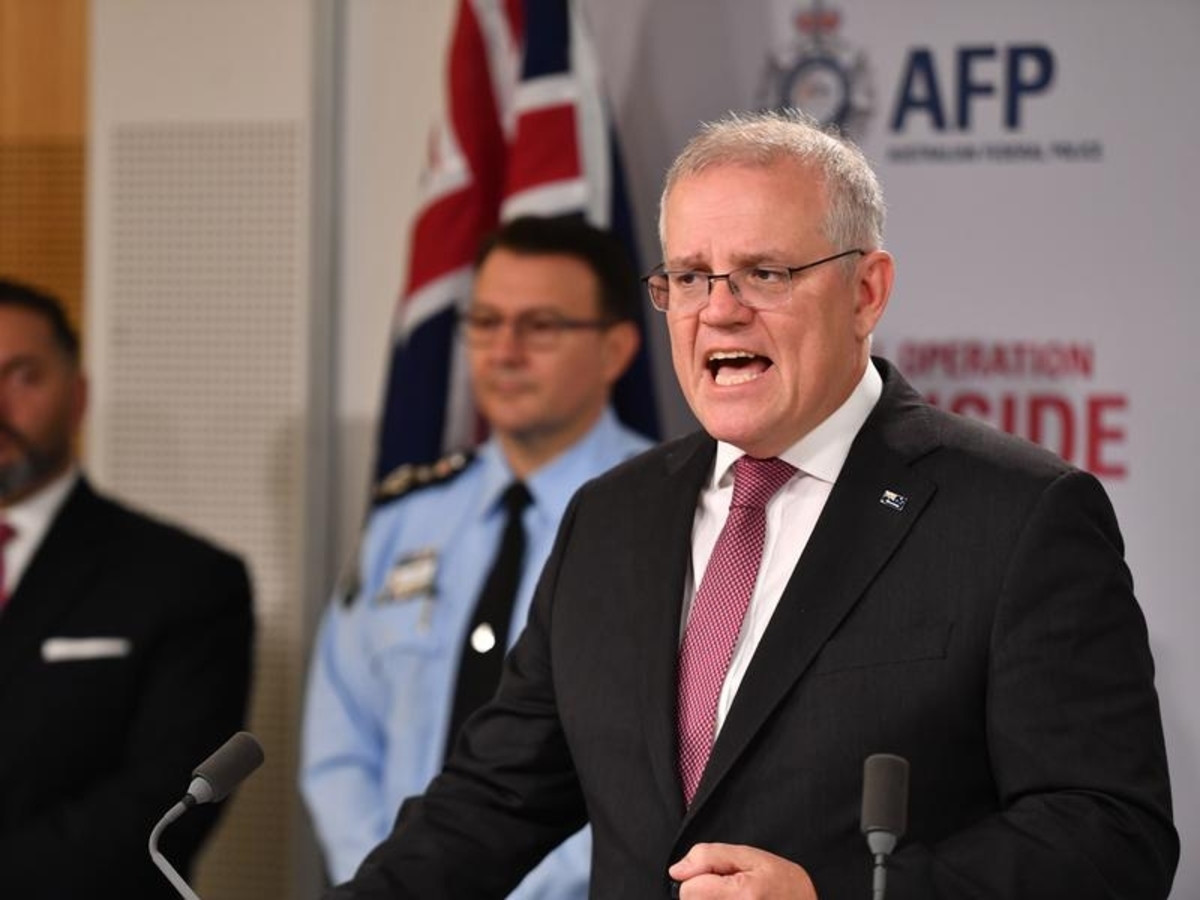
The prime minister stood alongside Australian Federal Police Commissioner Reece Kershaw and the FBI's legal attache from the US embassy Anthony Russo as he called for Labor to support three bills.
One would stop workers with links to organised crime or with a history of offending from gaining aviation and maritime security cards.
Labor has criticised the bill for leaving a hole in Australia's border security regime because it fails to apply to foreign crew on ships.
Opposition home affairs spokeswoman Kristina Keneally has warned the legislation forces authorities to predict whether someone would commit a future crime.
Labor wants a more targeted scope and the legislation delayed until a separate bill is passed to ensure local employees aren't subject to more stringent tests than foreign transport workers.
Mr Morrison said the government attempted to pass the legislation through three consecutive parliaments.
"This is critical to ensure that criminals don't get on to our wharves, that they can't access security credentials," he told reporters in Sydney on Tuesday.
"I don't know why they're being protected. I can't give you an answer to that. We want to shut it down."
The second Morrison government bill would allow national agencies to intercept communications in foreign countries which Australia has agreements with.
Mr Morrison said the bill lacked support from across the political divide despite parliament's bipartisan security and intelligence committee recommending it be passed with amendments.
An inquiry into the bill called for safeguards around international data sharing agreements to prevent information being used to punish people with the death penalty or targeting Australian citizens.
A third proposal to give law enforcement agencies more powers to combat serious crimes using the dark web is before the joint security and intelligence committee
Mr Morrison also claimed the bill did not have bipartisan support.
AFP Commissioner Reece Kershaw said law enforcement needed to be a step ahead of encrypted communications and the dark web.
"There's proliferation of child sexual abuse material on the dark web. It's an absolute disgrace," he said.
"That's a criminal marketplace that we can't actually penetrate without that legislation."