For years, Morocco has relied heavily on imported fossil fuels to meet its energy needs. Today, it is rewriting that story by harnessing one resource it has in abundance: sunshine. Through massive investments in solar and wind energy, the North African nation has emerged as one of Africa's leading renewable energy pioneers. At the centre of this transformation is the Noor Ouarzazate Solar Complex, a landmark project that has become a global symbol of clean energy innovation.
Get breaking news anytime, anywhere. Download the TOI app now!
Morocco's transition is being driven not only by climate goals but also by economic necessity. A 2025 review published in Energy Conversion and Management notes that despite major progress, fossil fuels still generated 83% of Morocco's electricity in 2022, while the energy sector accounted for nearly 48% of the country's energy-related greenhouse gas emissions. The study argues that expanding renewable energy is essential if Morocco is to reduce fuel imports, strengthen energy security and meet its long-term decarbonisation targets.
Why Morocco is betting on renewable energy instead of fossil fuels
Although renewable energy has expanded rapidly, Morocco's electricity system still has a long way to go. According to a 2025 review by researchers from Al Akhawayn University published in Energy Conversion and Management:
Morocco generated almost 43 terawatt-hours (TWh) of electricity in 2022, but inefficiencies in storage and transmission meant only around 38 TWh reached end users. The study highlights grid modernisation as one of the country's biggest priorities over the coming decades.
The review also notes that Morocco is targeting 52% renewable electricity capacity by 2030 and 70% by 2050, supported by reforms to electricity regulation, private investment and improvements to grid infrastructure. Researchers argue that continued investment in storage technologies, smarter transmission networks and local manufacturing will be essential if these ambitions are to be achieved.
How the Noor Ouarzazate Solar Complex became the face of Morocco's clean energy revolution
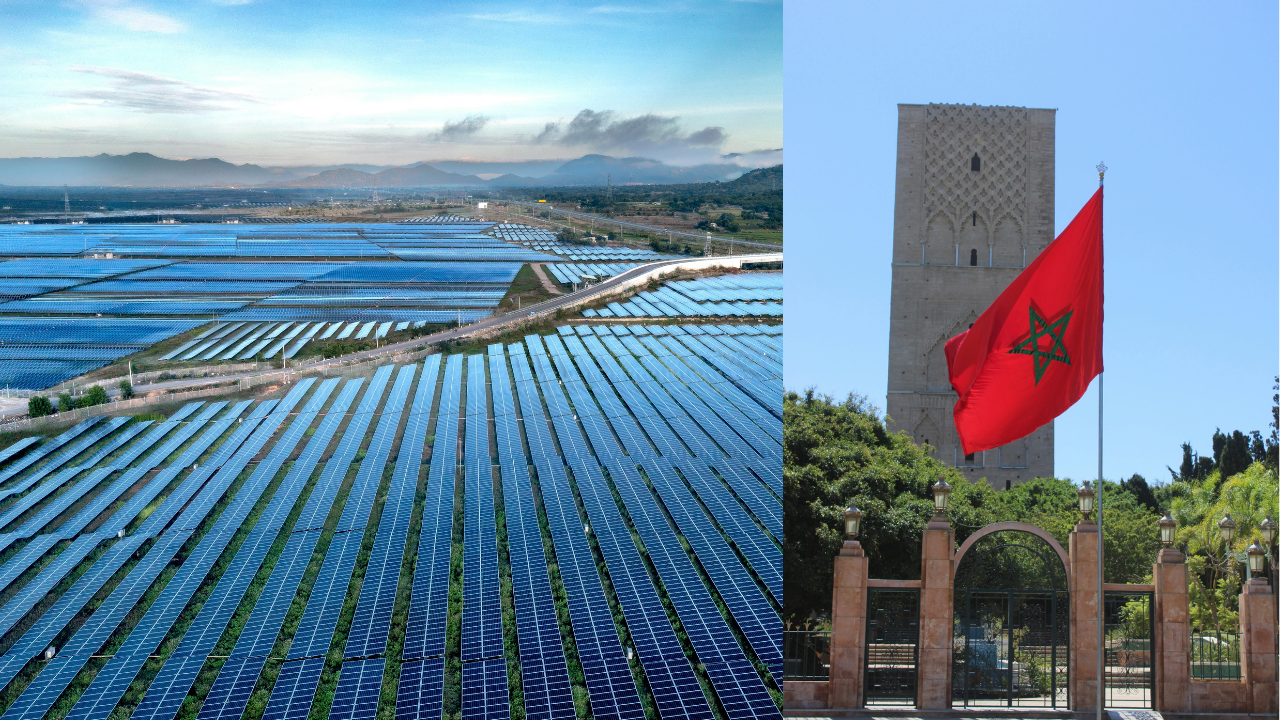
No project better reflects Morocco's renewable ambitions than the Noor Ouarzazate Solar Complex, located on the edge of the Sahara Desert. Developed by the Moroccan Agency for Sustainable Energy (MASEN), the project combines concentrated solar power (CSP) with photovoltaic (PV) technology, allowing it to generate electricity efficiently throughout the day.
One of Noor's most innovative features is its molten salt thermal storage system. Instead of stopping electricity generation when the sun sets, the plant stores heat collected during daylight hours and uses it to continue producing power well into the evening, improving the reliability of solar energy.
The Noor complex is also part of a much broader national expansion. According to the 2025 review, Morocco has already developed approximately 1.6 gigawatts (GW) of solar capacity, capable of generating around 4.14 TWh of electricity each year. Wind farms contribute another 1.28 GW with an annual generation of 4.29 TWh, while hydropower adds roughly 1.1 GW, producing 1.7 TWh annually. Together, these projects are steadily reshaping Morocco's electricity mix.
Speaking to The Telegraph, Mustapha Sellam, the project's site manager, reflected on the scale of Noor III's central tower. Standing on a five-storey observation platform overlooking the site, he said, "When we finished it [in 2017], it was the tallest building in Africa." Rising approximately 243 metres above the desert, the solar tower has become one of Morocco's most recognisable engineering achievements.
The project has also attracted financial support from organisations including the World Bank, African Development Bank, European Investment Bank and the Clean Technology Fund, demonstrating growing international confidence in Morocco's renewable energy ambitions.
According to MASEN, the Noor complex marks an important step towards reducing fossil fuel dependence while strengthening the country's electricity network and supporting its long-term climate goals.
Can Morocco become Africa's renewable energy superpower?
Morocco's ambitions go far beyond meeting its own electricity needs. The country also hopes to become a regional clean energy hub, supplying renewable electricity and green hydrogen to international markets.
Its location, separated from Spain by just 14 kilometres at the Strait of Gibraltar, provides a strategic advantage. Existing electricity interconnections with Europe already allow power trading, while future projects could further expand exports of renewable electricity.
At the same time, Morocco is investing heavily in green hydrogen, which is produced by using renewable electricity to split water into hydrogen and oxygen. Green hydrogen is expected to play a crucial role in reducing emissions from industries that are difficult to electrify, including steel, shipping and fertiliser production.
The International Renewable Energy Agency (IRENA) believes countries with abundant renewable resources will be well placed to become major exporters of renewable fuels in the coming decades, and Morocco is widely considered one of the strongest candidates.
Challenges remain. Expanding renewable infrastructure will require continued investment in transmission networks, battery storage, water management and skilled workers. Climate change and rising electricity demand will also place increasing pressure on the country's energy system.
The review also warns that Morocco's renewable ambitions cannot succeed through new power plants alone. The authors recommend simplifying grid access for private developers, strengthening the country's electricity regulator, encouraging domestic manufacturing of renewable technologies and expanding public-private partnerships. They estimate that attracting an additional US$1–2 billion in private investment will be necessary to accelerate the next phase of Morocco's energy transition.
Morocco's renewable energy journey is still unfolding, but its progress over the past two decades has already reshaped perceptions of what is possible. From building one of the world's largest solar complexes to setting ambitious long-term decarbonisation targets, the country has shown that limited fossil fuel reserves need not be a barrier to energy leadership.
The next challenge will be modernising the grid, attracting greater private investment and expanding renewable technologies at an even faster pace. If Morocco succeeds, it could not only secure its own energy future but also provide a blueprint for other African nations seeking affordable, reliable and low-carbon growth.