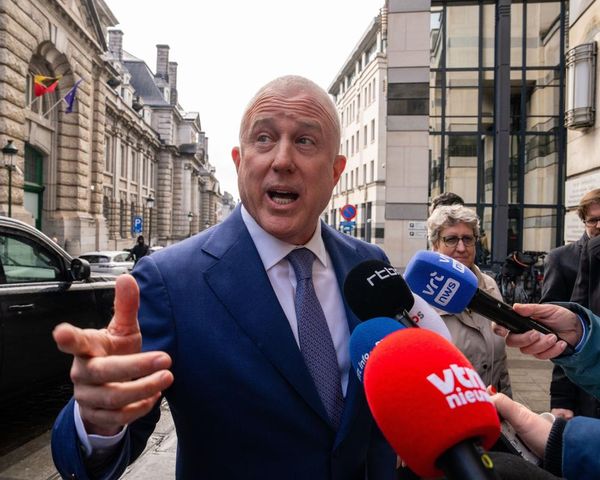

“The return of Moroccans who fought with ISIS presents a real threat to the country,” said Morocco's Central Bureau of Judicial Investigations (BCIJ) Director Abdelhak Khiame.
Khiame is a specialist in counterterrorism efforts. Returning ISIS fighters prompted Moroccan authorities to draw up a plan and adopt special laws and countermeasures.
In an interview with French news agency AFP, Khiame says that 200 Moroccan ISIS fighters have been arrested.
He added that Moroccan authorities established a framework in 2015 for measures concerning returning fighters which permits police to apprehend returnees, hold them for investigation, and place them in custody.
Returning ISIS fighters typically receive sentences ranging from 10 to 15 years in prison.
Khiame said that the number of Moroccans who fought alongside radical ranks in Iraq and Syria was estimated at be over 1,600 in 2015.
“Some have committed bombing suicide or were shot by coalition forces and others have fled to other countries.”
Moroccan fighters in foreign countries are “regularly involved in attacks in Europe,” including in France, Brussels, Belgium, Spain, said the BCIJ head.
Khiame also stressed that the alarming security situation in the Sahel remains one of the government’s main concerns, as it has become a “fertile ground” for terrorism and a safe zone for certain terror cells, including al-Qaeda in the Islamic Maghreb (AQIM) and ISIS that face security crackdowns from law enforcement in Middle Eastern conflict areas.
With widespread extremism and Islamophobia across the world, several countries continue to link terrorism to Islam and specific nationalities. Refuting claims stigmatizing a certain religion or background, Khiame asserts that terrorism has no nationality.
The Moroccan official added that Morocco has effectively implemented its legislation against terrorist groups, especially following the Casablanca and Marrakech terrorist attacks in 2003 and 2011.
Recalling his staff’s achievements, Khiame said that Morocco frequently announces the dismantling of “terror cells.” He added that the country also recently released data on the terrorist groups dismantled from 2015 to 2017.
During the interview, Khiame also discussed the role of international cooperation in the fight against terrorism.
“Thanks to our services, attacks have been foiled in France, Belgium, Germany, England, Denmark, Italy, and Spain.”