Good morning, this is Helen Sullivan bringing you the main stories and must-reads on Wednesday 6 February.
Top stories
In Townsville, dam management has come under scrutiny as experts demand greater preparation. The decision to open Townsville’s Ross River dam floodgates was based on a 2012 study modelled on a one-in-100 year flood scenario. But experts say that, based on the rate of water coming from the dam spillway on Sunday night, this week’s unprecedented monsoonal rainfall was comparable to about a one-in-1,000 year flood and that Australia needs to be better prepared for more extreme weather events. Prof Jamie Pittock of the Australian National University said authorities in Australia typically made planning and flood management decisions based on the one-in-100 year designation. Elsewhere, in Europe and the US, contingencies are made for more extreme natural disasters.
Zali Steggall, the independent taking on Tony Abbott in Warringah, says Labor’s climate change policy needs to be more ambitious and include an explicit commitment to block the Adani coalmine. In an interview with Guardian Australia’s politics live podcast, the former Olympic skier said if Labor won this year’s federal election, it needed to use whatever regulatory powers it had available to it to stop the project. “Our financial institutions aren’t prepared to lend or invest in coal projects, why should the Australia people’s money be invested?” Steggall said.
An Australian-led study has called for the retraction of more than 400 scientific papers on organ transplantation, claiming the organs were obtained unethically from Chinese prisoners. The study’s author, professor of clinical ethics at Macquarie University, Wendy Rogers, said journals, researchers and clinicians who used the research were complicit in “barbaric” methods of organ procurement. The research found even the Journal of American Transplantation and the official journal of the The Transplantation Society, which have policies barring unethical research involving executed prisoners, had published questionable papers. The paper concludes: “The transplant community has failed to implement ethical standards banning publication of research using material from executed prisoners.”
World

Pope Francis has for the first time publicly acknowledged the scandal of priests and bishops sexually abusing nuns, and says he is committed to doing more to fight the problem.
Theresa May has said she will not allow changes to the Brexit withdrawal agreement that give no insurance for the people of Northern Ireland, suggesting she would reject any proposal that disrupted border communities.
Nicolás Maduro has issued a thinly veiled threat to the young opposition leader trying to force him from power, hinting that Juan Guaidó could soon be imprisoned as a result of his challenge.
Police have arrested a woman on suspicion of starting a fire that swept through an eight-storey apartment building in Paris, killing at least 10 people and injuring 30 others, including eight firefighters.
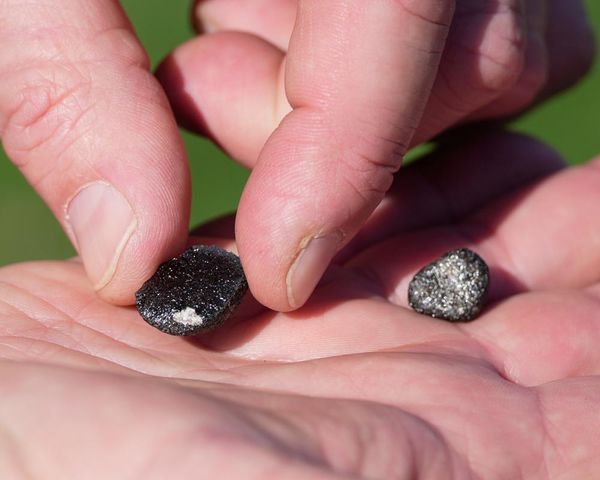
Nasa scientists have landed for the first time on one of the world’s newest islands, and discovered the three-year-old land mass is now covered in a sticky, mysterious mud, as well as vegetation and bird life.

Opinion and analysis
At the World Economic Forum last week, the emerging relationship between the Davos set and far-right populists was plain to see. And it is far rosier than either party would like to admit, writes Cas Mudde. “Neoliberal elites from Davos to Seattle do not oppose the rightwing populist agenda. They are trying to shape the post-Trump world, in which big business can amass profits unopposed by largely privatised and underfunded states.”
When asked to provide evidence that closing tax loopholes would weaken the economy, Scott Morrison said: “I think it’s just fundamental economics 101.” Richard Denniss writes that in 25 years of teaching, he has never read such a statement in any economics textbook. “On the contrary, economics 101 makes it clear that collecting more revenue from something that causes harm (like coal) and spending that money on something that causes good (like education) will simultaneously help the economy, help the environment and make people happier. It’s a win-win-win.”
Sport
From far away has come the news of England’s worst cricketing week since the last Ashes. Meanwhile, Australia’s cricket team, badly battered in 2018 by both scandal and failure, is showing faint, though only faint, signs of recovery. This summer’s Ashes could be thrillingly close, writes Matthew Engel.
Australians will be forced to rethink weekend summer sports in the near future, according to a new report by the Climate Council, that shows more extreme weather happening more often across Australia.
Thinking time: the rise and rise of New York’s pencil towers

It is rare in the history of architecture for a new type of building to emerge. The Romans’ discovery of concrete birthed the great domes and fortifications of its empire. The Victorians’ development of steel led to an era of majestic bridges and vaulted train sheds. The US invention of the elevator created the first skyscrapers in Chicago. Now, we are seeing a new type of structure that perfectly embodies the 21st-century age of technical ingenuity and extreme inequality. A heady confluence of engineering prowess, zoning loopholes and an unparalleled concentration of personal wealth have together spawned a new species of super-tall, super-skinny, super-expensive spires.
Any visitor to New York over the past few years will have witnessed this curious new breed of pencil-thin tower. Poking up above the Manhattan skyline like etiolated beanpoles, they seem to defy the laws of both gravity and commercial sense. They stand like naked elevator shafts awaiting their floors, raw extrusions of capital piled up until it hits the clouds.
Media roundup
The Daily Telegraph’s front page is dedicated to a story headlined Sick Joke, about what it describes as “boat people [making] a mockery of of medical transfers”, in a story revealing that 900 people medically transferred to Australia from Manus Island and Nauru have not returned to offshore processing centres. Bank stocks soared to give the sharemarket its biggest one-day rise in two years, the Australian reports, with $19bn added to the sector. Adelaide house prices have climbed 2.13% in the December quarter, and 4.01% on the same period in 2017, the Advertiser reveals, approaching a record median price of $500,000.
Coming up
Donald Trump will deliver the delayed annual State of the Union address to the US Congress. It is expected to start at 1pm AEDT.
The Commonwealth Bank will release its half-year results, becoming the first bank to do so after the final report of the banking royal commission.
Supporting the Guardian
Thank you to all our generous supporters who enable us to keep reporting on the critical stories. Our independent journalism is free from commercial bias and not influenced by billionaire owners, politicians or shareholders. Your support is vital in helping us do the most important journalism of all: that which changes society for the better. If you value what we do and would like to help support it, please make a contribution today.
Sign up
If you would like to receive the Guardian Australia morning mail to your email inbox every weekday, sign up here.