Good morning, this is Richard Parkin bringing you the main stories and must-reads on Thursday 17 October.
Top stories
You might not realise it if you live in the city, but land clearing in Australia has reached epidemic proportions. In New South Wales alone, the rate of clearing has at least tripled since 2014 - and it has global consequences. We are currently cutting down more trees than we are planting under taxpayer-funded schemes to address climate change, a major new Guardian Australia investigation can reveal. Australia is among the 11 worst countries when it comes to deforestation. Little more than two years of land clearing will cancel out the $1.5bn in taxpayer funds that goes towards protecting native habitat. Anne Davies went to the back of Bourke to see the scarred landscape for herself and find out why the issue is bitterly dividing communities.
We also explore the bitter fight over Australian farmers clearing their land in the first episode of Guardian Australia’s new podcast, Full Story.
A Brexit deal won’t happen today, British government sources have confirmed, despite German chancellor Angela Merkel describing negotiations as in the “final sprint” phase. Leading Eurosceptics inside the Conservative party have rallied around Boris Johnson as he seeks to resolve several “red lines” set in negotiations with the Democratic Unionist party. European council president Donald Tusk has suggested the “foundations” of a Brexit deal are ready to be approved by EU leaders on Thursday but confirmed that late “doubts” in London are still holding up the final wording of any agreement. Johnson is still yet to win over many of the 21 rebels he previously expelled from the Conservative party, whose vote may yet prove crucial if any deal is to be ratified in time for Johnson’s 31 October deadline.
The threat from extreme rightwing terrorism in Australia has increased in recent years and will remain an “enduring threat”, according to Australia’s spy agency. The Australian Security and Intelligence Organisation issued the warning in its latest annual report, adding that “extreme rightwing groups in Australia are more cohesive and organised than they have been in previous years”. The comments amp up the agency’s concern about rightwing extremist terrorism, after Asio boss Duncan Lewis told Senate estimates in April it was an important issue but the Christchurch massacre had not changed the agency’s calculus. The massacre of 49 people at two mosques in Christchurch, for which 28-year-old Australian Brenton Tarrant has been charged, prompted renewed scrutiny of the far right.
A record number of women have received prime minister’s science awards, with mathematician Cheryl Praeger taking the top award and earning praise from Scott Morrison for her “outstanding contribution to mathematics”. 2019 saw a fivefold increase in female representation among prize-winners, with Samantha Moyle, Sarah Finney, Laura McKay and Elizabeth New also receiving major awards. In 2016 a report from the chief scientist revealed that just 16% of science, technology, engineering and mathematics-trained professionals were women.
World

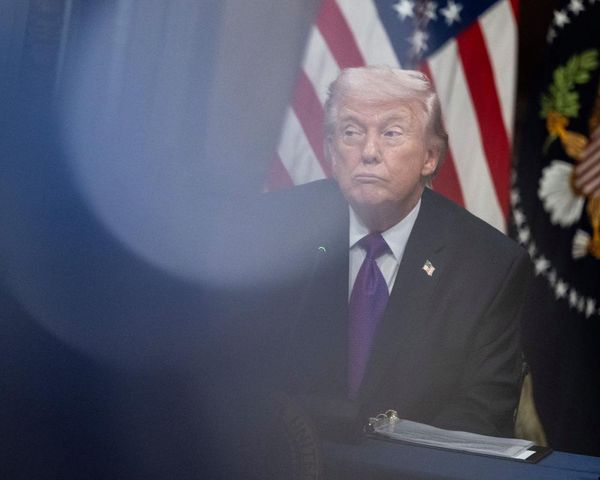
Kurds in northern Syria are “much safer now”, according to Donald Trump, in a statement that contradicted efforts by vice president Mike Pence and secretary of state Mike Pompeo to halt a Turkish offensive in the region.
The father of a boy killed in the Sandy Hook school shooting has successfully sued a conspiracy theorist who claimed the massacre never occurred, with a jury in Wisconsin awarding him $450,000.
Three US military attaches were briefly detained following a mysterious explosion near a Russian test site that killed five people in August, state news agencies have reported.
Austrian playwright Peter Handke has spoken publicly following controversy over his Nobel prize for literature, saying he will “never again” talk to journalists.
Hundreds of tubes of Dutch manufactured prosecco-flavoured Pringles have been seized near Venice, with the Italian agricultural minister pledging to fight “identity theft”.
Opinion and analysis

From terrible husbands to homicidal in-laws, advice columns are an addictive antidote to our polished online lives, writes Josephine Tovey. “They’re everywhere, thanks to readers like me who can’t get enough, and they’re better than ever. As one friend put it, ‘they’re even more assuring these days because they’re an antidote to the angst of observing everyone’s polished social media ... a reminder that everyone doesn’t have their shit together’.”
The IMF has handed down it’s six-monthly world economic outlook – and to save you the hassle, the future is looking decidedly bad, writes Greg Jericho. From “A weakening global expansion” to “Growth slowdown; precarious recovery” the titles have been getting progressively worse. “In 12 months we had gone from an upswing to a slowdown. Hope you enjoyed the good times while they lasted.” From predictions of 3.0% growth, revised to 2.1%, and now 1.7%, a slowing China is dragging Europe and Australia down with it.
Sport

With the dust from the winter sport grand finals only just settled, cricket season is rolling into town a little earlier than fans are accustomed to. The fifth iteration of the Women’s Big Bash League begins this weekend and with Australia’s women dominating internationally the standard has never been higher, writes Megan Maurice.
Joe Schmidt will not be the next All Blacks coach, but the Ireland boss could have a significant say on Saturday as to who succeeds Steve Hansen. Long-time lieutenant Ian Foster’s chances could be scuppered with a loss – does this open the door for Japan’s boss Jamie Joseph, Matt McIlraith asks.
Thinking time: Guardian’s climate crisis pledge

Photograph: Valentin Flauraud/EPA
The climate crisis is the most urgent issue of our times. And while the Guardian understands the critical importance of objective reporting in the contemporary media landscape, we will not stay quiet on the climate crisis, writes editor-in-chief Katherine Viner.
“Today the Guardian is making a pledge to our readers that we will play our part, both in our journalism and in our own organisation, to address the climate emergency. We hope this underlines to you the Guardian’s deep commitment to quality environmental journalism, rooted in scientific fact.
“As an organisation we will take steps to address the Guardian’s own impact on the environment. Today we commit to achieving net zero emissions by 2030, and we are currently undertaking a full audit of our emissions to assess how we will achieve this challenging goal.”
Guardian Australia editor-in-chief Lenore Taylor writes Australia “has the potential to be a superpower of the post-carbon world economy if we could just set aside the self-defeating culture war and look to the future with imagination”.
“Guardian Australia will provide that reporting, because only a properly informed debate can help us avoid the worst impacts of the climate crisis and steer us out of this cul-de sac and towards a low-carbon future.”
Media roundup
A businessman blacklisted by the United Nations for his connections with Liberian dictator Charles Taylor allegedly entered Australia and gambled at Crown Casino between 2010 and 2018, Fairfax papers and the ABC are reporting. Turkey’s ambassador to Australia has confirmed their forces can’t guarantee the safety of 66 Australian citizens believed to be the wives and children of Isis fighters, as it pushes further into Syria, writes the Australian. And former Essendon star Jobe Watson has heightened speculation of fresh revelations in the long-running drugs saga, claims the Herald Sun, encouraging journalists to “keep digging”.
Listen
Guardian Australia is launching a news podcast called Full Story.
Covering current events and Guardian exclusives, each episode explores one story - where it really started, what happened and what it means for listeners. If you want to hear from our reporters and hear the voices of the people they talk to and write about, then this podcast is for you.
Full Story is hosted by Laura Murphy-Oates, a Ngiyampaa Weilwan woman and the 2018 Walkley Young Journalist of the year. It is produced by Ellen Leabeater and Joe Koning and executive produced by associate news editor Gabrielle Jackson and Guardian Australia’s head of audio, Miles Martignoni.
Launching today with a special episode exploring Australia’s land clearing crisis, it will be released three times a week from Monday. Listen to the trailer here. You can also subscribe here - or search Full Story wherever you get your podcasts.
Sign up
If you would like to receive the Guardian Australia morning mail to your email inbox every weekday, sign up here.