Good morning, this is Eleanor Ainge Roy bringing you the main stories and must-reads on Friday 10 May.
Top stories
Two more candidates have been forced to resign over comments on social media, with barely a week to go before the federal election. Late on Thursday the Liberal candidate in Scullin, Gurpal Singh, was asked to quit over a Facebook post in which he said the husband of a rape victim was “the real victim”, while the Clive Palmer candidate in Melbourne, Tony Pecora, stood down after peddling conspiracy theories about the 9/11 terrorist attack. Another United Australia party hopeful, the Queensland Senate candidate Yodie Batzke, is under scrutiny for an anti-abortion post showing a pregnant woman with a noose around her belly.
Labor will better the government’s planned surpluses and have a $200bn war chest to spend on further tax cuts over the next decade, costings to be released today will show. As Labor seeks to demonstrate its economic credibility and counter Coalition claims about the risk of a change of government, the party will reveal projections for a surplus more than twice as large as the Coalition’s by 2022, with its tax crackdown to raise $154bn over the decade. In another splash-the-cash effort Labor will pledge $1bn to begin buying the land corridor for an east coast high-speed rail line between Melbourne and Brisbane via Canberra and Sydney. In a statement, Anthony Albanese said the commitment would help deliver a rail line to “revolutionise interstate travel and regional development in Australia” with speeds of up to 350km/h. He cited a 2013 feasibility study that identified a 1,748km route and “found the project would return more than $2 in public benefit for every dollar invested”.
A News Corp journalist has gone on the record with critical remarks about his own paper, the Australian, saying “the craziness has been dialled up” in recent months. The paper’s social affairs writer, Rick Morton, told journalism students at the University of Technology, Sydney, that senior writers know what the paper’s editorial line is and write stories to fit. Asked whether the Murdoch paper’s journalists were uncomfortable with the Australian barracking for the Coalition in the election, Morton said they were “more uncomfortable certainly now than at any time I’ve been there in the past seven years”. He characterised the newsroom at the Australian as “subversive” and in a state of “guerrilla warfare” with editors, who routinely misrepresented what reporters had written by changing copy and writing misleading headlines.
World

Early results in South Africa’s general election suggest the ruling African National Congress party is heading for a historic low, but with enough votes to retain power. Many South Africans have been alienated by the corruption scandals and the ANC’s continuing failure to deal with collapsing public services, soaring unemployment and high levels of violent crime.
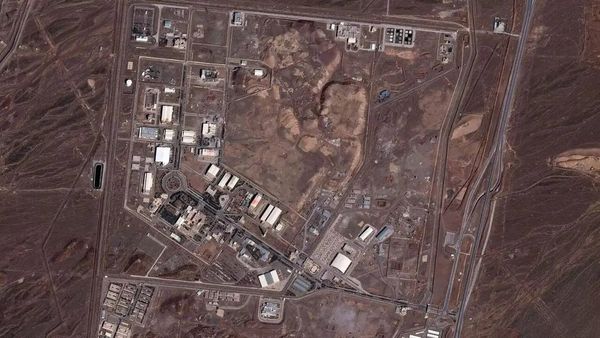
Donald Trump has offered Iran direct talks, saying its leaders should “call me”, and suggested the US would help revive the country’s economy as long as Iran did not acquire nuclear weapons.
A co-founder of Facebook has called for the government to break up the company, warning that Mark Zuckerberg’s power is “unprecedented and un-American”. Chris Hughes says from the early days of Facebook, Zuckerberg had touted “domination” as an ultimate goal.
At least five people have been killed in Jamaica since March last year after being deported from the UK by the Home Office, the Guardian has learned. The killings took place after the men were sent back to Jamaica – which has one of the highest per-capita murder rates in the world – despite strict rules prohibiting deportations to countries in which an individual’s life may be in danger.
Three of the largest ports in Europe – Rotterdam, Antwerp and Ghent – are to be used to capture and bury 10m tonnes of CO2 emissions under the North Sea, in what will be the biggest project of its kind in the world. The ports, which account for one-third of the total greenhouse gas emissions from the Belgium, Netherlands and Luxembourg region, are to be used to pipe the gas into a porous reservoir of sandstone about 3km below the seabed.
Opinion and analysis

Being called a slacker is “a byproduct of what Australians are comfortable with”, says the musician Alex Lahey, who says her breakout success has led to her being typecast as a bitch, too. Australia, after all, is the land of tall-poppy syndrome – if someone finds success, it’s best to assume that they lazily fell into it. “That idea of someone is so celebrated here – to the benefit and detriment of everything and everyone.”
On Wednesday thousands of Australians shared tales of their mothers’ sacrifices on social media under the hashtag #MyMum, after Bill Shorten’s emotional speech paying tribute to his late mother in response to a critical News Corp article. But the stories about the socioeconomic struggles of these women transcends past decades, writes Van Badham: “The economic reality of women’s restriction isn’t a distant past – it’s not even about the legacy that yesterday has certainly left for today. It’s now. It’s here. It’s us. It’s about this election and the economic priorities of political parties and the structural power of women’s policy to determine the shape of our lives.”
Sport

The potential financial fallout from the Israel Folau case has been brought into sharp focus after Asics became the first sponsor to pull the plug on the Wallabies star. How many more will follow suit?
Our resident football cartoonist, David Squires, turns his attention to the A-League semi-finals, which kick off tonight when Perth Glory host Adelaide United, and rues a missed opportunity due to some poor finishing during the week.
Thinking time: Are lockout laws killing Sydney’s queer culture?

It’s no secret Sydney’s nightlife has suffered under NSW laws, but artists like William Yang say the effect on LGBT spaces has been particularly profound. Yang began photographing Sydney’s queer scene in the 80s and 90s, and describes parties as a “delerium” sweeping across the city. “There was a dance party every weekend and on a long weekend there could be three or four,” remembers Yang. “This went on for many years and coincided with the Aids pandemic in Sydney. I think the dance party was partly an escape from that grim reality.”
In 2014 the NSW government introduced 1.30am lockout laws across the city, and since then 176 venues have closed, a parliamentary inquiry into the music and arts economy in NSW was told last year. Yang’s warehouse party images have thus become a memento mori for lives lost and creative tribes feeling the squeeze of commerce, urban development and the rise of business culture. The former Amsterdam night mayor Mirik Milan says Sydney may have done irreparable damage to its international allure as a thriving, all-night city. “That means less interest for tourists, but you’re also less interesting for young creatives and musicians to move to that city,” Milan says.
Media roundup
The ABC has an analysis piece exploring how Scott Morrison became the Liberal party’s Phil Collins. “So many demented things have happened so far during this election campaign that our sense of what is deemed normal is now officially warped beyond recognition,” writes Annabel Crabb. The Mercury reports that Hobart’s rental crisis is unlikely to continue long-term, drawing on evidence from a new report which says strong growth in the building sector should mean new dwellings are available within two years. Labor’s Bill Shorten is appealing for the youth vote, the Age and the Sydney Morning Herald report, with the opposition leader saying young Australians are getting a “dud deal” from a system stacked against them.
Coming up
The winners of the 2019 Archibald, Wynne and Sulman prizes will be announced at the Art Gallery of NSW.
The Geoffrey Rush defamation case returns to court, with a hearing over further compensation for his economic losses.
Sign up
If you would like to receive the Guardian Australia morning mail to your email inbox every weekday, sign up here.