Whether it's an effect rooted in a general rise in health consciousness or simply a generational shift in values, an increasing number of younger people in Japan are turning away from drinking alcohol.
The word in Japanese for people who cannot drink due to their physical makeup is "geko." On Facebook, members of a geko group called "Gekonomist" post messages about how they enjoy themselves. One member of the group wrote, "We had an online drinking party with nonalcoholic wine." "I bought a kit to make alcohol-free gin. I enjoy it at home," another member posted.
Last November, seven people, including members of the Facebook group, participated in a nonalcohol drinking party held at a restaurant in Fukuoka. One of the participants said, "Nonalcoholic beverages are cheaper than alcoholic beverages," while another commented, "If you don't drink alcohol, you can enjoy food to the end." The most popular drink on that day was Aojiru green vegetable juice, and the restaurant ran out of stock.
The group was established in June last year by Hideto Fujino, 53, president of an asset management company. Nearly 3,800 men and women of all ages participate in the group. Not only are there people who cannot drink due to their reaction to alcohol, there are also many people who don't drink alcohol even if they can drink a lot who say, "It's a waste of time to be drunk," or "I want to stay healthy."
Many members say they like the atmosphere of drinking parties even if they don't drink. In the beginning, there were many posts about alcohol harassment that coerced them to drink, but recently there are many positive posts about living a nonalcohol life.
"Through interactions with the members, I realized again that getting drunk is not the only value of a drinking party," Fujino said.
In Kobe, a group to promote the city held an event called Japan Geko Summit, in which about 50 people interacted online. At the event, the result of an internet survey of 200 geko types was announced. According to the survey, it is estimated that "new type geko," who dared not drink despite being able to do so, accounted for 25%. Regarding reasons for not drinking, 35% of the respondents said, "To avoid hangovers and overeating"; 17% each said, "I don't drink depending on the situation," and "There is no merit because it costs too much."
Ryo Ikeshima, 31, a board member of a nonprofit organization and moderator of the event, said, "Maybe people think it's cool to be able to control yourself by stopping smoking and muscle training."
According to a survey by the Health, Labor and Welfare Ministry in 2018, 33% of men have a "drinking habit." The percentage of people with a drinking habit has decreased since 20 years ago across all generations. The survey defined people who drink more than 180 milliliters of sake on a drinking day as having a drinking habit. Among those in their 20s, 27% said, "[I can drink, but] I hardly drink," while 24% said, "I am [constitutionally] undrinkable." Meanwhile, 8% of women said they drink alcohol, down slightly from 9% 20 years ago.
The alcohol-free economy, dubbed "geconomics," is also expanding.
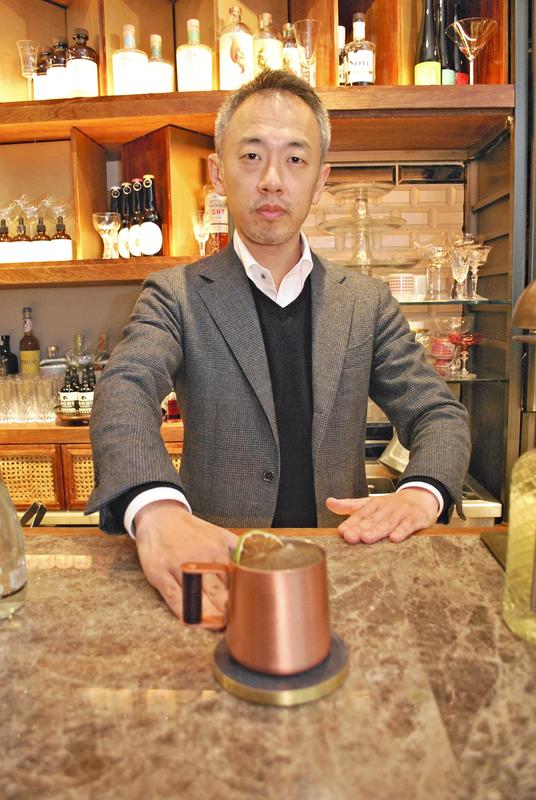
In March, bartender Eiji Miyazawa, 42, opened the Low-Non-Bar in Tokyo's Nihonbashi district, which serves both nonalcoholic and low-alcohol beverages.
"I opened the bar because I felt that the lineup of nonalcoholic drinks was insufficient at traditional bars and it was difficult for geko people to enter such bars," he said.
While the bar is on the first floor of the building, there is a separate affiliated bar that serves alcohol on the second floor. "I hope people who can drink use the two bars depending on their mood of the day and the person you are drinking with," Miyazawa said.
Naoko Kuga, a senior researcher at the NLI Research Institute and an expert on alcohol and consumer behavior, said the nonalcoholic lifestyle is booming among young people in the United States and Europe. "Values of people have changed, and an increasing number of people think it's cool not to drink. [The current phenomenon is] more than just avoidance of alcohol. As the new coronavirus is seen fueling increased consciousness about health and reducing the number of real-life drinking parties [that aren't online], the tendency [to avoid drinking alcohol] is accelerating in Japan, too," she said.
Read more from The Japan News at https://japannews.yomiuri.co.jp/