More than half the companies that made up the FTSE 100 last time it peaked in 1999 have left the index, transforming the makeup of the group of leading UK shares.
Only 49 companies survive from 30 December 1999 when the FTSE closed at 6930.20 points – a level it broke on Tuesday when it closed at 6949.63. The other 51 companies have either been bought, broken up, gone bust or declined in the turbulent period since the last record was set.
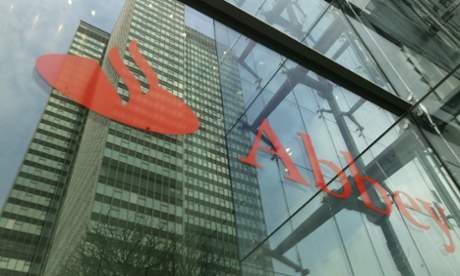
Since the final trading day of 1999, former household names such as Abbey National, ICI and Norwich Union have disappeared entirely after mergers or takeovers. Other famous brands such as Cadbury’s Schweppes, British Airways and NatWest live on but as part of bigger companies.
In 1999, the telecoms and first internet boom was in full swing and phone companies and technology companies made up more than 20% of the index, according to figures from stockbroker Hargreaves Lansdown. Now they account for about 7% of the list.
BT and Vodafone made up almost 14% of the FTSE between them and were the second and third biggest companies in the country. Both are still in the index but companies that fell out after the dotcom collapse of 2000 included Marconi, which went bust, Colt Telecom and Cable & Wireless.
Laith Khalaf, an analyst at Hargreaves Lansdown, said: “The standout difference is the prevalence of telecoms back then. That was shortly before the tech crash that wiped out the likes of Marconi, which was the 10th biggest company in the index in 1999.”
The dotcom crash was followed by the financial crisis that started in 2007 and radically reshaped the FTSE 100 again.
There were 11 banks in the index in 1999. Now there are five and the sector’s share has shrunk from just over 16% of the list to 13%. The decline represents mergers, some of them to prevent bank collapses, and the damage done to lenders’ share prices during the crisis.
The space has been filled by miners, whose presence in the index more than doubled since 1999 when overseas mining companies such as Antofagasta, Fresnillo and Randgold listed their shares in London. When the FTSE hit its last high, miners made up 3% of the FTSE but now the figure has more than doubled, despite the battering mining shares have taken as commodity prices have fallen.
While overseas companies have floated in London, UK-based companies have expanded overseas into emerging markets. Affluent Asians used to buy Burberry products when they visited London; now the clothing brand, demerged from another departed name, GUS, makes about 40% of its revenue in Asia.
The result is that the FTSE 100 has gone global and become increasingly detached from the UK economy, whose fortunes it was once assumed to reflect.
Khalaf said: “That is increasingly not the case. It’s not a criticism of the FTSE. The marketplace for goods is increasingly global and the place where a company is listed doesn’t necessarily tell you where it does most of its business.”
The top echelons of the index have remained more stable as companies such as HSBC and BP have used their financial strength to weather crises including the credit crunch and the Gulf of Mexico oil spill. The biggest five companies in 1999 were led by BP, followed by BT, Vodafone, HSBC and Glaxo Wellcome. Now they are led by HSBC and then Royal Dutch Shell, BP, GlaxoSmithKline and British American Tobacco.
The survivors from 1999 in the FTSE 100
3i
Anglo American
Arm
Associated British Foods
AstraZeneca
Barclays
BG
BP Amoco
British Aerospace
British American Tobacco
British Sky Broadcasting
British Telecommunications
Centrica
Compass
Diageo
Dixons Group
GKN
Glaxo Wellcome
HSBC
Imperial Tobacco
Kingfisher
Land Securities
Legal & General
Lloyds TSB
Marks & Spencer
National Grid
Old Mutual
Pearson
Prudential
Reckitt Benckiser
Reed International
Rio Tinto
Rolls-Royce
Royal & Sun Alliance
Royal Bank of Scotland
Sage
Sainsbury’s
Schroders
Scottish & Southern Energy
Shell
South African Breweries
Standard Chartered
Tesco
Unilever
United Utilities
Vodafone
Whitbread
Wolseley
WPP
The firms in the FTSE 100 in 1999 but not in 2015
Abbey National
Alliance & Leicester
Allied Domecq
Allied Zurich
Amvescap
BAA
Bank of Scotland
Bass
Billiton
Blue Circle
BOC
Boots
British Airways
Cable & Wireless
Cadbury Schweppes
Carlton
CGU
CMG
Colt Telecommunications
Corus
DMGT
EMI
Energis
Granada
Gus
Halifax
Hanson
Hays
Hilton
ICI
Invensys
Logica
Marconi
Misys
National Power
NatWest
Norwich Union
Peninsular & Oriental Steam
PowerGen
Railtrack
Rentokil
Reuters
Schroders NV
Scottish & Newcastle
Scottish Power
Sema
SmithKline Beecham
Sun Life & Provincial
Telewest
Thames Water
United News & Media
Woolwich
The firms in the FTSE 100 now but not in 1999
Aberdeen Asset Management
Admiral
Aggreko
Antofagasta
Ashtead
Aviva
Babcock
Barratt
BHP Billiton
British Land
Bunzl
Burberry
Capita
Carnival
Coca-Cola
CRH
Direct Line
easyJet
Experian
Fresnillo
Friends Life
G4S
Glencore
Hammerson
Hargreaves Lansdown
InterContinental Hotels
IAG
Intertek
Intu Properties
ITV
Johnson Matthey
London Stock Exchange
Meggitt
Mondi
Morrisons
Next
Persimmon
Randgold
Royal Dutch Shell B
Royal Mail
Severn Trent
Shire
Smith & Nephew
Smiths Group
Sports Direct
St James’s Place
Standard Life
Taylor Wimpey
Travis Perkins
Tui
Tullow Oil
Weir Group